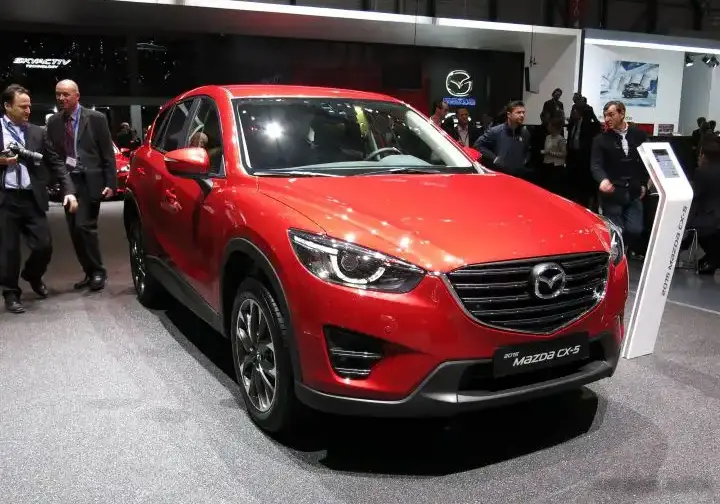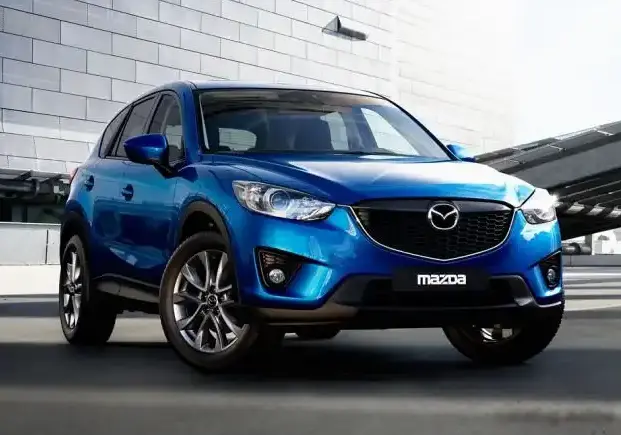
The Mazda CX-5 2.2 SKYACTIV-D (150 Hp) AWD Automatic was a diesel-powered variant of Mazda’s popular compact SUV, produced between 2012 and 2015. Positioned as a mid-range offering within the first generation (KE series) CX-5 lineup, it aimed to provide a balance of fuel efficiency, torque, and all-weather capability. This model was primarily sold in European and Asian markets where diesel engines were more prevalent, and represented Mazda’s commitment to their SKYACTIV technology suite focused on maximizing combustion efficiency. It was built on the Mazda’s new generation platform, offering a compelling package for buyers seeking a practical and refined crossover.
Technical Specifications
| Brand | Mazda |
| Model | CX-5 |
| Generation | CX-5 |
| Type (Engine) | 2.2 SKYACTIV-D (150 Hp) AWD Automatic |
| Start of production | 2012 |
| End of production | 2015 |
| Powertrain Architecture | Internal Combustion engine |
| Body type | SUV |
| Seats | 5 |
| Doors | 5 |
| Fuel consumption (urban) | 6.4 l/100 km (36.8 US mpg, 44.1 UK mpg, 15.6 km/l) |
| Fuel consumption (extra urban) | 4.9 l/100 km (48 US mpg, 57.6 UK mpg, 20.4 km/l) |
| Fuel consumption (combined) | 5.5 l/100 km (42.8 US mpg, 51.4 UK mpg, 18.2 km/l) |
| CO2 emissions | 144 g/km |
| Fuel Type | Diesel |
| Acceleration 0 – 100 km/h | 10.2 sec |
| Acceleration 0 – 62 mph | 10.2 sec |
| Acceleration 0 – 60 mph | 9.7 sec |
| Maximum speed | 194 km/h (120.55 mph) |
| Emission standard | Euro 6 |
| Weight-to-power ratio | 9.9 kg/Hp, 100.7 Hp/tonne |
| Weight-to-torque ratio | 3.9 kg/Nm, 255 Nm/tonne |
| Power | 150 Hp @ 4500 rpm |
| Power per litre | 68.5 Hp/l |
| Torque | 380 Nm @ 1800-2600 rpm (280.27 lb.-ft. @ 1800-2600 rpm) |
| Engine layout | Front, Transverse |
| Engine Model/Code | SHY1 |
| Engine displacement | 2191 cm3 (133.7 cu. in.) |
| Number of cylinders | 4 |
| Engine configuration | Inline |
| Cylinder Bore | 86 mm (3.39 in.) |
| Piston Stroke | 94.3 mm (3.71 in.) |
| Compression ratio | 14:1 |
| Number of valves per cylinder | 4 |
| Fuel injection system | Diesel Commonrail |
| Engine aspiration | Twin-Turbo, Intercooler |
| Valvetrain | DOHC |
| Engine oil capacity | 5.1 l (5.39 US qt | 4.49 UK qt) |
| Coolant | 8.6 l (9.09 US qt | 7.57 UK qt) |
| Kerb Weight | 1490 kg (3284.89 lbs.) |
| Max. weight | 2120 kg (4673.8 lbs.) |
| Max load | 630 kg (1388.91 lbs.) |
| Trunk (boot) space – minimum | 503 l (17.76 cu. ft.) |
| Trunk (boot) space – maximum | 1620 l (57.21 cu. ft.) |
| Fuel tank capacity | 58 l (15.32 US gal | 12.76 UK gal) |
| Max. roof load | 50 kg (110.23 lbs.) |
| Permitted trailer load with brakes (8%) | 2100 kg (4629.71 lbs.) |
| Permitted trailer load with brakes (12%) | 2000 kg (4409.25 lbs.) |
| Permitted trailer load without brakes | 750 kg (1653.47 lbs.) |
| Permitted towbar download | 88 kg (194.01 lbs.) |
| Length | 4555 mm (179.33 in.) |
| Width | 1840 mm (72.44 in.) |
| Height | 1710 mm (67.32 in.) |
| Wheelbase | 2700 mm (106.3 in.) |
| Front track | 1585 mm (62.4 in.) |
| Rear (Back) track | 1590 mm (62.6 in.) |
| Drag coefficient (Cd) | 0.33 |
| Minimum turning circle | 11.7 m (38.39 ft.) |
| Drivetrain Architecture | All wheel drive (4×4) |
| Number of gears and type of gearbox | 6 gears, automatic transmission |
| Front suspension | Independent type McPherson |
| Rear suspension | Independent multi-link suspension |
| Front brakes | Ventilated discs |
| Rear brakes | Disc |
| Steering type | Steering rack and pinion |
| Power steering | Electric Steering |
| Tires size | 225/65 R17; 225/55 R19 |
| Wheel rims size | 7J x 17; 7J x 19 |
Powertrain & Engine Architecture
The heart of the CX-5 2.2 SKYACTIV-D was Mazda’s SHY1 2.2-liter four-cylinder diesel engine. This engine was a key component of Mazda’s SKYACTIV technology, designed to improve fuel efficiency and reduce emissions without sacrificing performance. It featured a high compression ratio of 14:1, achieved through advanced combustion control and optimized piston design. The engine utilized a twin-turbocharger setup – a small turbo for quick response at low RPMs and a larger turbo for sustained power at higher speeds. A common-rail direct injection system delivered fuel at extremely high pressure, ensuring efficient combustion. The DOHC valvetrain further optimized airflow into and out of the cylinders. Paired with this engine was a six-speed automatic transmission, specifically tuned to work with the diesel’s torque characteristics. This transmission wasn’t a traditional torque-converter automatic; it featured a quicker shift response and a wider gear ratio spread than older designs.
Driving Characteristics
The 150 horsepower and 380 Nm (280 lb-ft) of torque delivered by the 2.2 SKYACTIV-D engine provided adequate, though not exhilarating, performance. Acceleration from 0-60 mph took around 9.7 seconds, and top speed was around 120 mph. The automatic transmission, while smooth, wasn’t particularly sporty. It prioritized fuel economy over aggressive shifting. Compared to the 2.0-liter gasoline engine option, the diesel offered significantly more low-end torque, making it easier to accelerate from a standstill and more comfortable for towing. However, the gasoline engine provided quicker acceleration overall. Compared to higher-output diesel variants available in some markets, this 150 hp version felt less powerful, but it offered a better balance of performance and fuel economy. The all-wheel-drive system provided enhanced traction in slippery conditions, making it a capable all-weather vehicle.
Equipment & Trim Levels
The CX-5 2.2 SKYACTIV-D Automatic typically came with a respectable level of standard equipment. This included air conditioning, power windows and locks, a basic audio system with USB connectivity, and alloy wheels. Higher trim levels added features such as leather upholstery, a sunroof, a navigation system, and advanced safety features like blind-spot monitoring and lane departure warning. Interior upholstery was generally cloth on base models, with leather options available on higher trims. Dashboard configuration was relatively straightforward, with a focus on functionality and ease of use. Optional extras included a premium sound system, heated seats, and a rear-view camera.
Chassis & Braking
The CX-5 featured an independent suspension setup – McPherson struts at the front and a multi-link system at the rear – providing a comfortable ride and good handling. Stabilizer bars were fitted to both axles to reduce body roll during cornering. Braking duties were handled by ventilated discs at the front and solid discs at the rear. Anti-lock brakes (ABS) were standard, along with electronic brakeforce distribution (EBD). The steering was a rack-and-pinion system with electric power assistance, offering a light and precise feel.
Market Reception & Comparison
The Mazda CX-5 2.2 SKYACTIV-D Automatic was generally well-received by automotive critics. It was praised for its fuel efficiency, comfortable ride, and refined interior. However, some reviewers noted that the engine could be a bit noisy under hard acceleration. Compared to competitors like the Nissan Qashqai and Volkswagen Tiguan, the CX-5 offered a more engaging driving experience and a more stylish interior. Fuel economy was a key selling point, with the diesel engine consistently achieving impressive MPG figures. Reliability was generally good, although diesel engines can be more complex and potentially more expensive to repair than gasoline engines.
Legacy
The Mazda CX-5 2.2 SKYACTIV-D Automatic remains a relatively reliable and affordable used car option. The SKYACTIV-D engine, while requiring diligent maintenance (particularly regarding the diesel particulate filter), has proven to be durable. The six-speed automatic transmission is also known for its longevity. Today, these vehicles can be found with reasonable mileage and are often sought after by buyers looking for a fuel-efficient and practical SUV. The first-generation CX-5, including this diesel variant, helped establish Mazda as a serious player in the compact SUV segment, paving the way for the continued success of the model.