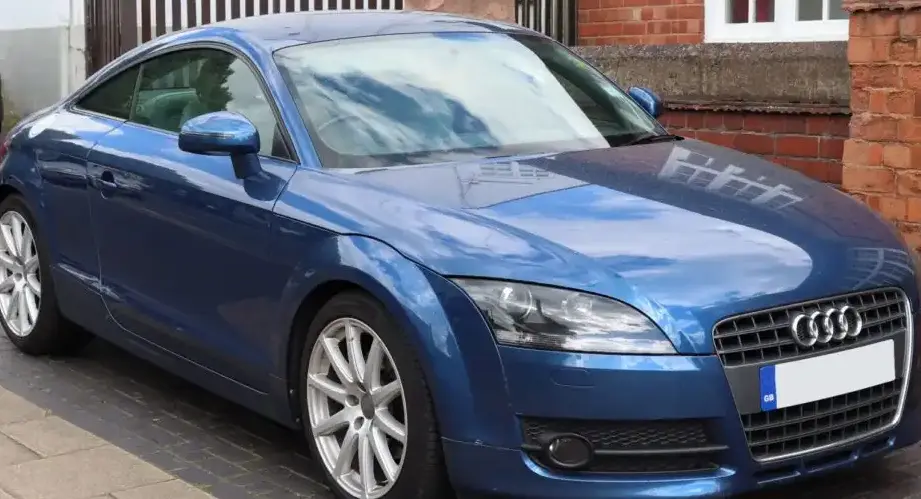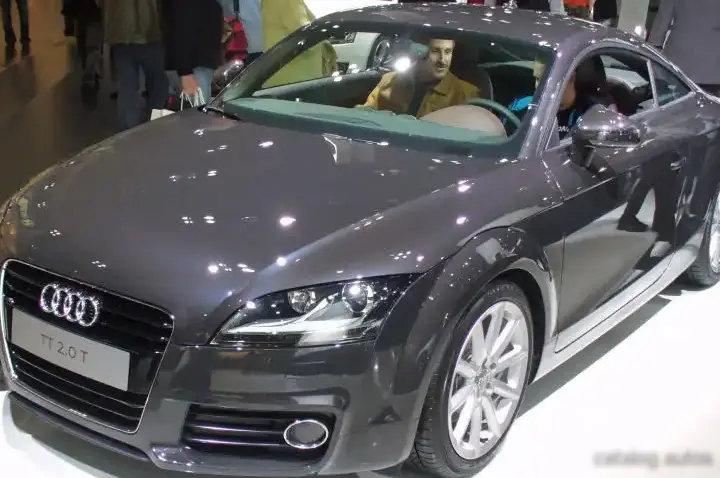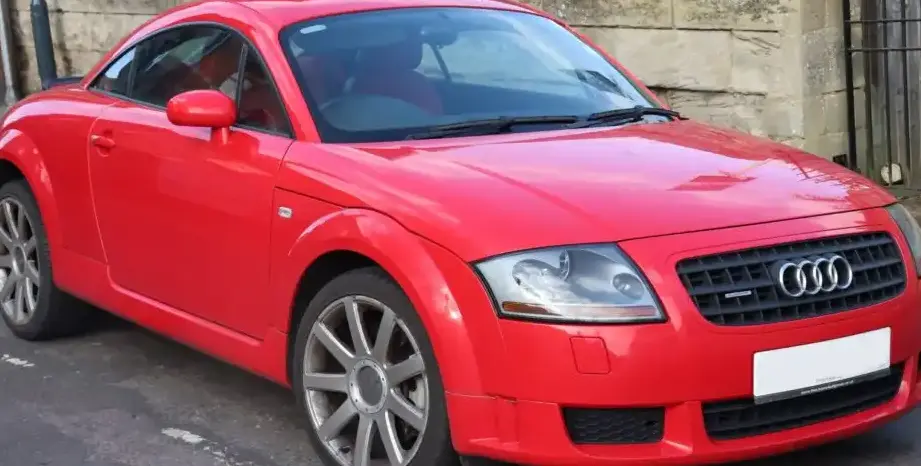
The Audi TT Coupe (8N facelift), specifically the 1.8T variant producing 190 horsepower, represents a significant evolution of Audi’s entry-level sports coupe. Introduced in late 2000 as a refresh of the original 8N TT, this model ran through 2006. It aimed to address initial criticisms of the first-generation TT regarding handling and stability, while retaining the car’s distinctive Bauhaus-inspired design. This particular engine and transmission combination occupied a middle ground in the 8N facelift lineup, offering a balance between performance and affordability, positioned below the more potent 225 horsepower 1.8T and the flagship 3.2-liter VR6 models.
Technical Specifications
| Brand | Audi |
| Model | TT |
| Generation | TT Coupe (8N, facelift 2000) |
| Type (Engine) | 1.8 T (190 Hp) |
| Start of production | September, 2005 |
| End of production | June, 2006 |
| Powertrain Architecture | Internal Combustion engine |
| Body type | Coupe |
| Seats | 4 |
| Doors | 3 |
| Fuel consumption (urban) | 11.1 l/100 km (21.2 US mpg) |
| Fuel consumption (extra urban) | 6.3 l/100 km (37.3 US mpg) |
| Fuel consumption (combined) | 8.1 l/100 km (29 US mpg) |
| CO2 emissions | 194 g/km |
| Fuel Type | Petrol (Gasoline) |
| Acceleration 0 – 100 km/h | 7.4 sec |
| Acceleration 0 – 62 mph | 7.4 sec |
| Acceleration 0 – 60 mph | 7 sec |
| Maximum speed | 234 km/h (145.4 mph) |
| Emission standard | Euro 4 |
| Weight-to-power ratio | 6.7 kg/Hp |
| Weight-to-torque ratio | 5.3 kg/Nm |
| Power | 190 Hp @ 5700 rpm |
| Torque | 240 Nm @ 1980-5400 rpm (177.01 lb.-ft.) |
| Engine layout | Front, Transverse |
| Engine Model/Code | BVR |
| Engine displacement | 1781 cm3 (108.68 cu. in.) |
| Number of cylinders | 4 |
| Engine configuration | Inline |
| Cylinder Bore | 81 mm (3.19 in.) |
| Piston Stroke | 86.4 mm (3.4 in.) |
| Compression ratio | 9.5:1 |
| Number of valves per cylinder | 5 |
| Fuel injection system | Multi-port manifold injection |
| Engine aspiration | Turbocharger, Intercooler |
| Valvetrain | DOHC |
| Engine oil capacity | 4.6 l (4.86 US qt | 4.05 UK qt) |
| Coolant | 7 l (7.4 US qt | 6.16 UK qt) |
| Kerb Weight | 1280 kg (2821.92 lbs.) |
| Max. weight | 1665 kg (3670.7 lbs.) |
| Max load | 385 kg (848.78 lbs.) |
| Trunk (boot) space – minimum | 270 l (9.53 cu. ft.) |
| Trunk (boot) space – maximum | 540 l (19.07 cu. ft.) |
| Fuel tank capacity | 55 l (14.53 US gal | 12.1 UK gal) |
| Length | 4041 mm (159.09 in.) |
| Width | 1764 mm (69.45 in.) |
| Height | 1346 mm (52.99 in.) |
| Wheelbase | 2422 mm (95.35 in.) |
| Front track | 1528 mm (60.16 in.) |
| Rear (Back) track | 1513 mm (59.57 in.) |
| Drag coefficient (Cd) | 0.32 |
| Minimum turning circle | 10.6 m (34.78 ft.) |
| Drivetrain Architecture | Front wheel drive |
| Number of gears | 5 |
| Gearbox type | Manual transmission |
| Front suspension | Independent, type McPherson with coil spring and anti-roll bar |
| Rear suspension | Independent torsion suspension |
| Front brakes | Ventilated discs |
| Rear brakes | Disc |
| Assisting systems | ABS (Anti-lock braking system) |
| Steering type | Steering rack and pinion |
| Tires size | 205/55 R16 |
| Wheel rims size | 7J x 16 |
INTRODUCTION
The Audi TT Coupe (8N facelift) 1.8T 190 hp model, produced from 2000 to 2006, was a key component of Audi’s strategy to broaden the appeal of the TT. The 8N generation, built on the Volkswagen Group’s A4-based 1HX0 platform (later A3 platform), aimed to deliver a sporty and stylish coupe experience. The facelift addressed early criticisms of the original TT’s handling, primarily through revisions to the suspension geometry and the availability of Electronic Stability Program (ESP). This 190 hp version of the 1.8T engine, paired with a five-speed manual transmission, offered a compelling blend of performance and fuel efficiency, making it a popular choice for buyers seeking a driver-focused coupe without the higher price tag of the VR6.
Powertrain & Engine Architecture
At the heart of this TT variant lies the 1.8-liter turbocharged four-cylinder engine, designated as the BVR engine code. This engine is a descendant of the long-running EA827 family, known for its robust construction and tuning potential. The BVR utilizes multi-port fuel injection and a sophisticated turbocharging system with an intercooler to boost power output to 190 hp at 5700 rpm and 240 Nm (177 lb-ft) of torque available from 1980 to 5400 rpm. The engine features a double overhead camshaft (DOHC) valvetrain with five valves per cylinder, contributing to its responsive nature. The five-speed manual transmission was the standard offering, providing precise gear changes and enhancing the driving experience. The transmission’s gear ratios were tuned to maximize acceleration and provide reasonable fuel economy.
Driving Characteristics
The 1.8T 190 hp TT offered a noticeably more engaging driving experience than its predecessors. While not as brutally fast as the VR6, the turbocharged engine delivered strong mid-range acceleration, making it well-suited for everyday driving and spirited back-road excursions. The five-speed manual transmission allowed drivers to fully exploit the engine’s powerband. Compared to the 180 hp version, the 190 hp variant offered a more noticeable power increase, particularly in the mid-range. The revised suspension geometry of the facelifted 8N TT significantly improved handling stability, reducing understeer and providing a more confident feel in corners. However, it still lacked the all-wheel-drive grip of the higher-spec models.
Equipment & Trim Levels
The 1.8T 190 hp TT typically came equipped with a respectable level of standard features. Interior appointments included sport seats upholstered in cloth or optional leather, a leather-wrapped steering wheel, and aluminum trim accents. Standard equipment also included air conditioning, power windows and locks, and an Audi Concert stereo system. Optional extras included a sunroof, heated seats, xenon headlights, and a premium Bose sound system. The dashboard layout was minimalist and driver-focused, reflecting the TT’s sporty character. Trim levels varied slightly depending on the market, but generally offered packages that bundled popular options together.
Chassis & Braking
The 8N TT utilized a McPherson strut front suspension and a torsion beam rear suspension. The facelifted models received revisions to the suspension geometry to improve handling and reduce understeer. The front suspension featured a stabilizer bar to further enhance cornering stability. Braking duties were handled by ventilated discs at the front and solid discs at the rear. Anti-lock Braking System (ABS) was standard, providing enhanced stopping power and control. The chassis was relatively lightweight, contributing to the car’s agile handling characteristics.
Market Reception & Comparison
The Audi TT Coupe (8N facelift) 1.8T 190 hp received generally positive reviews from automotive critics. It was praised for its stylish design, engaging driving dynamics, and relatively affordable price point. Compared to the 180 hp version, the 190 hp model offered a noticeable performance improvement. However, it was often seen as a compromise compared to the more powerful VR6, which offered superior acceleration and a more premium feel. Fuel economy was respectable for a sports coupe, averaging around 29 US mpg in combined driving. Reliability was generally good, although some owners reported issues with the turbocharger and the cooling system.
Legacy
The Audi TT Coupe (8N facelift) 1.8T 190 hp remains a popular choice among enthusiasts and used car buyers. The BVR engine is known for its durability and tuning potential, making it a favorite among those who enjoy modifying their vehicles. While not as collectible as the VR6 models, the 1.8T TT offers a compelling blend of style, performance, and affordability. Well-maintained examples continue to command reasonable prices in the used car market, and the car’s distinctive design ensures that it remains a head-turner even today. The 8N TT, in all its variants, played a crucial role in establishing Audi as a premium sports car manufacturer.