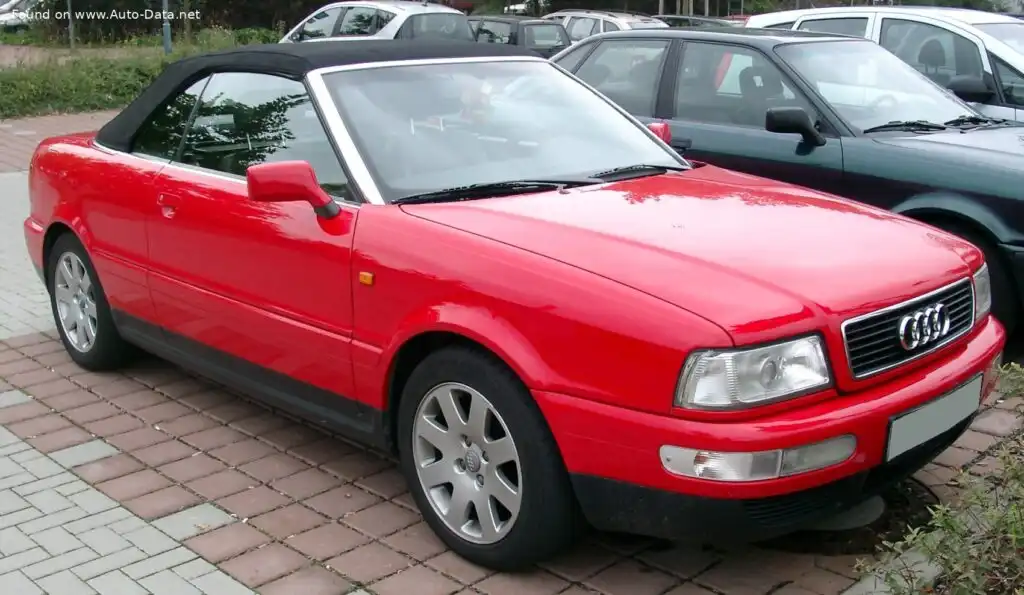
The Audi Cabriolet (B3 8G) 2.3 E, produced between June 1991 and July 1994, represented a significant step forward for Audi’s open-top offerings. Positioned as a mid-range variant within the B3 Cabriolet lineup, it offered a balance between performance and affordability, appealing to buyers seeking a stylish and capable convertible. This model was built on the Audi 80 (B3) platform, sharing many components with its coupe and sedan siblings, but distinguished by its fully automatic electro-hydraulic fabric roof. The 2.3 E variant, with its 133 horsepower engine, aimed to provide a more refined driving experience than the base models while remaining accessible to a broader customer base than the more powerful, and expensive, 2.6 and 2.8 liter options.
Technical Specifications
| Brand | Audi |
| Model | Cabriolet |
| Generation | Cabriolet (B3 8G) |
| Type (Engine) | 2.3 E (133 Hp) |
| Start of production | June, 1991 |
| End of production | July, 1994 |
| Powertrain Architecture | Internal Combustion engine |
| Body type | Cabriolet |
| Seats | 4 |
| Doors | 2 |
| Fuel consumption (combined) | 10 l/100 km (23.5 US mpg, 28.2 UK mpg, 10 km/l) |
| Fuel Type | Petrol (Gasoline) |
| Acceleration 0 – 100 km/h | 10.8 sec |
| Acceleration 0 – 62 mph | 10.8 sec |
| Acceleration 0 – 60 mph | 10.3 sec |
| Maximum speed | 198 km/h (123.03 mph) |
| Weight-to-power ratio | 10.3 kg/Hp, 97.1 Hp/tonne |
| Weight-to-torque ratio | 7.4 kg/Nm, 135.8 Nm/tonne |
| Power | 133 Hp @ 5500 rpm |
| Power per litre | 57.6 Hp/l |
| Torque | 186 Nm @ 4000 rpm (137.19 lb.-ft. @ 4000 rpm) |
| Engine layout | Front, Longitudinal |
| Engine Model/Code | NG |
| Engine displacement | 2309 cm3 (140.9 cu. in.) |
| Number of cylinders | 5 |
| Engine configuration | Inline |
| Cylinder Bore | 82.5 mm (3.25 in.) |
| Piston Stroke | 86.4 mm (3.4 in.) |
| Compression ratio | 10:1 |
| Number of valves per cylinder | 2 |
| Fuel injection system | Multi-port manifold injection |
| Engine aspiration | Naturally aspirated engine |
| Valvetrain | OHC |
| Engine oil capacity | 4 l (4.23 US qt | 3.52 UK qt) |
| Coolant capacity | 8 l (8.45 US qt | 7.04 UK qt) |
| Kerb Weight | 1370 kg (3020.33 lbs.) |
| Max. weight | 1770 kg (3902.18 lbs.) |
| Max load | 400 kg (881.85 lbs.) |
| Trunk (boot) space – minimum | 230 l (8.12 cu. ft.) |
| Fuel tank capacity | 70 l (18.49 US gal | 15.4 UK gal) |
| Length | 4366 mm (171.89 in.) |
| Width | 1716 mm (67.56 in.) |
| Height | 1379 mm (54.29 in.) |
| Wheelbase | 2556 mm (100.63 in.) |
| Front track | 1453 mm (57.2 in.) |
| Rear (Back) track | 1447 mm (56.97 in.) |
| Drag coefficient (Cd) | 0.36 |
| Minimum turning circle | 11.2 m (36.75 ft.) |
| Drivetrain Architecture | Front wheel drive |
| Number of gears | 5 gears, manual transmission |
| Front suspension | Independent, type McPherson with coil spring and anti-roll bar |
| Front brakes | Ventilated discs |
| Rear brakes | Disc |
| Assisting systems | ABS (Anti-lock braking system) |
| Tires size | 195/65 R15 |
| Wheel rims size | 15 |
Powertrain & Engine Architecture
The heart of the 2.3 E Cabriolet was the Audi NG inline five-cylinder engine. This engine, a hallmark of Audi’s engineering prowess during the period, was known for its smooth operation and relatively high output for its displacement. The NG engine featured a cast iron block and an aluminum cylinder head, employing a single overhead camshaft (OHC) design operating two valves per cylinder. Fuel delivery was managed by a Bosch Motronic multi-port fuel injection system, optimizing combustion for both performance and efficiency. The 2.3-liter displacement was achieved with a bore of 82.5mm and a stroke of 86.4mm, resulting in a compression ratio of 10:1. The engine was mounted longitudinally in the front of the vehicle, driving the front wheels through a five-speed manual transmission. This configuration contributed to a balanced weight distribution, enhancing handling characteristics.
Driving Characteristics
The 2.3 E Cabriolet offered a comfortable and engaging driving experience. While not overtly sporty, the 133 horsepower engine provided adequate power for everyday driving and even some spirited acceleration. The 0-60 mph time of around 10.3 seconds and a top speed of 123 mph were respectable for the early 1990s. The five-speed manual transmission allowed drivers to effectively utilize the engine’s torque curve, providing good control and responsiveness. Compared to the more powerful 2.6 and 2.8 liter versions, the 2.3 E felt less strained at higher speeds, and its lighter weight contributed to slightly improved fuel economy. However, it lacked the outright punch of its larger-engined siblings. The front-wheel-drive layout, while providing good traction in most conditions, could exhibit some torque steer under hard acceleration.
Equipment & Trim Levels
The 2.3 E Cabriolet typically came equipped with a respectable level of standard features. Interior appointments included cloth upholstery, power windows, central locking, and a basic stereo system. The dashboard layout was typical of Audi’s design language of the era, characterized by a clean and functional aesthetic. Optional extras included leather upholstery, a sunroof (in addition to the convertible top), alloy wheels, and upgraded audio systems. The trim level was generally considered a step above the base models, offering a more refined interior and a slightly more comprehensive equipment list. The electro-hydraulic convertible top was a key feature, offering convenient and reliable operation.
Chassis & Braking
The B3 Cabriolet’s chassis was based on the Audi 80 platform, featuring independent suspension at the front with McPherson struts and coil springs, and a semi-independent torsion beam suspension at the rear. The 2.3 E variant benefited from a slightly stiffer suspension setup compared to the base models, improving handling and stability. Braking duties were handled by ventilated discs at the front and solid discs at the rear, assisted by an Anti-lock Braking System (ABS). The ABS system enhanced braking performance and control, particularly on slippery surfaces. The 195/65 R15 tires provided a good balance of grip and ride comfort.
Market Reception & Comparison
The Audi Cabriolet 2.3 E was generally well-received by automotive critics. It was praised for its stylish design, comfortable ride, and refined engine. However, some reviewers noted that the performance was not as exhilarating as some of its competitors, particularly those with larger engines. Compared to the 2.6 and 2.8 liter Cabriolet models, the 2.3 E offered a more affordable entry point into Audi’s convertible range. It also provided better fuel economy than the larger-engined variants. In terms of reliability, the 2.3 E engine proved to be relatively robust, although regular maintenance was essential to prevent issues such as oil leaks and timing belt failures.
Legacy
The Audi Cabriolet B3 8G, and specifically the 2.3 E variant, holds a special place in automotive history as a stylish and well-engineered convertible. Today, these cars are increasingly sought after by enthusiasts and collectors. The NG five-cylinder engine is particularly admired for its unique sound and durability. While finding well-maintained examples can be challenging, the 2.3 E Cabriolet remains a rewarding classic car to own and drive. Common issues to look for in the used market include rust, particularly in the bodywork and undercarriage, and wear and tear on the convertible top mechanism. The engine is generally reliable, but regular maintenance, including timing belt replacement, is crucial to ensure long-term reliability.