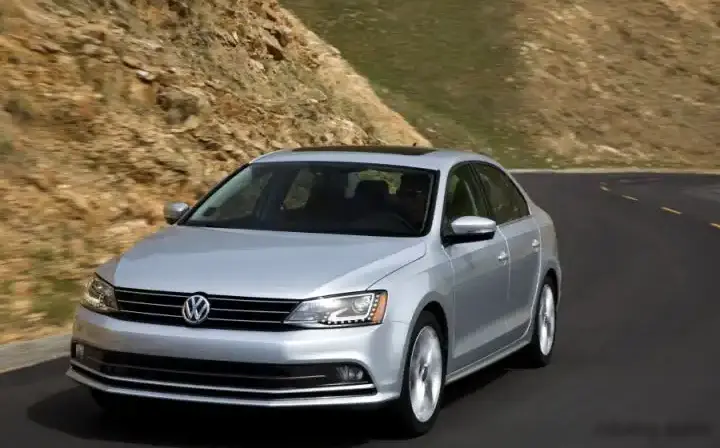
The Volkswagen Jetta VI, specifically the 2.0 TDI variant produced from 2014 to 2018, represents a mid-cycle refresh of the sixth generation Jetta (designated the 1HX0/A3 platform). This model year saw significant updates to the Jetta’s exterior styling, interior appointments, and powertrain options. The 2.0 TDI with 110 horsepower was positioned as a fuel-efficient and practical option within the Jetta lineup, appealing to buyers prioritizing economy and reasonable performance over outright speed. It served as a key offering in European markets, where diesel engines held a substantial market share, and also saw moderate sales in North America as a more economical alternative to the gasoline-powered Jetta trims.
Technical Specifications
| Brand | Volkswagen |
| Model | Jetta |
| Generation | Jetta VI (facelift 2014) |
| Type (Engine) | 2.0 TDI (110 Hp) |
| Start of production | 2014 |
| End of production | 2018 |
| Powertrain Architecture | Internal Combustion engine |
| Body type | Sedan |
| Seats | 5 |
| Doors | 4 |
| Fuel consumption (urban) | 4.9 l/100 km (48 US mpg, 57.6 UK mpg, 20.4 km/l) |
| Fuel consumption (extra urban) | 3.6 l/100 km (65.3 US mpg, 78.5 UK mpg, 27.8 km/l) |
| Fuel consumption (combined) | 4 l/100 km (58.8 US mpg, 70.6 UK mpg, 25 km/l) |
| CO2 emissions | 105 g/km |
| Fuel Type | Diesel |
| Acceleration 0 – 100 km/h | 11 sec |
| Acceleration 0 – 62 mph | 11 sec |
| Acceleration 0 – 60 mph | 10.5 sec |
| Maximum speed | 197 km/h (122.41 mph) |
| Emission standard | Euro 6 |
| Weight-to-power ratio | 12.7 kg/Hp, 78.9 Hp/tonne |
| Weight-to-torque ratio | 5.6 kg/Nm, 179.2 Nm/tonne |
| Power | 110 Hp @ 3200-4000 rpm |
| Power per litre | 55.9 Hp/l |
| Torque | 250 Nm @ 1750-3000 rpm (184.39 lb.-ft. @ 1750-3000 rpm) |
| Engine layout | Front, Transverse |
| Engine Model/Code | CLCA, CUAA |
| Engine displacement | 1968 cm3 (120.09 cu. in.) |
| Number of cylinders | 4 |
| Engine configuration | Inline |
| Number of valves per cylinder | 4 |
| Fuel injection system | Diesel Commonrail |
| Engine aspiration | Turbocharger, Intercooler |
| Engine oil capacity | 4.3 l (4.54 US qt | 3.78 UK qt) |
| Kerb Weight | 1395 kg (3075.45 lbs.) |
| Max. weight | 1910 kg (4210.83 lbs.) |
| Max load | 515 kg (1135.38 lbs.) |
| Trunk (boot) space – minimum | 510 l (18.01 cu. ft.) |
| Fuel tank capacity | 55 l (14.53 US gal | 12.1 UK gal) |
| Max. roof load | 75 kg (165.35 lbs.) |
| Permitted trailer load with brakes (12%) | 1500 kg (3306.93 lbs.) |
| Permitted trailer load without brakes | 690 kg (1521.19 lbs.) |
| Permitted towbar download | 80 kg (176.37 lbs.) |
| Length | 4659 mm (183.43 in.) |
| Width | 1778 mm (70 in.) |
| Height | 1482 mm (58.35 in.) |
| Wheelbase | 2651 mm (104.37 in.) |
| Front track | 1535 mm (60.43 in.) |
| Rear (Back) track | 1538 mm (60.55 in.) |
| Minimum turning circle (turning diameter) | 11.1 m (36.42 ft.) |
| Drivetrain Architecture | The Internal combustion engine (ICE) drives the front wheels of the vehicle. |
| Drive wheel | Front wheel drive |
| Number of gears and type of gearbox | 5 gears, manual transmission |
| Front brakes | Ventilated discs |
| Rear brakes | Disc |
| Assisting systems | ABS (Anti-lock braking system) |
| Steering type | Steering rack and pinion |
| Tires size | 205/55 R16 |
| Wheel rims size | 6.5J x 16 |
Powertrain & Engine Architecture
The heart of the Jetta VI 2.0 TDI is the Volkswagen Group’s EA188 series diesel engine, specifically the CLCA or CUAA engine code depending on the market and specific production date. This 1968cc inline-four cylinder engine utilizes a common rail direct injection system, delivering fuel at extremely high pressures for optimized combustion. A turbocharger with an intercooler is employed to boost power output and improve efficiency. The engine features four valves per cylinder and a relatively modest compression ratio for a diesel, contributing to its refinement. The 2.0 TDI engine benefits from a diesel particulate filter (DPF) to reduce emissions, meeting the stringent Euro 6 standards. The 5-speed manual transmission was the standard offering, chosen for its simplicity and contribution to fuel economy.
Driving Characteristics
The 110 horsepower and 250 Nm (184 lb-ft) of torque produced by the 2.0 TDI engine provide adequate, though not exhilarating, performance. Acceleration from 0-60 mph takes around 10.5 seconds, and top speed is approximately 122 mph. The engine’s torque curve is relatively flat, offering good responsiveness in everyday driving situations. The 5-speed manual transmission is well-matched to the engine’s characteristics, providing smooth shifts and allowing the driver to keep the engine in its optimal power band. Compared to the more powerful 2.0 TDI variants (typically producing 140 or 170 hp), this version feels less stressed and offers a more relaxed driving experience. However, it lacks the outright acceleration and passing power of its higher-output siblings.
Equipment & Trim Levels
The Jetta VI 2.0 TDI typically came equipped with a reasonable level of standard features. These included air conditioning, power windows and locks, a basic audio system, and steel wheels with wheel covers. Higher trim levels, such as Trendline or Comfortline, added features like alloy wheels, upgraded audio systems, cruise control, and automatic climate control. Optional extras included a sunroof, leather upholstery, and a navigation system. Interior upholstery was typically cloth, with a functional and durable design. The dashboard layout was straightforward and user-friendly, with clearly labeled controls.
Chassis & Braking
The Jetta VI utilizes a MacPherson strut front suspension and a multi-link rear suspension, providing a comfortable and controlled ride. The suspension was tuned for everyday use, prioritizing comfort over sporty handling. The front brakes are ventilated discs, while the rear brakes are solid discs. Anti-lock braking system (ABS) is standard. The chassis is relatively lightweight, contributing to the car’s fuel efficiency and handling. Stabilizer bars are fitted to both the front and rear axles to reduce body roll during cornering.
Market Reception & Comparison
The Jetta VI 2.0 TDI was generally well-received by automotive critics as a practical and fuel-efficient option. It was praised for its comfortable ride, spacious interior, and good fuel economy. However, some critics noted that the engine lacked the refinement and power of some of its competitors. Compared to the gasoline-powered Jetta models, the 2.0 TDI offered significantly better fuel economy, making it an attractive option for drivers who prioritize cost savings. Compared to the higher-output TDI variants, it was more affordable to purchase and maintain, but offered less performance.
Legacy
The 2.0 TDI engine in the Jetta VI has proven to be relatively reliable, although the diesel particulate filter (DPF) can be prone to clogging if the vehicle is primarily used for short trips. Regular maintenance, including oil changes and DPF regeneration, is essential to ensure long-term reliability. In the used car market, the Jetta VI 2.0 TDI remains a popular choice for buyers seeking a fuel-efficient and practical sedan. Its reputation for reliability and affordability has helped it maintain a strong resale value. However, potential buyers should be aware of the potential for DPF issues and ensure that the vehicle has been properly maintained.