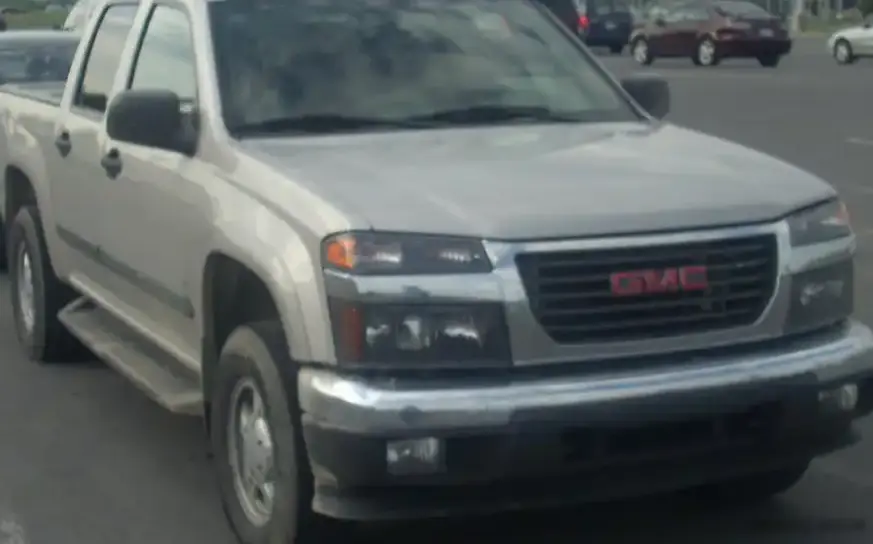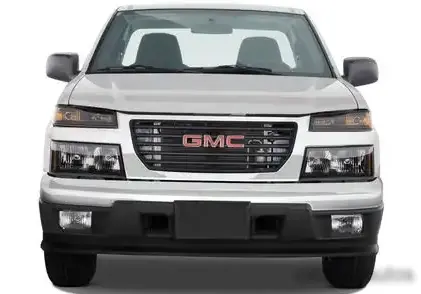
The GMC Canyon I Regular Cab, equipped with the 2.9-liter inline-four engine and a four-speed automatic transmission, was a mainstay of GMC’s mid-size pickup truck offerings from 2007 to 2012. Positioned as the base engine option for the first generation Canyon (2004-2012), this configuration provided a more affordable entry point into the compact pickup market, appealing to buyers prioritizing utility and value over outright performance. It was part of the broader GM mid-size truck family, sharing its platform with the Chevrolet Colorado. This variant primarily served the North American market, offering a practical and relatively fuel-efficient option for light-duty tasks.
Technical Specifications
| Brand | GMC |
| Model | Canyon |
| Generation | Canyon I Regular Cab |
| Type (Engine) | 2.9 (185 Hp) Automatic |
| Start of production | 2007 |
| End of production | 2012 |
| Powertrain Architecture | Internal Combustion engine |
| Body type | Pick-up |
| Seats | 2-3 |
| Doors | 2 |
| Fuel consumption (urban) | 13.8 l/100 km (17 US mpg, 20.5 UK mpg) |
| Fuel consumption (extra urban) | 9.8 l/100 km (24 US mpg, 28.8 UK mpg) |
| Fuel Type | Petrol (Gasoline) |
| Weight-to-power ratio | 8.5 kg/Hp, 118.1 Hp/tonne |
| Weight-to-torque ratio | 6.1 kg/Nm, 164.8 Nm/tonne |
| Power | 185 Hp @ 5600 rpm |
| Power per litre | 63.3 Hp/l |
| Torque | 258 Nm @ 2800 rpm (190.29 lb.-ft. @ 2800 rpm) |
| Maximum engine speed | 6300 rpm |
| Engine layout | Front, Longitudinal |
| Engine Model/Code | LLV |
| Engine displacement | 2921 cm3 (178.25 cu. in.) |
| Number of cylinders | 4 |
| Engine configuration | Inline |
| Cylinder Bore | 95.5 mm (3.76 in.) |
| Piston Stroke | 102 mm (4.02 in.) |
| Compression ratio | 10:1 |
| Number of valves per cylinder | 4 |
| Fuel injection system | Multi-port manifold injection |
| Engine aspiration | Naturally aspirated engine |
| Valvetrain | DOHC, CVVT |
| Engine oil capacity | 4.7 l (4.97 US qt | 4.14 UK qt) |
| Coolant | 9.8 l (10.36 US qt | 8.62 UK qt) |
| Kerb Weight | 1566 kg (3452.44 lbs.) |
| Max. weight | 1882 kg (4149.1 lbs.) |
| Max load | 316 kg (696.66 lbs.) |
| Trunk (boot) space – minimum | 1245 l (43.97 cu. ft.) |
| Fuel tank capacity | 74.2 l (19.6 US gal | 16.32 UK gal) |
| Length | 4886 mm (192.36 in.) |
| Width | 1717 mm (67.6 in.) |
| Height | 1649 mm (64.92 in.) |
| Wheelbase | 2826 mm (111.26 in.) |
| Front track | 1460 mm (57.48 in.) |
| Rear (Back) track | 1460 mm (57.48 in.) |
| Ride height (ground clearance) | 185.7 mm (7.31 in.) |
| Minimum turning circle (turning diameter) | 12 m (39.37 ft.) |
| Drivetrain Architecture | Rear wheel drive |
| Drive wheel | Rear wheel drive |
| Number of gears and type of gearbox | 4 gears, automatic transmission Hydra-Matic |
| Front suspension | Independent coil spring |
| Rear suspension | Leaf spring |
| Front brakes | Ventilated discs |
| Rear brakes | Drum |
| Assisting systems | ABS (Anti-lock braking system) |
| Steering type | Steering rack and pinion |
| Power steering | Hydraulic Steering |
| Tires size | 205/75 R15; 225/70 R15 |
| Wheel rims size | 6J x 15; 6.5J x 15 |
Powertrain & Engine Architecture
The heart of this Canyon variant was the LLV 2.9-liter inline-four cylinder engine. This engine, a member of GM’s Atlas family, featured a cast iron block and aluminum cylinder heads. It utilized a multi-port fuel injection system and a double overhead camshaft (DOHC) valvetrain with variable valve timing (CVVT) to optimize efficiency and power delivery. The 2.9L engine produced 185 horsepower at 5600 rpm and 190 lb-ft of torque at 2800 rpm. The Hydra-Matic 4L60-E four-speed automatic transmission was the sole transmission option for this configuration. This transmission was known for its durability but was beginning to show its age by the late 2000s, lacking the efficiency of newer five- or six-speed automatics.
Driving Characteristics
The 2.9-liter engine and four-speed automatic combination delivered adequate, but not exhilarating, performance. Acceleration was modest, and the transmission’s gear ratios were spaced to prioritize fuel economy over rapid acceleration. Compared to the optional 3.7-liter inline-five or the more powerful 4.3-liter V6, the 2.9L felt noticeably slower, particularly when hauling loads or climbing hills. The automatic transmission, while smooth in normal driving, could feel hesitant during quick downshifts. The rear-wheel-drive configuration provided a traditional truck feel, but limited traction in slippery conditions. The overall driving experience was geared towards practicality and everyday usability rather than sporty performance.
Equipment & Trim Levels
The 2.9-liter engine was typically found in the base “Regular Cab” trim level of the Canyon. Standard features included air conditioning, a basic audio system, and vinyl upholstery. Power windows and locks were often optional extras. The interior was functional and durable, but lacked the refinement of higher trim levels. Optional equipment could include upgraded audio systems, cruise control, and alloy wheels. The Regular Cab configuration offered a bench seat capable of seating up to three passengers, though it was often used as a two-seater for increased work space.
Chassis & Braking
The Canyon I Regular Cab utilized a body-on-frame construction, providing a robust and durable platform. The front suspension consisted of independent coil springs, while the rear suspension employed leaf springs, a traditional setup for pickup trucks. Braking duties were handled by ventilated discs at the front and drum brakes at the rear. ABS (Anti-lock Braking System) was standard. The rear leaf spring suspension was tuned for load-carrying capability, resulting in a somewhat firm ride when unladen. Stabilizer bars were typically smaller in diameter on the base models compared to higher trim levels.
Market Reception & Comparison
The 2.9-liter Canyon was generally viewed as a sensible and affordable option for buyers needing a basic, no-frills pickup truck. Critics noted its adequate fuel economy (around 17 mpg city and 24 mpg highway) but also pointed out its lack of power compared to the available V6 engines. Compared to the 3.7L five-cylinder, the 2.9L offered slightly better fuel economy but significantly less power. The 4.3L V6 provided a substantial performance upgrade but came at a higher price point. The 2.9L appealed to buyers who prioritized cost savings and fuel efficiency over performance.
Legacy
The 2.9-liter engine, while not known for being particularly exciting, proved to be relatively reliable. Common issues included oil leaks and occasional sensor failures. The Hydra-Matic 4L60-E transmission, if properly maintained, could also provide years of service. Today, these Canyons are often found as work trucks or affordable transportation. Their simplicity and relatively low maintenance costs make them appealing to budget-conscious buyers. While not a collector’s item, the 2.9-liter Canyon represents a practical and durable entry point into the world of mid-size pickup trucks.