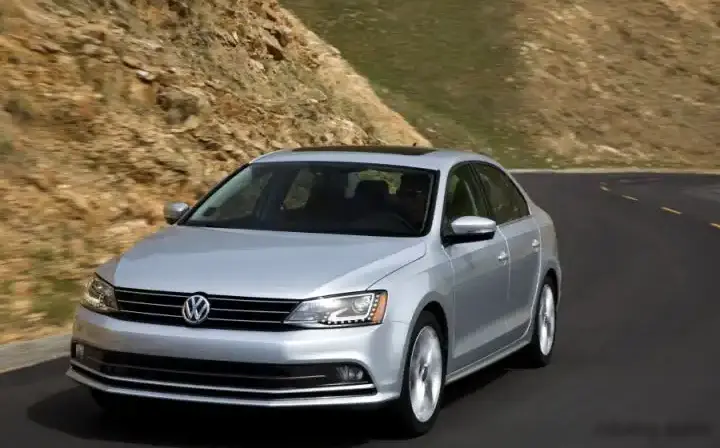
The Volkswagen Jetta VI, specifically the facelifted model produced from 2014 to 2018, represented a significant evolution of Volkswagen’s popular compact sedan. Within this generation, the 2.0 TDI variant, producing 150 horsepower, occupied a middle ground in the lineup, offering a balance between fuel efficiency and performance. This model was primarily aimed at the European market, where diesel engines held a substantial share of the automotive landscape, but was also available in other regions. The Jetta VI, built on the A5 (and later A6) platform, aimed to provide a more mature and refined experience compared to its predecessor, the Jetta V.
Technical Specifications
| Brand | Volkswagen |
| Model | Jetta |
| Generation | Jetta VI (facelift 2014) |
| Type (Engine) | 2.0 TDI (150 Hp) |
| Start of production | 2014 |
| End of production | 2018 |
| Powertrain Architecture | Internal Combustion engine |
| Body type | Sedan |
| Seats | 5 |
| Doors | 4 |
| Fuel consumption (urban) | 5 l/100 km (47 US mpg, 56.5 UK mpg, 20 km/l) |
| Fuel consumption (extra urban) | 3.8 l/100 km (61.9 US mpg, 74.3 UK mpg, 26.3 km/l) |
| Fuel consumption (combined) | 4.2 l/100 km (56 US mpg, 67.3 UK mpg, 23.8 km/l) |
| CO2 emissions | 109 g/km |
| Fuel Type | Diesel |
| Acceleration 0 – 100 km/h | 8.9 sec |
| Acceleration 0 – 62 mph | 8.9 sec |
| Acceleration 0 – 60 mph | 8.5 sec |
| Maximum speed | 220 km/h (136.7 mph) |
| Emission standard | Euro 6 |
| Weight-to-power ratio | 9.5 kg/Hp, 105.3 Hp/tonne |
| Weight-to-torque ratio | 4.2 kg/Nm, 238.6 Nm/tonne |
| Power | 150 Hp @ 3500-4000 rpm |
| Torque | 340 Nm @ 1750-3000 rpm (250.77 lb.-ft. @ 1750-3000 rpm) |
| Engine layout | Front, Transverse |
| Engine Model/Code | CUUB |
| Engine displacement | 1968 cm3 (120.09 cu. in.) |
| Number of cylinders | 4 |
| Engine configuration | Inline |
| Number of valves per cylinder | 4 |
| Fuel injection system | Diesel Commonrail |
| Engine aspiration | Turbocharger, Intercooler |
| Engine oil capacity | 4.6 l (4.86 US qt | 4.05 UK qt) |
| Kerb Weight | 1425 kg (3141.59 lbs) |
| Max. weight | 1940 kg (4276.97 lbs) |
| Max load | 515 kg (1135.38 lbs) |
| Trunk (boot) space – minimum | 510 l (18.01 cu. ft.) |
| Fuel tank capacity | 55 l (14.53 US gal | 12.1 UK gal) |
| Length | 4659 mm (183.43 in) |
| Width | 1778 mm (70 in) |
| Height | 1482 mm (58.35 in) |
| Wheelbase | 2651 mm (104.37 in) |
| Front track | 1535 mm (60.43 in) |
| Rear (Back) track | 1538 mm (60.55 in) |
| Minimum turning circle | 11.1 m (36.42 ft) |
| Drivetrain Architecture | Front wheel drive |
| Number of gears | 6 gears, manual transmission |
| Front brakes | Ventilated discs |
| Tires size | 205/55 R16 |
| Wheel rims size | 6.5J x 16 |
Powertrain & Engine Architecture
The heart of the Jetta VI 2.0 TDI was the CUUB engine, a four-cylinder, inline diesel engine displacing 1968cc. This engine utilized a common rail direct injection system, delivering fuel at extremely high pressures for optimized combustion. A turbocharger with an intercooler was employed to boost power output and improve efficiency. The engine featured four valves per cylinder, contributing to its relatively high specific output. The 2.0 TDI engine was known for its robust construction and ability to handle increased power through tuning, although factory specifications remained at 150 hp and 340 Nm (250 lb-ft) of torque. The six-speed manual transmission was the standard offering, providing precise gear changes and a direct connection to the engine.
Driving Characteristics
The 2.0 TDI with a manual transmission offered a practical and engaging driving experience. While not a sports car, the engine provided ample torque throughout the rev range, making everyday driving and overtaking maneuvers effortless. The 0-60 mph time of around 8.5 seconds was respectable for a diesel sedan of this class. The gear ratios were well-matched, allowing the engine to operate efficiently at highway speeds. Compared to the more powerful Jetta TDI variants, this 150 hp version prioritized fuel economy over outright performance. The manual transmission allowed for greater driver control, but some drivers preferred the convenience of an automatic transmission, which was also available, albeit with a slight impact on fuel efficiency and responsiveness.
Equipment & Trim Levels
The Jetta VI 2.0 TDI typically came equipped with a reasonable level of standard features. These included air conditioning, power windows and locks, a basic audio system, and alloy wheels. Higher trim levels, such as the Trendline and Comfortline, added features like a multi-function steering wheel, cruise control, upgraded audio systems, and automatic climate control. Optional extras included a sunroof, leather upholstery, and a navigation system. Interior upholstery was typically cloth, with leather options available on higher trims. The dashboard layout was functional and straightforward, prioritizing usability over flashy design.
Chassis & Braking
The Jetta VI featured a MacPherson strut front suspension and a multi-link rear suspension, providing a comfortable and controlled ride. The suspension was tuned to balance ride comfort with handling stability. The front brakes were ventilated discs, offering good stopping power, while the rear brakes were typically solid discs on higher trims, and drums on base models. Anti-lock Braking System (ABS) was standard, enhancing safety during emergency braking situations. The steering was a rack and pinion system, providing precise and responsive steering feel.
Market Reception & Comparison
The Jetta VI 2.0 TDI was generally well-received by automotive critics. It was praised for its fuel efficiency, comfortable ride, and spacious interior. However, some critics noted that the interior materials were not as premium as those found in some competing models. Compared to the petrol-powered Jetta variants, the 2.0 TDI offered significantly better fuel economy, making it an attractive option for drivers who prioritized efficiency. Compared to other diesel-powered sedans in its class, the Jetta TDI offered a competitive combination of performance, fuel economy, and price.
Legacy
The Jetta VI 2.0 TDI, particularly the CUUB engine variant, has proven to be a relatively reliable powertrain. While diesel engines are inherently more complex than petrol engines, the CUUB engine is known for its durability when properly maintained. Common issues include diesel particulate filter (DPF) clogging and injector problems, but these can often be prevented with regular servicing and the use of high-quality fuel. In the used car market, the Jetta VI 2.0 TDI remains a popular choice for buyers seeking a fuel-efficient and reliable compact sedan. Its reputation for longevity and relatively low running costs continues to make it a desirable option, even as newer models have emerged.