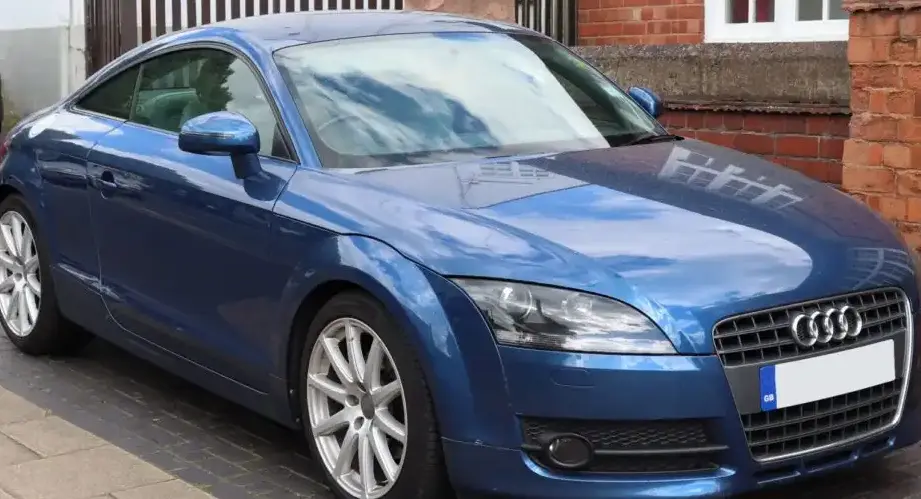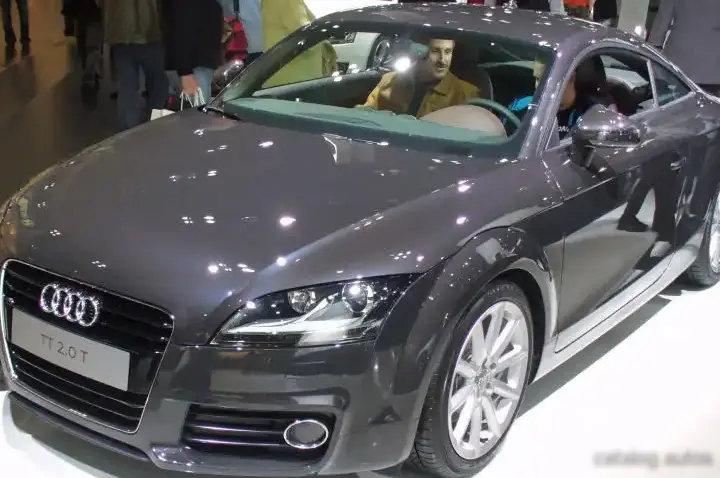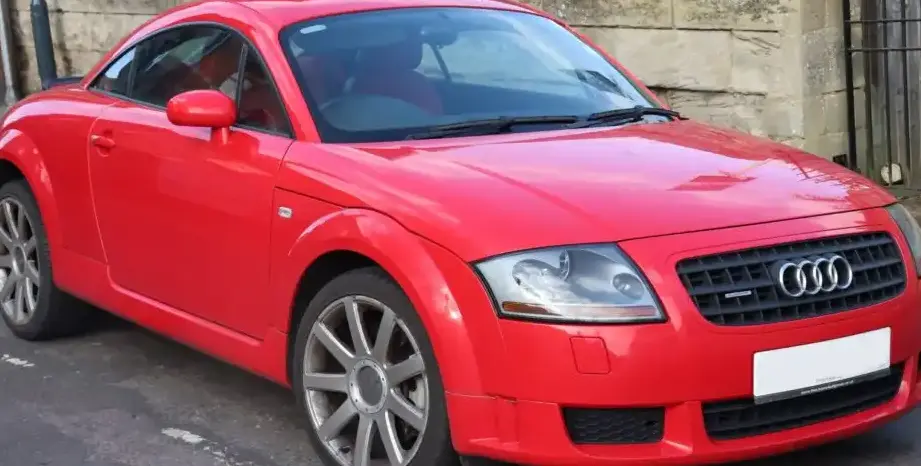
The Audi TT Coupe (8N), particularly the facelifted version introduced in 2000, represented a bold step for the German automaker. Departing from traditional Audi design cues, the 8N TT embraced a distinctly rounded aesthetic, heavily influenced by Bauhaus principles. Production of the facelifted model ran from 2000 through June 2006. The 1.8T quattro variant, producing 225 horsepower, occupied a significant position within the 8N TT lineup, offering a compelling blend of performance, style, and all-weather capability. It served as a step up from the base 1.8T models, bridging the gap to the more potent and expensive 3.2-liter V6 version.
Technical Specifications
| Brand | Audi |
| Model | TT |
| Generation | TT Coupe (8N, facelift 2000) |
| Type (Engine) | 1.8 T (225 Hp) quattro |
| Start of production | 2000 |
| End of production | June, 2006 |
| Powertrain Architecture | Internal Combustion engine |
| Body type | Coupe |
| Seats | 4 |
| Doors | 3 |
| Fuel consumption (urban) | 13.3 l/100 km (17.7 US mpg, 21.2 UK mpg, 7.5 km/l) |
| Fuel consumption (extra urban) | 7.1 l/100 km (33.1 US mpg, 39.8 UK mpg, 14.1 km/l) |
| Fuel consumption (combined) | 9.4 l/100 km (25 US mpg, 30.1 UK mpg, 10.6 km/l) |
| CO2 emissions | 226 g/km |
| Fuel Type | Petrol (Gasoline) |
| Acceleration 0 – 100 km/h | 6.6 sec |
| Acceleration 0 – 62 mph | 6.6 sec |
| Acceleration 0 – 60 mph | 6.3 sec |
| Maximum speed | 243 km/h (150.99 mph) |
| Emission standard | Euro 3 |
| Weight-to-power ratio | 6.5 kg/Hp, 153.6 Hp/tonne |
| Weight-to-torque ratio | 5.2 kg/Nm, 191.1 Nm/tonne |
| Power | 225 Hp @ 5900 rpm |
| Power per litre | 126.3 Hp/l |
| Torque | 280 Nm @ 2200-5500 rpm (206.52 lb.-ft. @ 2200-5500 rpm) |
| Engine layout | Front, Transverse |
| Engine Model/Code | APX, BAM |
| Engine displacement | 1781 cm3 (108.68 cu. in.) |
| Number of cylinders | 4 |
| Engine configuration | Inline |
| Cylinder Bore | 81 mm (3.19 in.) |
| Piston Stroke | 86.4 mm (3.4 in.) |
| Compression ratio | 9:1 |
| Number of valves per cylinder | 5 |
| Fuel injection system | Multi-port manifold injection |
| Engine aspiration | Turbocharger |
| Valvetrain | DOHC |
| Engine oil capacity | 4.5 l (4.76 US qt | 3.96 UK qt) |
| Coolant | 7 l (7.4 US qt | 6.16 UK qt) |
| Kerb Weight | 1465 kg (3229.77 lbs.) |
| Max. weight | 1850 kg (4078.55 lbs.) |
| Max load | 385 kg (848.78 lbs.) |
| Trunk (boot) space – minimum | 220 l (7.77 cu. ft.) |
| Trunk (boot) space – maximum | 490 l (17.3 cu. ft.) |
| Fuel tank capacity | 62 l (16.38 US gal | 13.64 UK gal) |
| Max. roof load | 75 kg (165.35 lbs.) |
| Length | 4041 mm (159.09 in.) |
| Width | 1764 mm (69.45 in.) |
| Height | 1345 mm (52.95 in.) |
| Wheelbase | 2429 mm (95.63 in.) |
| Front track | 1528 mm (60.16 in.) |
| Rear (Back) track | 1505 mm (59.25 in.) |
| Drag coefficient (Cd) | 0.32 |
| Minimum turning circle | 10.5 m (34.45 ft.) |
| Drive wheel | All wheel drive (4×4) |
| Number of gears | 6 gears, manual transmission |
| Front suspension | Independent, type McPherson with coil spring and anti-roll bar |
| Rear suspension | Independent multi-link spring suspension with stabilizer |
| Front brakes | Ventilated discs |
| Rear brakes | Ventilated discs |
| Assisting systems | ABS (Anti-lock braking system) |
| Steering type | Steering rack and pinion |
| Power steering | Hydraulic Steering |
| Tires size | 225/45 R17 |
| Wheel rims size | 7.5J x 17 |
Powertrain & Engine Architecture
The heart of the 1.8T quattro was the 1.8-liter, turbocharged inline-four cylinder engine, specifically utilizing the APX or BAM engine codes depending on the exact production year and market. This engine was a sophisticated design for its time, featuring multi-port fuel injection and a double overhead camshaft (DOHC) valvetrain with five valves per cylinder. The turbocharger, a K04 unit, provided a significant boost in power output compared to naturally aspirated engines. The engine’s electronic engine management system carefully controlled fuel delivery, ignition timing, and boost pressure to optimize performance and efficiency. The 6-speed manual transmission was standard, providing precise gear changes and contributing to the car’s sporty driving experience.
Driving Characteristics
The 225 horsepower and 280 Nm (206.52 lb-ft) of torque delivered by the 1.8T engine, combined with Audi’s quattro all-wheel-drive system, resulted in a surprisingly capable and engaging driving experience. Acceleration from 0 to 60 mph took approximately 6.3 seconds, making it competitive with other sports coupes of the era. The quattro system provided excellent traction, particularly in adverse weather conditions, enhancing stability and confidence. While not as brutally fast as the 3.2-liter V6 TT, the 1.8T offered a more accessible and balanced driving experience, with a broader powerband and less demanding handling characteristics. The 6-speed manual transmission allowed drivers to fully exploit the engine’s power, while the relatively light weight of the car contributed to its agility.
Equipment & Trim Levels
The 1.8T quattro typically came well-equipped, though options allowed for further customization. Standard features included air conditioning, power windows and locks, a driver and passenger airbag, and an upgraded audio system. Interior upholstery was typically cloth, though leather options were available. The dashboard featured a clean, minimalist design, characteristic of Audi’s interior styling at the time. Popular optional extras included a sunroof, heated seats, and upgraded alloy wheels. The TT’s interior was designed to be driver-focused, with logically placed controls and a comfortable seating position.
Chassis & Braking
The 8N TT utilized a McPherson strut front suspension and a multi-link rear suspension, providing a good balance of ride comfort and handling precision. Stabilizer bars were fitted front and rear to reduce body roll during cornering. The braking system consisted of ventilated discs on all four wheels, providing ample stopping power. The ABS (Anti-lock Braking System) was standard, enhancing safety and control during emergency braking situations. The chassis was designed to be lightweight yet rigid, contributing to the car’s overall agility and responsiveness.
Market Reception & Comparison
The Audi TT, including the 1.8T quattro variant, was widely praised by automotive critics for its striking design, engaging driving dynamics, and high-quality interior. The 1.8T quattro offered a compelling alternative to rivals such as the BMW Z3 and Porsche Boxster, providing a more practical and affordable option. Fuel economy was reasonable for a sports coupe, averaging around 25 mpg in combined driving. Reliability was generally good, though some owners reported issues with the turbocharger and the electronic throttle control system. Compared to the 3.2-liter V6 TT, the 1.8T quattro was more fuel-efficient and less expensive to maintain, making it a popular choice for buyers seeking a balance of performance and practicality.
Legacy
The Audi TT (8N) established the TT as a design icon and a successful model for Audi. The 1.8T engine, in its various iterations, proved to be a reliable and durable powerplant, capable of providing years of enjoyable driving. Today, well-maintained 8N TTs, including the 1.8T quattro, are sought after by enthusiasts and collectors. While some maintenance may be required due to the car’s age, the 1.8T engine remains relatively easy to repair and maintain. The 8N TT’s enduring appeal lies in its unique design, engaging driving dynamics, and the overall quality of its construction.