
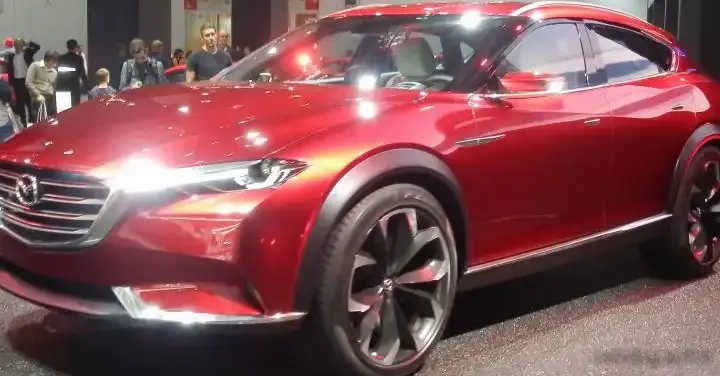
The Mazda CX-4 2.0 SKYACTIV-G (158 hp) was a compact crossover SUV produced by Mazda from 2016 onwards, primarily targeted at the Chinese automotive market. Positioned as a more stylish and sporty alternative to traditional SUVs, the CX-4 offered a coupe-like roofline and a focus on driving dynamics. It was built on Mazda’s SKYACTIV technology platform, emphasizing fuel efficiency and responsive performance. This particular variant, featuring the 2.0-liter SKYACTIV-G engine paired with a six-speed manual transmission, represented a core offering within the CX-4 lineup, balancing affordability with Mazda’s signature driving experience.
Technical Specifications
| Brand | Mazda |
| Model | CX-4 |
| Generation | CX-4 |
| Type (Engine) | 2.0 SKYACTIV-G (158 Hp) |
| Start of production | 2016 |
| Powertrain Architecture | Internal Combustion engine |
| Body type | SUV |
| Seats | 5 |
| Doors | 5 |
| Fuel consumption (combined) | 6.4 l/100 km (36.8 US mpg, 44.1 UK mpg, 15.6 km/l) |
| Fuel Type | Petrol (Gasoline) |
| Maximum speed | 200 km/h (124.27 mph) |
| Emission standard | Euro 6 |
| Weight-to-power ratio | 8.8 kg/Hp, 113.7 Hp/tonne |
| Weight-to-torque ratio | 6.9 kg/Nm, 145.3 Nm/tonne |
| Power | 158 Hp @ 6400 rpm |
| Power per litre | 79.1 Hp/l |
| Torque | 202 Nm @ 4000 rpm (148.99 lb.-ft. @ 4000 rpm) |
| Engine layout | Front, Transverse |
| Engine Model/Code | PE-VPS |
| Engine displacement | 1998 cm3 (121.93 cu. in.) |
| Number of cylinders | 4 |
| Engine configuration | Inline |
| Cylinder Bore | 83.5 mm (3.29 in.) |
| Piston Stroke | 91.2 mm (3.59 in.) |
| Compression ratio | 13:1 |
| Number of valves per cylinder | 4 |
| Fuel injection system | Direct injection |
| Engine aspiration | Naturally aspirated engine |
| Valvetrain | DOHC |
| Engine oil capacity | 4.2 l (4.44 US qt | 3.7 UK qt) |
| Coolant | 6.9 l (7.29 US qt | 6.07 UK qt) |
| Kerb Weight | 1390 kg (3064.43 lbs.) |
| Fuel tank capacity | 51 l (13.47 US gal | 11.22 UK gal) |
| Length | 4633 mm (182.4 in.) |
| Width | 1840 mm (72.44 in.) |
| Height | 1535 mm (60.43 in.) |
| Wheelbase | 2700 mm (106.3 in.) |
| Front track | 1584 mm (62.36 in.) |
| Rear track | 1586 mm (62.44 in.) |
| Ride height (ground clearance) | 197 mm (7.76 in.) |
| Drag coefficient (Cd) | 0.33 |
| Minimum turning circle | 11.2 m (36.75 ft.) |
| Drivetrain Architecture | Front wheel drive |
| Number of gears and type of gearbox | 6 gears, manual transmission |
| Front suspension | Independent, type McPherson with coil spring and anti-roll bar |
| Rear suspension | Independent multi-link suspension |
| Front brakes | Ventilated discs |
| Rear brakes | Disc |
| Assisting systems | ABS (Anti-lock braking system) |
| Steering type | Steering rack and pinion |
| Power steering | Electric Steering |
| Tires size | 225/65 R17 |
| Wheel rims size | 17 |
Powertrain & Engine Architecture
The heart of the CX-4 2.0 SKYACTIV-G was the PE-VPS engine, a 1.998-liter inline-four cylinder gasoline engine. This engine was a key component of Mazda’s SKYACTIV technology, designed to maximize combustion efficiency. It featured direct injection, a high compression ratio of 13:1, and a lightweight design. The engine utilized a dual overhead camshaft (DOHC) valvetrain with four valves per cylinder, optimizing airflow for improved performance. The six-speed manual transmission was chosen to complement the engine’s characteristics, providing drivers with a more engaging driving experience. This transmission featured closely spaced gear ratios, designed to keep the engine within its optimal power band. Mazda’s SKYACTIV philosophy wasn’t just about the engine; it extended to the transmission, aiming for reduced weight and improved efficiency.
Driving Characteristics
The 158 hp and 202 Nm (148.99 lb-ft) of torque delivered by the 2.0-liter engine, coupled with the six-speed manual, provided adequate performance for everyday driving. While not a sports car, the CX-4 offered a responsive feel and decent acceleration. Compared to higher-output versions of the CX-4 (which were not widely available), this variant prioritized fuel economy and affordability. The manual transmission allowed for greater driver control, but the power delivery wasn’t particularly strong at higher RPMs. The gear ratios were tuned for efficiency, meaning frequent shifting was often required to maintain momentum, especially when overtaking or climbing hills. The overall driving experience was characterized by a balance between comfort and engagement, typical of Mazda’s approach. The steering, while electric, offered a reasonable amount of feedback, and the suspension did a good job of absorbing bumps without feeling overly soft.
Equipment & Trim Levels
The CX-4 2.0 SKYACTIV-G typically came standard with features such as air conditioning, power windows and locks, a basic audio system, and ABS. Higher trim levels added features like alloy wheels, a touchscreen infotainment system, a rearview camera, and automatic climate control. Interior upholstery was generally cloth, with leather options available on higher trims. Safety features included multiple airbags and stability control. The specific equipment levels varied depending on the region and optional packages selected by the buyer. Common options included a sunroof, upgraded sound system, and parking sensors. The interior design, while functional, leaned towards a minimalist aesthetic, focusing on ease of use rather than lavish appointments.
Chassis & Braking
The CX-4 utilized a front-wheel-drive layout with an independent McPherson strut suspension in the front and an independent multi-link suspension in the rear. This suspension setup provided a comfortable ride while maintaining reasonable handling characteristics. The front brakes were ventilated discs, while the rear brakes were solid discs. The steering was an electric power steering system, offering light and precise control. The chassis was designed to balance rigidity with weight reduction, contributing to the vehicle’s overall agility. Mazda engineers paid particular attention to noise, vibration, and harshness (NVH) reduction, resulting in a relatively quiet cabin for its class.
Market Reception & Comparison
The Mazda CX-4 was well-received in the Chinese market, where it competed with other compact crossover SUVs. Critics praised its stylish design, comfortable interior, and engaging driving dynamics. The 2.0-liter engine with the manual transmission was seen as a good balance between performance and fuel economy. Compared to other trims, this variant offered a more affordable entry point into the CX-4 lineup, appealing to budget-conscious buyers. Fuel economy was competitive within its class, and reliability was generally considered good, consistent with Mazda’s reputation. Competitors like the Honda XR-V and Nissan Qashqai offered similar levels of practicality, but the CX-4 distinguished itself with its more dynamic driving experience and distinctive styling.
Legacy
The Mazda CX-4, particularly the 2.0 SKYACTIV-G variant, has established a reputation for reliability and reasonable running costs. The PE-VPS engine is known to be durable, and the manual transmission is relatively simple to maintain. In the used car market, these models represent a good value proposition for buyers seeking a stylish and practical crossover SUV. While not as common in North America or Europe, the CX-4 remains a popular choice in China and other markets where it was originally sold, and its SKYACTIV technology continues to influence Mazda’s current vehicle lineup. The engine’s direct injection system, while contributing to efficiency, does require regular maintenance to prevent carbon buildup, a common issue with these types of engines. Overall, the CX-4 2.0 SKYACTIV-G represents a solid and dependable choice for those seeking a well-rounded compact crossover.
