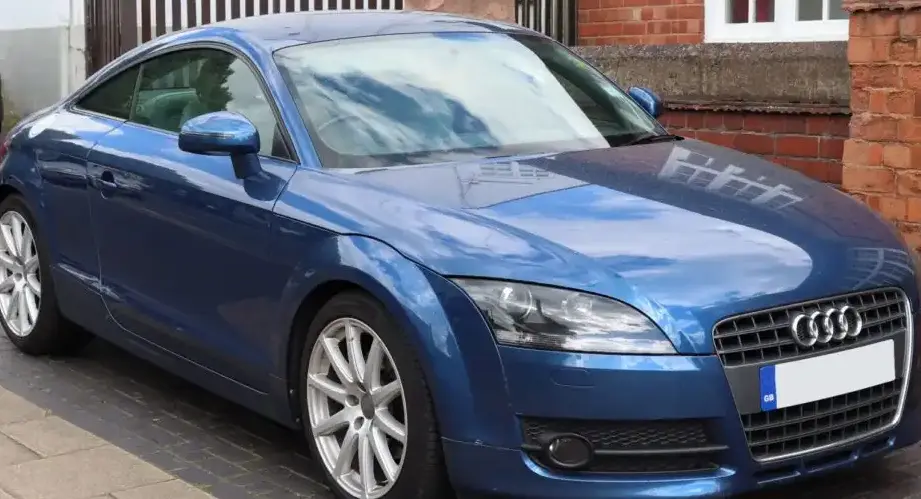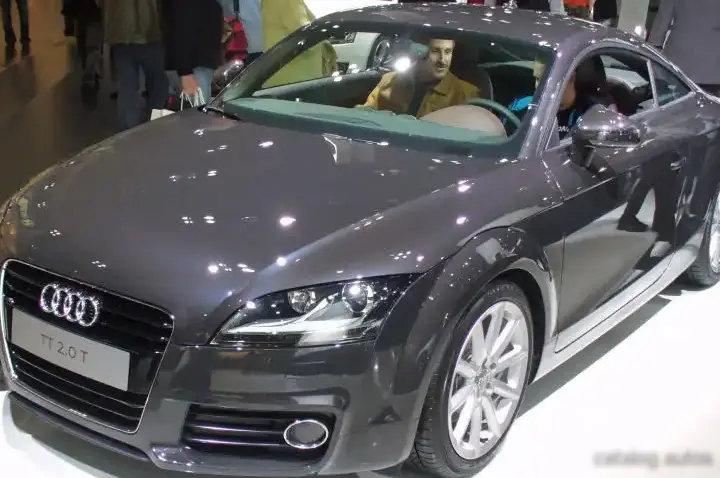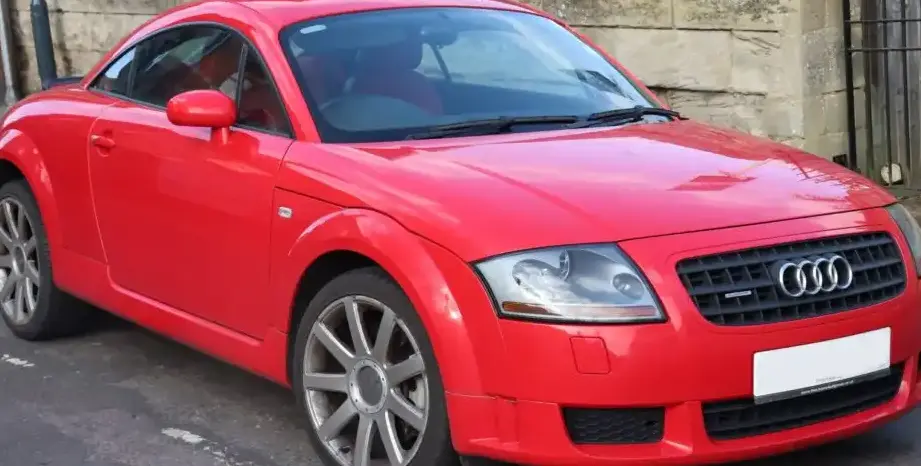
The Audi TT Coupe (8N facelift), specifically the 1.8T sport quattro model produced from 2005 to 2006, represents a high-performance iteration of Audi’s iconic sports car. Positioned as a premium offering within the 8N facelift range, it bridged the gap between the standard 1.8T models and the flagship 3.2L V6 variant. This model year benefitted from the mid-cycle refresh of the 8N platform (introduced in 2000), incorporating revised styling cues and refined interior appointments. The 1.8T sport quattro was aimed at drivers seeking a blend of engaging performance, sophisticated styling, and all-weather capability, making it a popular choice in European markets and increasingly sought after by enthusiasts in North America.
Technical Specifications
| Brand | Audi |
| Model | TT |
| Generation | TT Coupe (8N, facelift 2000) |
| Type (Engine) | 1.8 T sport (240 Hp) quattro |
| Start of production | 2005 |
| End of production | 2006 |
| Powertrain Architecture | Internal Combustion engine |
| Body type | Coupe |
| Seats | 2 |
| Doors | 3 |
| Fuel consumption (urban) | 13.2 l/100 km (17.8 US mpg, 21.4 UK mpg, 7.6 km/l) |
| Fuel consumption (extra urban) | 7 l/100 km (33.6 US mpg, 40.4 UK mpg, 14.3 km/l) |
| Fuel consumption (combined) | 9.3 l/100 km (25.3 US mpg, 30.4 UK mpg, 10.8 km/l) |
| CO2 emissions | 223 g/km |
| Fuel Type | Petrol (Gasoline) |
| Acceleration 0 – 100 km/h | 5.9 sec |
| Acceleration 0 – 62 mph | 5.9 sec |
| Acceleration 0 – 60 mph | 5.6 sec |
| Maximum speed | 250 km/h (155.34 mph) |
| Emission standard | Euro 3 |
| Weight-to-power ratio | 5.8 kg/Hp, 172.7 Hp/tonne |
| Weight-to-torque ratio | 4.3 kg/Nm, 230.2 Nm/tonne |
| Power | 240 Hp @ 5700 rpm |
| Power per litre | 134.8 Hp/l |
| Torque | 320 Nm @ 2300-5000 rpm (236.02 lb.-ft. @ 2300-5000 rpm) |
| Engine layout | Front, Transverse |
| Engine Model/Code | BFV |
| Engine displacement | 1781 cm3 (108.68 cu. in.) |
| Number of cylinders | 4 |
| Engine configuration | Inline |
| Cylinder Bore | 81 mm (3.19 in.) |
| Piston Stroke | 86.4 mm (3.4 in.) |
| Compression ratio | 9:1 |
| Number of valves per cylinder | 5 |
| Fuel injection system | Multi-port manifold injection |
| Engine aspiration | Turbocharger, Intercooler |
| Valvetrain | DOHC |
| Engine oil capacity | 4.6 l (4.86 US qt | 4.05 UK qt) |
| Coolant | 5 l (5.28 US qt | 4.4 UK qt) |
| Kerb Weight | 1390 kg (3064.43 lbs.) |
| Max. weight | 1775 kg (3913.21 lbs.) |
| Max load | 385 kg (848.78 lbs.) |
| Trunk (boot) space – minimum | 210 l (7.42 cu. ft.) |
| Trunk (boot) space – maximum | 540 l (19.07 cu. ft.) |
| Fuel tank capacity | 62 l (16.38 US gal | 13.64 UK gal) |
| Max. roof load | 75 kg (165.35 lbs.) |
| Length | 4041 mm (159.09 in.) |
| Width | 1764 mm (69.45 in.) |
| Height | 1343 mm (52.87 in.) |
| Wheelbase | 2429 mm (95.63 in.) |
| Front track | 1528 mm (60.16 in.) |
| Rear (Back) track | 1505 mm (59.25 in.) |
| Drag coefficient (Cd) | 0.32 |
| Minimum turning circle | 10.6 m (34.78 ft.) |
| Drive wheel | All wheel drive (4×4) |
| Number of gears and type of gearbox | 6 gears, manual transmission |
| Front suspension | Independent, type McPherson with coil spring and anti-roll bar |
| Rear suspension | Independent multi-link spring suspension with stabilizer |
| Front brakes | Ventilated discs |
| Rear brakes | Ventilated discs |
| Assisting systems | ABS (Anti-lock braking system) |
| Steering type | Steering rack and pinion |
| Tires size | 235/40 R18 |
| Wheel rims size | 8.5J x 18 |
Powertrain & Engine Architecture
At the heart of the 1.8T sport quattro lies the BFV engine code, a 1.8-liter turbocharged inline-four cylinder powerplant. This engine builds upon the foundation of the earlier 1.8T engines found in the A4 and Passat, but with significant enhancements to boost output to 240 horsepower. Key features include a larger turbocharger, an upgraded intercooler, and revised engine management software. The engine utilizes Bosch Motronic fuel injection and a double overhead camshaft (DOHC) valvetrain with five valves per cylinder – three intake and two exhaust – optimizing both low-end torque and high-rpm power. The 6-speed manual transmission was standard, providing precise gear changes and enhancing the driving experience. The quattro all-wheel-drive system, a hallmark of Audi, distributes power between the front and rear axles as needed, providing superior traction and stability in various conditions.
Driving Characteristics
The 1.8T sport quattro delivers a noticeably more engaging driving experience than the standard 1.8T models. The increased horsepower and torque, combined with the quattro all-wheel-drive system, result in brisk acceleration – 0 to 60 mph in approximately 5.6 seconds. The turbocharger provides a surge of power in the mid-range, making overtaking maneuvers effortless. The 6-speed manual transmission allows for precise control over the engine’s powerband. While not as raw or visceral as the V6-powered TT, the 1.8T sport quattro offers a well-balanced and refined driving experience, suitable for both daily commuting and spirited weekend drives. The quattro system inspires confidence, particularly on wet or slippery roads.
Equipment & Trim Levels
The 1.8T sport quattro trim came generously equipped. Standard features included sport seats upholstered in a combination of cloth and leather, leather-wrapped steering wheel and shift knob, automatic climate control, and a premium audio system. Exterior features included unique alloy wheels, a sport suspension, and subtle styling enhancements. Optional extras included xenon headlights, navigation system, and upgraded interior trim options. The interior design emphasized a driver-focused layout with aluminum accents and a minimalist aesthetic.
Chassis & Braking
The 8N TT’s chassis was designed to provide a balance between sporty handling and ride comfort. The 1.8T sport quattro featured a slightly stiffer suspension setup compared to the base models, enhancing cornering stability. Front and rear ventilated disc brakes provided ample stopping power. ABS (Anti-lock Braking System) was standard. The McPherson strut front suspension and multi-link rear suspension contributed to a controlled and predictable ride.
Market Reception & Comparison
The 1.8T sport quattro was well-received by automotive critics, who praised its performance, handling, and stylish design. It was often seen as a sweet spot in the TT lineup, offering a significant performance upgrade over the base models without the higher price tag of the V6. Fuel economy was reasonable for a performance car of its era, averaging around 25 mpg combined. Compared to the 1.8T models with front-wheel drive, the quattro version offered superior traction and handling. The V6 TT provided even more power and a more aggressive exhaust note, but at a considerable price premium.
Legacy
The Audi TT (8N) 1.8T sport quattro has become a desirable used car, appreciated for its blend of performance, style, and relative reliability. The 1.8T engine, while turbocharged, is generally considered robust when properly maintained. Common maintenance items include regular oil changes, timing belt replacement (typically every 80,000-100,000 miles), and inspection of the turbocharger and intercooler. The quattro all-wheel-drive system requires periodic servicing to ensure optimal performance. Today, these cars are increasingly sought after by enthusiasts and collectors, representing a significant chapter in Audi’s sports car history.