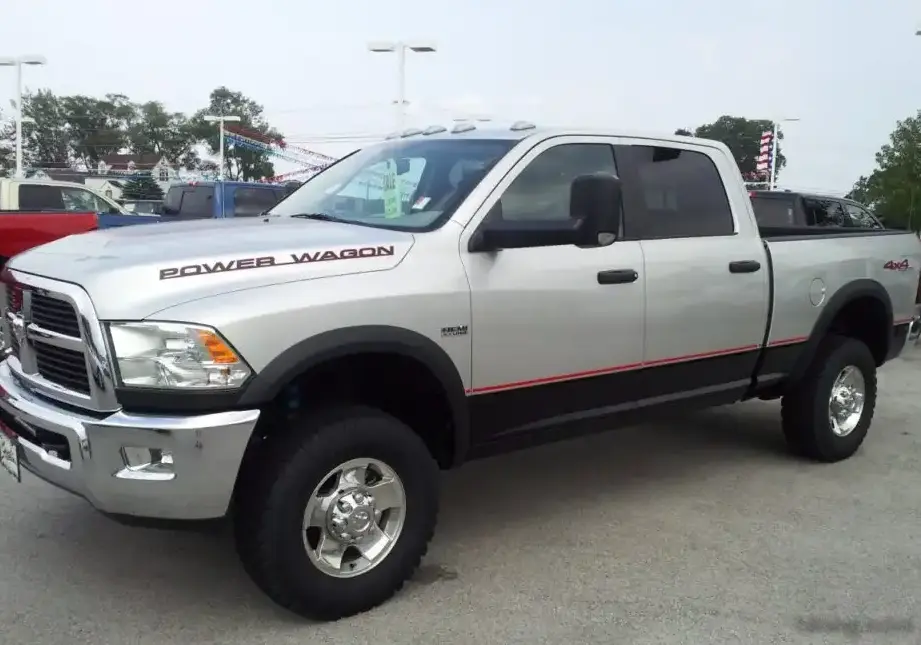
The RAM 1500 Regular Cab Long (DS) equipped with the 3.7-liter V6 engine and automatic transmission was produced for the 2010 and 2011 model years. This configuration represented the base engine option for the fourth generation of the RAM 1500 (DS/DX), which debuted in 2009. Positioned as an entry-level offering, it catered to buyers prioritizing affordability and basic functionality in a full-size pickup truck. It was part of the broader redesign of the RAM lineup, moving away from the previous generation’s more rounded styling towards a bolder, more truck-like aesthetic. This variant played a crucial role in attracting customers seeking a capable work truck without the added cost of more powerful engines or higher trim levels.
Technical Specifications
| Brand | RAM |
| Model | 1500 |
| Generation | 1500 Regular Cab Long (DS) |
| Type (Engine) | 3.7 V6 (215 Hp) Automatic |
| Start of production | 2010 |
| End of production | 2012 |
| Powertrain Architecture | Internal Combustion engine |
| Body type | Pick-up |
| Seats | 2-3 |
| Doors | 2 |
| Fuel consumption (urban) | 14.8 l/100 km (15.9 US mpg) |
| Fuel consumption (extra urban) | 10 l/100 km (23.5 US mpg) |
| Fuel Type | Petrol (Gasoline) |
| Weight-to-power ratio | 9.9 kg/Hp |
| Weight-to-torque ratio | 6.7 kg/Nm |
| Power | 215 Hp @ 5200 rpm |
| Power per litre | 58.1 Hp/l |
| Torque | 319 Nm @ 4000 rpm (235.28 lb.-ft. @ 4000 rpm) |
| Maximum engine speed | 6000 rpm |
| Engine layout | Front, Longitudinal |
| Engine Model/Code | EKG |
| Engine displacement | 3701 cm3 (225.85 cu. in.) |
| Number of cylinders | 6 |
| Engine configuration | V-engine |
| Cylinder Bore | 93 mm (3.66 in.) |
| Piston Stroke | 90.8 mm (3.57 in.) |
| Compression ratio | 9.7:1 |
| Number of valves per cylinder | 2 |
| Fuel injection system | Multi-port manifold injection |
| Engine aspiration | Naturally aspirated engine |
| Valvetrain | SOHC |
| Engine oil capacity | 4.7 l (4.97 US qt | 4.14 UK qt) |
| Coolant | 13 l (13.74 US qt | 11.44 UK qt) |
| Kerb Weight | 2132 kg (4700.26 lbs.) |
| Max. weight | 2994 kg (6600.64 lbs.) |
| Max load | 862 kg (1900.38 lbs.) |
| Trunk (boot) space – maximum | 2115 l (74.69 cu. ft.) |
| Fuel tank capacity | 121 l (31.96 US gal | 26.62 UK gal) |
| Permitted trailer load with brakes (12%) | 1655 kg (3648.65 lbs.) |
| Length | 5866 mm (230.94 in.) |
| Width including mirrors | 2016 mm (79.37 in.) |
| Height | 1889 mm (74.37 in.) |
| Wheelbase | 3569 mm (140.51 in.) |
| Front track | 1728 mm (68.03 in.) |
| Rear (Back) track | 1714 mm (67.48 in.) |
| Drag coefficient (Cd) | 0.36 |
| Minimum turning circle (turning diameter) | 13.7 m (44.95 ft.) |
| Approach angle | 18.8° |
| Departure angle | 24.1° |
| Ramp-over (brakeover) angle | 21.4° |
| Drivetrain Architecture | Rear wheel drive |
| Number of gears and type of gearbox | 4 gears, automatic transmission |
| Front suspension | Double wishbone |
| Rear suspension | Independent multi-link suspension |
| Front brakes | Ventilated discs |
| Rear brakes | Disc |
| Assisting systems | ABS (Anti-lock braking system) |
| Tires size | 265/70 R17 |
| Wheel rims size | 7.0J x 17 |
Powertrain & Engine Architecture
The heart of this RAM 1500 variant is the 3.7-liter EKG V6 engine. This engine, a member of Chrysler’s Phoenix engine family, utilizes a 60-degree V-configuration. It features a cast iron block with aluminum cylinder heads, and a single overhead camshaft (SOHC) design operating two valves per cylinder. Fuel delivery is managed by a multi-point fuel injection system. The engine produces 215 horsepower at 5,200 rpm and 235 lb-ft of torque at 4,000 rpm. The engine’s relatively simple design prioritized reliability and affordability over outright performance. The engine is mated to a four-speed automatic transmission, a common choice for base model trucks at the time. This transmission was selected for its durability and cost-effectiveness, though it lacked the sophistication of newer transmissions with more gears.
Driving Characteristics
The 3.7L V6 and four-speed automatic combination delivered adequate, but not exhilarating, performance. Acceleration was modest, and the truck felt noticeably slower when fully loaded or towing. The four-speed automatic, while reliable, lacked the close gear ratios of more modern transmissions, resulting in a less refined driving experience. The gear ratios were optimized for fuel economy and towing capacity rather than quick acceleration. Compared to the optional 4.7L V8 or the 5.7L HEMI V8, the 3.7L felt underpowered, especially when climbing hills or merging onto highways. However, for basic commuting and light-duty tasks, the 3.7L proved sufficient for many buyers.
Equipment & Trim Levels
The RAM 1500 Regular Cab Long (DS) with the 3.7L V6 typically came with a basic set of standard features. These included air conditioning, a basic audio system (often with an AM/FM radio and CD player), vinyl upholstery, and manual windows and locks. The interior was functional and durable, designed for work rather than luxury. Optional extras included power windows and locks, upgraded audio systems, and a basic cruise control system. The DS trim level was the base model, meaning it lacked many of the convenience and comfort features found in higher trim levels like the STX or Laramie.
Chassis & Braking
The chassis of the 2010-2012 RAM 1500 featured a fully boxed frame, providing a solid foundation for the truck. The front suspension utilized a double wishbone design, while the rear suspension employed an independent multi-link setup. This suspension configuration aimed to balance ride comfort with load-carrying capability. Braking duties were handled by ventilated discs at the front and solid discs at the rear. Anti-lock brakes (ABS) were standard equipment. The braking system was adequate for the truck’s weight and intended use, but it lacked the stopping power of more advanced braking systems found on higher trim levels.
Market Reception & Comparison
The 3.7L V6-equipped RAM 1500 was generally viewed as a practical and affordable option for buyers who didn’t require the power of a V8 engine. Critics noted its adequate fuel economy (around 16 mpg combined) compared to the V8 models, but also pointed out its lack of performance. Compared to the 4.7L V8, the 3.7L offered lower initial cost and slightly better fuel economy, but at the expense of towing capacity and overall power. The 3.7L was often favored by fleet buyers and individuals who primarily used their trucks for commuting and light-duty tasks. Reliability was generally good, with the 3.7L engine proving to be a durable and dependable powerplant.
Legacy
The 3.7L V6 engine in the RAM 1500, while not a performance icon, established itself as a reliable and economical option for full-size truck buyers. While it was discontinued after the 2012 model year, replaced by the more powerful Pentastar V6, the 3.7L continues to be found in the used truck market. These trucks represent a relatively affordable entry point into full-size truck ownership. The powertrain is known for its durability, and with proper maintenance, can provide many years of service. However, potential buyers should be aware of the limitations of the four-speed automatic transmission and the engine’s modest power output.