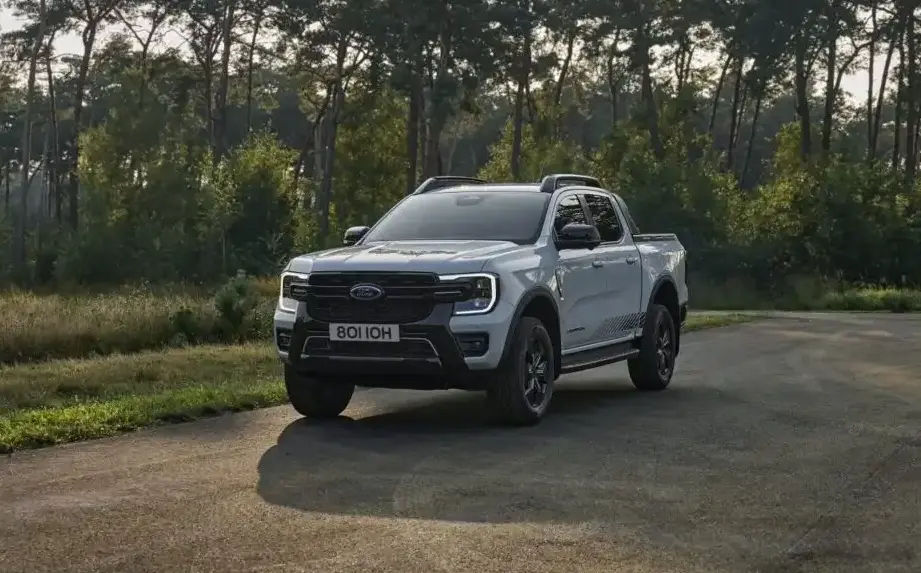
The Ford Ranger IV Double Cab 2.3 EcoBoost Plug-in Hybrid e-4WD Automatic represents a significant step in the evolution of the globally popular Ford Ranger mid-size pickup truck. Introduced in March 2025, this variant combines a turbocharged gasoline engine with an electric motor and battery pack, offering a blend of performance, efficiency, and capability. It’s positioned as a premium offering within the Ranger IV lineup, targeting buyers seeking a more environmentally conscious and technologically advanced pickup experience. The Ranger IV generation, built on an updated chassis, aims to deliver improved refinement and a wider range of features compared to its predecessor. This particular powertrain option is primarily aimed at the European and Australian markets, where demand for plug-in hybrid vehicles is growing, though it is expected to be available in limited quantities in North America.
Technical Specifications
| Brand | Ford |
| Model | Ranger |
| Generation | Ranger IV Double Cab |
| Type (Engine) | 2.3 EcoBoost (281 Hp) Plug-in Hybrid e-4WD Automatic |
| Start of production | March, 2025 |
| Powertrain Architecture | PHEV (Plug-in Hybrid Electric Vehicle) |
| Body type | Pick-up |
| Seats | 5 |
| Doors | 4 |
| Combined fuel consumption (WLTP) | 3.1-3.2 l/100 km (75.9 – 73.5 US mpg, 91.1 – 88.3 UK mpg, 32.3 – 31.3 km/l) |
| CO2 emissions (WLTP) | 70-72 g/km |
| Fuel Type | Petrol / electricity |
| Weight-to-power ratio | 8.9 kg/Hp, 112.1 Hp/tonne |
| Weight-to-torque ratio | 3.6 kg/Nm, 278 Nm/tonne |
| Gross battery capacity | 11.8 kWh |
| Battery technology | Lithium nickel manganese cobalt oxides (Li-NMC) |
| Battery location | Under the trunk |
| All-electric range (WLTP) | 43 km (26.72 mi) |
| Average Energy consumption (WLTP) | 18.7 kWh/100 km (30.09 kWh/100 mi, 112 MPGe, 5.3 km/kWh, 3.3 mi/kWh) |
| Electric motor power | 102 Hp |
| Electric motor location | Between the combustion engine and the transmission |
| Electric motor type | Synchronous |
| System power | 281 Hp @ 4600 rpm |
| System torque | 697 Nm @ 2500 rpm (514.08 lb.-ft. @ 2500 rpm) |
| Power | 188 Hp @ 4600 rpm |
| Torque | 411 Nm @ 2700 rpm (303.14 lb.-ft. @ 2700 rpm) |
| Engine layout | Front, Longitudinal |
| Engine Model/Code | EcoBoost / C42X |
| Engine displacement | 2261 cm3 (137.97 cu. in.) |
| Number of cylinders | 4 |
| Engine configuration | Inline |
| Cylinder Bore | 87.6 mm (3.45 in.) |
| Piston Stroke | 94 mm (3.7 in.) |
| Compression ratio | 10:1 |
| Number of valves per cylinder | 4 |
| Fuel injection system | Direct injection |
| Engine aspiration | Turbocharger, Intercooler |
| Valvetrain | DOHC, TIVCT |
| Kerb Weight | 2507-2560 kg (5526.99 – 5643.83 lbs.) |
| Max. weight | 3500 kg (7716.18 lbs.) |
| Max load | 940-993 kg (2072.35 – 2189.19 lbs.) |
| Fuel tank capacity | 70 l (18.49 US gal | 15.4 UK gal) |
| Max. roof load | 80 kg (176.37 lbs.) |
| Permitted trailer load with brakes (12%) | 3500 kg (7716.18 lbs.) |
| Length | 5350 mm (210.63 in.) |
| Width | 1924 mm (75.75 in.) |
| Width including mirrors | 2207 mm (86.89 in.) |
| Height | 1871 mm (73.66 in.) |
| Wheelbase | 3270 mm (128.74 in.) |
| Front track | 1630 mm (64.17 in.) |
| Rear (Back) track | 1630 mm (64.17 in.) |
| Front overhang | 865 mm (34.06 in.) |
| Rear overhang | 1215 mm (47.83 in.) |
| Ride height (ground clearance) | 215-226 mm (8.46 – 8.9 in.) |
| Minimum turning circle (turning diameter) | 12.9 m (42.32 ft.) |
| Front brakes | Ventilated discs, 341×34 mm |
| Rear brakes | Ventilated discs, 332×24 mm |
| Number of gears and type of gearbox | 10 gears, automatic transmission |
Powertrain & Engine Architecture
At the heart of the Ranger IV Double Cab 2.3 EcoBoost PHEV lies a 2.3-liter turbocharged inline-four cylinder gasoline engine, designated the EcoBoost C42X. This engine produces 188 horsepower and 303 lb-ft of torque. It utilizes direct fuel injection and a twin-scroll turbocharger to enhance efficiency and responsiveness. The engine also features Ford’s TIVCT (Twin Independent Variable Camshaft Timing) technology, optimizing valve timing for improved performance across the rev range. Integrated with the gasoline engine is a 102 horsepower electric motor, positioned between the engine and the 10-speed automatic transmission. The electric motor draws power from an 11.8 kWh lithium-nickel-manganese-cobalt oxide (Li-NMC) battery pack located under the truck bed, minimizing impact on cargo space. The combined system output reaches 281 horsepower and a substantial 514 lb-ft of torque. The powertrain is designed to operate in various modes, including a full electric mode for short distances, a hybrid mode for optimized efficiency, and a combined mode for maximum performance.
Driving Characteristics
The 2.3 EcoBoost PHEV Ranger offers a unique driving experience compared to its gasoline-only counterparts. The instant torque from the electric motor provides brisk acceleration, particularly from a standstill. The 10-speed automatic transmission is well-tuned to manage the combined power output, offering smooth and timely shifts. In electric-only mode, the Ranger can travel up to 43 kilometers (26.72 miles) on a full charge, making it suitable for short commutes and urban driving. The hybrid mode seamlessly blends power from the engine and motor, resulting in improved fuel economy. While the added weight of the battery pack slightly impacts handling, the Ranger maintains its inherent truck-like stability. Compared to the higher-output gasoline engines, the PHEV variant prioritizes efficiency and refinement over outright performance, making it a compelling option for drivers who value both.
Equipment & Trim Levels
The Ranger IV Double Cab 2.3 EcoBoost PHEV is typically offered in well-equipped trim levels, often positioned as a mid-to-high range option. Standard features generally include a large touchscreen infotainment system with Apple CarPlay and Android Auto compatibility, a digital instrument cluster, automatic climate control, and a suite of advanced driver-assistance systems (ADAS) such as adaptive cruise control, lane-keeping assist, and automatic emergency braking. Interior upholstery typically consists of premium cloth or leather, with options for heated and ventilated front seats. Optional extras may include a premium sound system, a panoramic sunroof, and a 360-degree camera system. The specific trim levels and available options vary depending on the market.
Chassis & Braking
The Ranger IV Double Cab utilizes a robust chassis designed to handle the demands of both on- and off-road driving. The front suspension features a coil spring and double wishbone setup, while the rear suspension employs leaf springs. This configuration provides a balance of ride comfort and load-carrying capacity. Braking duties are handled by ventilated discs on all four wheels, providing ample stopping power. The Ranger IV also incorporates ABS (Anti-lock Braking System) and electronic stability control. The steering system is an electric power-assisted rack and pinion setup, offering precise and responsive steering feel. Tire sizes typically range from 255/65 R17 to 255/65 R18, depending on the trim level.
Market Reception & Comparison
The Ford Ranger IV Double Cab 2.3 EcoBoost PHEV has been generally well-received by automotive critics, who praise its blend of performance, efficiency, and technology. The plug-in hybrid powertrain offers a compelling alternative to traditional gasoline engines, particularly in markets with stringent emissions regulations. Compared to the gasoline-only Ranger variants, the PHEV offers superior fuel economy and a quieter driving experience. However, the higher price tag and added weight are potential drawbacks. Compared to diesel-powered Rangers, the PHEV offers a different driving character, with less low-end torque but quicker acceleration. The PHEV’s long-term reliability remains to be fully assessed, but Ford’s reputation for building durable trucks suggests it will be a dependable option.
Legacy
The Ford Ranger IV Double Cab 2.3 EcoBoost Plug-in Hybrid e-4WD Automatic represents a significant step towards electrification in the mid-size pickup truck segment. Its introduction demonstrates Ford’s commitment to offering a wider range of powertrain options to meet the evolving needs of its customers. While it’s still relatively early in its lifecycle, the Ranger PHEV is poised to become a popular choice for buyers seeking a versatile, efficient, and technologically advanced pickup truck. Its long-term success will depend on its reliability, fuel economy, and overall ownership costs. As the demand for electric and hybrid vehicles continues to grow, the Ranger PHEV is likely to play an increasingly important role in Ford’s lineup.