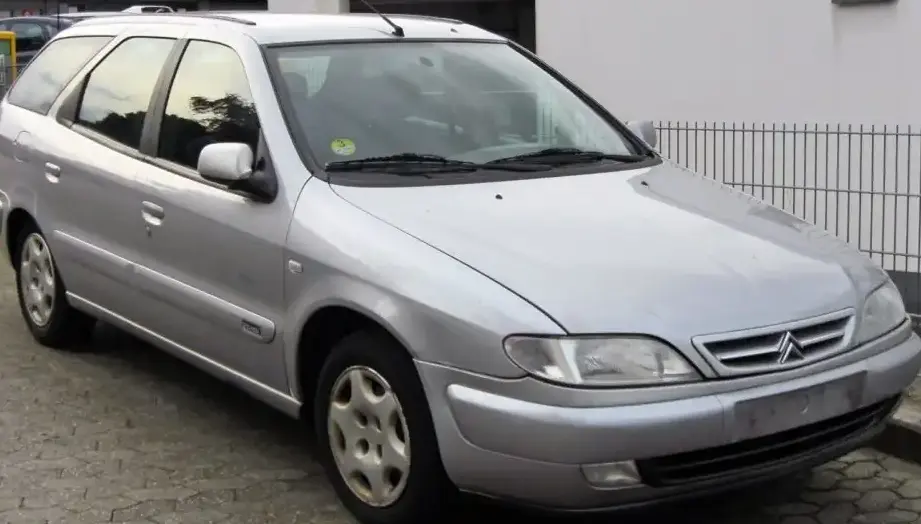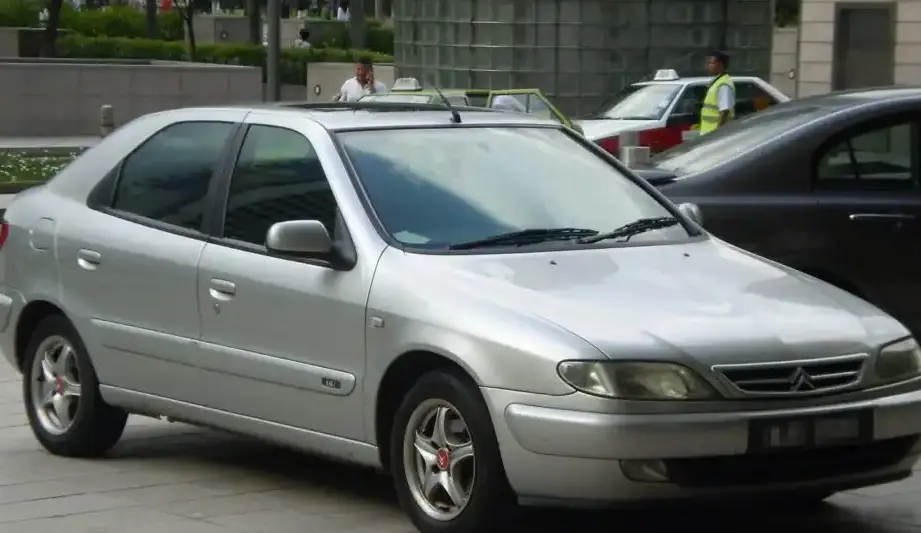
The Citroën Xsara 1.9D, produced between 1999 and 2000, represents a practical and economical offering within the first generation (N1) of the Xsara compact hatchback. Positioned as an entry-level variant, it catered to buyers prioritizing fuel efficiency and affordability over outright performance. This model played a significant role in Citroën’s European lineup, offering a diesel-powered alternative in a segment increasingly focused on value and practicality. The N1 Xsara, launched in 1997, was a crucial model for Citroën, replacing the aging BX and aiming to compete with established rivals like the Ford Focus and Volkswagen Golf.
Technical Specifications
| Brand | Citroen |
| Model | Xsara |
| Generation | Xsara (N1, Phase I) |
| Type (Engine) | 1.9 D (69 Hp) |
| Start of production | 1999 year |
| End of production | 2000 year |
| Powertrain Architecture | Internal Combustion engine |
| Body type | Hatchback |
| Seats | 5 |
| Doors | 5 |
| Fuel consumption (urban) | 8.3 l/100 km (28.3 US mpg, 34 UK mpg, 12 km/l) |
| Fuel consumption (extra urban) | 5 l/100 km (47 US mpg, 56.5 UK mpg, 20 km/l) |
| Fuel consumption (combined) | 6.2 l/100 km (37.9 US mpg, 45.6 UK mpg, 16.1 km/l) |
| CO2 emissions | 164 g/km |
| Fuel Type | Diesel |
| Acceleration 0 – 100 km/h | 17.2 sec |
| Acceleration 0 – 62 mph | 17.2 sec |
| Acceleration 0 – 60 mph | 16.3 sec |
| Maximum speed | 162 km/h (100.66 mph) |
| Emission standard | Euro 2 |
| Weight-to-power ratio | 16.1 kg/Hp, 62.1 Hp/tonne |
| Weight-to-torque ratio | 8.9 kg/Nm, 112.4 Nm/tonne |
| Power | 69 Hp @ 4600 rpm |
| Power per litre | 36.9 Hp/l |
| Torque | 125 Nm @ 2500 rpm (92.2 lb.-ft. @ 2500 rpm) |
| Engine layout | Front, Transverse |
| Engine Model/Code | WJY DW8B |
| Engine displacement | 1868 cm3 (113.99 cu. in.) |
| Number of cylinders | 4 |
| Engine configuration | Inline |
| Cylinder Bore | 82.2 mm (3.24 in.) |
| Piston Stroke | 88 mm (3.46 in.) |
| Compression ratio | 23:1 |
| Number of valves per cylinder | 2 |
| Fuel injection system | Precombustion chamber injection |
| Engine aspiration | Naturally aspirated engine |
| Valvetrain | SOHC |
| Engine oil capacity | 4.5 l (4.76 US qt | 3.96 UK qt) |
| Coolant | 8.5 l (8.98 US qt | 7.48 UK qt) |
| Kerb Weight | 1112 kg (2451.54 lbs.) |
| Max. weight | 1650 kg (3637.63 lbs.) |
| Max load | 538 kg (1186.09 lbs.) |
| Trunk (boot) space – minimum | 408 l (14.41 cu. ft.) |
| Trunk (boot) space – maximum | 1190 l (42.02 cu. ft.) |
| Fuel tank capacity | 54 l (14.27 US gal | 11.88 UK gal) |
| Max. roof load | 75 kg (165.35 lbs.) |
| Permitted trailer load with brakes (12%) | 1100 kg (2425.08 lbs.) |
| Permitted trailer load without brakes | 590 kg (1300.73 lbs.) |
| Permitted towbar download | 70 kg (154.32 lbs.) |
| Length | 4167 mm (164.06 in.) |
| Width | 1698 mm (66.85 in.) |
| Width including mirrors | 1975 mm (77.76 in.) |
| Height | 1405 mm (55.31 in.) |
| Wheelbase | 2540 mm (100 in.) |
| Front track | 1423 mm (56.02 in.) |
| Rear (Back) track | 1430 mm (56.3 in.) |
| Front overhang | 868 mm (34.17 in.) |
| Rear overhang | 759 mm (29.88 in.) |
| Minimum turning circle | 11.5 m (37.73 ft.) |
| Drivetrain Architecture | The Internal combustion engine (ICE) drives the front wheels of the vehicle. |
| Drive wheel | Front wheel drive |
| Number of gears and type of gearbox | 5 gears, manual transmission |
| Front suspension | Independent, type McPherson with coil spring and anti-roll bar |
| Rear suspension | Torsion |
| Front brakes | Ventilated discs |
| Rear brakes | Drum |
| Assisting systems | ABS (Anti-lock braking system) |
| Steering type | Steering rack and pinion |
| Power steering | Hydraulic Steering |
| Tires size | 185/65 R14 |
Powertrain & Engine Architecture
The heart of the Xsara 1.9D is the DW8B engine, a 1.9-liter inline-four diesel engine. This engine, identified by the code WJY, is a naturally aspirated unit utilizing precombustion chamber injection. This system, common in older diesel engines, involves injecting fuel into a precombustion chamber connected to the main cylinder, promoting more complete combustion. The engine features a single overhead camshaft (SOHC) valvetrain operating two valves per cylinder. The DW8 engine family was known for its robustness and relatively simple design, making it a popular choice for budget-conscious buyers. The 1.9D produced 69 horsepower at 4600 rpm and 125 Nm (92.2 lb-ft) of torque at 2500 rpm. The engine’s relatively low compression ratio of 23:1 contributed to its durability. The manual transmission offered was a standard five-speed unit, geared for economy rather than performance.
Driving Characteristics
The Xsara 1.9D, with its 69 horsepower, was not designed for spirited driving. Acceleration was leisurely, taking approximately 17.2 seconds to reach 62 mph. The focus was firmly on fuel economy and low-speed usability. The five-speed manual transmission helped to maximize efficiency, with taller gear ratios prioritizing fuel savings over rapid acceleration. Compared to the more powerful petrol variants of the Xsara, or even the later 2.0HDi diesel, the 1.9D felt significantly slower. However, the engine provided adequate torque for everyday driving, making it suitable for urban commutes and longer journeys at moderate speeds. The steering was light and easy, contributing to a comfortable driving experience.
Equipment & Trim Levels
The 1.9D variant of the Xsara typically came with a basic level of equipment. Standard features generally included power steering, central locking, and an adjustable steering column. Interior upholstery was typically cloth, and the dashboard featured a functional, if somewhat utilitarian, design. Optional extras, such as air conditioning, electric windows, and a radio/cassette player, were available but often added to the vehicle’s cost. The trim level was generally considered the base model, aimed at buyers seeking a no-frills, affordable hatchback.
Chassis & Braking
The Xsara 1.9D utilized a McPherson strut front suspension with a torsion beam rear suspension. This setup provided a reasonable balance between ride comfort and handling. The front brakes were ventilated discs, offering adequate stopping power, while the rear brakes were drums, a cost-saving measure common in this segment. ABS (Anti-lock Braking System) was often included as standard, enhancing safety. The relatively lightweight nature of the vehicle, at around 1112 kg (2451.54 lbs), helped to mitigate the limitations of the braking system.
Market Reception & Comparison
The Citroën Xsara 1.9D was generally well-received as a practical and economical choice. Critics praised its fuel efficiency and low running costs, but noted its lack of performance. Compared to the petrol-powered Xsara variants, the 1.9D offered significantly better fuel economy but lacked the responsiveness and refinement of the gasoline engines. Against competitors like the Ford Focus and Volkswagen Golf, the Xsara 1.9D offered a competitive price point and a reputation for reliability. However, it often lagged behind in terms of interior quality and overall driving experience.
Legacy
The DW8 engine, found in the Xsara 1.9D, is known for its durability and longevity. Many examples of this engine continue to operate reliably today, even with high mileage. The simplicity of the engine design makes it relatively easy to maintain and repair. In the used car market, the Xsara 1.9D remains an affordable option for buyers seeking a dependable and economical hatchback. While not a performance icon, the 1.9D variant represents a practical and enduring example of Citroën’s commitment to providing accessible transportation.