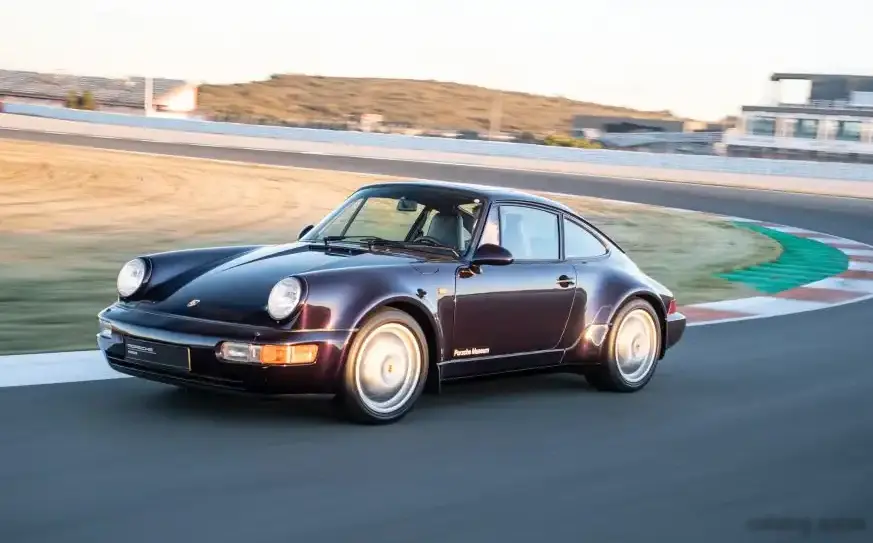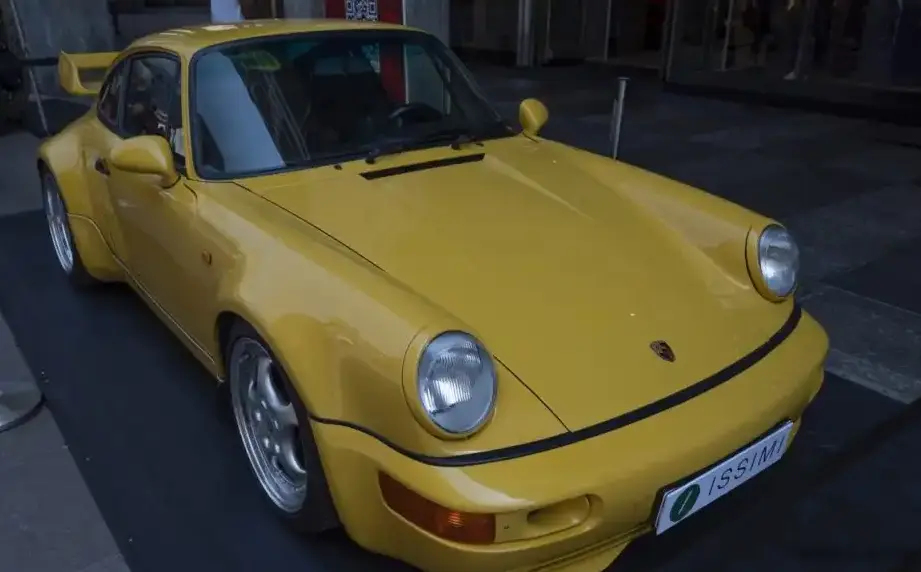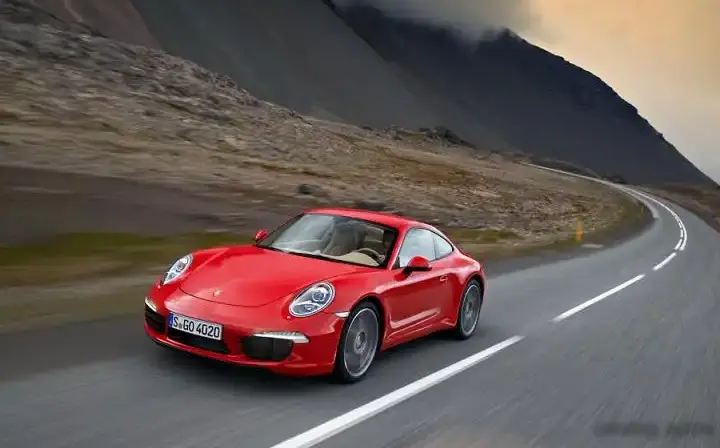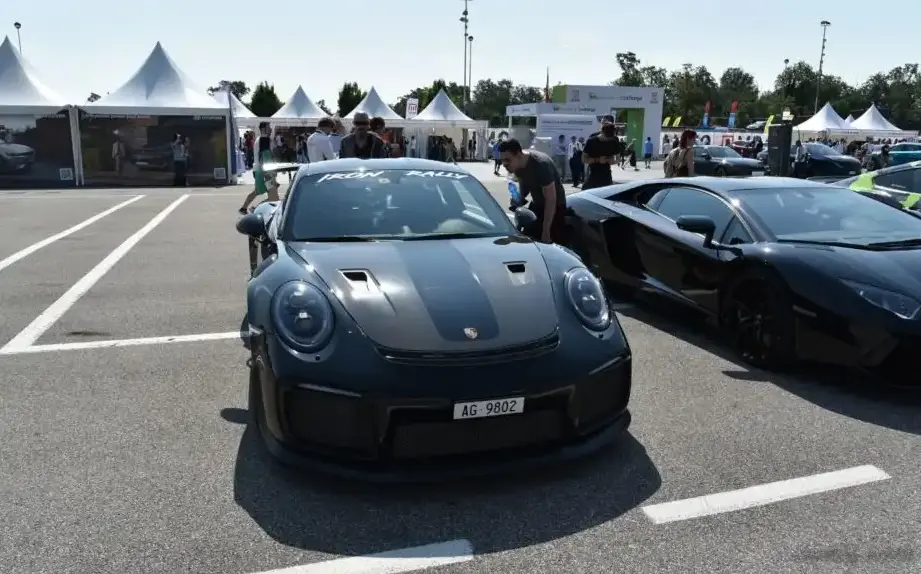
The Porsche 911 (991.2) GT2 RS 3.8, produced from 2017 to 2019, represents the pinnacle of performance within the 991.2 generation of Porsche’s iconic sports car. Positioned as the most track-focused variant of the 911 family at the time of its release, the GT2 RS was engineered to deliver uncompromising performance, blending a highly tuned engine with advanced aerodynamics and a lightweight construction. It built upon the foundation of the 991.2 platform, sharing its basic architecture with other 911 models but diverging significantly in its powertrain, chassis, and overall intent. The GT2 RS was a limited-production model, further enhancing its exclusivity and desirability among Porsche enthusiasts and collectors.
Technical Specifications
| Brand | Porsche |
| Model | 911 |
| Generation | 911 (991 II) |
| Type (Engine) | GT2 RS 3.8 (700 Hp) PDK |
| Start of production | 2017 |
| End of production | 2019 |
| Powertrain Architecture | Internal Combustion engine |
| Body type | Coupe |
| Seats | 2 |
| Doors | 2 |
| Fuel consumption (economy) – urban | 18.1 l/100 km (13 US mpg, 15.6 UK mpg, 5.5 km/l) |
| Fuel consumption (economy) – extra urban | 8.2 l/100 km (28.7 US mpg, 34.4 UK mpg, 12.2 km/l) |
| Fuel consumption (economy) – combined | 11.8 l/100 km (19.9 US mpg, 23.9 UK mpg, 8.5 km/l) |
| CO2 emissions | 269 g/km |
| Fuel Type | Petrol (Gasoline) |
| Acceleration 0 – 100 km/h | 2.8 sec |
| Acceleration 0 – 62 mph | 2.8 sec |
| Acceleration 0 – 60 mph | 2.7 sec |
| Acceleration 0 – 200 km/h | 8.3 sec |
| Maximum speed | 340 km/h (211.27 mph) |
| Emission standard | Euro 6 |
| Weight-to-power ratio | 2.1 kg/Hp, 476.2 Hp/tonne |
| Weight-to-torque ratio | 2 kg/Nm, 510.2 Nm/tonne |
| Power | 700 Hp @ 7000 rpm |
| Power per litre | 184.2 Hp/l |
| Torque | 750 Nm @ 2500-4500 rpm (553.17 lb.-ft. @ 2500-4500 rpm) |
| Maximum engine speed | 7200 rpm |
| Engine layout | Rear, Longitudinal |
| Engine Model/Code | MDH.NA |
| Engine displacement | 3800 cm3 (231.89 cu. in.) |
| Number of cylinders | 6 |
| Engine configuration | Boxer |
| Cylinder Bore | 102 mm (4.02 in.) |
| Piston Stroke | 77.5 mm (3.05 in.) |
| Compression ratio | 9:1 |
| Number of valves per cylinder | 4 |
| Fuel injection system | Direct injection |
| Engine aspiration | BiTurbo, Intercooler |
| Engine oil capacity | 7.95 l (8.4 US qt | 7 UK qt) |
| Kerb Weight | 1470 kg (3240.8 lbs.) |
| Max. weight | 1830 kg (4034.46 lbs.) |
| Max load | 360 kg (793.66 lbs.) |
| Trunk (boot) space – minimum | 115 l (4.06 cu. ft.) |
| Fuel tank capacity | 64 l (16.91 US gal | 14.08 UK gal) |
| Length | 4549 mm (179.09 in.) |
| Width | 1880 mm (74.02 in.) |
| Width including mirrors | 1978 mm (77.87 in.) |
| Height | 1297 mm (51.06 in.) |
| Wheelbase | 2453 mm (96.57 in.) |
| Front track | 1588 mm (62.52 in.) |
| Rear (Back) track | 1557 mm (61.3 in.) |
| Drag coefficient (Cd) | 0.35 |
| Minimum turning circle | 11.1 m (36.42 ft.) |
| Drivetrain Architecture | Rear wheel drive |
| Number of gears and type of gearbox | 7 gears, automatic transmission PDK |
| Front suspension | Independent type McPherson |
| Rear suspension | Independent multi-link suspension |
| Front brakes | Ventilated discs |
| Rear brakes | Disc |
| Assisting systems | ABS (Anti-lock braking system) |
| Steering type | Steering rack and pinion |
| Power steering | Electric Steering |
| Tires size | 265/35 ZR 20; 325/30 ZR 21 |
| Wheel rims size | 9.5J x 20; 12.5J x 21 |
Powertrain & Engine Architecture
At the heart of the 911 GT2 RS lies a 3.8-liter twin-turbocharged flat-six engine, internally designated as the MDH.NA. This engine is derived from the 3.8-liter unit found in the 911 Turbo S, but extensively modified for increased performance. Key upgrades included revised turbochargers, a more efficient intercooler system, and strengthened internal components. The engine utilizes direct fuel injection, ensuring precise fuel delivery and optimal combustion. The engine produces 700 horsepower at 7,000 rpm and 750 Nm (553 lb-ft) of torque between 2,500 and 4,500 rpm. This power is delivered exclusively through a seven-speed Porsche Doppelkupplung (PDK) dual-clutch automatic transmission. The PDK was specifically tuned for faster shift times and a more aggressive driving experience. The engine’s layout is rear-mounted and longitudinal, a defining characteristic of the 911.
Driving Characteristics
The GT2 RS delivers a visceral and exhilarating driving experience. The combination of the powerful twin-turbo engine and the quick-shifting PDK transmission results in breathtaking acceleration. The 0-60 mph sprint is achieved in a mere 2.7 seconds, and the car can reach a top speed of 211 mph. The PDK transmission’s gear ratios are optimized for both rapid acceleration and track performance. While the PDK offers seamless shifts, it prioritizes performance over comfort, with noticeable shift shock during aggressive driving. Compared to the naturally aspirated 911 GT3, the GT2 RS offers significantly more torque and a broader powerband, making it more accessible and rewarding on the road. However, the GT3 provides a more analog and engaging driving experience due to its manual transmission option and naturally aspirated engine.
Equipment & Trim Levels
The GT2 RS was sparsely equipped, focusing on weight reduction and performance. Standard features included a lightweight interior with carbon fiber trim, bucket seats, and a Club Sport package, which included a roll cage, six-point harnesses, and a fire extinguisher (for track use only). Air conditioning and a basic audio system were standard, but many luxury features were omitted to save weight. Optional extras included a front lift system to increase ground clearance, full bucket seats, and various exterior customization options. The interior was primarily focused on functionality, with minimal distractions and a clear emphasis on the driving experience.
Chassis & Braking
The chassis of the GT2 RS was extensively modified to enhance handling and stability. It featured a wider track than other 911 models, along with stiffer springs and dampers. The suspension utilized Porsche Active Suspension Management (PASM), allowing the driver to adjust the damping characteristics. Braking duties were handled by Porsche Ceramic Composite Brakes (PCCB) as standard, providing exceptional stopping power and fade resistance. The PCCB system utilized large, ventilated discs at all four corners. The steering system was a power-assisted rack and pinion setup, providing precise and responsive steering feel.
Market Reception & Comparison
The Porsche 911 (991.2) GT2 RS was widely praised by automotive critics for its exceptional performance and track capabilities. It was consistently lauded as one of the most capable and exciting sports cars on the market. Compared to other 911 variants, such as the Turbo S, the GT2 RS offered a more focused and aggressive driving experience. While the Turbo S provided a more comfortable and refined ride, the GT2 RS prioritized outright performance. Fuel economy was understandably poor, reflecting the car’s high-performance nature. Reliability was generally good, although the complex twin-turbo system required careful maintenance.
Legacy
The 911 (991.2) GT2 RS has cemented its place as a modern classic. Its limited production run and exceptional performance have made it a highly sought-after collectible. The powertrain, while complex, has proven to be relatively reliable when properly maintained. On the used car market, GT2 RS models command a significant premium over other 911 variants. The car’s influence can be seen in subsequent Porsche models, which have adopted many of the GT2 RS’s performance-enhancing technologies and design cues. It remains a benchmark for track-focused sports cars and a testament to Porsche’s engineering prowess.