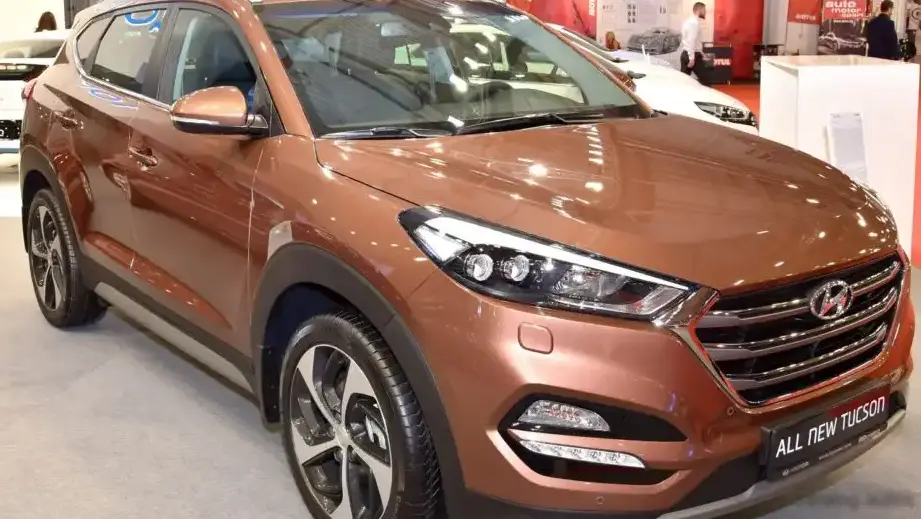
The Hyundai Tucson III 1.7 CRDI (141 hp) DCT represents a significant offering in the compact SUV segment, produced between 2016 and 2018. Positioned as a fuel-efficient and technologically advanced option within the Tucson III range (internally designated the TL series), this variant aimed to appeal to buyers seeking a balance between practicality, economy, and modern features. It was a key model for Hyundai in the European market, where diesel engines and dual-clutch transmissions were highly favored, and also saw moderate sales in other regions. This specific configuration occupied a mid-range position in the Tucson III lineup, slotting in below the more powerful 2.0-liter diesel and gasoline options, and above the base 1.6-liter gasoline engine.
Technical Specifications
| Brand | Hyundai |
| Model | Tucson |
| Generation | Tucson III |
| Type (Engine) | 1.7 CRDI (141 Hp) DCT |
| Start of production | 2016 |
| End of production | 2018 |
| Powertrain Architecture | Internal Combustion engine |
| Body type | SUV |
| Seats | 5 |
| Doors | 5 |
| Fuel consumption (urban) | 5.4 l/100 km (43.6 US mpg, 52.3 UK mpg, 18.5 km/l) |
| Fuel consumption (extra urban) | 4.7 l/100 km (50 US mpg, 60.1 UK mpg, 21.3 km/l) |
| Fuel consumption (combined) | 4.9 l/100 km (48 US mpg, 57.6 UK mpg, 20.4 km/l) |
| CO2 emissions | 129 g/km |
| Fuel Type | Diesel |
| Acceleration 0 – 100 km/h | 11.5 sec |
| Acceleration 0 – 62 mph | 11.5 sec |
| Acceleration 0 – 60 mph | 10.9 sec |
| Maximum speed | 185 km/h (114.95 mph) |
| Emission standard | Euro 6 |
| Weight-to-power ratio | 10.4 kg/Hp, 95.9 Hp/tonne |
| Weight-to-torque ratio | 4.3 kg/Nm, 231.3 Nm/tonne |
| Power | 141 Hp @ 4000 rpm |
| Power per litre | 83.7 Hp/l |
| Torque | 340 Nm @ 1750-2500 rpm (250.77 lb.-ft. @ 1750-2500 rpm) |
| Engine layout | Front, Transverse |
| Engine Model/Code | U II / D4FD |
| Engine displacement | 1685 cm3 (102.83 cu. in.) |
| Number of cylinders | 4 |
| Engine configuration | Inline |
| Cylinder Bore | 77.2 mm (3.04 in.) |
| Piston Stroke | 90 mm (3.54 in.) |
| Compression ratio | 15.7:1 |
| Number of valves per cylinder | 4 |
| Fuel injection system | Diesel Commonrail |
| Engine aspiration | Turbocharger, Intercooler |
| Engine oil capacity | 5.3 l (5.6 US qt | 4.66 UK qt) |
| Coolant | 6.8 l (7.19 US qt | 5.98 UK qt) |
| Kerb Weight | 1470 kg (3240.8 lbs.) |
| Max. weight | 2085 kg (4596.64 lbs.) |
| Max load | 615 kg (1355.84 lbs.) |
| Trunk (boot) space – minimum | 513 l (18.12 cu. ft.) |
| Trunk (boot) space – maximum | 1503 l (53.08 cu. ft.) |
| Fuel tank capacity | 62 l (16.38 US gal | 13.64 UK gal) |
| Max. roof load | 100 kg (220.46 lbs.) |
| Permitted trailer load with brakes (12%) | 1600 kg (3527.4 lbs.) |
| Permitted trailer load without brakes | 750 kg (1653.47 lbs.) |
| Length | 4475 mm (176.18 in.) |
| Width | 1850 mm (72.83 in.) |
| Height | 1655 mm (65.16 in.) |
| Wheelbase | 2670 mm (105.12 in.) |
| Front track | 1604-1608 mm (63.15 – 63.31 in.) |
| Rear (Back) track | 1615-1620 mm (63.58 – 63.78 in.) |
| Ride height (ground clearance) | 172 mm (6.77 in.) |
| Minimum turning circle (turning diameter) | 10.6 m (34.78 ft.) |
| Drivetrain Architecture | Front wheel drive |
| Number of gears and type of gearbox | 7 gears, automatic transmission DCT |
| Front suspension | Independent type McPherson |
| Rear suspension | Independent multi-link suspension |
| Front brakes | Ventilated discs |
| Rear brakes | Disc |
| Assisting systems | ABS (Anti-lock braking system) |
| Steering type | Steering rack and pinion |
| Power steering | Electric Steering |
| Tires size | 215/70 R16; 225/60 R17; 245/45 R19 |
| Wheel rims size | 6.5J x 16; 7.0J x 17; 7.5J x 19 |
INTRODUCTION
The Hyundai Tucson III, launched in 2015, represented a significant step forward for the Korean automaker in terms of design, technology, and overall refinement. The 1.7 CRDI DCT variant, introduced in 2016, was specifically engineered to offer a compelling blend of fuel efficiency and drivability. Utilizing Hyundai’s U II engine family and a seven-speed dual-clutch transmission (DCT), this model aimed to capture a substantial share of the European diesel SUV market. The Tucson III platform (shared with the Kia Sportage) provided a solid foundation for a comfortable and practical family vehicle.
Powertrain & Engine Architecture
At the heart of the Tucson III 1.7 CRDI DCT lies the U II series diesel engine, specifically the D4FD code. This 1685cc inline-four cylinder engine features a turbocharger with an intercooler, enabling it to produce 141 horsepower at 4000 rpm and a robust 340 Nm (250.77 lb-ft) of torque between 1750 and 2500 rpm. The engine employs a second-generation common-rail direct injection system, delivering precise fuel metering for optimized combustion and reduced emissions. The cylinder head incorporates four valves per cylinder, enhancing volumetric efficiency. The seven-speed DCT, sourced from Hyundai’s own development, provides quick and smooth gear changes, contributing to both performance and fuel economy. Unlike traditional automatic transmissions, the DCT utilizes two separate clutches for odd and even gears, allowing for pre-selection of the next gear and minimizing interruption in power delivery.
Driving Characteristics
The 1.7 CRDI DCT Tucson offers a comfortable and refined driving experience. While not overtly sporty, the engine provides adequate power for everyday driving and highway cruising. The DCT transmission contributes to responsive acceleration, particularly in the lower gears. However, compared to the more powerful 2.0-liter diesel variants, the 1.7 CRDI feels less eager when accelerating from higher speeds or when fully loaded. The DCT’s gear ratios are tuned for fuel efficiency, meaning that the engine can sometimes feel slightly strained when climbing steep hills. The front-wheel-drive configuration provides predictable handling, and the suspension effectively absorbs bumps and imperfections in the road surface. The steering is light and precise, making it easy to maneuver in urban environments.
Equipment & Trim Levels
The 1.7 CRDI DCT typically came equipped with a generous level of standard features. Base models included air conditioning, a touchscreen infotainment system with Bluetooth connectivity, alloy wheels, and a suite of safety features such as ABS, ESC (Electronic Stability Control), and multiple airbags. Higher trim levels added features like leather upholstery, heated front seats, a panoramic sunroof, a rear-view camera, and advanced driver-assistance systems (ADAS) such as lane departure warning and automatic emergency braking. Interior upholstery was typically cloth on lower trims, with leather options available on higher-spec models. Dashboard configurations were generally consistent across the range, featuring a modern and user-friendly design.
Chassis & Braking
The Tucson III utilizes a McPherson strut front suspension and a multi-link rear suspension, providing a good balance between ride comfort and handling. The front suspension incorporates a stabilizer bar to reduce body roll during cornering. Braking duties are handled by ventilated discs at the front and solid discs at the rear. ABS (Anti-lock Braking System) is standard, ensuring effective braking performance in emergency situations. The chassis is designed to provide a stable and secure driving experience, with a focus on minimizing noise, vibration, and harshness (NVH).
Market Reception & Comparison
The Hyundai Tucson III 1.7 CRDI DCT was generally well-received by automotive critics. It was praised for its fuel efficiency, comfortable ride, and well-equipped interior. However, some reviewers noted that the engine could feel underpowered at times, particularly when compared to larger-displacement diesel engines offered by competitors. Compared to the 2.0-liter diesel Tucson, the 1.7 CRDI offered significantly better fuel economy but sacrificed some performance. Against gasoline-powered rivals, the 1.7 CRDI provided superior torque and fuel efficiency, making it a compelling option for drivers who frequently cover long distances. Reliability reports have been generally positive, with few major issues reported with the engine or transmission.
Legacy
The Hyundai Tucson III 1.7 CRDI DCT has proven to be a reliable and durable vehicle in the used car market. The U II engine, while not without its complexities, has generally demonstrated good longevity when properly maintained. The DCT transmission, while requiring occasional servicing, has also proven to be relatively robust. Today, these Tucsons represent a good value proposition for buyers seeking a practical and fuel-efficient SUV. The combination of a comfortable ride, a well-equipped interior, and a reasonable price point continues to make this variant a popular choice among used car shoppers.