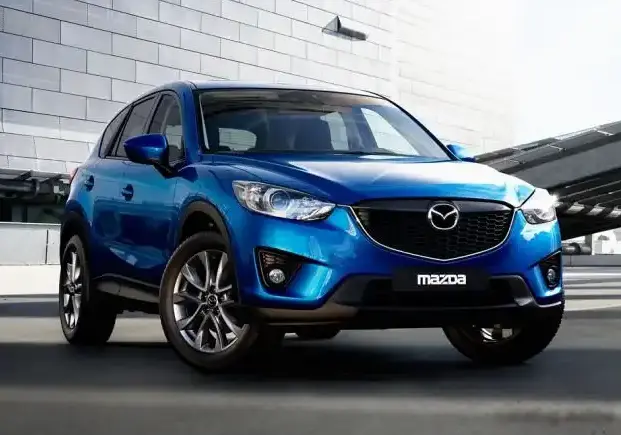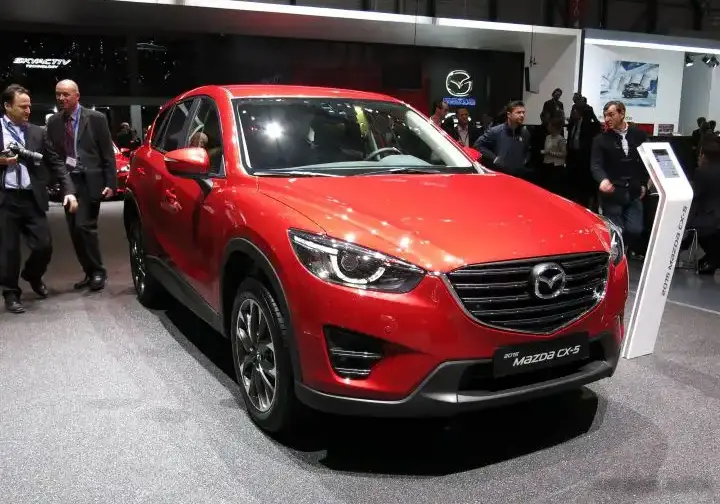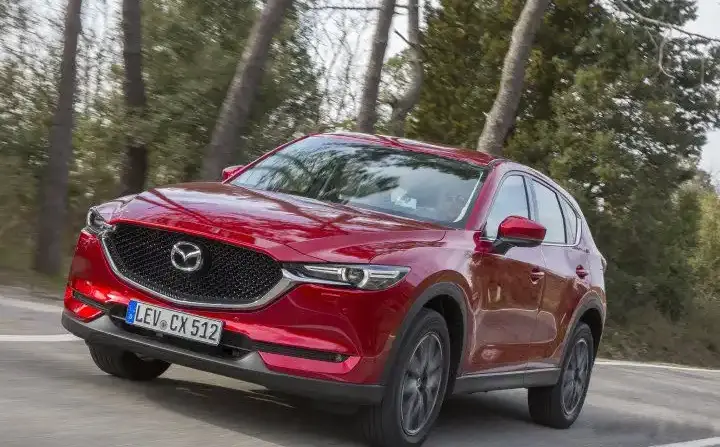
The Mazda CX-5 II 2.2 SKYACTIV-D (184 Hp) AWD represents a significant iteration of Mazda’s popular compact SUV, produced from 2018 to September 2021. Positioned as a mid-to-upper trim level within the second-generation CX-5 (KF series) lineup, this variant combined a potent diesel engine with Mazda’s sophisticated all-wheel-drive system. It was primarily marketed in Europe and other regions where diesel engines remained popular, offering a blend of fuel efficiency, performance, and practicality. This model aimed to appeal to buyers seeking a refined driving experience and the capability of all-wheel drive without sacrificing economy.
Technical Specifications
| Brand | Mazda |
| Model | CX-5 |
| Generation | CX-5 II |
| Type (Engine) | 2.2 SKYACTIV-D (184 Hp) AWD |
| Start of production | 2018 |
| End of production | September, 2021 |
| Powertrain Architecture | Internal Combustion engine |
| Body type | SUV |
| Seats | 5 |
| Doors | 5 |
| Fuel consumption (urban) | 5.8 l/100 km (40.6 US mpg, 48.7 UK mpg, 17.2 km/l) |
| Fuel consumption (extra urban) | 4.8 l/100 km (49 US mpg, 58.9 UK mpg, 20.8 km/l) |
| Fuel consumption (combined) | 5.2 l/100 km (45.2 US mpg, 54.3 UK mpg, 19.2 km/l) |
| CO2 emissions | 137 g/km |
| Fuel Type | Diesel |
| Acceleration 0 – 100 km/h | 9.3 sec |
| Acceleration 0 – 62 mph | 9.3 sec |
| Acceleration 0 – 60 mph | 8.8 sec |
| Maximum speed | 211 km/h (131.11 mph) |
| Emission standard | Euro 6 d |
| Weight-to-power ratio | 9 kg/Hp, 110.5 Hp/tonne |
| Weight-to-torque ratio | 3.7 kg/Nm, 267.3 Nm/tonne |
| Power | 184 Hp @ 4000 rpm |
| Power per litre | 84 Hp/l |
| Torque | 445 Nm @ 2000 rpm (328.22 lb.-ft. @ 2000 rpm) |
| Engine layout | Front, Transverse |
| Engine Model/Code | SHY8 |
| Engine displacement | 2191 cm3 (133.7 cu. in.) |
| Number of cylinders | 4 |
| Engine configuration | Inline |
| Cylinder Bore | 86 mm (3.39 in.) |
| Piston Stroke | 94.3 mm (3.71 in.) |
| Compression ratio | 14.4:1 |
| Number of valves per cylinder | 4 |
| Fuel injection system | Diesel Commonrail |
| Engine aspiration | BiTurbo, Intercooler |
| Engine oil capacity | 5.1 l (5.39 US qt | 4.49 UK qt) |
| Coolant | 8.5 l (8.98 US qt | 7.48 UK qt) |
| Kerb Weight | 1665-1735 kg (3670.7 – 3825.02 lbs.) |
| Max. weight | 2220 kg (4894.26 lbs.) |
| Max load | 485-555 kg (1069.24 – 1223.57 lbs.) |
| Trunk (boot) space – minimum | 494 l (17.45 cu. ft.) |
| Trunk (boot) space – maximum | 1608 l (56.79 cu. ft.) |
| Fuel tank capacity | 58 l (15.32 US gal | 12.76 UK gal) |
| Max. roof load | 50 kg (110.23 lbs.) |
| Permitted trailer load with brakes (8%) | 2100 kg (4629.71 lbs.) |
| Permitted trailer load with brakes (12%) | 2000 kg (4409.25 lbs.) |
| Permitted trailer load without brakes | 750 kg (1653.47 lbs.) |
| Permitted towbar download | 84 kg (185.19 lbs.) |
| Length | 4550 mm (179.13 in.) |
| Width | 1840 mm (72.44 in.) |
| Width including mirrors | 2115 mm (83.27 in.) |
| Height | 1680 mm (66.14 in.) |
| Wheelbase | 2700 mm (106.3 in.) |
| Front track | 1595 mm (62.8 in.) |
| Rear (Back) track | 1595 mm (62.8 in.) |
| Ride height (ground clearance) | 185 – 193 mm (7.28 – 7.6 in.) |
| Minimum turning circle (turning diameter) | 11.0 m (36.09 ft.) |
| Drive wheel | All wheel drive (4×4) |
| Number of gears and type of gearbox | 6 gears, manual transmission |
| Front brakes | Ventilated discs |
| Rear brakes | Ventilated discs |
| Assisting systems | ABS (Anti-lock braking system) |
| Steering type | Steering rack and pinion |
| Power steering | Electric Steering |
INTRODUCTION
The Mazda CX-5 II 2.2 SKYACTIV-D AWD, launched in 2018, built upon the success of the first-generation CX-5. It represented Mazda’s continued commitment to refining its SUV offerings, focusing on driving dynamics, fuel efficiency, and premium interior appointments. This variant was a key component of Mazda’s strategy to appeal to a broader customer base in the competitive compact SUV segment, particularly in markets favoring diesel powertrains. The CX-5 II utilized the 1HX0/A3 platform, shared with other Mazda models, providing a solid foundation for its performance and handling characteristics.
Powertrain & Engine Architecture
At the heart of the CX-5 II 2.2 SKYACTIV-D was the SHY8 engine, a 2.2-liter inline-four cylinder diesel engine. This engine was a cornerstone of Mazda’s SKYACTIV technology, designed to maximize efficiency and reduce emissions. The SHY8 featured a high compression ratio of 14.4:1, achieved through advanced combustion control and optimized piston design. It employed a twin-turbocharger setup – a small turbo for quick response at low engine speeds and a larger turbo for increased power at higher RPMs. The engine utilized a common-rail direct injection system, delivering fuel directly into the combustion chamber at extremely high pressure for improved atomization and combustion efficiency. The 6-speed manual transmission was standard, providing precise gear changes and contributing to the vehicle’s engaging driving experience.
Driving Characteristics
The 184 horsepower and 328 lb-ft of torque produced by the 2.2 SKYACTIV-D engine provided ample power for everyday driving and confident highway cruising. While not as overtly sporty as some gasoline-powered rivals, the diesel engine’s strong low-end torque made for effortless acceleration and overtaking. The manual transmission allowed for a greater degree of driver control, although it required more driver involvement than an automatic. Compared to the 2.0-liter gasoline engine options available in the CX-5 II, the 2.2 SKYACTIV-D offered significantly better fuel economy and a more relaxed driving experience, particularly on long journeys. The all-wheel-drive system provided enhanced traction and stability in various weather conditions, making it a capable vehicle for year-round use.
Equipment & Trim Levels
The CX-5 II 2.2 SKYACTIV-D AWD typically came well-equipped, reflecting its mid-to-upper trim level positioning. Standard features often included automatic climate control, a touchscreen infotainment system with navigation, Bluetooth connectivity, and a suite of safety technologies such as lane departure warning, blind-spot monitoring, and automatic emergency braking. Interior upholstery was typically cloth or a combination of cloth and leatherette, with higher trims offering full leather seating. Optional extras included a premium sound system, a sunroof, and adaptive front lighting. The dashboard layout was clean and modern, with a focus on ergonomics and ease of use.
Chassis & Braking
The CX-5 II featured a MacPherson strut front suspension and a multi-link rear suspension, providing a comfortable ride and responsive handling. Stabilizer bars were fitted to both axles to reduce body roll during cornering. Braking duties were handled by ventilated discs on all four wheels, providing ample stopping power. The anti-lock braking system (ABS) and electronic brakeforce distribution (EBD) were standard features, enhancing safety and control. The suspension was tuned to balance comfort and handling, offering a composed ride without sacrificing agility.
Market Reception & Comparison
The Mazda CX-5 II 2.2 SKYACTIV-D AWD was generally well-received by automotive critics. It was praised for its refined driving dynamics, fuel efficiency, and spacious interior. However, some reviewers noted that the diesel engine could be slightly noisy compared to gasoline alternatives. Compared to other trims in the CX-5 II lineup, the 2.2 SKYACTIV-D offered a compelling combination of performance and economy, appealing to drivers who prioritized fuel efficiency and long-distance comfort. Against competitors such as the Nissan Qashqai and Kia Sportage, the CX-5 II stood out for its premium interior and engaging driving experience.
Legacy
The SHY8 engine, while generally reliable, requires regular maintenance, including oil changes and adherence to recommended service intervals. The diesel particulate filter (DPF) can be prone to clogging if the vehicle is primarily used for short trips, necessitating periodic regeneration cycles. In the used car market, the CX-5 II 2.2 SKYACTIV-D AWD remains a popular choice, particularly among buyers seeking a fuel-efficient and well-equipped SUV. Its reputation for reliability and driving enjoyment ensures continued demand, making it a solid long-term investment for those seeking a practical and refined vehicle.