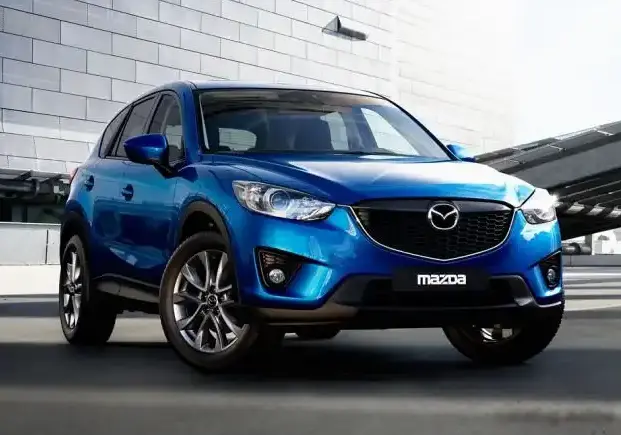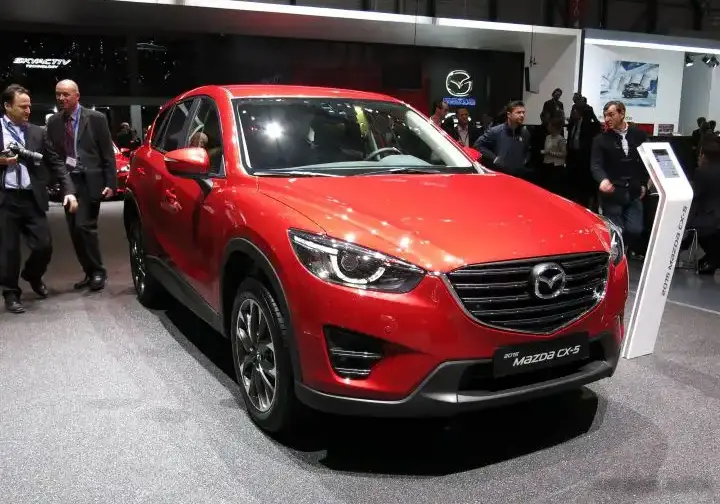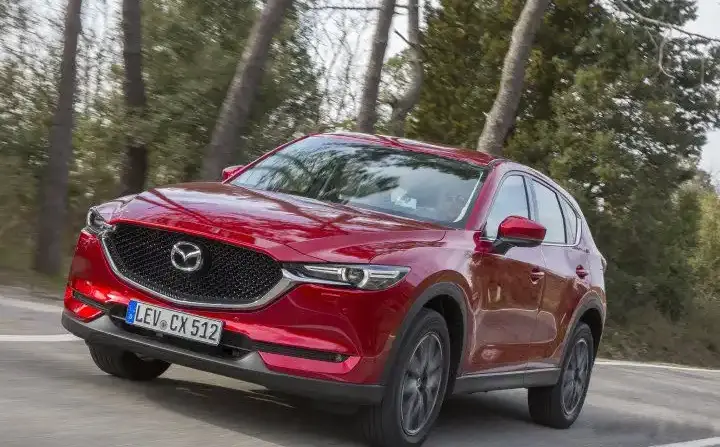
The Mazda CX-5 II 2.2 SKYACTIV-D (184 Hp) AWD Automatic is a compact crossover SUV produced by the Japanese automaker Mazda from 2018 to September 2021. This variant represents a significant offering within the second generation (CX-5 II) of the CX-5, positioned as a premium trim level focused on fuel efficiency and torque delivery. It was primarily marketed in Europe and other regions where diesel engines remained popular, offering a balance between performance and economy within the competitive compact SUV segment. The CX-5 II built upon the success of the first-generation CX-5, refining its design, improving interior quality, and introducing advanced safety technologies.
Technical Specifications
| Brand | Mazda |
| Model | CX-5 |
| Generation | CX-5 II |
| Type (Engine) | 2.2 SKYACTIV-D (184 Hp) AWD Automatic |
| Start of production | 2018 |
| End of production | September, 2021 |
| Powertrain Architecture | Internal Combustion engine |
| Body type | SUV |
| Seats | 5 |
| Doors | 5 |
| Fuel consumption (urban) | 6.3 l/100 km (37.3 US mpg, 44.8 UK mpg, 15.9 km/l) |
| Fuel consumption (extra urban) | 5.1 l/100 km (46.1 US mpg, 55.4 UK mpg, 19.6 km/l) |
| Fuel consumption (combined) | 5.6 l/100 km (42 US mpg, 50.4 UK mpg, 17.9 km/l) |
| CO2 emissions | 147 g/km |
| Fuel Type | Diesel |
| Acceleration 0 – 100 km/h | 9.6 sec |
| Acceleration 0 – 62 mph | 9.6 sec |
| Acceleration 0 – 60 mph | 9.1 sec |
| Maximum speed | 208 km/h (129.25 mph) |
| Emission standard | Euro 6 d |
| Weight-to-power ratio | 9.1 kg/Hp, 109.9 Hp/tonne |
| Weight-to-torque ratio | 3.8 kg/Nm, 265.8 Nm/tonne |
| Power | 184 Hp @ 4000 rpm |
| Power per litre | 84 Hp/l |
| Torque | 445 Nm @ 2000 rpm (328.22 lb.-ft. @ 2000 rpm) |
| Engine layout | Front, Transverse |
| Engine Model/Code | SHY8 |
| Engine displacement | 2191 cm3 (133.7 cu. in.) |
| Number of cylinders | 4 |
| Engine configuration | Inline |
| Cylinder Bore | 86 mm (3.39 in.) |
| Piston Stroke | 94.3 mm (3.71 in.) |
| Compression ratio | 14.4:1 |
| Number of valves per cylinder | 4 |
| Fuel injection system | Diesel Commonrail |
| Engine aspiration | BiTurbo, Intercooler |
| Engine oil capacity | 5.1 l (5.39 US qt | 4.49 UK qt) |
| Coolant | 8.6 l (9.09 US qt | 7.57 UK qt) |
| Kerb Weight | 1674-1745 kg (3690.54 – 3847.07 lbs.) |
| Max. weight | 2235 kg (4927.33 lbs.) |
| Max load | 490-561 kg (1080.27 – 1236.79 lbs.) |
| Trunk (boot) space – minimum | 494 l (17.45 cu. ft.) |
| Trunk (boot) space – maximum | 1608 l (56.79 cu. ft.) |
| Fuel tank capacity | 58 l (15.32 US gal | 12.76 UK gal) |
| Max. roof load | 50 kg (110.23 lbs.) |
| Permitted trailer load with brakes (8%) | 2100 kg (4629.71 lbs.) |
| Permitted trailer load with brakes (12%) | 2100 kg (4629.71 lbs.) |
| Permitted trailer load without brakes | 750 kg (1653.47 lbs.) |
| Permitted towbar download | 84 kg (185.19 lbs.) |
| Length | 4550 mm (179.13 in.) |
| Width | 1840 mm (72.44 in.) |
| Width including mirrors | 2115 mm (83.27 in.) |
| Height | 1680 mm (66.14 in.) |
| Wheelbase | 2700 mm (106.3 in.) |
| Front track | 1595 mm (62.8 in.) |
| Rear (Back) track | 1595 mm (62.8 in.) |
| Ride height (ground clearance) | 185 – 193 mm (7.28 – 7.6 in.) |
| Minimum turning circle (turning diameter) | 11.0 m (36.09 ft.) |
| Drive wheel | All wheel drive (4×4) |
| Number of gears and type of gearbox | 6 gears, automatic transmission |
| Front brakes | Ventilated discs |
| Rear brakes | Ventilated discs |
INTRODUCTION
The Mazda CX-5 II 2.2 SKYACTIV-D 184 AWD Automatic, launched in 2018, represents a key variant within the second generation of Mazda’s popular compact SUV. Built on the 1HX0 platform (shared with other Mazda models), this version was designed to appeal to buyers seeking a refined driving experience, strong fuel economy, and the capability of all-wheel drive. The 2.2-liter SKYACTIV-D diesel engine, paired with a six-speed automatic transmission, offered a compelling alternative to gasoline-powered options, particularly in European markets where diesel remained a dominant fuel choice. This trim level typically sat in the mid-to-upper range of the CX-5 II lineup, offering a balance of features and performance.
Powertrain & Engine Architecture
At the heart of this CX-5 variant lies the SHY8 2.2-liter SKYACTIV-D four-cylinder diesel engine. This engine is characterized by its high compression ratio of 14.4:1, achieved through Mazda’s innovative engine design and materials. The engine utilizes a twin-turbocharger setup (BiTurbo) with an intercooler, which helps to minimize turbo lag and deliver a broad torque curve. Fuel is delivered via a common-rail direct injection system, optimizing combustion efficiency and reducing emissions. The engine also incorporates a particulate filter to further reduce harmful emissions, meeting stringent Euro 6d standards. The six-speed automatic transmission, a staple of Mazda’s offerings, is designed for smooth and responsive shifting. It features a torque converter and electronically controlled gear changes, optimized for both fuel efficiency and driving enjoyment. The transmission’s gear ratios are tuned to maximize the engine’s torque output, providing strong acceleration in everyday driving situations.
Driving Characteristics
The 184 hp and 445 Nm (328 lb-ft) of torque produced by the 2.2 SKYACTIV-D engine, combined with the all-wheel-drive system, provide the CX-5 II with confident and capable performance. While not a sports SUV, the 0-60 mph time of around 9.1 seconds is respectable for its class. The automatic transmission contributes to a relaxed driving experience, particularly in urban environments. Compared to the lower-powered 2.0-liter gasoline versions, the diesel offers significantly more torque, resulting in stronger acceleration and easier overtaking. Compared to higher-output diesel variants (typically around 175 hp), the 184 hp version provides a good balance between performance and fuel economy. The all-wheel-drive system enhances traction and stability, especially in adverse weather conditions, making it a practical choice for drivers in regions with challenging climates.
Equipment & Trim Levels
The 2.2 SKYACTIV-D 184 AWD Automatic trim typically included a generous array of standard features. These often included automatic climate control, a touchscreen infotainment system with navigation, Bluetooth connectivity, and a rearview camera. Higher trim levels within this engine configuration could add features such as leather upholstery, a premium sound system, a sunroof, and advanced driver-assistance systems (ADAS) like adaptive cruise control, lane departure warning, and blind-spot monitoring. Interior upholstery was typically a combination of cloth and synthetic leather, with higher trims offering full leather options. Dashboard configuration was consistent across the range, featuring a clean and modern design with a focus on ergonomics.
Chassis & Braking
The CX-5 II utilizes a MacPherson strut front suspension and a multi-link rear suspension, providing a comfortable and controlled ride. The suspension tuning is geared towards balancing ride comfort with handling precision. Braking duties are handled by ventilated discs on all four wheels, providing ample stopping power. Anti-lock braking system (ABS) and electronic stability control (ESC) are standard features, enhancing safety and control. The weight distribution is well-balanced, contributing to the vehicle’s stable handling characteristics. Stabilizer bars are fitted to both the front and rear axles to reduce body roll during cornering.
Market Reception & Comparison
The Mazda CX-5 II 2.2 SKYACTIV-D 184 AWD Automatic was generally well-received by automotive critics. It was praised for its refined driving experience, fuel efficiency, and comfortable interior. Compared to its gasoline-powered siblings, the diesel variant offered superior fuel economy and torque. However, some critics noted that the diesel engine was slightly noisier than the gasoline engines. Compared to competitors like the Volkswagen Tiguan and Nissan Qashqai, the CX-5 II was often lauded for its more engaging driving dynamics and higher-quality interior. The diesel’s reliability was generally considered good, although diesel engines typically require more frequent maintenance than gasoline engines.
Legacy
The 2.2 SKYACTIV-D engine has proven to be a reliable and durable powertrain when properly maintained. In the used car market, the CX-5 II 2.2 SKYACTIV-D 184 AWD Automatic remains a popular choice for buyers seeking a fuel-efficient and capable compact SUV. However, potential buyers should be aware of the potential maintenance costs associated with diesel engines, such as diesel particulate filter (DPF) maintenance and potential injector issues. Overall, this variant represents a well-rounded and practical option within the CX-5 II lineup, offering a compelling blend of performance, economy, and refinement.