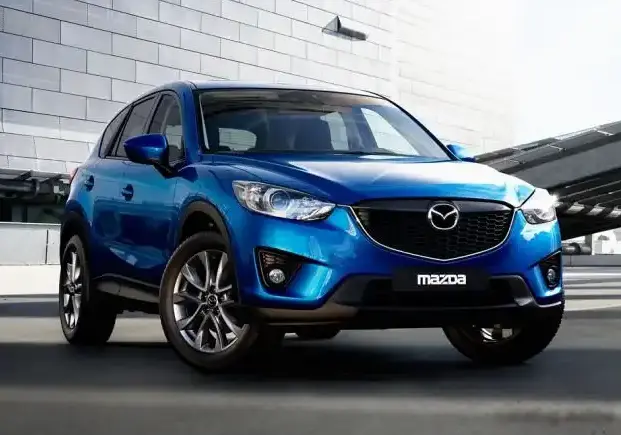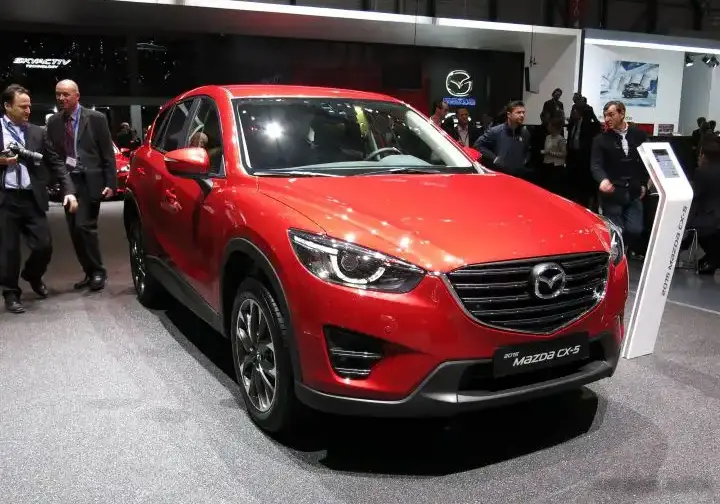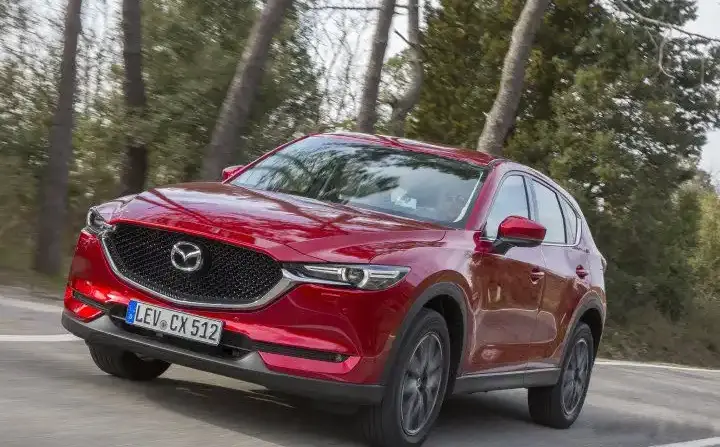
The Mazda CX-5 II 2.0 SKYACTIV-G (165 Hp) was a front-wheel drive compact crossover SUV produced by Mazda between 2017 and 2018. It represented a key variant within the second generation (CX-5 II) of the CX-5 line, positioned as an entry-level offering in many markets. This model aimed to balance affordability with Mazda’s signature driving dynamics and fuel efficiency, appealing to buyers seeking a practical and stylish SUV. It was part of the broader KE series of CX-5 vehicles, built on the Mazda’s SKYACTIV technology platform.
Technical Specifications
| Brand | Mazda |
| Model | CX-5 |
| Generation | CX-5 II |
| Type (Engine) | 2.0 SKYACTIV-G (165 Hp) |
| Start of production | 2017 |
| End of production | 2018 |
| Powertrain Architecture | Internal Combustion engine |
| Body type | SUV |
| Seats | 5 |
| Doors | 5 |
| Fuel consumption (urban) | 7.9 l/100 km (29.8 US mpg, 35.8 UK mpg, 12.7 km/l) |
| Fuel consumption (extra urban) | 5.6 l/100 km (42 US mpg, 50.4 UK mpg, 17.9 km/l) |
| Fuel consumption (combined) | 6.4 l/100 km (36.8 US mpg, 44.1 UK mpg, 15.6 km/l) |
| CO2 emissions | 149 g/km |
| Fuel Type | Petrol (Gasoline) |
| Acceleration 0 – 100 km/h | 10.4 sec |
| Acceleration 0 – 62 mph | 10.4 sec |
| Acceleration 0 – 60 mph | 9.9 sec |
| Maximum speed | 201 km/h (124.9 mph) |
| Emission standard | Euro 6 |
| Weight-to-power ratio | 8.7 kg/Hp, 115 Hp/tonne |
| Weight-to-torque ratio | 6.8 kg/Nm, 146.3 Nm/tonne |
| Power | 165 Hp @ 6000 rpm |
| Power per litre | 82.6 Hp/l |
| Torque | 210 Nm @ 4800 rpm (154.89 lb.-ft. @ 4800 rpm) |
| Engine layout | Front, Transverse |
| Engine Model/Code | PEX3, PEXB, PEXP |
| Engine displacement | 1998 cm3 (121.93 cu. in.) |
| Number of cylinders | 4 |
| Engine configuration | Inline |
| Cylinder Bore | 83.5 mm (3.29 in.) |
| Piston Stroke | 91.2 mm (3.59 in.) |
| Compression ratio | 14:1 |
| Number of valves per cylinder | 4 |
| Fuel injection system | Direct injection |
| Engine aspiration | Naturally aspirated engine |
| Engine oil capacity | 4.2 l (4.44 US qt | 3.7 UK qt) |
| Coolant | 7 l (7.4 US qt | 6.16 UK qt) |
| Kerb Weight | 1435 kg (3163.63 lbs.) |
| Max. weight | 2020 kg (4453.34 lbs.) |
| Max load | 585 kg (1289.7 lbs.) |
| Trunk (boot) space – minimum | 506 l (17.87 cu. ft.) |
| Trunk (boot) space – maximum | 1620 l (57.21 cu. ft.) |
| Fuel tank capacity | 56 l (14.79 US gal | 12.32 UK gal) |
| Max. roof load | 50 kg (110.23 lbs.) |
| Permitted trailer load with brakes (8%) | 1900 kg (4188.78 lbs.) |
| Permitted trailer load with brakes (12%) | 1800 kg (3968.32 lbs.) |
| Permitted trailer load without brakes | 715 kg (1576.31 lbs.) |
| Permitted towbar download | 75 kg (165.35 lbs.) |
| Length | 4550 mm (179.13 in.) |
| Width | 1840 mm (72.44 in.) |
| Width including mirrors | 2115 mm (83.27 in.) |
| Height | 1680 mm (66.14 in.) |
| Wheelbase | 2700 mm (106.3 in.) |
| Front track | 1586 mm (62.44 in.) |
| Rear (Back) track | 1586 mm (62.44 in.) |
| Ride height (ground clearance) | 185-193 mm (7.28 – 7.6 in.) |
| Minimum turning circle (turning diameter) | 11.0 m (36.09 ft.) |
| Drivetrain Architecture | The Internal combustion engine (ICE) drives the front wheels of the vehicle. |
| Drive wheel | Front wheel drive |
| Number of gears and type of gearbox | 6 gears, manual transmission |
| Front brakes | Ventilated discs |
| Rear brakes | Disc |
| Assisting systems | ABS (Anti-lock braking system) |
| Steering type | Steering rack and pinion |
| Power steering | Electric Steering |
| Tires size | 225/65 R17 |
| Wheel rims size | 17 |
INTRODUCTION
The Mazda CX-5 II 2.0 SKYACTIV-G (165 Hp) was introduced as part of the second-generation CX-5 lineup, launched in 2017. Building upon the success of the first-generation CX-5, this variant offered a more refined driving experience and improved fuel economy thanks to Mazda’s SKYACTIV technology. It served as a crucial entry point into the CX-5 range, targeting buyers who prioritized efficiency and value without sacrificing the brand’s renowned handling characteristics. This model was primarily sold in Europe and Asia, with limited availability in North America where larger engine options were more popular.
Powertrain & Engine Architecture
At the heart of the CX-5 II 2.0 SKYACTIV-G was the PE-VPH engine, a 1998cc (2.0-liter) inline-four cylinder gasoline engine. This engine was a key component of Mazda’s SKYACTIV technology suite, designed to maximize combustion efficiency. It featured a high compression ratio of 14:1, achieved through careful engineering and optimized combustion chamber design. The engine utilized direct injection, delivering fuel directly into the cylinders for precise control and improved fuel economy. The valvetrain employed dual overhead camshafts (DOHC) and four valves per cylinder, enhancing breathing and power delivery. The engine codes associated with this variant include PEX3, PEXB, and PEXP, depending on the specific market and production year. The engine was paired with a six-speed automatic transmission, designed to provide smooth and efficient gear changes. This transmission was specifically tuned to complement the engine’s torque curve, prioritizing fuel economy and drivability over outright performance.
Driving Characteristics
The 165 hp and 210 Nm (154.89 lb-ft) of torque produced by the 2.0-liter engine resulted in a driving experience focused on efficiency and comfort rather than outright speed. Acceleration from 0-60 mph took approximately 9.9 seconds, and 0-100 km/h in 10.4 seconds. While not particularly quick, the engine provided adequate power for everyday driving situations. The six-speed automatic transmission was programmed for smooth shifts and optimized fuel economy, sometimes at the expense of responsiveness. Compared to the higher-output 2.5-liter SKYACTIV-G engine or the diesel options available in some markets, this variant felt noticeably less powerful. However, the CX-5’s well-tuned chassis and suspension provided a composed and engaging driving experience, even with the lower-powered engine. The gear ratios were optimized for cruising, making it a comfortable vehicle for long highway journeys.
Equipment & Trim Levels
The 2.0 SKYACTIV-G variant typically served as the base trim level for the CX-5 II in many markets. Standard equipment generally included air conditioning, power windows and locks, a basic infotainment system with a touchscreen display, and a rearview camera. Safety features such as ABS, stability control, and multiple airbags were also standard. Interior upholstery was typically cloth, and the dashboard featured a straightforward design. Optional extras included features like leather upholstery, a sunroof, a premium sound system, and advanced driver-assistance systems (ADAS) such as lane departure warning and blind-spot monitoring. Trim levels varied by region, but generally, this engine was offered in more basic trims focused on value.
Chassis & Braking
The CX-5 II utilized a MacPherson strut front suspension and a multi-link rear suspension, providing a comfortable and controlled ride. The suspension was tuned to balance handling and ride quality, offering a good compromise between sporty dynamics and everyday comfort. Braking duties were handled by ventilated discs at the front and solid discs at the rear. ABS (Anti-lock Braking System) was standard, enhancing braking performance and stability. The chassis was designed to be lightweight yet rigid, contributing to the CX-5’s agile handling characteristics. Stabilizer bars were fitted to both the front and rear axles to reduce body roll during cornering.
Market Reception & Comparison
The Mazda CX-5 II 2.0 SKYACTIV-G was generally well-received by automotive critics, particularly for its fuel efficiency and engaging driving dynamics. However, some reviewers noted that the 165 hp engine felt underpowered, especially when the vehicle was fully loaded. Compared to the 2.5-liter SKYACTIV-G engine, the 2.0-liter variant offered significantly lower fuel consumption but at the cost of performance. The diesel options, where available, provided superior torque and fuel economy but came with a higher price tag. In terms of reliability, the SKYACTIV engines have proven to be generally robust, with few major issues reported. The 2.0-liter engine was considered a good choice for buyers who prioritized fuel economy and value over outright performance.
Legacy
The Mazda CX-5 II 2.0 SKYACTIV-G remains a popular choice in the used car market, particularly for buyers seeking a reliable and fuel-efficient compact SUV. The SKYACTIV powertrain has proven to be durable and relatively maintenance-free. While not the fastest variant of the CX-5, it offers a comfortable and engaging driving experience, making it a practical and enjoyable vehicle for everyday use. Its reputation for reliability and fuel efficiency continues to make it a competitive option in the used car segment.