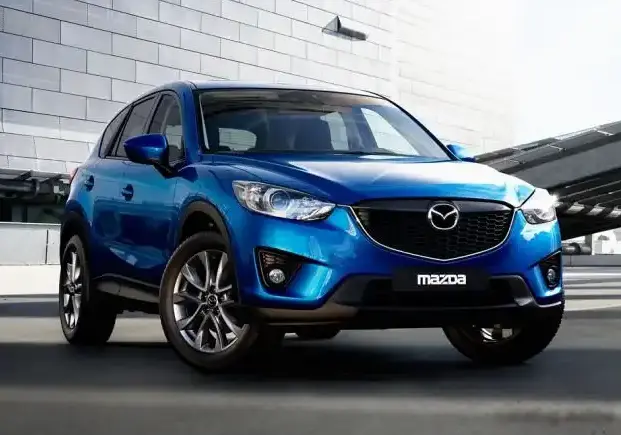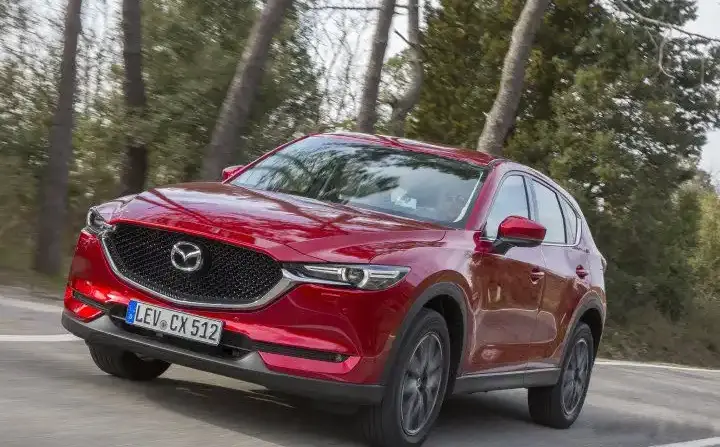
The Mazda CX-5 II 2.5 SKYACTIV-G (250 Hp) AWD Automatic, produced from 2019 to September 2021, represents a significant iteration of Mazda’s popular compact crossover SUV. This variant occupied a premium position within the second-generation CX-5 (KF series) lineup, offering a blend of performance, refinement, and all-weather capability. It was primarily marketed in North America, Europe, and Asia-Pacific regions, catering to buyers seeking a more engaging driving experience than typically found in the segment. The CX-5 II built upon the success of the first-generation model, introducing updated styling, enhanced interior materials, and improved technology, solidifying Mazda’s reputation for building driver-focused vehicles.
Technical Specifications
| Brand | Mazda |
| Model | CX-5 |
| Generation | CX-5 II |
| Type (Engine) | 2.5 SKYACTIV-G (250 Hp) AWD Automatic |
| Start of production | 2019 |
| End of production | September, 2021 |
| Powertrain Architecture | Internal Combustion engine |
| Body type | SUV |
| Seats | 5 |
| Doors | 5 |
| Fuel consumption (economy) – urban | 10.7 l/100 km (22 US mpg, 26.4 UK mpg, 9.3 km/l) |
| Fuel consumption (economy) – extra urban | 8.7 l/100 km (27 US mpg, 32.5 UK mpg, 11.5 km/l) |
| Fuel Type | Petrol (Gasoline) |
| Weight-to-power ratio | 6.9 kg/Hp, 144.1 Hp/tonne |
| Weight-to-torque ratio | 4.1 kg/Nm, 242.1 Nm/tonne |
| Power | 250 Hp @ 5000 rpm |
| Power per litre | 100.5 Hp/l |
| Torque | 420 Nm @ 2000 rpm (309.78 lb.-ft. @ 2000 rpm) |
| Maximum engine speed | 6300 rpm |
| Engine layout | Front, Transverse |
| Engine Model/Code | PY-VPTS |
| Engine displacement | 2488 cm3 (151.83 cu. in.) |
| Number of cylinders | 4 |
| Engine configuration | Inline |
| Cylinder Bore | 89 mm (3.5 in.) |
| Piston Stroke | 100 mm (3.94 in.) |
| Compression ratio | 10.5:1 |
| Number of valves per cylinder | 4 |
| Fuel injection system | Direct injection |
| Engine aspiration | Turbocharger, Intercooler |
| Valvetrain | DOHC-VVT |
| Engine oil capacity | 4.5 l (4.76 US qt | 3.96 UK qt) |
| Coolant | 7.4 l (7.82 US qt | 6.51 UK qt) |
| Kerb Weight | 1735 kg (3825.02 lbs.) |
| Trunk (boot) space – minimum | 875 l (30.9 cu. ft.) |
| Trunk (boot) space – maximum | 1688 l (59.61 cu. ft.) |
| Fuel tank capacity | 58 l (15.32 US gal | 12.76 UK gal) |
| Permitted trailer load with brakes (12%) | 907 kg (1999.59 lbs.) |
| Length | 4549 mm (179.09 in.) |
| Width | 1841 mm (72.48 in.) |
| Width including mirrors | 2116 mm (83.31 in.) |
| Height | 1679 mm (66.1 in.) |
| Wheelbase | 2697 mm (106.18 in.) |
| Front track | 1595 mm (62.8 in.) |
| Rear (Back) track | 1595 mm (62.8 in.) |
| Ride height (ground clearance) | 190 mm (7.48 in.) |
| Minimum turning circle (turning diameter) | 11.0 m (36.09 ft.) |
| Drive wheel | All wheel drive (4×4) |
| Number of gears and type of gearbox | 6 gears, automatic transmission |
| Front suspension | Independent, type McPherson with coil spring and anti-roll bar |
| Rear suspension | Independent multi-link spring suspension with stabilizer |
| Front brakes | Ventilated discs |
| Rear brakes | Disc |
| Assisting systems | ABS (Anti-lock braking system) |
| Steering type | Steering rack and pinion |
| Power steering | Electric Steering |
| Tires size | 225/55 R19 |
| Wheel rims size | 7J x 19 |
Powertrain & Engine Architecture
At the heart of the CX-5 II 2.5 SKYACTIV-G AWD Automatic lies Mazda’s PY-VPTS 2.5-liter inline-four cylinder engine. This engine is a cornerstone of Mazda’s SKYACTIV technology, designed to maximize efficiency and performance. The PY-VPTS features direct injection, a high compression ratio of 10.5:1, and a twin-scroll turbocharger with an intercooler. The dual overhead camshafts (DOHC) are coupled with variable valve timing (VVT) on both intake and exhaust valves, optimizing airflow for improved responsiveness and fuel economy. The engine produces 250 horsepower at 5000 rpm and 310 lb-ft of torque at 2000 rpm. This power is delivered through a six-speed automatic transmission, specifically tuned for smooth and efficient operation. The transmission features manual shift mode, allowing drivers some control over gear selection. The all-wheel-drive system is Mazda’s i-ACTIV AWD, which proactively distributes torque between the front and rear wheels based on road conditions and driver input.
Driving Characteristics
The 2.5-liter turbocharged engine paired with the six-speed automatic provides a noticeably more spirited driving experience compared to the naturally aspirated 2.0-liter engine offered in lower trims. Acceleration is brisk, and the turbocharger provides a broad torque curve, making overtaking maneuvers effortless. The automatic transmission is generally responsive, although it can occasionally exhibit some hesitation during downshifts. The i-ACTIV AWD system enhances stability and traction, particularly in inclement weather. Compared to the manual transmission versions of the 2.5T, the automatic sacrifices some driver engagement, but offers greater convenience for daily commuting. The gear ratios are optimized for a balance of acceleration and fuel efficiency, with a focus on providing usable power in everyday driving situations.
Equipment & Trim Levels
The 2.5 SKYACTIV-G AWD Automatic trim typically included a generous array of standard features. These commonly included leather upholstery, a power-adjustable driver’s seat with memory function, a premium sound system (often Bose), a large infotainment screen with navigation, and a suite of advanced safety features such as adaptive cruise control, lane departure warning, and automatic emergency braking. Optional extras often included a power moonroof, heated and ventilated front seats, and a 360-degree view monitor. Interior materials were generally of high quality, reflecting Mazda’s commitment to creating a premium feel within the cabin. Dashboard configuration was clean and modern, with a focus on ergonomics and ease of use.
Chassis & Braking
The CX-5 II utilizes a MacPherson strut front suspension and a multi-link rear suspension, providing a comfortable yet controlled ride. Stabilizer bars are fitted to both axles to minimize body roll during cornering. The chassis is relatively lightweight, contributing to the vehicle’s agile handling. Braking duties are handled by ventilated discs at the front and solid discs at the rear. The anti-lock braking system (ABS) is standard, along with electronic brake-force distribution (EBD) and brake assist. The steering is electrically assisted, providing a precise and responsive feel.
Market Reception & Comparison
The Mazda CX-5 II 2.5 SKYACTIV-G AWD Automatic was generally well-received by automotive critics. It was praised for its engaging driving dynamics, refined interior, and comprehensive suite of safety features. Fuel economy was considered competitive for its class, although not class-leading. Compared to other trims in the CX-5 lineup, the 2.5T offered a significant performance upgrade, but at a higher price point. It positioned itself as a compelling alternative to rivals such as the Honda CR-V, Toyota RAV4, and Nissan Rogue, offering a more premium driving experience.
Legacy
The PY-VPTS engine and the six-speed automatic transmission have proven to be relatively reliable powertrains. While some owners have reported minor issues with the turbocharger or fuel injectors, these are not widespread concerns. The i-ACTIV AWD system has also demonstrated good durability. On the used car market, the CX-5 II 2.5 SKYACTIV-G AWD Automatic holds its value well, reflecting its reputation for quality and reliability. It remains a popular choice for buyers seeking a well-rounded and engaging compact crossover SUV.