Technical Specifications
| Brand | Mazda |
| Model | CX-5 |
| Generation | CX-5 II |
| Type (Engine) | 2.0 SKYACTIV-G (165 Hp) AWD |
| Start of production | 2018 |
| End of production | September, 2021 |
| Powertrain Architecture | Internal Combustion engine |
| Body type | SUV |
| Seats | 5 |
| Doors | 5 |
| Fuel consumption (urban) | 8.8 l/100 km (26.7 US mpg, 32.1 UK mpg, 11.4 km/l) |
| Fuel consumption (extra urban) | 6.2 l/100 km (37.9 US mpg, 45.6 UK mpg, 16.1 km/l) |
| Fuel consumption (combined) | 7.2 l/100 km (32.7 US mpg, 39.2 UK mpg, 13.9 km/l) |
| CO2 emissions | 163 g/km |
| Fuel Type | Petrol (Gasoline) |
| Acceleration 0 – 100 km/h | 10.8 sec |
| Acceleration 0 – 62 mph | 10.8 sec |
| Acceleration 0 – 60 mph | 10.3 sec |
| Maximum speed | 198 km/h (123.03 mph) |
| Emission standard | Euro 6 d |
| Weight-to-power ratio | 9.2 kg/Hp, 108.9 Hp/tonne |
| Weight-to-torque ratio | 7.1 kg/Nm, 140.6 Nm/tonne |
| Power | 165 Hp @ 6000 rpm |
| Power per litre | 82.6 Hp/l |
| Torque | 213 Nm @ 4000 rpm (157.1 lb.-ft. @ 4000 rpm) |
| Engine layout | Front, Transverse |
| Engine Model/Code | PEXB, PEXP |
| Engine displacement | 1998 cm3 (121.93 cu. in.) |
| Number of cylinders | 4 |
| Engine configuration | Inline |
| Cylinder Bore | 83.5 mm (3.29 in.) |
| Piston Stroke | 91.2 mm (3.59 in.) |
| Compression ratio | 13:1 |
| Number of valves per cylinder | 4 |
| Fuel injection system | Direct injection |
| Engine aspiration | Naturally aspirated engine |
| Engine oil capacity | 4.2 l (4.44 US qt | 3.7 UK qt) |
| Coolant | 7 l (7.4 US qt | 6.16 UK qt) |
| Kerb Weight | 1515-1585 kg (3340 – 3494.33 lbs.) |
| Max. weight | 2080 kg (4585.62 lbs.) |
| Max load | 495-565 kg (1091.29 – 1245.61 lbs.) |
| Trunk (boot) space – minimum | 506 l (17.87 cu. ft.) |
| Trunk (boot) space – maximum | 1620 l (57.21 cu. ft.) |
| Fuel tank capacity | 58 l (15.32 US gal | 12.76 UK gal) |
| Max. roof load | 50 kg (110.23 lbs.) |
| Permitted trailer load with brakes (8%) | 1900 kg (4188.78 lbs.) |
| Permitted trailer load with brakes (12%) | 1800 kg (3968.32 lbs.) |
| Permitted trailer load without brakes | 750 kg (1653.47 lbs.) |
| Permitted towbar download | 84 kg (185.19 lbs.) |
| Length | 4550 mm (179.13 in.) |
| Width | 1840 mm (72.44 in.) |
| Width including mirrors | 2115 mm (83.27 in.) |
| Height | 1680 mm (66.14 in.) |
| Wheelbase | 2700 mm (106.3 in.) |
| Front track | 1595 mm (62.8 in.) |
| Rear (Back) track | 1595 mm (62.8 in.) |
| Ride height (ground clearance) | 185 – 193 mm (7.28 – 7.6 in.) |
| Minimum turning circle (turning diameter) | 11.0 m (36.09 ft.) |
| Drive wheel | All wheel drive (4×4) |
| Number of gears and type of gearbox | 6 gears, automatic transmission |
| Front brakes | Ventilated discs |
| Rear brakes | Ventilated discs |
| Assisting systems | ABS (Anti-lock braking system) |
| Steering type | Steering rack and pinion |
| Power steering | Electric Steering |
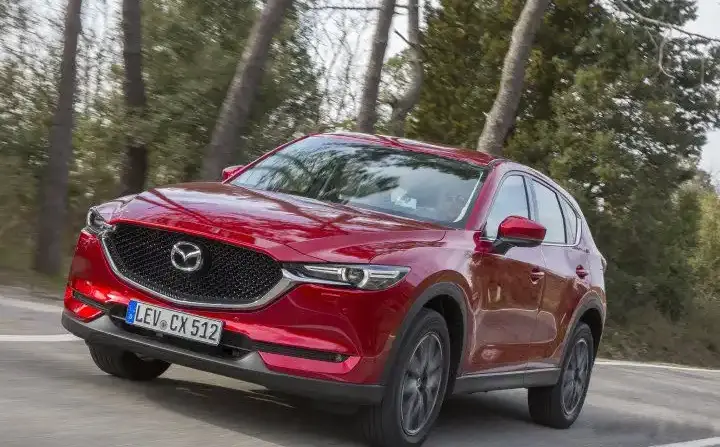
The Mazda CX-5 II 2.0 SKYACTIV-G AWD was a popular configuration of Mazda’s compact crossover SUV, produced from 2018 to September 2021. Positioned as a mid-range offering within the second generation (CX-5 II) of the CX-5 lineup, it aimed to balance fuel efficiency with adequate performance for everyday driving. This variant played a significant role in Mazda’s strategy to offer a compelling alternative to more mainstream competitors in the North American and European markets, emphasizing driving dynamics and premium interior appointments. It was built on the Mazda’s 1HX0 platform.
Powertrain & Engine Architecture
At the heart of the CX-5 II 2.0 SKYACTIV-G AWD lies Mazda’s PE-VPH (PEXB/PEXP) 2.0-liter inline-four cylinder engine. This engine is a key component of Mazda’s SKYACTIV technology suite, designed to maximize efficiency and responsiveness. It features direct injection, a high compression ratio of 13:1, and optimized intake and exhaust systems. The engine utilizes a variable valve timing system on both intake and exhaust camshafts to improve performance across the rev range. The 2.0-liter engine produced 165 horsepower at 6,000 rpm and 157 lb-ft of torque at 4,000 rpm. The engine is transversely mounted in the front of the vehicle. The 6-speed automatic transmission was designed to work in harmony with the engine’s characteristics, providing smooth shifts and efficient power delivery.
Driving Characteristics
The 165 hp 2.0-liter engine, paired with the all-wheel-drive system, provided adequate, though not exhilarating, performance. Acceleration from 0-60 mph took around 10.3 seconds. The automatic transmission was tuned for fuel economy, resulting in relatively conservative gear ratios. This meant that while the CX-5 II 2.0 was perfectly capable of highway cruising and everyday commuting, it lacked the punch of the higher-output 2.5-liter SKYACTIV-G engine or the turbocharged diesel options available in some markets. The all-wheel-drive system provided enhanced traction in inclement weather, making it a practical choice for drivers in regions with snow or rain. The steering was precise and well-weighted, contributing to a more engaging driving experience than many competitors.
Equipment & Trim Levels
The 2.0 SKYACTIV-G AWD trim typically included standard features such as Mazda’s infotainment system with a 7-inch touchscreen display, Bluetooth connectivity, and a rearview camera. Safety features included automatic emergency braking, lane departure warning, and adaptive cruise control. Interior upholstery was typically cloth, with available upgrades to leatherette or leather in higher sub-trims. Optional extras included a power sunroof, premium audio system, and heated front seats. The trim level sat in the middle of the CX-5 II range, offering a good balance of features and affordability.
Chassis & Braking
The CX-5 II utilized a MacPherson strut front suspension and a multi-link rear suspension, providing a comfortable ride and responsive handling. The chassis was engineered for rigidity, contributing to improved stability and reduced noise, vibration, and harshness (NVH). Braking duties were handled by ventilated discs on all four wheels, providing ample stopping power. The anti-lock braking system (ABS) and electronic brakeforce distribution (EBD) were standard features. Stabilizer bars were fitted to both the front and rear axles to minimize body roll during cornering.
Market Reception & Comparison
The CX-5 II 2.0 SKYACTIV-G AWD was generally well-received by automotive critics. It was praised for its stylish design, comfortable interior, and engaging driving dynamics. However, some reviewers noted that the 2.0-liter engine could feel underpowered, particularly when fully loaded or driving uphill. Compared to the 2.5-liter SKYACTIV-G engine, the 2.0-liter offered better fuel economy but sacrificed some performance. The 2.0-liter variant was often seen as a more sensible choice for budget-conscious buyers who prioritized efficiency over outright speed.
Legacy
The Mazda CX-5 II 2.0 SKYACTIV-G AWD has proven to be a reliable and durable vehicle. The SKYACTIV engine is known for its longevity, and the automatic transmission has a good track record. On the used car market, these models continue to hold their value relatively well, thanks to Mazda’s reputation for quality and the CX-5’s overall appeal. While not the fastest or most powerful version of the CX-5, the 2.0-liter AWD variant remains a practical and enjoyable choice for drivers seeking a well-rounded compact crossover SUV.