
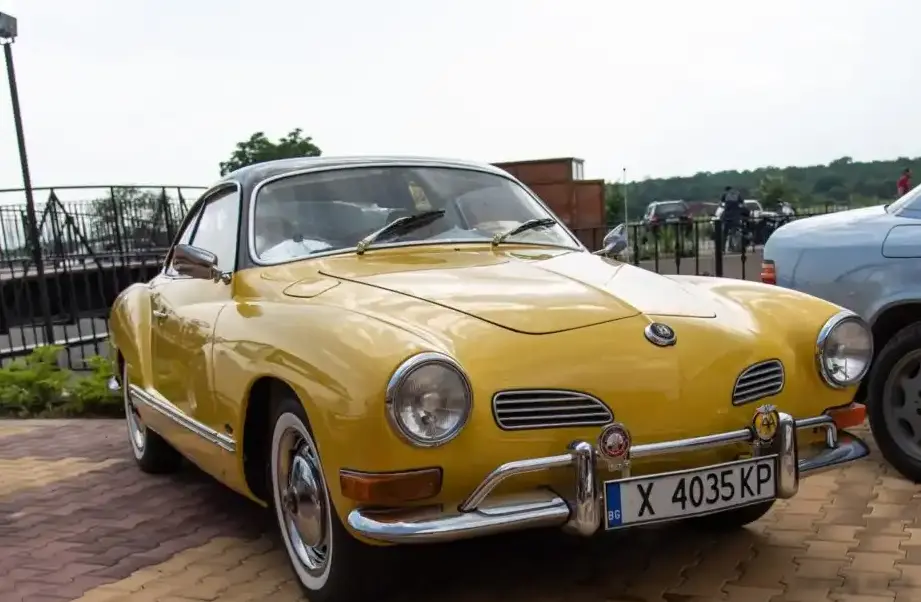
The Volkswagen Karmann Ghia Type 14, specifically the 1.2-liter (36 hp) variant, represents the foundational model of this iconic coupe. Produced from March 1960 to March 1965, this version was pivotal in establishing the Karmann Ghia as a stylish and accessible sports car. Built on the Volkswagen Type 1 (Beetle) chassis, it distinguished itself through its elegant Italian design by Carrozzeria Ghia and assembly by Karmann in Osnabrück, Germany. This initial offering laid the groundwork for the broader Karmann Ghia range, paving the way for more powerful engine options in subsequent years. It served as the entry-level trim, appealing to buyers seeking a touch of sophistication without a substantial price premium.
Technical Specifications
| Brand | Volkswagen |
| Model | Karmann Ghia |
| Generation | Karmann Ghia (Type 14) |
| Type (Engine) | 1.2 (36 Hp) |
| Start of production | March, 1960 |
| End of production | March, 1965 |
| Powertrain Architecture | Internal Combustion engine |
| Body type | Coupe |
| Seats | 4 |
| Doors | 2 |
| Fuel consumption (combined) | 7.3 l/100 km (32.2 US mpg, 38.7 UK mpg, 13.7 km/l) |
| Fuel Type | Petrol (Gasoline) |
| Maximum speed | 115 km/h (71.46 mph) |
| Weight-to-power ratio | 21.7 kg/Hp (46.2 Hp/tonne) |
| Power | 36 Hp @ 3700 rpm |
| Power per litre | 30.2 Hp/l |
| Engine displacement | 1192 cm3 (72.74 cu. in.) |
| Number of cylinders | 4 |
| Engine configuration | 180° flat V-engine |
| Cylinder Bore | 77 mm (3.03 in.) |
| Piston Stroke | 64 mm (2.52 in.) |
| Compression ratio | 6.6:1 |
| Number of valves per cylinder | 2 |
| Fuel injection system | Carburettor |
| Engine aspiration | Naturally aspirated engine |
| Valvetrain | OHV |
| Engine oil capacity | 2.5 l (2.64 US qt | 2.2 UK qt) |
| Kerb Weight | 780 kg (1719.61 lbs.) |
| Max. weight | 1110 kg (2447.13 lbs.) |
| Max load | 330 kg (727.53 lbs.) |
| Fuel tank capacity | 40 l (10.57 US gal | 8.8 UK gal) |
| Length | 4140 mm (162.99 in.) |
| Width | 1634 mm (64.33 in.) |
| Height | 1325 mm (52.17 in.) |
| Wheelbase | 2400 mm (94.49 in.) |
| Front track | 1290 mm (50.79 in.) |
| Rear (Back) track | 1250 mm (49.21 in.) |
| Ride height (ground clearance) | 155 mm (6.1 in.) |
| Minimum turning circle (turning diameter) | 11 m (36.09 ft.) |
| Drivetrain Architecture | The Internal combustion engine (ICE) drives the rear wheels of the vehicle. |
| Drive wheel | Rear wheel drive |
| Number of gears and type of gearbox | 4 gears, manual transmission |
| Front suspension | Transverse stabilizer, Torsion |
| Rear suspension | Torsion |
| Steering type | Worm-reduction unit |
| Wheel rims size | 4J x 15 |
Powertrain & Engine Architecture
The early Karmann Ghia was powered by an 1,192 cc (72.74 cubic inches) air-cooled, longitudinally-mounted flat-four engine. This engine, directly derived from the Volkswagen Beetle, produced 36 horsepower at 3,700 rpm. It featured a 6.6:1 compression ratio and utilized a single Solex carburetor for fuel delivery. The engine employed an overhead valve (OHV) valvetrain with two valves per cylinder. The flat configuration contributed to a low center of gravity, enhancing handling. This 1.2-liter engine was paired with a four-speed manual transmission, sending power to the rear wheels. This powertrain was a straightforward carryover from the Beetle, prioritizing simplicity and reliability. The engine’s design, while basic, was robust and well-understood, making it relatively easy to service and repair.
Driving Characteristics
The 1.2-liter Karmann Ghia offered a relaxed driving experience. With only 36 horsepower propelling a curb weight of approximately 1,720 pounds, acceleration was modest. Top speed hovered around 71 mph. The four-speed manual transmission required frequent shifting to maintain momentum, particularly when climbing hills. Compared to later Karmann Ghias equipped with the 1.5-liter or 1.6-liter engines, the 1.2-liter model felt noticeably underpowered. However, its light weight and relatively nimble handling made it enjoyable on winding roads. The gear ratios were optimized for fuel economy and everyday usability rather than outright performance. The steering, while not particularly precise, was light and manageable, making it easy to maneuver in urban environments.
Equipment & Trim Levels
The initial 1.2-liter Karmann Ghia was relatively sparsely equipped, reflecting its position as the entry-level model. Standard features included basic instrumentation – a speedometer and fuel gauge – a three-spoke steering wheel, and vinyl upholstery. Chrome trim accentuated the exterior, contributing to its stylish appearance. Optional extras included a sunroof, whitewall tires, and a radio. Interior color choices were limited, typically consisting of shades of gray, beige, and red. The dashboard layout was simple and functional, mirroring the utilitarian design philosophy of the Volkswagen Beetle. The focus was on providing a comfortable and aesthetically pleasing driving experience without unnecessary frills.
Chassis & Braking
The Karmann Ghia’s chassis was based on the Volkswagen Beetle platform, utilizing a torsion beam rear suspension and transverse torsion bar front suspension. This suspension setup provided a comfortable ride, although it wasn’t particularly sporty. The early models were equipped with drum brakes on all four wheels, offering adequate stopping power for the car’s performance capabilities. Steering was accomplished via a worm-and-roller system, which provided a somewhat indirect feel. The 15-inch wheels were fitted with 4J rims, and tire sizes were typically 5.60-15. The suspension, while simple, was durable and capable of handling the car’s weight and the typical road conditions of the era.
Market Reception & Comparison
The 1.2-liter Karmann Ghia was generally well-received by critics and the public, particularly for its striking design and relatively affordable price. It offered a more sophisticated alternative to the utilitarian Beetle, appealing to buyers who desired a stylish and comfortable coupe. However, the 1.2-liter engine was often criticized for its lack of power. Compared to the later 1.5-liter and 1.6-liter versions, the 1.2-liter model offered significantly less performance. Fuel economy was reasonable for the time, averaging around 32 mpg. Reliability was generally good, benefiting from the proven mechanicals of the Volkswagen Beetle. It was positioned as a more aspirational vehicle than the Beetle, attracting a slightly more affluent clientele.
Legacy
The 1.2-liter Karmann Ghia, while the least powerful variant, played a crucial role in establishing the model’s reputation. It demonstrated the potential of combining Italian design with German engineering. Today, these early Karmann Ghias are sought after by collectors and enthusiasts, particularly those who appreciate their originality and simplicity. The 1.2-liter engine, while not known for its performance, is relatively straightforward to maintain. Parts availability is generally good, thanks to the shared components with the Volkswagen Beetle. A well-maintained 1.2-liter Karmann Ghia represents a charming and affordable entry point into the world of classic Volkswagen ownership, offering a unique blend of style, history, and driving enjoyment. The longevity of the Type 1 engine ensures that many of these cars remain on the road today, a testament to their robust design. It remains a popular choice for restoration projects and a beloved classic among Volkswagen enthusiasts.
