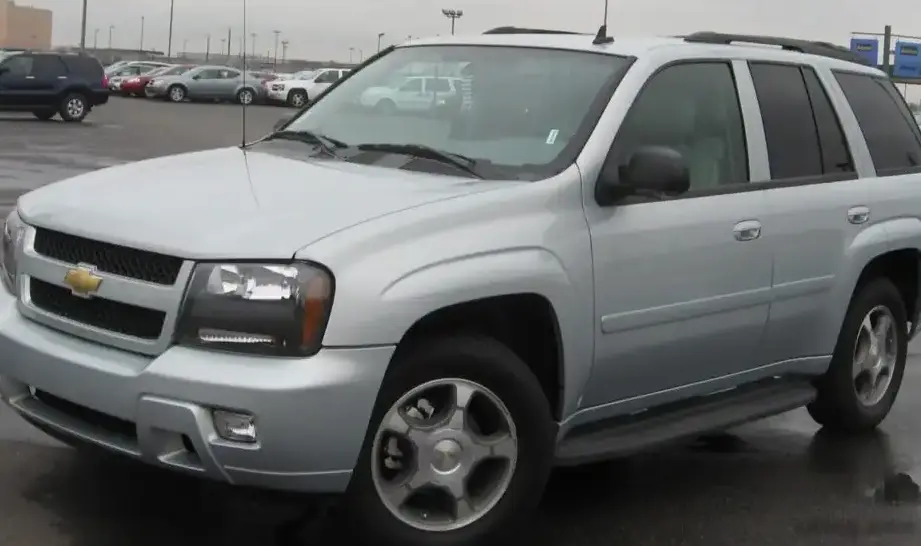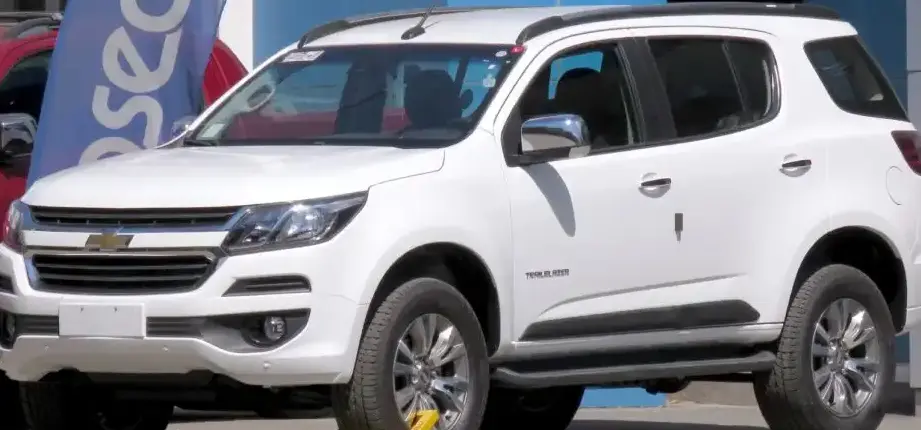
The Chevrolet Trailblazer II, specifically the facelifted version produced from 2016 to 2019, represented a significant update to Chevrolet’s mid-size SUV offering. This iteration of the Trailblazer, built on a body-on-frame chassis, was primarily aimed at markets outside of North America, serving as a robust and capable seven-passenger vehicle. The 2.8d (200 Hp) Automatic variant occupied a middle ground in the Trailblazer II lineup, offering a balance between performance, fuel efficiency, and affordability. It was positioned above the base engine options and below the more powerful diesel variants, targeting buyers seeking a capable SUV for family use and occasional off-road adventures.
Technical Specifications
| Brand | Chevrolet |
| Model | Trailblazer |
| Generation | Trailblazer II (facelift 2016) |
| Type (Engine) | 2.8d (200 Hp) Automatic |
| Start of production | 2016 |
| End of production | 2019 |
| Powertrain Architecture | Internal Combustion engine |
| Body type | SUV |
| Seats | 7 |
| Doors | 5 |
| Fuel Type | Diesel |
| Power | 200 Hp @ 3800 rpm |
| Power per litre | 72 Hp/l |
| Torque | 500 Nm @ 2000 rpm / 368.78 lb.-ft. @ 2000 rpm |
| Engine layout | Front, Longitudinal |
| Engine Model/Code | XLD28 |
| Engine displacement | 2776 cm3 / 169.4 cu. in. |
| Number of cylinders | 4 |
| Engine configuration | Inline |
| Number of valves per cylinder | 4 |
| Fuel injection system | Diesel Commonrail |
| Engine aspiration | Turbocharger, Intercooler |
| Valvetrain | DOHC, VGT |
| Engine oil capacity | 5.6 l / 5.92 US qt | 4.93 UK qt |
| Coolant | 9 l / 9.51 US qt | 7.92 UK qt |
| Fuel tank capacity | 76 l / 20.08 US gal | 16.72 UK gal |
| Length | 4887 mm / 192.4 in. |
| Width | 1902 mm / 74.88 in. |
| Width including mirrors | 2132 mm / 83.94 in. |
| Height | 1852 mm / 72.91 in. |
| Minimum turning circle | 11.8 m / 38.71 ft. |
| Wading depth | 800 mm / 31.5 in. |
| Drivetrain Architecture | Rear wheel drive |
| Number of gears | 6 |
| Gearbox type | Automatic transmission |
| Front suspension | Double wishbone |
| Rear suspension | Independent multi-link suspension |
| Front brakes | Ventilated discs |
| Rear brakes | Disc |
| Assisting systems | ABS (Anti-lock braking system) |
| Steering type | Steering rack and pinion |
| Power steering | Electric Steering |
| Tires size | 245/70 R16; 255/65 R17 |
| Wheel rims size | 6.5J x 16; 7.0J x 17 |
Powertrain & Engine Architecture
The heart of the 2.8d variant was the Duramax XLD28 four-cylinder diesel engine. This 2.8-liter (2776 cc) engine utilized a common rail direct injection system, delivering fuel at extremely high pressures for optimized combustion. A variable geometry turbocharger (VGT) with an intercooler further enhanced performance by providing increased air intake and reducing intake air temperature. The engine featured a double overhead camshaft (DOHC) valvetrain with four valves per cylinder, contributing to efficient gas exchange. The automatic transmission was a six-speed unit, designed to handle the engine’s torque output and provide smooth shifting. This transmission was calibrated to prioritize fuel economy and drivability, rather than outright performance.
Driving Characteristics
The 200 horsepower and 368 lb-ft of torque produced by the 2.8d engine provided adequate performance for the Trailblazer II’s size and weight. While not a sports SUV, it offered sufficient power for highway cruising, overtaking, and towing. The automatic transmission, while smooth, wasn’t particularly quick to downshift, resulting in a slightly less responsive feel compared to the manual transmission options available in other Trailblazer trims. The gear ratios were optimized for fuel efficiency, meaning the engine often operated at lower RPMs during normal driving conditions. Compared to the higher-output diesel variants, the 2.8d felt less powerful, especially when fully loaded or tackling steep inclines. However, it offered a more refined and relaxed driving experience.
Equipment & Trim Levels
The 2.8d Automatic trim typically included standard features such as air conditioning, power windows and locks, a basic audio system with USB connectivity, and cloth upholstery. Safety features included ABS, airbags, and rear parking sensors. Higher trim levels offered upgrades like leather upholstery, a touchscreen infotainment system with navigation, automatic climate control, and alloy wheels. Optional extras included a sunroof, a rear-view camera, and a premium sound system. The interior design was functional and durable, prioritizing practicality over luxury.
Chassis & Braking
The Trailblazer II utilized a traditional body-on-frame construction, providing a robust and durable platform. The front suspension consisted of a double wishbone setup, while the rear featured an independent multi-link suspension. This configuration aimed to balance ride comfort with off-road capability. The braking system consisted of ventilated discs at the front and solid discs at the rear, providing adequate stopping power for the vehicle’s weight. The electric power steering offered a light and easy steering feel, making it convenient for urban driving.
Market Reception & Comparison
The 2.8d Automatic variant of the Trailblazer II was generally well-received in markets where it was offered. Critics praised its comfortable ride, spacious interior, and decent fuel economy. However, some noted that the automatic transmission could feel sluggish at times, and the engine lacked the outright power of the larger diesel options. Compared to the 2.5-liter gasoline engine, the 2.8d offered significantly more torque and better fuel economy, making it a more suitable choice for those who frequently tow or drive long distances. Against competitors like the Toyota Fortuner and Mitsubishi Pajero Sport, the Trailblazer II offered a competitive package in terms of price, features, and capability.
Legacy
The Chevrolet Trailblazer II, including the 2.8d Automatic variant, has proven to be a relatively reliable vehicle in the long term. The Duramax diesel engine is known for its durability, and the automatic transmission, while not without its quirks, has generally held up well. In the used car market, these Trailblazers are often sought after for their affordability, spaciousness, and off-road capability. Maintenance costs are generally reasonable, although sourcing parts can sometimes be challenging depending on the region. The 2.8d Automatic remains a viable option for buyers seeking a capable and practical seven-passenger SUV.