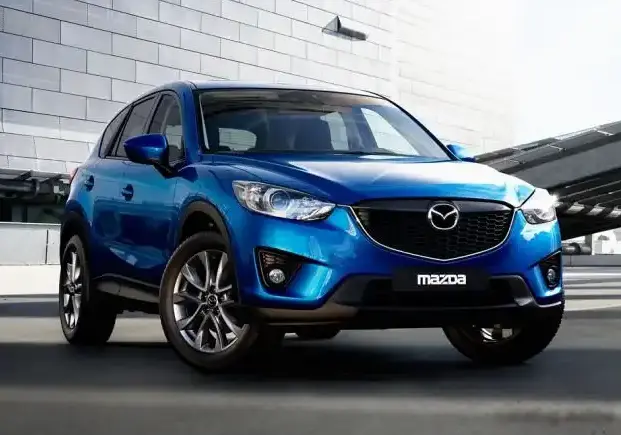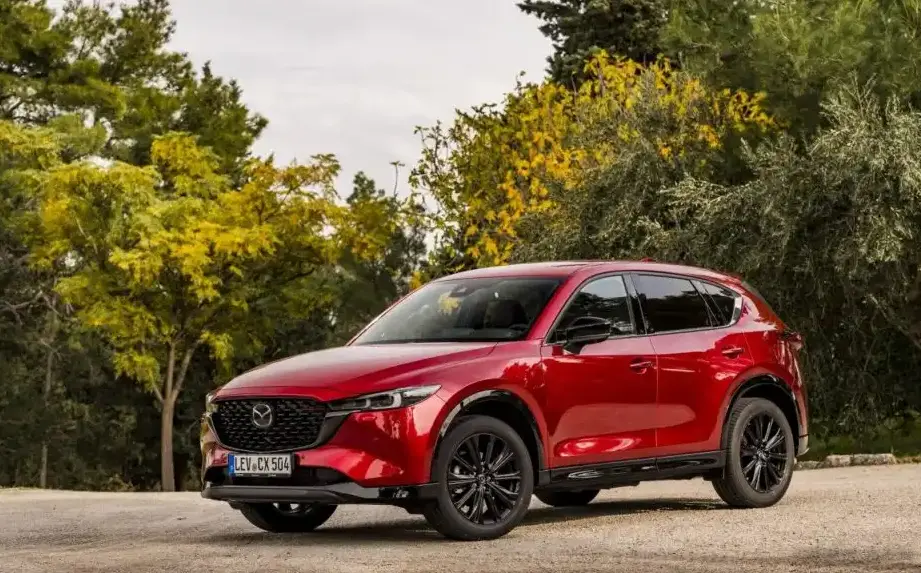
The Mazda CX-5 II, specifically the facelift model introduced in September 2021 and produced through November 2022, represents a significant evolution of Mazda’s popular compact SUV. This variant, equipped with the 2.0-liter SKYACTIV-G engine producing 165 horsepower, served as a key entry point into the CX-5 lineup, offering a balance of fuel efficiency and practicality. It falls within the second generation of the CX-5 (KE series), benefiting from updates to styling, technology, and driving dynamics compared to the original model. The 2.0L engine option was primarily aimed at buyers prioritizing affordability and fuel economy over outright performance, positioning it below the more powerful 2.5-liter variants.
Technical Specifications
| Brand | Mazda |
| Model | CX-5 |
| Generation | CX-5 II (facelift 2021) |
| Type (Engine) | 2.0 SKYACTIV-G (165 Hp) |
| Start of production | September, 2021 |
| End of production | November, 2022 |
| Powertrain Architecture | Internal Combustion engine |
| Body type | SUV |
| Seats | 5 |
| Doors | 5 |
| Fuel consumption at Low speed (WLTP) | 8.2 l/100 km (28.7 US mpg, 34.4 UK mpg, 12.2 km/l) |
| Fuel consumption at Medium speed (WLTP) | 6.4 l/100 km (36.8 US mpg, 44.1 UK mpg, 15.6 km/l) |
| Fuel consumption at high speed (WLTP) | 5.8-5.9 l/100 km (40.6 – 39.9 US mpg, 48.7 – 47.9 UK mpg, 17.2 – 16.9 km/l) |
| Fuel consumption at very high speed (WLTP) | 7.2-7.3 l/100 km (32.7 – 32.2 US mpg, 39.2 – 38.7 UK mpg, 13.9 – 13.7 km/l) |
| Combined fuel consumption (WLTP) | 6.8 l/100 km (34.6 US mpg, 41.5 UK mpg, 14.7 km/l) |
| CO2 emissions (WLTP) | 153-154 g/km |
| Fuel consumption (economy) – urban (NEDC) | 7.1 l/100 km (33.1 US mpg, 39.8 UK mpg, 14.1 km/l) |
| Fuel consumption (economy) – extra urban (NEDC) | 5.1-5.3 l/100 km (46.1 – 44.4 US mpg, 55.4 – 53.3 UK mpg, 19.6 – 18.9 km/l) |
| Fuel consumption (economy) – combined (NEDC) | 5.8-6 l/100 km (40.6 – 39.2 US mpg, 48.7 – 47.1 UK mpg, 17.2 – 16.7 km/l) |
| CO2 emissions (NEDC) | 133-135 g/km |
| Fuel Type | Petrol (Gasoline) |
| Acceleration 0 – 100 km/h | 10.5 sec |
| Acceleration 0 – 62 mph | 10.5 sec |
| Acceleration 0 – 60 mph | 10 sec |
| Maximum speed | 201 km/h (124.9 mph) |
| Emission standard | Euro 6d |
| Weight-to-power ratio | 8.6 kg/Hp, 116.9 Hp/tonne |
| Weight-to-torque ratio | 6.6 kg/Nm, 151 Nm/tonne |
| Power | 165 Hp @ 6000 rpm |
| Power per litre | 82.6 Hp/l |
| Torque | 213 Nm @ 4000 rpm (157.1 lb.-ft. @ 4000 rpm) |
| Engine layout | Front, Transverse |
| Engine Model/Code | PE |
| Engine displacement | 1998 cm3 (121.93 cu. in.) |
| Number of cylinders | 4 |
| Engine configuration | Inline |
| Cylinder Bore | 83.5 mm (3.29 in.) |
| Piston Stroke | 91.2 mm (3.59 in.) |
| Compression ratio | 13:1 |
| Number of valves per cylinder | 4 |
| Fuel injection system | Direct injection |
| Engine aspiration | Naturally aspirated engine |
| Valvetrain | DOHC |
| Engine oil capacity | 4.2 l (4.44 US qt | 3.7 UK qt) |
| Coolant | 7.1 l (7.5 US qt | 6.25 UK qt) |
| Kerb Weight | 1411-1501 kg (3110.72 – 3309.14 lbs.) |
| Max. weight | 2020 kg (4453.34 lbs.) |
| Max load | 519-609 kg (1144.2 – 1342.62 lbs.) |
| Trunk (boot) space – minimum | 522 l (18.43 cu. ft.) |
| Trunk (boot) space – maximum | 1638 l (57.85 cu. ft.) |
| Fuel tank capacity | 56 l (14.79 US gal | 12.32 UK gal) |
| Max. roof load | 75 kg (165.35 lbs.) |
| Permitted trailer load with brakes (8%) | 1900 kg (4188.78 lbs.) |
| Permitted trailer load with brakes (12%) | 1800 kg (3968.32 lbs.) |
| Permitted trailer load without brakes | 750 kg (1653.47 lbs.) |
| Length | 4575 mm (180.12 in.) |
| Width | 1845 mm (72.64 in.) |
| Width including mirrors | 2115 mm (83.27 in.) |
| Height | 1680-1685 mm (66.14 – 66.34 in.) |
| Wheelbase | 2700 mm (106.3 in.) |
| Front track | 1595 mm (62.8 in.) |
| Rear (Back) track | 1595 mm (62.8 in.) |
| Front overhang | 965 mm (37.99 in.) |
| Rear overhang | 910 mm (35.83 in.) |
| Ride height (ground clearance) | 192-200 mm (7.56 – 7.87 in.) |
| Minimum turning circle (turning diameter) | 11 m (36.09 ft.) |
| Drivetrain Architecture | The Internal combustion engine (ICE) drives the front wheels of the vehicle. |
| Drive wheel | Front wheel drive |
| Number of gears and type of gearbox | 6 gears, manual transmission |
| Front suspension | Independent type McPherson |
| Rear suspension | Independent multi-link suspension |
| Front brakes | Ventilated discs, 297 mm |
| Rear brakes | Disc, 303 mm |
| Assisting systems | ABS (Anti-lock braking system) |
| Steering type | Steering rack and pinion |
| Power steering | Electric Steering |
| Tires size | 225/65 R17; 225/55 R19 |
| Wheel rims size | 7J x 17; 7J x 19 |
Powertrain & Engine Architecture
The heart of this CX-5 variant is Mazda’s PE-VPH 2.0-liter SKYACTIV-G inline-four cylinder engine. This engine is a cornerstone of Mazda’s efficiency-focused engineering philosophy. It features direct injection, a high compression ratio of 13:1, and a double overhead camshaft (DOHC) valvetrain. The SKYACTIV technology emphasizes optimized combustion, reduced internal friction, and a lightweight design. The engine utilizes a sophisticated fuel injection system designed to precisely control fuel delivery for improved efficiency and reduced emissions. Paired with this engine is a six-speed automatic transmission, chosen for its smooth operation and contribution to fuel economy. This transmission is not a particularly sporty unit, prioritizing comfort and efficiency over rapid shifts.
Driving Characteristics
The 165-horsepower 2.0-liter engine, coupled with the automatic transmission, delivers adequate performance for everyday driving. Acceleration from 0-60 mph takes around 10 seconds, and top speed is rated at 124.9 mph. However, it’s noticeably less responsive than the 2.5-liter turbocharged options available in the CX-5 lineup. The automatic transmission is tuned for fuel efficiency, meaning it often upshifts quickly to maintain lower engine speeds. This can result in a slight delay in response when accelerating, particularly when overtaking. The gear ratios are optimized for cruising, making it a comfortable highway companion, but less engaging on twisty roads. Compared to the manual transmission versions of the 2.0L, the automatic sacrifices some driver involvement for ease of use.
Equipment & Trim Levels
The 2.0-liter CX-5 typically served as the base trim level, offering a solid set of standard features. These generally included Mazda’s infotainment system with a 10.25-inch display, Apple CarPlay and Android Auto integration, LED headlights, and a suite of safety features like Mazda Radar Cruise Control, Smart Brake Support, and Lane Departure Warning. Interior upholstery was typically cloth, with options for leather upgrades on higher sub-trims. Available options included a power sunroof, Bose premium audio system, and heated front seats. The overall interior design emphasized a clean, minimalist aesthetic with high-quality materials for its class.
Chassis & Braking
The CX-5 II utilizes a MacPherson strut front suspension and a multi-link rear suspension, providing a comfortable and controlled ride. The suspension tuning is geared towards everyday usability rather than outright sportiness. Braking duties are handled by ventilated discs at the front and solid discs at the rear. Anti-lock braking system (ABS) is standard, along with electronic brake-force distribution and brake assist. The chassis is designed to balance rigidity with weight savings, contributing to the CX-5’s responsive handling.
Market Reception & Comparison
The 2.0-liter CX-5 was generally well-received by critics as a practical and fuel-efficient option within the compact SUV segment. However, it was often noted that the engine lacked the punch of its larger counterparts. Fuel economy figures were competitive, averaging around 34.6 US mpg in combined driving. Compared to the 2.5-liter models, the 2.0L offered a lower price point but sacrificed performance. Reliability has been a strong point for the CX-5 in general, and the 2.0-liter engine has proven to be durable and relatively maintenance-free.
Legacy
The 2.0-liter SKYACTIV-G engine in the CX-5 II has established a reputation for reliability and fuel efficiency. On the used car market, these models represent a good value proposition for buyers seeking a well-equipped and dependable compact SUV. While not the most exciting option in the CX-5 lineup, the 2.0L variant provides a practical and economical choice for everyday transportation. The engine’s robust design and Mazda’s commitment to quality suggest that these vehicles will continue to provide years of reliable service.