
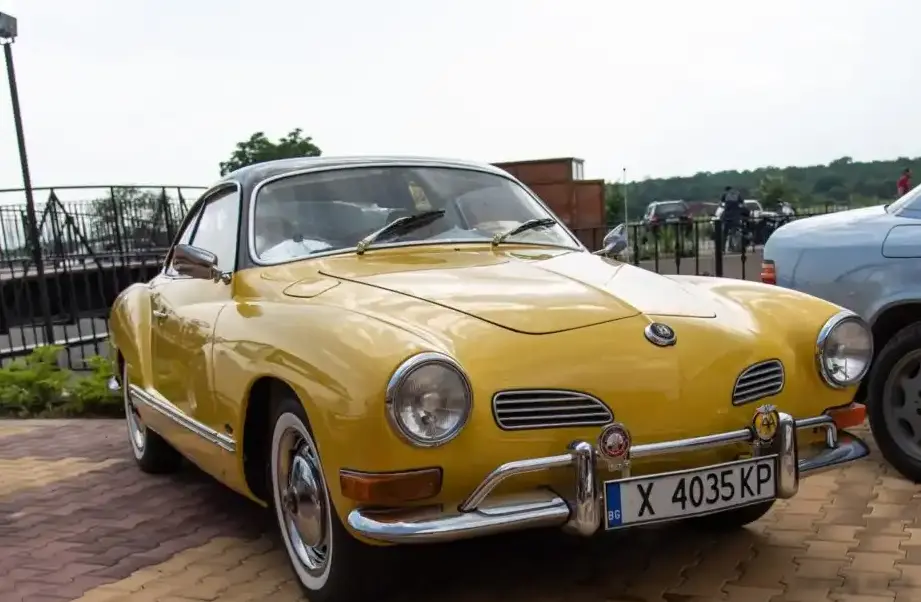
The Volkswagen Karmann Ghia Type 14, specifically the 1.5-liter (53 hp) variant, represents an early iteration of this stylish coupe produced between March 1966 and March 1970. Positioned as an entry-level offering within the Karmann Ghia range, it aimed to provide a more accessible price point while retaining the model’s distinctive Italian-inspired design. This version was part of the initial Type 14 series, built upon the Volkswagen Beetle platform, and served as a key model in Volkswagen’s strategy to broaden its appeal beyond purely utilitarian vehicles.
Technical Specifications
| Brand | Volkswagen |
| Model | Karmann Ghia |
| Generation | Karmann Ghia (Type 14) |
| Type (Engine) | 1.5 (53 Hp) |
| Start of production | March, 1966 |
| End of production | March, 1970 |
| Powertrain Architecture | Internal Combustion engine |
| Body type | Coupe |
| Seats | 4 |
| Doors | 2 |
| Fuel consumption (combined) | 8.6 l/100 km (27.4 US mpg, 32.8 UK mpg, 11.6 km/l) |
| Fuel Type | Petrol (Gasoline) |
| Maximum speed | 132 km/h (82.02 mph) |
| Weight-to-power ratio | 16.4 kg/Hp, 60.9 Hp/tonne |
| Power | 53 Hp @ 4200 rpm |
| Power per litre | 35.5 Hp/l |
| Engine displacement | 1493 cm3 (91.11 cu. in.) |
| Number of cylinders | 4 |
| Engine configuration | 180° flat V-engine |
| Cylinder Bore | 83.06 mm (3.27 in.) |
| Piston Stroke | 69.09 mm (2.72 in.) |
| Compression ratio | 7.5:1 |
| Number of valves per cylinder | 2 |
| Fuel injection system | Carburettor |
| Engine aspiration | Naturally aspirated engine |
| Valvetrain | OHV |
| Engine oil capacity | 2.5 l (2.64 US qt | 2.2 UK qt) |
| Kerb Weight | 870 kg (1918.02 lbs.) |
| Max. weight | 1200 kg (2645.55 lbs.) |
| Max load | 330 kg (727.53 lbs.) |
| Fuel tank capacity | 40 l (10.57 US gal | 8.8 UK gal) |
| Length | 4140 mm (162.99 in.) |
| Width | 1633 mm (64.29 in.) |
| Height | 1331 mm (52.4 in.) |
| Wheelbase | 2400 mm (94.49 in.) |
| Front track | 1311 mm (51.61 in.) |
| Rear (Back) track | 1349 mm (53.11 in.) |
| Minimum turning circle | 11.3 m (37.07 ft.) |
| Drivetrain Architecture | The Internal combustion engine (ICE) drives the rear wheels of the vehicle. |
| Drive wheel | Rear wheel drive |
| Number of gears and type of gearbox | 4 gears, manual transmission |
| Front suspension | Transverse stabilizer, Torsion |
| Rear suspension | Torsion |
| Front brakes | Disc |
| Rear brakes | Drum |
| Steering type | Worm-reduction unit |
Powertrain & Engine Architecture
The heart of the 1.5-liter Karmann Ghia was the Type 113 engine, a 1493 cc, air-cooled, flat-four cylinder engine. This engine, derived from the Volkswagen Beetle’s powerplant, featured a 7.5:1 compression ratio and utilized a single Solex carburetor for fuel delivery. The overhead valve (OHV) configuration, while simple, proved reliable. The engine produced 53 horsepower at 4200 rpm, a modest output for the time. The engine was mounted longitudinally in the rear of the vehicle, a characteristic of many Volkswagen models of the era. The four-speed manual transmission was standard, providing a relatively direct connection between the engine and the rear wheels. This configuration, while not particularly sophisticated, was known for its durability and ease of maintenance.
Driving Characteristics
The 1.5-liter Karmann Ghia offered a comfortable, if not particularly exhilarating, driving experience. With only 53 horsepower propelling a curb weight of approximately 870 kg (1918 lbs), acceleration was leisurely. Top speed was around 82 mph. The four-speed manual transmission required frequent shifting to maintain momentum, especially when encountering hills or overtaking. Compared to later, more powerful Karmann Ghias (like those equipped with the 1.6-liter or even the Type 3 engines), the 1.5-liter felt noticeably underpowered. However, the relatively light weight and well-tuned suspension provided decent handling, making it a pleasant cruiser on smooth roads. The rear-engine layout contributed to a unique driving feel, with a tendency towards oversteer if pushed hard.
Equipment & Trim Levels
The 1.5-liter Karmann Ghia was generally equipped with basic, yet functional, features. Standard equipment included cloth upholstery, a simple dashboard with basic instrumentation (speedometer, fuel gauge, and temperature gauge), and manually operated windows. Chrome trim accentuated the exterior, contributing to the car’s stylish appearance. Optional extras included a sunroof, upgraded upholstery materials, and a radio. The interior was relatively spartan compared to more luxurious coupes of the time, but it was well-built and durable. The focus was on providing a comfortable and aesthetically pleasing environment without excessive frills.
Chassis & Braking
The Karmann Ghia Type 14 utilized a chassis derived from the Volkswagen Beetle, featuring a torsion beam rear suspension and independent front suspension with torsion bars. This suspension setup provided a reasonably comfortable ride, although it was not particularly sophisticated. The braking system consisted of disc brakes on the front wheels and drum brakes on the rear. While adequate for the car’s weight and performance, the braking system lacked the stopping power of more modern vehicles. A worm-and-roller steering system provided relatively precise steering, although it required a fair amount of effort, especially at low speeds.
Market Reception & Comparison
The 1.5-liter Karmann Ghia was generally well-received by critics and consumers alike, particularly for its attractive styling and relatively affordable price. It offered a more stylish alternative to the utilitarian Volkswagen Beetle, appealing to buyers who wanted a sporty-looking coupe without breaking the bank. Compared to the later, more powerful Karmann Ghia variants, the 1.5-liter was seen as a more economical choice, but it lacked the performance to truly satisfy driving enthusiasts. Fuel economy was reasonable for the time, averaging around 27.4 US mpg. Reliability was generally good, thanks to the robust and well-proven Volkswagen engine and chassis components.
Legacy
The 1.5-liter Karmann Ghia, while not the most powerful or technologically advanced version of this iconic coupe, holds a significant place in automotive history. It helped establish the Karmann Ghia as a desirable and stylish alternative to mainstream vehicles. Today, these early Karmann Ghias are sought after by collectors and enthusiasts, particularly those who appreciate their classic styling and simple mechanicals. The 1.5-liter engine, while not known for its blistering performance, is relatively easy to maintain and repair, making these cars a viable option for those looking for a classic car project. Parts availability remains reasonably good, thanks to the large number of Volkswagen Beetle components that are shared with the Karmann Ghia. A well-maintained 1.5-liter Karmann Ghia represents a charming and affordable entry point into the world of classic Volkswagen ownership.
