
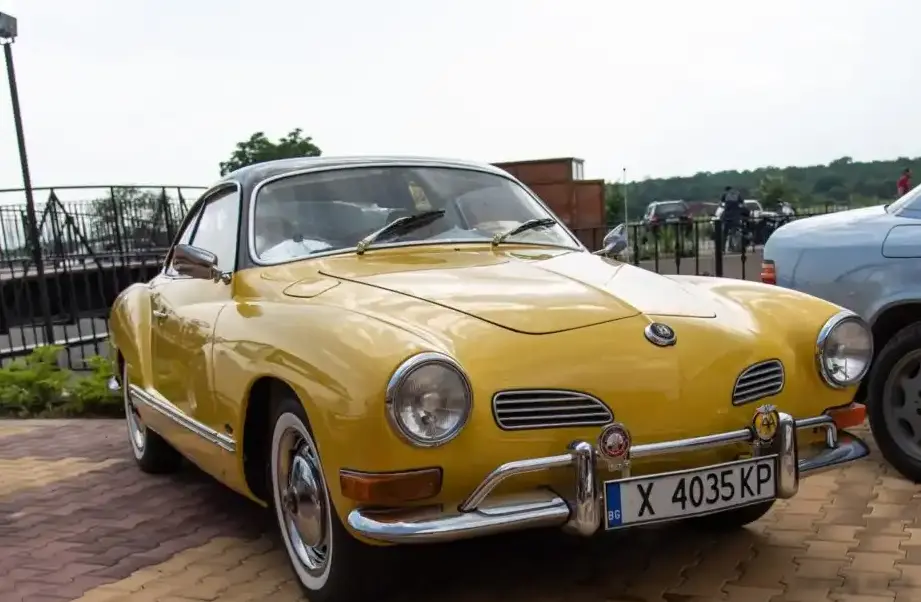
The Volkswagen Karmann Ghia Type 14, specifically the 1.5-liter (53 hp) variant with an automatic transmission, represents a unique and often overlooked chapter in the Karmann Ghia’s history. Produced between March 1966 and March 1970, this model occupied the entry-level position within the Type 14 range, offering a more accessible price point and a focus on comfortable cruising rather than outright performance. It was positioned below the more powerful 1.6-liter and later 1.7-liter versions, and significantly differed from the sporty aspirations of the Type 34 Karmann Ghia, which featured a larger engine and more luxurious appointments. This variant was primarily aimed at the North American market, where automatic transmissions were highly desirable, and European markets seeking a more relaxed driving experience.
Technical Specifications
| Brand | Volkswagen |
| Model | Karmann Ghia |
| Generation | Karmann Ghia (Type 14) |
| Type (Engine) | 1.5 (53 Hp) Automatic |
| Start of production | March, 1966 |
| End of production | March, 1970 |
| Powertrain Architecture | Internal Combustion engine |
| Body type | Coupe |
| Seats | 4 |
| Doors | 2 |
| Fuel consumption (combined) | 9 l/100 km (26.1 US mpg, 31.4 UK mpg, 11.1 km/l) |
| Fuel Type | Petrol (Gasoline) |
| Maximum speed | 129 km/h (80.16 mph) |
| Weight-to-power ratio | 16.4 kg/Hp (60.9 Hp/tonne) |
| Power | 53 Hp @ 4200 rpm |
| Power per litre | 35.5 Hp/l |
| Engine displacement | 1493 cm3 (91.11 cu. in.) |
| Number of cylinders | 4 |
| Engine configuration | 180° flat V-engine |
| Cylinder Bore | 83.06 mm (3.27 in.) |
| Piston Stroke | 69.09 mm (2.72 in.) |
| Compression ratio | 7.5:1 |
| Number of valves per cylinder | 2 |
| Fuel injection system | Carburettor |
| Engine aspiration | Naturally aspirated engine |
| Valvetrain | OHV |
| Engine oil capacity | 2.5 l (2.64 US qt | 2.2 UK qt) |
| Kerb Weight | 870 kg (1918.02 lbs.) |
| Max. weight | 1200 kg (2645.55 lbs.) |
| Max load | 330 kg (727.53 lbs.) |
| Fuel tank capacity | 40 l (10.57 US gal | 8.8 UK gal) |
| Length | 4140 mm (162.99 in.) |
| Width | 1633 mm (64.29 in.) |
| Height | 1331 mm (52.4 in.) |
| Wheelbase | 2400 mm (94.49 in.) |
| Front track | 1311 mm (51.61 in.) |
| Rear (Back) track | 1349 mm (53.11 in.) |
| Minimum turning circle | 11.3 m (37.07 ft.) |
| Drivetrain Architecture | Rear wheel drive |
| Drive wheel | Rear wheel drive |
| Number of gears and type of gearbox | 3 gears, automatic transmission |
| Front suspension | Transverse stabilizer, Torsion |
| Rear suspension | Torsion |
| Front brakes | Disc |
| Rear brakes | Drum |
| Steering type | Worm-reduction unit |
Powertrain & Engine Architecture
The heart of this Karmann Ghia variant is the Volkswagen Type 113 air-cooled, 1493cc flat-four engine. This engine, derived from the Volkswagen Beetle’s powerplant, featured a 7.5:1 compression ratio and utilized a single Solex carburetor for fuel delivery. The overhead valve (OHV) configuration, while simple, proved reliable. The engine produced 53 horsepower at 4200 rpm, a modest output compared to the later, larger displacement engines. The automatic transmission was a three-speed unit, a relatively early implementation of automatic technology in a Volkswagen. This transmission, while offering convenience, was known to slightly reduce overall performance and fuel economy compared to the four-speed manual option. The engine is longitudinally mounted in the rear of the vehicle, a characteristic of many Volkswagen models of the era.
Driving Characteristics
The 1.5-liter automatic Karmann Ghia offered a distinctly different driving experience than its more powerful siblings. Acceleration was leisurely, and the three-speed automatic transmission lacked the responsiveness of a manual gearbox. The gear ratios were optimized for comfortable cruising rather than spirited driving. While the manual transmission versions felt more engaging and offered better control, the automatic provided a smoother, more relaxed experience, particularly in city traffic. The car’s relatively light weight (870 kg / 1918 lbs) helped mitigate the effects of the lower horsepower, making it feel adequately powered for everyday driving. However, overtaking maneuvers required careful planning.
Equipment & Trim Levels
The 1.5-liter automatic Karmann Ghia typically came equipped with basic, yet comfortable, features. Standard upholstery was typically vinyl, with options for cloth inserts available. The dashboard featured a simple layout with basic instrumentation, including a speedometer, fuel gauge, and temperature indicator. Optional extras included a radio, whitewall tires, and a sunroof. The trim level was generally considered the base model, lacking the more luxurious appointments found in the higher-spec versions. Chrome trim was present, but less extensive than on the more expensive models.
Chassis & Braking
The Karmann Ghia Type 14 utilized a torsion beam suspension system at both the front and rear, providing a relatively comfortable ride. The front suspension incorporated a transverse stabilizer bar to reduce body roll. Braking was accomplished via disc brakes at the front and drum brakes at the rear. The braking system was adequate for the car’s weight and performance, but lacked the stopping power of more modern systems. Steering was via a worm-reduction unit, which provided a somewhat indirect feel.
Market Reception & Comparison
The 1.5-liter automatic Karmann Ghia received mixed reviews. Critics generally praised its stylish design and comfortable ride, but noted its lack of performance. Compared to the 1.6-liter and 1.7-liter versions, the 1.5-liter model felt noticeably slower and less refined. However, its lower price point and the convenience of the automatic transmission appealed to a specific segment of the market, particularly those seeking a stylish and comfortable cruiser. Fuel economy was reasonable for the era, averaging around 26.1 US mpg. Reliability was generally good, typical of Volkswagen’s air-cooled engines, but the automatic transmission required more frequent servicing than the manual gearbox.
Legacy
Today, the 1.5-liter automatic Karmann Ghia is a relatively rare and collectible variant. While not as sought after as the more powerful models, it represents an important part of the Karmann Ghia’s history. The powertrain, while not particularly high-performance, is known for its durability and relative simplicity, making it easier to maintain than some of the more complex later engines. Parts availability is generally good, thanks to the widespread use of Volkswagen Beetle components. In the used car market, these models typically command lower prices than their higher-spec counterparts, making them an affordable entry point into the world of classic Volkswagen ownership. The 1.5 automatic Karmann Ghia remains a charming and distinctive example of 1960s automotive design, offering a unique blend of style, comfort, and affordability.
