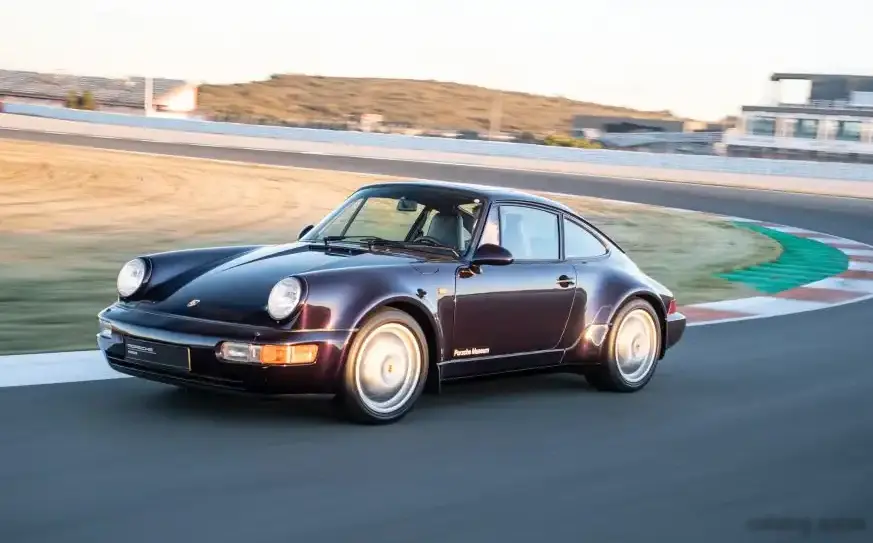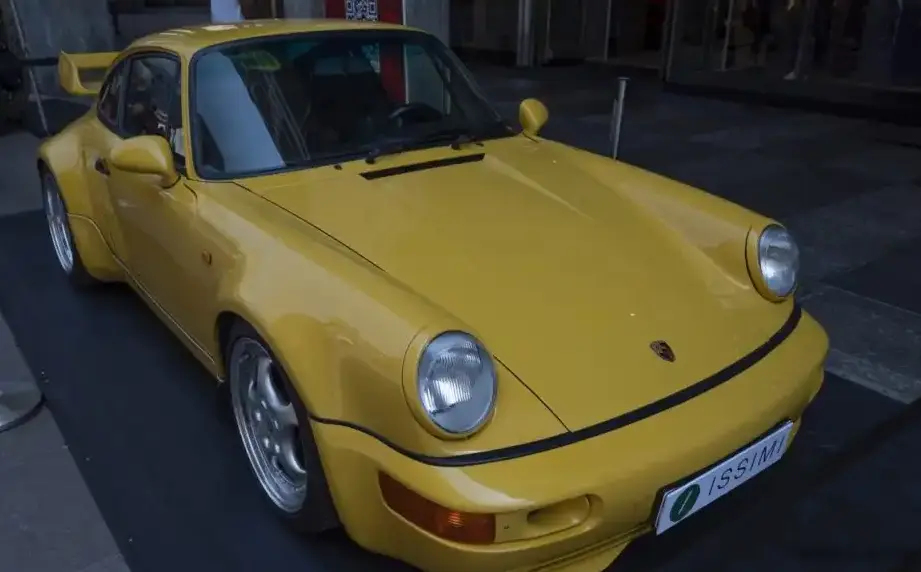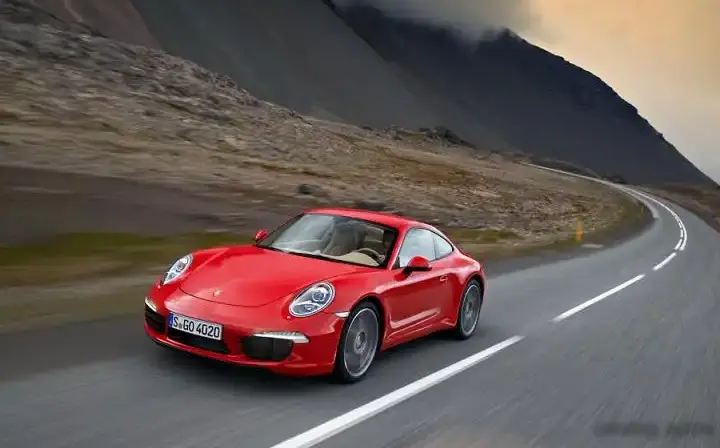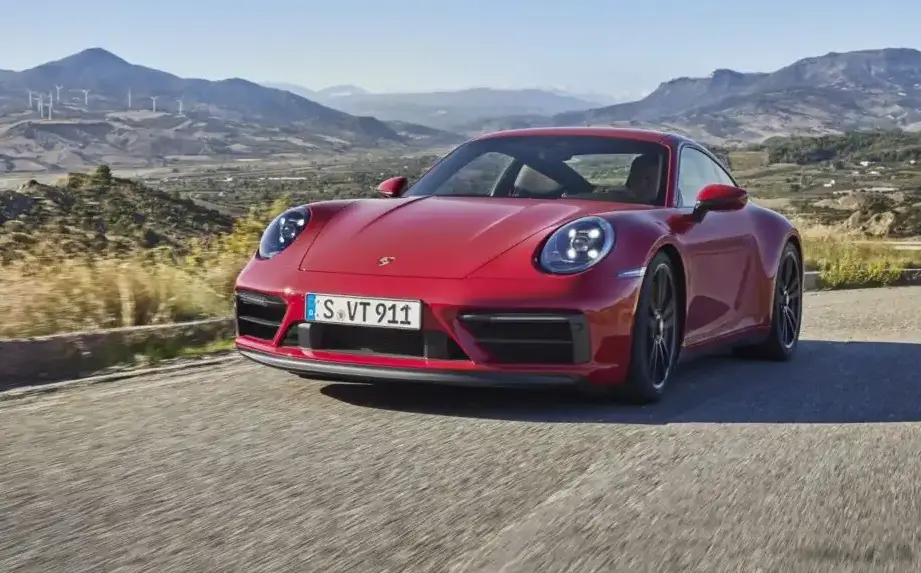
The Porsche 911 Carrera 4 3.0 (385 hp) PDK, produced from September 2019 through May 2024, represents a significant iteration of Porsche’s iconic sports car. Falling within the 992 generation, this variant balances performance with all-weather capability, making it a popular choice for drivers seeking a versatile 911 experience. It occupies a mid-range position within the 992 lineup, offering a step up in performance and features from the base Carrera models while remaining more accessible than the higher-performance Carrera S or GTS variants. The “Carrera 4” designation signifies Porsche’s all-wheel-drive system, enhancing traction and stability.
Technical Specifications
| Brand | Porsche |
| Model | 911 |
| Generation | 911 (992) |
| Type (Engine) | Carrera 4 3.0 (385 Hp) PDK |
| Start of production | September, 2019 |
| End of production | May, 2024 |
| Powertrain Architecture | Internal Combustion engine |
| Body type | Coupe |
| Seats | 4 |
| Doors | 2 |
| Fuel consumption (economy) – urban | 13.2 l/100 km (17.8 US mpg, 21.4 UK mpg, 7.6 km/l) |
| Fuel consumption (economy) – extra urban | 6.8 l/100 km (34.6 US mpg, 41.5 UK mpg, 14.7 km/l) |
| Fuel consumption (economy) – combined | 9.2 l/100 km (25.6 US mpg, 30.7 UK mpg, 10.9 km/l) |
| CO2 emissions | 210 g/km |
| Fuel Type | Petrol (Gasoline) |
| Acceleration 0 – 100 km/h | 4.2 sec |
| Acceleration 0 – 62 mph | 4.2 sec |
| Acceleration 0 – 60 mph | 4 sec |
| Acceleration 0 – 200 km/h | 14.9 sec |
| Maximum speed | 291 km/h (180.82 mph) |
| Emission standard | Euro 6d – TEMP – EVAP – ISC |
| Weight-to-power ratio | 4 kg/Hp, 247.6 Hp/tonne |
| Weight-to-torque ratio | 3.5 kg/Nm, 289.4 Nm/tonne |
| Power | 385 Hp @ 6500 rpm |
| Power per litre | 129.2 Hp/l |
| Torque | 450 Nm @ 1950-5000 rpm (331.9 lb.-ft. @ 1950-5000 rpm) |
| Maximum engine speed | 7500 rpm |
| Engine layout | Rear, Longitudinal |
| Engine Model/Code | DKCA |
| Engine displacement | 2981 cm3 (181.91 cu. in.) |
| Number of cylinders | 6 |
| Engine configuration | Boxer |
| Cylinder Bore | 91 mm (3.58 in.) |
| Piston Stroke | 76.4 mm (3.01 in.) |
| Compression ratio | 10.2:1 |
| Number of valves per cylinder | 4 |
| Fuel injection system | Direct injection |
| Engine aspiration | BiTurbo, Intercooler |
| Engine oil capacity | 8.3 l (8.77 US qt | 7.3 UK qt) |
| Kerb Weight | 1555 kg (3428.19 lbs.) |
| Max. weight | 1985 kg (4376.18 lbs.) |
| Max load | 430 kg (947.99 lbs.) |
| Trunk (boot) space – minimum | 132 l (4.66 cu. ft.) |
| Fuel tank capacity | 67 l (17.7 US gal | 14.74 UK gal) |
| Length | 4519 mm (177.91 in.) |
| Width | 1852 mm (72.91 in.) |
| Width including mirrors | 2024 mm (79.69 in.) |
| Height | 1298 mm (51.1 in.) |
| Wheelbase | 2450 mm (96.46 in.) |
| Front track | 1591 mm (62.64 in.) |
| Rear (Back) track | 1557 mm (61.3 in.) |
| Drag coefficient (Cd) | 0.29 |
| Minimum turning circle | 11.2 m (36.75 ft.) |
| Drivetrain Architecture | All wheel drive (4×4) |
| Number of gears and type of gearbox | 8 gears, automatic transmission PDK |
| Front suspension | Independent, type McPherson with coil spring and anti-roll bar |
| Rear suspension | Independent multi-link spring suspension with stabilizer |
| Front brakes | Ventilated discs, 330 mm |
| Rear brakes | Ventilated discs, 330 mm |
| Front tires | 235/40 ZR 19 |
| Rear tires | 295/35 ZR 20 |
Powertrain & Engine Architecture
At the heart of the 911 Carrera 4 3.0 PDK lies the DKCA engine, a 3.0-liter twin-turbocharged flat-six (boxer) engine. This engine utilizes direct fuel injection and variable turbine geometry (VTG) turbochargers to deliver a responsive and broad torque curve. The twin-turbo setup provides 385 horsepower at 6,500 rpm and 450 Nm (331.9 lb-ft) of torque between 1,950 and 5,000 rpm. The engine’s architecture, with its horizontally opposed cylinders, contributes to a lower center of gravity, enhancing handling. The Porsche Doppelkupplung (PDK) is a seven-speed dual-clutch transmission known for its incredibly fast and smooth gear changes. It offers both automatic and manual shifting modes, allowing drivers to tailor the driving experience to their preferences.
Driving Characteristics
The Carrera 4 3.0 PDK delivers a refined yet engaging driving experience. The all-wheel-drive system provides exceptional traction, particularly in adverse weather conditions, and contributes to confident cornering. The PDK transmission ensures seamless gear changes, whether in automatic mode for comfortable cruising or in manual mode for more spirited driving. While not as overtly aggressive as the Carrera S models, the 385 hp engine provides ample power for both daily driving and track use. The power delivery is linear and predictable, making the car accessible to drivers of all skill levels. The all-wheel drive system does add some weight compared to rear-wheel drive variants, slightly impacting agility, but the added stability is a worthwhile trade-off for many drivers.
Equipment & Trim Levels
The 911 Carrera 4 3.0 PDK came standard with a comprehensive list of features, including Porsche Communication Management (PCM) with a touchscreen display, a premium sound system, leather upholstery, and automatic climate control. Optional extras were plentiful, allowing buyers to personalize their vehicles. Popular options included adaptive sport seats, a sunroof, Porsche Dynamic Lighting System (PDLS), and various interior trim packages. The Carrera 4 trim generally offered a slightly more luxurious interior than the base Carrera, with additional standard leather accents.
Chassis & Braking
The 992 generation 911 features a sophisticated chassis designed for both comfort and performance. The Carrera 4 utilizes independent suspension with McPherson struts at the front and a multi-link setup at the rear. Porsche Active Suspension Management (PASM), an optional extra, allows drivers to adjust the damping characteristics to suit their driving style and road conditions. The braking system consists of ventilated discs on all four wheels, providing ample stopping power. The Carrera 4 also benefits from Porsche’s 4-wheel steering system, which enhances agility at low speeds and stability at high speeds.
Market Reception & Comparison
The 911 Carrera 4 3.0 PDK was well-received by automotive critics, who praised its blend of performance, comfort, and all-weather capability. Compared to the base Carrera, the Carrera 4 offered superior traction and stability, making it a more practical choice for drivers in regions with inclement weather. Compared to the Carrera S, the Carrera 4 provided a more accessible price point and a slightly more comfortable ride. Fuel economy was respectable for a sports car of this caliber, averaging around 25.6 US mpg in combined driving. Reliability has generally been good, with the PDK transmission proving to be particularly robust.
Legacy
The 992 Carrera 4 3.0 PDK has established itself as a desirable and well-rounded sports car. Its combination of performance, practicality, and Porsche’s renowned build quality ensures its continued appeal in the used car market. The DKCA engine and PDK transmission are known for their durability, and with proper maintenance, these vehicles are expected to provide many years of reliable service. As the 992 generation matures, the Carrera 4 3.0 PDK is likely to become a sought-after model for enthusiasts seeking a classic Porsche experience with modern technology.