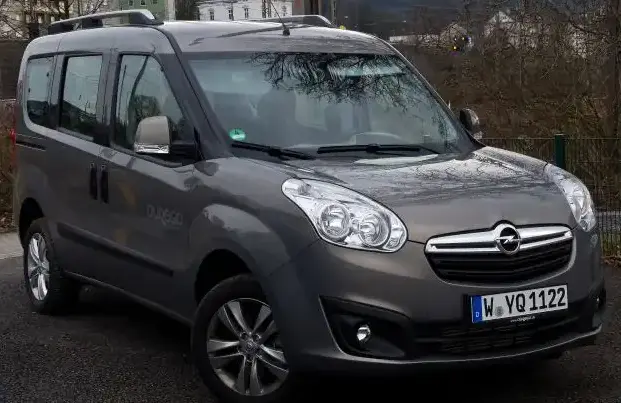
The Opel Combo Tour D 2.0 CDTI (135 hp) Ecotec start/stop, produced from February 2012 to March 2016, represents a significant iteration of Opel’s popular light commercial vehicle and passenger-oriented minivan. Positioned as a mid-range offering within the Combo Tour D lineup, this variant aimed to balance fuel efficiency, practicality, and a reasonable level of performance for families and commercial users alike. It falls within the broader context of the Combo Tour D generation, which itself is based on the Fiat Doblo platform developed jointly by Opel/Vauxhall and Fiat. This collaboration allowed Opel to expand its presence in the compact van segment, offering a versatile vehicle suited for both work and leisure.
Technical Specifications
| Brand | Opel |
| Model | Combo |
| Generation | Combo Tour D |
| Type (Engine) | 2.0 CDTI (135 Hp) Ecotec start/stop |
| Start of production | February, 2012 |
| End of production | March, 2016 |
| Powertrain Architecture | Internal Combustion engine |
| Body type | Minivan |
| Seats | 5 |
| Doors | 5 |
| Fuel consumption (urban) | 7.8-7.3 l/100 km (30.2 – 32.2 US mpg) |
| Fuel consumption (extra urban) | 5.5-5.1 l/100 km (42.8 – 46.1 US mpg) |
| Fuel consumption (combined) | 6.3-5.9 l/100 km (37.3 – 39.9 US mpg) |
| CO2 emissions | 167-156 g/km |
| Fuel Type | Diesel |
| Acceleration 0 – 100 km/h | 11.3 sec |
| Acceleration 0 – 62 mph | 11.3 sec |
| Acceleration 0 – 60 mph | 10.7 sec |
| Maximum speed | 179 km/h (111.23 mph) |
| Emission standard | Euro 5 |
| Power | 135 Hp @ 3500 rpm |
| Torque | 320 Nm @ 1500 rpm (236.02 lb.-ft. @ 1500 rpm) |
| Engine layout | Front, Transverse |
| Engine Model/Code | A20FD |
| Engine displacement | 1956 cm3 (119.36 cu. in.) |
| Number of cylinders | 4 |
| Engine configuration | Inline |
| Cylinder Bore | 83 mm (3.27 in.) |
| Piston Stroke | 90.5 mm (3.56 in.) |
| Fuel injection system | Diesel Commonrail |
| Engine aspiration | Turbocharger, Intercooler |
| Engine oil capacity | 4.9 l (5.18 US qt | 4.31 UK qt) |
| Coolant | 6.7 l (7.08 US qt | 5.9 UK qt) |
| Trunk (boot) space – maximum | 3200 l (113.01 cu. ft.) |
| Fuel tank capacity | 60 l (15.85 US gal | 13.2 UK gal) |
| Length | 4390 mm (172.83 in.) |
| Width | 1831 mm (72.09 in.) |
| Height | 1845-2100 mm (72.64 – 82.68 in.) |
| Wheelbase | 2755 mm (108.46 in.) |
| Front track | 1510 mm (59.45 in.) |
| Rear (Back) track | 1530 mm (60.24 in.) |
| Minimum turning circle | 11.2 m (36.75 ft.) |
| Drivetrain Architecture | Front wheel drive |
| Number of gears | 6 gears, manual transmission |
| Assisting systems | ABS (Anti-lock braking system) |
Powertrain & Engine Architecture
The heart of the Combo Tour D 2.0 CDTI is the A20FD engine, a 1.956-liter inline-four cylinder diesel. This engine is part of Opel’s Ecotec family, known for its focus on efficiency and reduced emissions. The A20FD utilizes a common rail direct injection system, delivering fuel directly into the combustion chamber at extremely high pressure. This, combined with a turbocharger and intercooler, allows for a good balance of power and torque. The engine produces 135 horsepower at 3500 rpm and a substantial 320 Nm (236 lb-ft) of torque at just 1500 rpm. This low-end torque is particularly beneficial for a vehicle intended for both commercial and family use, providing ample pulling power and relaxed cruising. The engine also incorporates a start/stop system to further improve fuel economy in urban driving conditions. The 6-speed manual transmission was the standard offering for this variant, providing precise gear changes and contributing to the overall driving experience.
Driving Characteristics
The 2.0 CDTI engine, paired with the 6-speed manual gearbox, delivers a competent, if not particularly sporty, driving experience. Acceleration from 0-60 mph takes around 10.7 seconds, and top speed is rated at 111 mph. The strength of this powertrain lies in its mid-range grunt. The readily available torque makes overtaking and hill climbing relatively effortless. Compared to the lower-powered 1.3 CDTI variants, the 2.0 CDTI offers a noticeable improvement in performance, especially when fully loaded with passengers or cargo. However, it doesn’t possess the outright speed of higher-performance options available in other Opel models. The gear ratios are well-chosen for everyday driving, providing a comfortable balance between fuel efficiency and responsiveness. The steering is light and precise, making it easy to maneuver in urban environments.
Equipment & Trim Levels
The Combo Tour D 2.0 CDTI typically came equipped with a reasonable level of standard features. These included power windows, central locking, an adjustable steering column, and a basic audio system. Safety features such as ABS and driver/passenger airbags were also standard. Higher trim levels, often denoted by specific packages, added features like air conditioning, alloy wheels, a more advanced audio system with Bluetooth connectivity, and parking sensors. Interior upholstery was typically cloth, with options for upgraded materials available. The dashboard layout was functional and straightforward, prioritizing practicality over luxury.
Chassis & Braking
The Combo Tour D utilizes a relatively simple chassis design, prioritizing robustness and cost-effectiveness. The front suspension consists of MacPherson struts, while the rear suspension employs a twist beam setup. This configuration provides a comfortable ride quality, although it’s not particularly sporty. Braking duties are handled by disc brakes on the front wheels and drum brakes on the rear. ABS (Anti-lock Braking System) is standard, enhancing safety during emergency braking situations. The suspension tuning is geared towards carrying loads, so the ride can feel slightly firm when the vehicle is unladen. Stabilizer bars were included to reduce body roll during cornering.
Market Reception & Comparison
The Opel Combo Tour D 2.0 CDTI was generally well-received by critics as a practical and versatile vehicle. It was praised for its spacious interior, fuel efficiency, and strong diesel engine. However, some reviewers noted that the interior was somewhat basic and lacked the refinement of some competitors. Compared to the 1.3 CDTI variants, the 2.0 CDTI offered a significant performance upgrade, making it a more suitable choice for those who frequently carry heavy loads or travel long distances. Fuel economy was competitive within its class, averaging around 39 mpg on the combined cycle. Reliability was generally good, although some owners reported minor issues with the diesel particulate filter (DPF).
Legacy
The Opel Combo Tour D 2.0 CDTI remains a popular choice in the used car market, particularly for those seeking a practical and affordable van or minivan. The A20FD engine is known for its durability and relatively low maintenance costs, provided it’s been properly maintained. The availability of spare parts is good, and the vehicle’s simple design makes it relatively easy to repair. While not a performance icon, the 2.0 CDTI variant offers a solid blend of practicality, efficiency, and reliability, making it a sensible choice for families, tradespeople, and anyone needing a versatile vehicle for work or leisure.