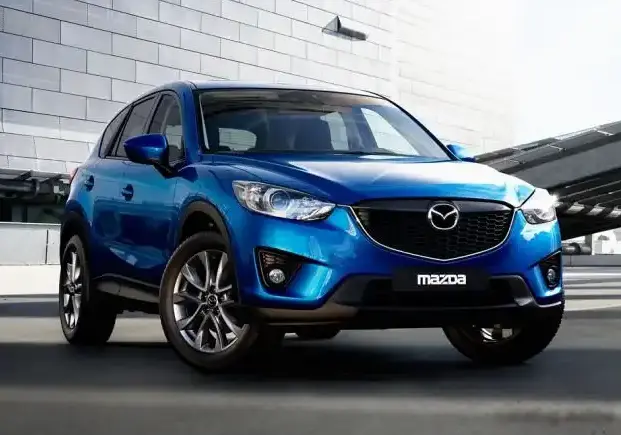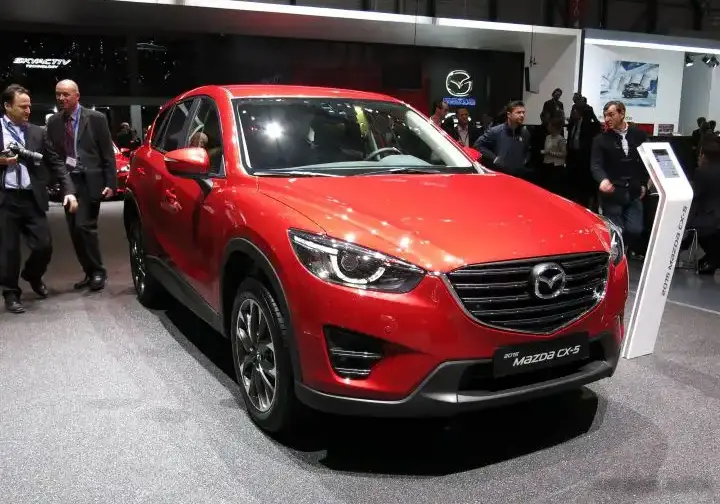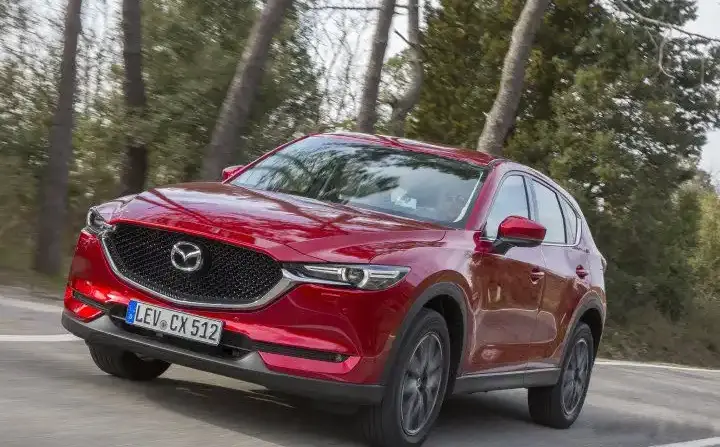
The Mazda CX-5 II 2.2 SKYACTIV-D (175 Hp) AWD was a variant of the second-generation Mazda CX-5, produced from 2017 to 2018. Positioned as a mid-range offering within the CX-5 lineup, it combined a potent diesel engine with all-wheel drive, targeting buyers seeking fuel efficiency and capable all-weather performance. This model played a significant role in Mazda’s strategy to offer a compelling alternative to gasoline-powered SUVs in the European and Asian markets, where diesel engines were more prevalent. While not officially sold in the United States during these years, the CX-5 platform was available with gasoline engines.
Technical Specifications
| Brand | Mazda |
| Model | CX-5 |
| Generation | CX-5 II |
| Type (Engine) | 2.2 SKYACTIV-D (175 Hp) AWD |
| Start of production | 2017 |
| End of production | 2018 |
| Powertrain Architecture | Internal Combustion engine |
| Body type | SUV |
| Seats | 5 |
| Doors | 5 |
| Fuel consumption (urban) | 6.3 l/100 km (37.3 US mpg, 44.8 UK mpg, 15.9 km/l) |
| Fuel consumption (extra urban) | 4.9 l/100 km (48 US mpg, 57.6 UK mpg, 20.4 km/l) |
| Fuel consumption (combined) | 5.4 l/100 km (43.6 US mpg, 52.3 UK mpg, 18.5 km/l) |
| CO2 emissions | 142 g/km |
| Fuel Type | Diesel |
| Acceleration 0 – 100 km/h | 9 sec |
| Acceleration 0 – 62 mph | 9 sec |
| Acceleration 0 – 60 mph | 8.6 sec |
| Maximum speed | 209 km/h (129.87 mph) |
| Emission standard | Euro 6 |
| Weight-to-power ratio | 9.1 kg/Hp, 109.7 Hp/tonne |
| Weight-to-torque ratio | 3.8 kg/Nm, 263.3 Nm/tonne |
| Power | 175 Hp @ 4500 rpm |
| Power per litre | 79.9 Hp/l |
| Torque | 420 Nm @ 2000 rpm (309.78 lb.-ft. @ 2000 rpm) |
| Engine layout | Front, Transverse |
| Engine Model/Code | SHY6 |
| Engine displacement | 2191 cm3 (133.7 cu. in.) |
| Number of cylinders | 4 |
| Engine configuration | Inline |
| Cylinder Bore | 86 mm (3.39 in.) |
| Piston Stroke | 94.3 mm (3.71 in.) |
| Compression ratio | 14:1 |
| Number of valves per cylinder | 4 |
| Fuel injection system | Diesel Commonrail |
| Engine aspiration | Turbocharger, Intercooler |
| Engine oil capacity | 5.1 l (5.39 US qt | 4.49 UK qt) |
| Coolant | 8.5 l (8.98 US qt | 7.48 UK qt) |
| Kerb Weight | 1595 kg (3516.37 lbs.) |
| Max. weight | 2143 kg (4724.51 lbs.) |
| Max load | 548 kg (1208.13 lbs.) |
| Trunk (boot) space – minimum | 506 l (17.87 cu. ft.) |
| Trunk (boot) space – maximum | 1620 l (57.21 cu. ft.) |
| Fuel tank capacity | 58 l (15.32 US gal | 12.76 UK gal) |
| Max. roof load | 50 kg (110.23 lbs.) |
| Permitted trailer load with brakes (8%) | 2100 kg (4629.71 lbs.) |
| Permitted trailer load with brakes (12%) | 2000 kg (4409.25 lbs.) |
| Permitted trailer load without brakes | 750 kg (1653.47 lbs.) |
| Permitted towbar download | 75 kg (165.35 lbs.) |
| Length | 4550 mm (179.13 in.) |
| Width | 1840 mm (72.44 in.) |
| Width including mirrors | 2115 mm (83.27 in.) |
| Height | 1680 mm (66.14 in.) |
| Wheelbase | 2700 mm (106.3 in.) |
| Front track | 1586 mm (62.44 in.) |
| Rear (Back) track | 1586 mm (62.44 in.) |
| Ride height (ground clearance) | 193 mm (7.6 in.) |
| Minimum turning circle | 11.0 m (36.09 ft.) |
| Drive wheel | All wheel drive (4×4) |
| Number of gears and type of gearbox | 6 gears, manual transmission |
| Front brakes | Ventilated discs |
| Rear brakes | Disc |
Powertrain & Engine Architecture
The heart of the CX-5 II 2.2 SKYACTIV-D was the SHY6 engine, a 2.2-liter inline-four cylinder diesel. This engine was a key component of Mazda’s SKYACTIV technology, designed to maximize efficiency and reduce emissions. It featured a high compression ratio of 14:1, achieved through advanced combustion control and optimized piston design. The engine utilized a common-rail direct injection system, delivering fuel directly into the cylinders at extremely high pressure for improved atomization and combustion. A turbocharger with an intercooler further enhanced performance by forcing more air into the engine. The 175 horsepower and 309.78 lb-ft of torque were respectable figures for a diesel engine of this displacement, providing a good balance of power and fuel economy. The 6-speed manual transmission was standard, offering precise gear changes and driver engagement.
Driving Characteristics
The CX-5 II 2.2 SKYACTIV-D with the manual transmission offered a surprisingly engaging driving experience for an SUV. The 420 Nm of torque available from 2000 rpm provided strong acceleration in everyday driving situations. While not a sports car, the engine felt responsive and capable, especially when overtaking or climbing hills. The all-wheel-drive system provided excellent traction in various weather conditions, enhancing stability and confidence. Compared to the gasoline-powered CX-5 variants, the diesel offered superior fuel economy and a more relaxed cruising experience due to the engine’s torque characteristics. However, it lacked the higher-revving nature and immediate throttle response of the gasoline engines.
Equipment & Trim Levels
The 2.2 SKYACTIV-D AWD trim typically included features such as automatic climate control, a touchscreen infotainment system with navigation, Bluetooth connectivity, and a suite of safety features including ABS, traction control, and stability control. Higher trim levels added features like leather upholstery, a sunroof, and advanced driver-assistance systems such as lane departure warning and blind-spot monitoring. The interior design was generally minimalist and functional, with a focus on ergonomics and build quality.
Chassis & Braking
The CX-5 II utilized a MacPherson strut front suspension and a multi-link rear suspension, providing a comfortable ride and good handling characteristics. The all-wheel-drive system employed a center differential to distribute torque between the front and rear axles, optimizing traction based on road conditions. The braking system consisted of ventilated discs at the front and solid discs at the rear, providing adequate stopping power for the vehicle’s weight and performance. The electric power steering offered a light and precise feel.
Market Reception & Comparison
The Mazda CX-5 II 2.2 SKYACTIV-D AWD was generally well-received by automotive critics in Europe and Asia. It was praised for its fuel efficiency, comfortable ride, and refined driving experience. Compared to other diesel SUVs in its class, the CX-5 offered a more engaging driving experience and a higher level of interior quality. However, some critics noted that the diesel engine was slightly noisier than its gasoline counterparts. The fuel economy was a significant selling point, particularly for drivers who covered long distances.
Legacy
The SHY6 engine proved to be a reliable and durable powertrain when properly maintained. The CX-5 II 2.2 SKYACTIV-D AWD remains a popular choice in the used car market, particularly for buyers seeking a fuel-efficient and capable SUV. While diesel engines have faced increased scrutiny in recent years due to emissions concerns, the SKYACTIV-D engine was designed to meet stringent emission standards. The CX-5 II, in general, established Mazda as a serious contender in the compact SUV segment, known for its stylish design, engaging driving dynamics, and overall quality.