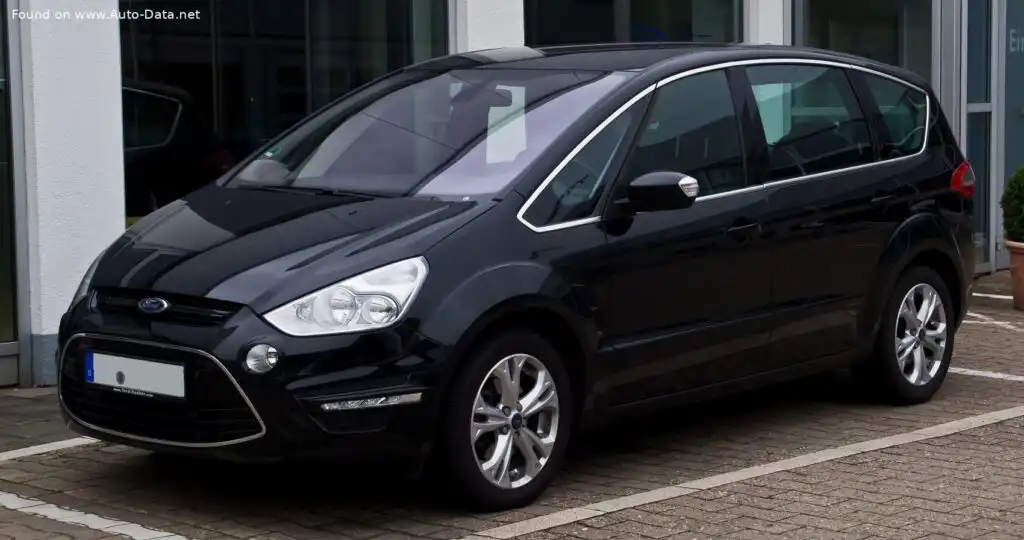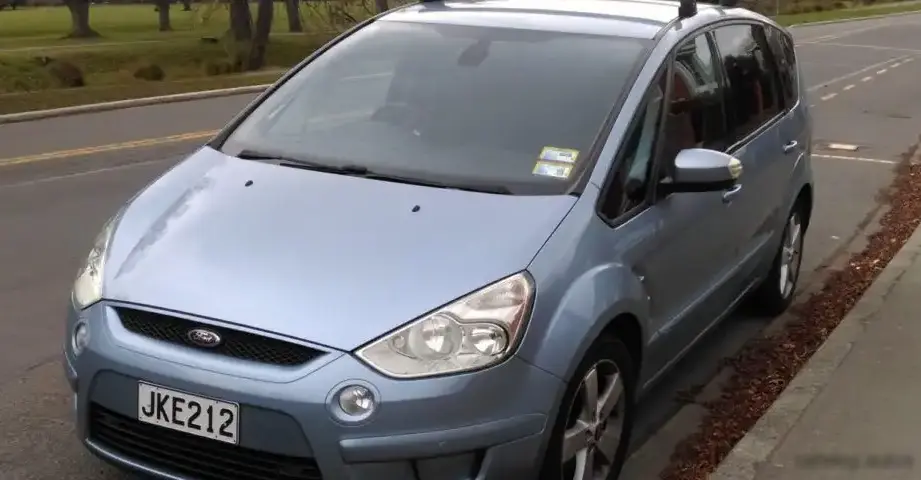
The Ford S-MAX 1.8 TDCi, produced between 2006 and 2010, represented an entry point into the first generation of Ford’s multi-purpose vehicle (MPV). Positioned within the S-MAX range – which also included higher-powered petrol and diesel variants – the 1.8 TDCi offered a balance of practicality, fuel efficiency, and affordability for families. It was a key model for Ford in the European market, competing with vehicles like the Renault Espace and Volkswagen Touran, offering a more dynamic driving experience than many of its competitors. This variant utilized the Ford C1 platform, shared with the contemporary Ford Galaxy and, to a degree, the Volvo S80.
Technical Specifications
| Brand | Ford |
| Model | S-MAX |
| Generation | S-MAX |
| Type (Engine) | 1.8 TDCi (125 Hp) |
| Start of production | 2006 |
| End of production | 2010 |
| Powertrain Architecture | Internal Combustion engine |
| Body type | Minivan |
| Seats | 7 |
| Doors | 5 |
| Fuel consumption (urban) | 7.9 l/100 km (29.8 US mpg) |
| Fuel consumption (extra urban) | 5.2 l/100 km (45.2 US mpg) |
| Fuel consumption (combined) | 6.2 l/100 km (37.9 US mpg) |
| Fuel Type | Diesel |
| Acceleration 0 – 100 km/h | 11.6 sec |
| Acceleration 0 – 62 mph | 11.6 sec |
| Acceleration 0 – 60 mph | 11 sec |
| Maximum speed | 190 km/h (118.06 mph) |
| Weight-to-power ratio | 14 kg/Hp |
| Weight-to-torque ratio | 5.5 kg/Nm |
| Power | 125 Hp @ 3850 rpm |
| Torque | 320 Nm @ 1750 rpm (236.02 lb.-ft. @ 1750 rpm) |
| Engine layout | Front, Transverse |
| Engine Model/Code | QYWA |
| Engine displacement | 1753 cm3 (106.97 cu. in.) |
| Number of cylinders | 4 |
| Engine configuration | Inline |
| Cylinder Bore | 82.5 mm (3.25 in.) |
| Piston Stroke | 82 mm (3.23 in.) |
| Compression ratio | 18.5:1 |
| Number of valves per cylinder | 2 |
| Fuel injection system | Diesel Commonrail |
| Engine aspiration | Turbocharger, Intercooler |
| Engine oil capacity | 5 l (5.28 US qt | 4.4 UK qt) |
| Coolant capacity | 7.9 l (8.35 US qt | 6.95 UK qt) |
| Kerb Weight | 1744 kg (3844.86 lbs.) |
| Max. weight | 2505 kg (5522.58 lbs.) |
| Max load | 761 kg (1677.72 lbs.) |
| Trunk (boot) space – minimum | 854 l (30.16 cu. ft.) |
| Trunk (boot) space – maximum | 2100 l (74.16 cu. ft.) |
| Fuel tank capacity | 70 l (18.49 US gal | 15.4 UK gal) |
| Length | 4768 mm (187.72 in.) |
| Width | 1884 mm (74.17 in.) |
| Height | 1658 mm (65.28 in.) |
| Wheelbase | 2850 mm (112.2 in.) |
| Front track | 1589 mm (62.56 in.) |
| Rear track | 1605 mm (63.19 in.) |
| Minimum turning circle | 11.6 m (38.06 ft.) |
| Drivetrain Architecture | Front wheel drive |
| Number of gears | 6 |
| Gearbox type | Manual transmission |
| Front suspension | Spring Strut |
| Rear suspension | Transverse stabilizer |
| Front brakes | Ventilated discs |
| Rear brakes | Disc |
| Assisting systems | ABS (Anti-lock braking system) |
| Steering type | Steering rack and pinion |
| Tires size | 215/60 R16 |
| Wheel rims size | 6.5J X 16 |
INTRODUCTION
The Ford S-MAX 1.8 TDCi, launched in 2006, was a significant addition to Ford’s lineup, aiming to provide a more engaging and stylish alternative to traditional MPVs. It was part of the first generation (2006-2014) of the S-MAX, built on the Ford C1 platform. This platform also underpinned the Ford Galaxy and, with some modifications, the Volvo S80. The 1.8 TDCi variant served as the entry-level diesel option, targeting buyers who prioritized fuel economy and practicality over outright performance. It offered seven-seat capability, a relatively spacious interior, and Ford’s characteristic focus on driving dynamics.
Powertrain & Engine Architecture
The heart of the S-MAX 1.8 TDCi is the QYWA engine, a 1.8-liter inline-four cylinder diesel engine. This engine belongs to Ford’s Duratorq family, known for its robust construction and relatively good fuel efficiency. The QYWA utilizes a common rail direct injection system, delivering fuel directly into the combustion chamber at extremely high pressure. This system, coupled with a variable geometry turbocharger and intercooler, optimizes combustion for improved power and reduced emissions. The engine produces 125 horsepower at 3850 rpm and 320 Nm (236 lb-ft) of torque at 1750 rpm. The engine features a dual overhead camshaft (DOHC) valvetrain with two valves per cylinder. The 1.8 TDCi was typically paired with a six-speed manual transmission, although a six-speed automatic transmission was also available as an option. The automatic transmission, while offering convenience, slightly impacted fuel economy and acceleration compared to the manual version.
Driving Characteristics
The S-MAX 1.8 TDCi, with its 125 hp and 320 Nm of torque, provided adequate, but not exhilarating, performance. Acceleration from 0 to 60 mph took around 11 seconds, and top speed was approximately 118 mph. The engine’s torque delivery was relatively flat, providing good responsiveness in everyday driving situations. However, when fully loaded with passengers and luggage, the engine could feel strained, particularly when overtaking or climbing hills. The six-speed manual transmission offered precise shifts and allowed drivers to make the most of the available power. The automatic transmission, while smooth, sometimes hesitated during downshifts. Compared to the higher-powered 2.0-liter TDCi and petrol variants, the 1.8 TDCi felt noticeably less potent, but it offered a more relaxed and fuel-efficient driving experience.
Equipment & Trim Levels
The S-MAX 1.8 TDCi was typically offered in base and mid-level trim configurations. Standard equipment generally included air conditioning, power windows, power mirrors, a CD stereo, and ABS brakes. Higher trim levels added features such as alloy wheels, front fog lights, a multi-function steering wheel, and upgraded interior trim. Optional extras included a sunroof, rear parking sensors, and a navigation system. Interior upholstery was typically cloth, with leather options available on higher trims. The dashboard layout was functional and well-designed, with clear instrumentation and intuitive controls. The S-MAX’s flexible seating arrangement, with its ability to fold and tumble the second and third-row seats, was a key selling point.
Chassis & Braking
The S-MAX 1.8 TDCi featured a MacPherson strut front suspension and a multi-link rear suspension. This setup provided a good balance of ride comfort and handling. The suspension was tuned to prioritize comfort, but the S-MAX still offered a relatively engaging driving experience, with minimal body roll in corners. Brakes consisted of ventilated discs at the front and solid discs at the rear. ABS (Anti-lock Braking System) was standard. The steering was a rack-and-pinion system, providing precise and responsive steering feel. The S-MAX’s chassis was relatively lightweight, contributing to its agility and fuel efficiency.
Market Reception & Comparison
The Ford S-MAX 1.8 TDCi was generally well-received by automotive critics. It was praised for its spacious interior, flexible seating arrangement, and engaging driving dynamics. However, some critics noted that the 1.8 TDCi engine lacked the power of its larger siblings. Fuel economy was a strong point, with the 1.8 TDCi achieving around 38 mpg on the combined cycle. Compared to the 2.0-liter TDCi, the 1.8 TDCi offered lower running costs but sacrificed performance. The petrol variants provided more power but were less fuel-efficient. The S-MAX 1.8 TDCi represented a good value proposition for families seeking a practical and affordable MPV.
Legacy
The Ford S-MAX 1.8 TDCi has proven to be a relatively reliable vehicle, with the Duratorq engine generally holding up well over time. Common issues include turbocharger wear and potential problems with the diesel particulate filter (DPF), particularly on vehicles that have primarily been used for short journeys. The QYWA engine is known for its durability, but regular maintenance, including oil changes and filter replacements, is crucial for long-term reliability. On the used car market, the S-MAX 1.8 TDCi remains a popular choice for budget-conscious buyers seeking a spacious and practical MPV. Its affordability, combined with its relatively good fuel economy and reliability, makes it a compelling option in the used car segment.