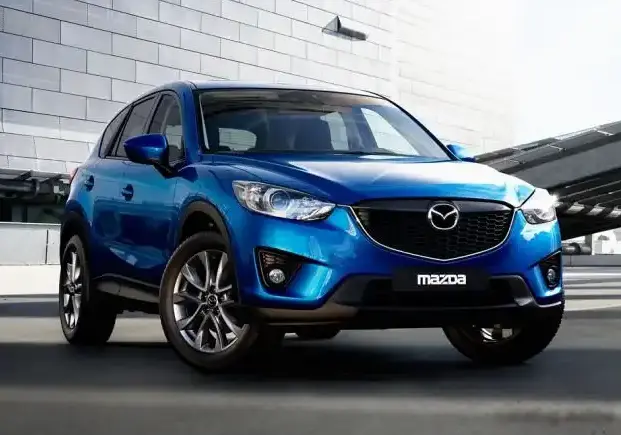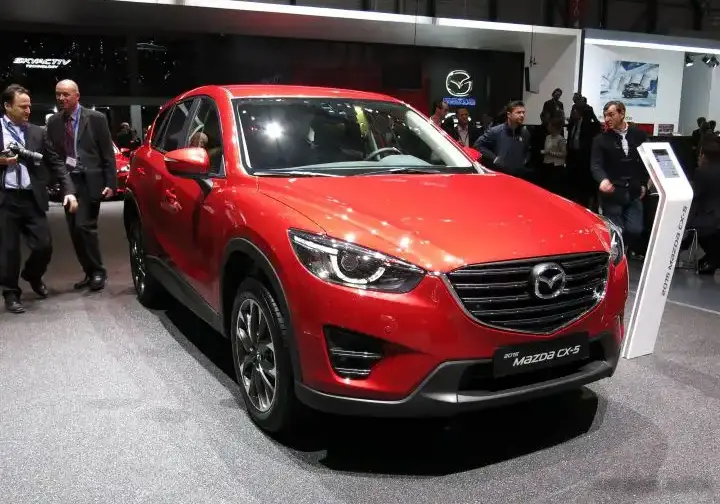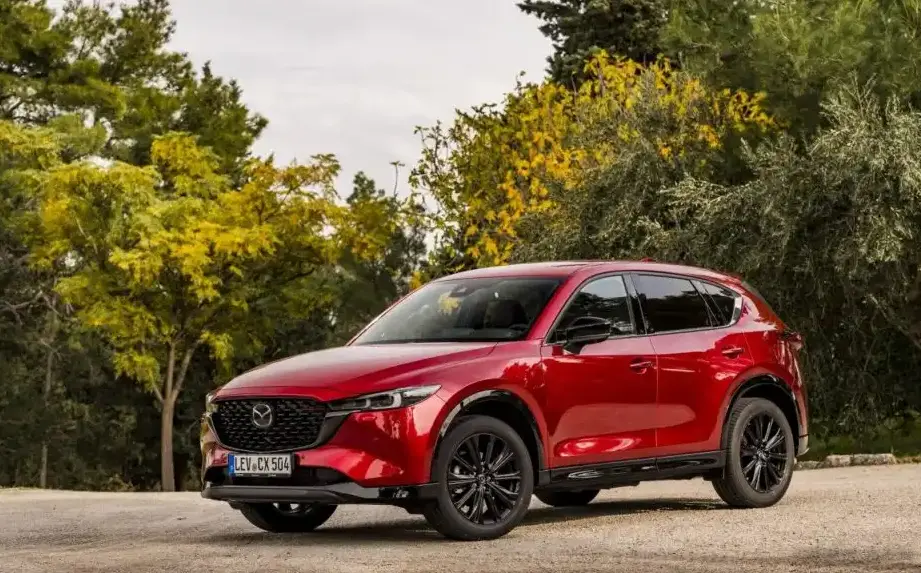
The Mazda CX-5 II, specifically the facelift model introduced in September 2021, represents a significant evolution of Mazda’s popular compact SUV. This variant, powered by the 2.2 SKYACTIV-D diesel engine producing 150 horsepower, occupied a key position in the CX-5 lineup, offering a balance between fuel efficiency, torque, and affordability. It was designed to appeal to buyers seeking a refined driving experience with the practicality of an SUV, primarily targeting the European and Asian markets where diesel engines remained popular. This model falls within the second generation of the CX-5 (KE series), benefiting from updates to styling, technology, and driving dynamics introduced with the facelift.
Technical Specifications
| Brand | Mazda |
| Model | CX-5 |
| Generation | CX-5 II (facelift 2021) |
| Type (Engine) | 2.2 SKYACTIV-D (150 Hp) |
| Start of production | September, 2021 |
| Powertrain Architecture | Internal Combustion engine |
| Body type | SUV |
| Seats | 5 |
| Doors | 5 |
| Fuel consumption at Low speed (WLTP) | 5.9-6.2 l/100 km (39.9 – 37.9 US mpg, 47.9 – 45.6 UK mpg, 16.9 – 16.1 km/l) |
| Fuel consumption at Medium speed (WLTP) | 5.3 l/100 km (44.4 US mpg, 53.3 UK mpg, 18.9 km/l) |
| Fuel consumption at high speed (WLTP) | 4.7-4.9 l/100 km (50 – 48 US mpg, 60.1 – 57.6 UK mpg, 21.3 – 20.4 km/l) |
| Fuel consumption at very high speed (WLTP) | 6.3 l/100 km (37.3 US mpg, 44.8 UK mpg, 15.9 km/l) |
| Combined fuel consumption (WLTP) | 5.6 l/100 km (42 US mpg, 50.4 UK mpg, 17.9 km/l) |
| CO2 emissions (WLTP) | 147 g/km |
| Fuel consumption (economy) – urban (NEDC) | 5.5-5.6 l/100 km (42.8 – 42 US mpg, 51.4 – 50.4 UK mpg, 18.2 – 17.9 km/l) |
| Fuel consumption (economy) – extra urban (NEDC) | 4.5-4.6 l/100 km (52.3 – 51.1 US mpg, 62.8 – 61.4 UK mpg, 22.2 – 21.7 km/l) |
| Fuel consumption (economy) – combined (NEDC) | 4.9-5.0 l/100 km (48 – 47 US mpg, 57.6 – 56.5 UK mpg, 20.4 – 20 km/l) |
| CO2 emissions (NEDC) | 128-130 g/km |
| Fuel Type | Diesel |
| Acceleration 0 – 100 km/h | 9.9 sec |
| Acceleration 0 – 62 mph | 9.9 sec |
| Acceleration 0 – 60 mph | 9.4 sec |
| Maximum speed | 204 km/h (126.76 mph) |
| Emission standard | Euro 6d |
| Weight-to-power ratio | 10.6 kg/Hp, 94.3 Hp/tonne |
| Weight-to-torque ratio | 4.2 kg/Nm, 238.8 Nm/tonne |
| Power | 150 Hp @ 4500 rpm |
| Power per litre | 68.5 Hp/l |
| Torque | 380 Nm @ 1800-2600 rpm (280.27 lb.-ft. @ 1800-2600 rpm) |
| Engine layout | Front, Transverse |
| Engine Model/Code | SHY6 |
| Engine displacement | 2191 cm3 (133.7 cu. in.) |
| Number of cylinders | 4 |
| Engine configuration | Inline |
| Cylinder Bore | 86 mm (3.39 in.) |
| Piston Stroke | 94.3 mm (3.71 in.) |
| Compression ratio | 14.4:1 |
| Number of valves per cylinder | 4 |
| Fuel injection system | Diesel Commonrail |
| Engine aspiration | Turbocharger, Intercooler |
| Valvetrain | DOHC |
| Engine oil capacity | 5.1 l (5.39 US qt | 4.49 UK qt) |
| Coolant | 8.7 l (9.19 US qt | 7.65 UK qt) |
| Kerb Weight | 1591-1648 kg (3507.55 – 3633.22 lbs.) |
| Max. weight | 2143 kg (4724.51 lbs.) |
| Max load | 495-552 kg (1091.29 – 1216.95 lbs.) |
| Trunk (boot) space – minimum | 510 l (18.01 cu. ft.) |
| Trunk (boot) space – maximum | 1626 l (57.42 cu. ft.) |
| Fuel tank capacity | 56 l (14.79 US gal | 12.32 UK gal) |
| Max. roof load | 75 kg (165.35 lbs.) |
| Permitted trailer load with brakes (8%) | 2000 kg (4409.25 lbs.) |
| Permitted trailer load with brakes (12%) | 2000 kg (4409.25 lbs.) |
| Permitted trailer load without brakes | 750 kg (1653.47 lbs.) |
| Length | 4575 mm (180.12 in.) |
| Width | 1845 mm (72.64 in.) |
| Width including mirrors | 2115 mm (83.27 in.) |
| Height | 1680-1685 mm (66.14 – 66.34 in.) |
| Wheelbase | 2700 mm (106.3 in.) |
| Front track | 1595 mm (62.8 in.) |
| Rear (Back) track | 1595 mm (62.8 in.) |
| Front overhang | 965 mm (37.99 in.) |
| Rear overhang | 910 mm (35.83 in.) |
| Ride height (ground clearance) | 192-200 mm (7.56 – 7.87 in.) |
| Minimum turning circle (turning diameter) | 11 m (36.09 ft.) |
| Drivetrain Architecture | The Internal combustion engine (ICE) drives the front wheels of the vehicle. |
| Drive wheel | Front wheel drive |
| Number of gears and type of gearbox | 6 gears, manual transmission |
| Front suspension | Independent type McPherson |
| Rear suspension | Independent multi-link suspension |
| Front brakes | Ventilated discs, 320 mm |
| Rear brakes | Disc, 303 mm |
| Assisting systems | ABS (Anti-lock braking system) |
| Steering type | Steering rack and pinion |
| Power steering | Electric Steering |
| Tires size | 225/65 R17; 225/55 R19 |
| Wheel rims size | 7J x 17; 7J x 19 |
INTRODUCTION
The Mazda CX-5 II 2.2 SKYACTIV-D (150 Hp) is a front-wheel-drive compact SUV that debuted in September 2021 as part of the facelift for the second-generation CX-5 (KE series). Built on the 1HX0/A3 platform, this variant aimed to provide a compelling blend of fuel economy, torque, and driving dynamics. Positioned as a mid-range offering within the CX-5 lineup, it slotted below the higher-powered diesel variants and the gasoline-powered options. The facelift brought with it revised styling, enhanced safety features, and improvements to the interior, further solidifying the CX-5’s position as a popular choice in the competitive compact SUV segment.
Powertrain & Engine Architecture
At the heart of this CX-5 variant lies the 2.2-liter SKYACTIV-D diesel engine, designated as SHY6. This engine is a four-cylinder, inline configuration with a displacement of 2191 cm3. It utilizes a high compression ratio of 14.4:1 and a turbocharger with an intercooler to achieve a balance of power and efficiency. The engine employs a common-rail direct fuel injection system, delivering precise fuel metering for optimized combustion. The valvetrain features a Double Overhead Camshaft (DOHC) design with four valves per cylinder. The 150 horsepower output is achieved at 4500 rpm, while the peak torque of 380 Nm (280.27 lb.-ft.) is available between 1800 and 2600 rpm. This broad torque curve provides strong pulling power for everyday driving and highway cruising. The engine is paired with a 6-speed manual transmission, delivering power to the front wheels.
Driving Characteristics
The 150 hp SKYACTIV-D engine, coupled with the 6-speed manual transmission, delivers a composed and efficient driving experience. While not as overtly sporty as some of the higher-powered CX-5 variants, it provides ample power for most driving situations. The broad torque band allows for relaxed cruising and effortless overtaking. The manual transmission offers precise shifts and allows the driver to maintain optimal engine speed for efficiency or performance. Compared to the gasoline engines, the diesel offers significantly better fuel economy and a more relaxed driving style. Against the higher-output diesel versions, this variant feels less urgent in acceleration, but the difference is often negligible in everyday driving. The gear ratios are tuned for a balance of fuel efficiency and responsiveness, with a relatively long sixth gear for highway cruising.
Equipment & Trim Levels
The CX-5 II 2.2 SKYACTIV-D (150 Hp) typically came equipped with a solid array of standard features. These included automatic climate control, a touchscreen infotainment system with Mazda’s MZD Connect interface, Bluetooth connectivity, and a rearview camera. Safety features such as ABS, traction control, and stability control were standard. Interior upholstery was typically cloth, with options for leather available as upgrades. Higher trim levels offered features like a premium sound system, navigation, power-adjustable seats, and advanced safety technologies such as lane departure warning and blind-spot monitoring. Optional extras included a sunroof, adaptive front lighting, and a power liftgate.
Chassis & Braking
The CX-5 II utilizes an independent suspension system on both the front and rear axles. The front suspension employs a McPherson strut design, while the rear features a multi-link setup. This configuration provides a comfortable ride and good handling characteristics. The braking system consists of ventilated discs on the front wheels (320mm) and solid discs on the rear wheels (303mm). ABS (Anti-lock Braking System) is standard, enhancing braking performance and stability. The chassis is designed to provide a balance between rigidity and weight, contributing to the CX-5’s responsive handling.
Market Reception & Comparison
The Mazda CX-5 II 2.2 SKYACTIV-D (150 Hp) was generally well-received by automotive critics. It was praised for its fuel efficiency, comfortable ride, and refined interior. The diesel engine was noted for its quiet operation and strong torque delivery. Compared to the gasoline-powered CX-5 variants, the diesel offered superior fuel economy, making it an attractive option for drivers who cover long distances. Against the higher-powered diesel trims, it represented a more affordable entry point into the CX-5 range, albeit with slightly less performance. Reliability reports generally indicated good long-term dependability for the SKYACTIV-D engine, although diesel particulate filter (DPF) maintenance was a consideration.
Legacy
The 2.2 SKYACTIV-D engine has proven to be a reliable and durable powertrain. In the used car market, CX-5 models equipped with this engine are often sought after for their fuel efficiency and longevity. Regular maintenance, including timely oil changes and DPF regeneration, is crucial for ensuring the engine’s continued reliability. While diesel engines have faced increasing scrutiny in recent years due to emissions concerns, the SKYACTIV-D engine’s relatively clean combustion technology has helped it maintain a positive reputation. The CX-5 II 2.2 SKYACTIV-D (150 Hp) remains a compelling option for buyers seeking a practical, efficient, and well-rounded compact SUV.