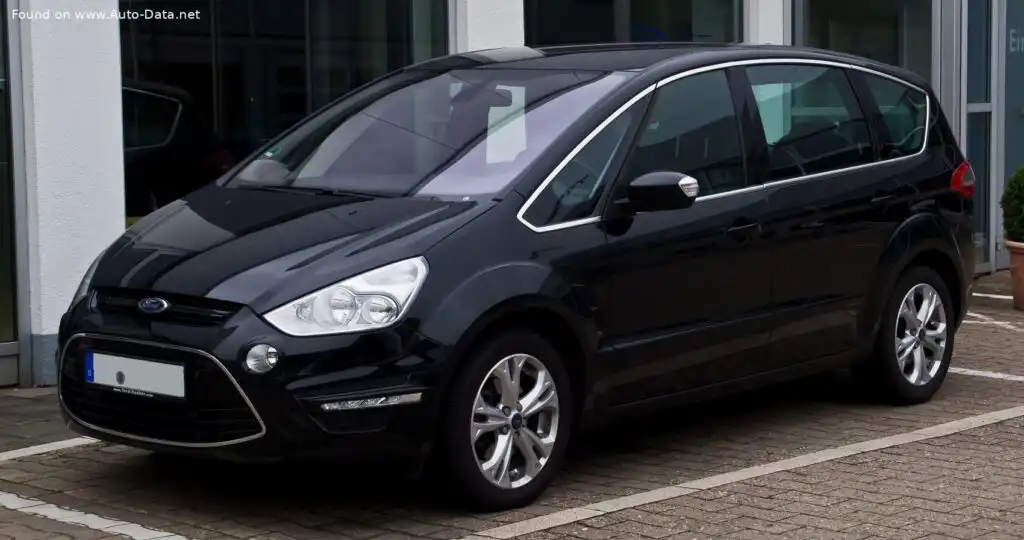
The Ford S-MAX 2.0 TDCi, producing 130 horsepower, was a key variant in the first generation S-MAX lineup produced between 2006 and 2010. Positioned as a mid-range offering, it aimed to balance fuel efficiency with acceptable performance for family transport. The S-MAX, launched as a direct competitor to multi-purpose vehicles (MPVs) like the Renault Espace and Volkswagen Sharan, quickly gained popularity in Europe for its sporty handling and flexible interior. This 2.0 TDCi model represented a significant portion of S-MAX sales, appealing to buyers seeking a diesel-powered MPV with reasonable running costs.
Technical Specifications
| Brand | Ford |
| Model | S-MAX |
| Generation | S-MAX |
| Type (Engine) | 2.0 TDCi (130 Hp) |
| Start of production | 2006 |
| End of production | 2010 |
| Powertrain Architecture | Internal Combustion engine |
| Body type | Minivan |
| Seats | 7 |
| Doors | 5 |
| Fuel consumption (urban) | 8.1 l/100 km (29 US mpg, 34.9 UK mpg) |
| Fuel consumption (extra urban) | 5.4 l/100 km (43.6 US mpg, 52.3 UK mpg) |
| Fuel consumption (combined) | 6.4 l/100 km (36.8 US mpg, 44.1 UK mpg) |
| Fuel Type | Diesel |
| Acceleration 0 – 100 km/h | 10.9 sec |
| Acceleration 0 – 62 mph | 10.9 sec |
| Acceleration 0 – 60 mph | 10.4 sec |
| Maximum speed | 191 km/h (118.68 mph) |
| Weight-to-power ratio | 13.4 kg/Hp |
| Weight-to-torque ratio | 5.5 kg/Nm |
| Power | 130 Hp @ 4000 rpm |
| Torque | 320 Nm @ 1750 rpm (236.02 lb.-ft. @ 1750 rpm) |
| Engine layout | Front, Transverse |
| Engine Model/Code | AZWA |
| Engine displacement | 1997 cm3 (121.86 cu. in.) |
| Number of cylinders | 4 |
| Engine configuration | Inline |
| Cylinder Bore | 85 mm (3.35 in.) |
| Piston Stroke | 88 mm (3.46 in.) |
| Compression ratio | 17.9:1 |
| Number of valves per cylinder | 4 |
| Fuel injection system | Diesel Commonrail |
| Engine aspiration | Turbocharger, Intercooler |
| Engine oil capacity | 5.5 l (5.81 US qt | 4.84 UK qt) |
| Coolant capacity | 8.1 l (8.56 US qt | 7.13 UK qt) |
| Kerb Weight | 1744 kg (3844.86 lbs.) |
| Max. weight | 2505 kg (5522.58 lbs.) |
| Max load | 761 kg (1677.72 lbs.) |
| Trunk (boot) space – minimum | 854 l (30.16 cu. ft.) |
| Trunk (boot) space – maximum | 2100 l (74.16 cu. ft.) |
| Fuel tank capacity | 70 l (18.49 US gal | 15.4 UK gal) |
| Length | 4768 mm (187.72 in.) |
| Width | 1884 mm (74.17 in.) |
| Height | 1658 mm (65.28 in.) |
| Wheelbase | 2850 mm (112.2 in.) |
| Front track | 1589 mm (62.56 in.) |
| Rear track | 1605 mm (63.19 in.) |
| Minimum turning circle | 11.6 m (38.06 ft.) |
| Drivetrain Architecture | Front wheel drive |
| Number of gears | 6 |
| Gearbox type | Manual transmission |
| Front suspension | Spring Strut |
| Rear suspension | Transverse stabilizer |
| Front brakes | Ventilated discs |
| Rear brakes | Disc |
| Assisting systems | ABS (Anti-lock braking system) |
| Steering type | Steering rack and pinion |
| Tires size | 215/60 R16 |
| Wheel rims size | 6.5J X 16 |
INTRODUCTION
The Ford S-MAX 2.0 TDCi (130 hp) was produced from 2006 to 2010 as part of the first generation (JAWA) S-MAX series. Built on the Ford C1 platform, shared with the Ford Galaxy and later the Ford Mondeo, the S-MAX aimed to redefine the MPV segment with its focus on driving dynamics. The 2.0 TDCi 130 hp variant served as a popular entry point into the S-MAX range, offering a balance between affordability, fuel economy, and practicality for families. It was positioned below the more powerful 2.0 TDCi 140 hp and the flagship 2.2 TDCi models.
Powertrain & Engine Architecture
The heart of this S-MAX variant is the Ford AZWA engine, a 1997cc inline-four cylinder diesel engine. This engine belongs to the Ford Duratorq family, known for its robust construction and relatively simple design. The AZWA utilizes a common rail direct injection system, delivering fuel at extremely high pressure for improved combustion efficiency and reduced emissions. A turbocharger with an intercooler further enhances performance by forcing more air into the cylinders. The engine features four valves per cylinder (DOHC) and a compression ratio of 17.9:1. The 130 hp output is achieved at 4000 rpm, while peak torque of 320 Nm (236 lb-ft) is available from just 1750 rpm, providing strong low-end pulling power. This engine was paired with a six-speed manual transmission, optimized for fuel efficiency and smooth gear changes. While an automatic transmission was available on other S-MAX models, the 130 hp version was primarily offered with the manual gearbox.
Driving Characteristics
The S-MAX 2.0 TDCi 130 hp offers a comfortable and practical driving experience. While not overtly sporty, the engine provides sufficient power for everyday driving and highway cruising. Acceleration from 0-60 mph takes around 10.4 seconds, and the top speed is approximately 118.68 mph. The six-speed manual transmission allows drivers to keep the engine in its optimal torque band, maximizing fuel efficiency and responsiveness. Compared to the higher-output 140 hp version, the 130 hp model feels slightly less eager to accelerate, particularly when fully loaded. However, the difference is not dramatic, and the 130 hp engine still provides ample power for most situations. The S-MAX’s well-tuned suspension delivers a comfortable ride, absorbing bumps and imperfections in the road effectively. The steering is precise and well-weighted, providing a confident feel behind the wheel.
Equipment & Trim Levels
The 2.0 TDCi 130 hp S-MAX typically came equipped with a respectable level of standard features. These included air conditioning, power windows, power mirrors, a CD player with auxiliary input, and ABS brakes. Higher trim levels, such as Zetec and Titanium, added features like alloy wheels, front fog lights, a multi-function steering wheel, and upgraded interior trim. Optional extras included a panoramic sunroof, leather upholstery, satellite navigation, and rear parking sensors. Interior upholstery was typically cloth, with a dark color scheme. The dashboard layout was functional and user-friendly, with clearly labeled controls and a straightforward instrument cluster.
Chassis & Braking
The S-MAX utilizes a front-wheel-drive layout with independent front suspension using MacPherson struts and a multi-link rear suspension. This setup provides a good balance between ride comfort and handling. The front brakes are ventilated discs, while the rear brakes are solid discs. ABS (Anti-lock Braking System) is standard, enhancing safety by preventing wheel lockup during hard braking. The S-MAX’s chassis is relatively lightweight, contributing to its agile handling characteristics. Stabilizer bars are fitted to both the front and rear axles to reduce body roll during cornering.
Market Reception & Comparison
The Ford S-MAX 2.0 TDCi 130 hp was generally well-received by automotive critics. It was praised for its spacious interior, comfortable ride, and engaging handling. The 130 hp engine was considered adequate for most drivers, although some reviewers noted that it could feel strained when carrying a full load of passengers and luggage. Fuel economy was a strong point, with combined fuel consumption figures of around 36.8 US mpg. Compared to the 140 hp version, the 130 hp model offered a lower purchase price, making it more accessible to budget-conscious buyers. However, the 140 hp version provided noticeably better performance. The S-MAX also competed with other MPVs such as the Renault Espace and Volkswagen Sharan, offering a more dynamic driving experience than many of its rivals.
Legacy
The Ford S-MAX 2.0 TDCi 130 hp has proven to be a reliable and durable vehicle. The Duratorq engine is known for its longevity, and with regular maintenance, it can easily exceed 150,000 miles. Common issues include turbocharger wear and potential problems with the fuel injection system, but these are generally not widespread. On the used car market, the S-MAX 2.0 TDCi 130 hp remains a popular choice for families seeking a practical and affordable MPV. Its combination of space, comfort, and fuel efficiency continues to appeal to buyers today. While newer MPVs offer more advanced technology and features, the first-generation S-MAX remains a well-regarded and capable vehicle.