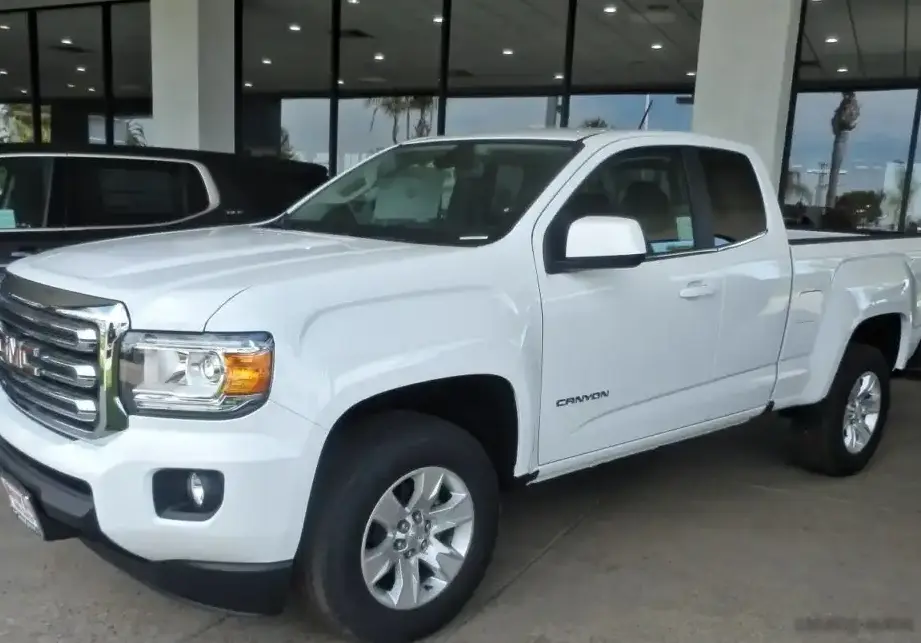
The GMC Canyon II, specifically the Extended Cab Long Box configuration with the 3.6-liter V6 engine producing 308 horsepower and paired with a four-wheel-drive system and an eight-speed automatic transmission, was a mid-size pickup truck sold in the United States from 2018 to 2020. This variant occupied a significant position in the Canyon lineup, offering a balance between capability, comfort, and fuel efficiency for buyers needing a versatile truck for both work and recreational purposes. It represented GMC’s entry into the increasingly popular mid-size truck segment, competing with offerings from Toyota, Ford, and Chevrolet (with whom it shared a platform).
Technical Specifications
| Brand | GMC |
| Model | Canyon |
| Generation | Canyon II Extended Cab Long Box |
| Type (Engine) | 3.6 V6 (308 Hp) 4WD Automatic |
| Start of production | 2018 |
| End of production | 2020 |
| Powertrain Architecture | Internal Combustion engine |
| Body type | Pick-up |
| Seats | 4 |
| Doors | 2 |
| Fuel consumption (urban) | 13.8 l/100 km (17 US mpg) |
| Fuel consumption (extra urban) | 9.8 l/100 km (24 US mpg) |
| Fuel Type | Petrol (Gasoline) |
| Power | 308 Hp @ 6800 rpm |
| Torque | 373 Nm @ 4000 rpm (275.11 lb.-ft. @ 4000 rpm) |
| Engine layout | Front, Longitudinal |
| Engine Model/Code | LGZ |
| Engine displacement | 3564 cm3 (217.49 cu. in.) |
| Number of cylinders | 6 |
| Engine configuration | V-engine |
| Cylinder Bore | 94 mm (3.7 in.) |
| Piston Stroke | 85.6 mm (3.37 in.) |
| Compression ratio | 11.5:1 |
| Number of valves per cylinder | 4 |
| Fuel injection system | Direct injection |
| Engine aspiration | Naturally aspirated engine |
| Valvetrain | DOHC, CVVT |
| Engine oil capacity | 5.7 l (6.02 US qt | 5.02 UK qt) |
| Coolant | 10.6 l (11.2 US qt | 9.33 UK qt) |
| Trunk (boot) space – maximum | 1414 l (49.93 cu. ft.) |
| Fuel tank capacity | 79.5 l (21 US gal | 17.49 UK gal) |
| Permitted trailer load with brakes (12%) | 3175 kg (6999.68 lbs.) |
| Length | 5395 mm (212.4 in.) |
| Width | 1886 mm (74.25 in.) |
| Height | 1785 mm (70.28 in.) |
| Wheelbase | 3258 mm (128.27 in.) |
| Front track | 1586 mm (62.44 in.) |
| Rear (Back) track | 1586 mm (62.44 in.) |
| Ride height (ground clearance) | 211 mm (8.31 in.) |
| Minimum turning circle (turning diameter) | 12.6 m (41.34 ft.) |
| Drivetrain Architecture | All wheel drive (4×4). ICE drives rear wheels, front engaged via clutch. |
| Number of gears and type of gearbox | 8 gears, automatic transmission Hydra-Matic |
| Front suspension | Independent coil spring |
| Rear suspension | Rigid axle suspension, Leaf spring |
| Front brakes | Disc, 310×27 mm |
| Rear brakes | Disc, 324×18 mm |
| Assisting systems | ABS (Anti-lock braking system) |
| Steering type | Steering rack and pinion |
| Power steering | Electric Steering |
| Tires size | 265/70 R16; 255/65 R17; 265/60 R18 |
| Wheel rims size | 7J x 16; 8J x 17; 8.5J x 18 |
INTRODUCTION
The 2018-2020 GMC Canyon II Extended Cab Long Box 3.6L V6 4WD Automatic represented a significant update to GMC’s mid-size truck offering. Built on the GM Colorado platform (often referred to as the 31XX platform), the Canyon aimed to provide a more refined and upscale experience compared to its Chevrolet sibling. The Extended Cab configuration, combined with the long bed, offered a practical balance of passenger space and cargo capacity. This particular variant, powered by the 3.6-liter LGZ V6 and an eight-speed automatic, was positioned as a strong all-around performer, appealing to buyers who needed a capable truck for both daily driving and occasional hauling or towing.
Powertrain & Engine Architecture
At the heart of this Canyon variant lies the 3.6-liter LGZ V6 engine. This engine is a naturally aspirated, 24-valve (DOHC) powerplant featuring direct fuel injection and variable valve timing (CVVT). The LGZ is known for its relatively smooth operation and decent power output. The direct injection system optimizes fuel delivery for improved efficiency and performance. The eight-speed Hydra-Matic automatic transmission was a key component, offering a wide range of gear ratios to maximize both acceleration and fuel economy. This transmission was designed to provide smooth and responsive shifts, contributing to a more refined driving experience. The 4WD system is a part-time system, allowing the driver to switch between two-wheel drive and four-wheel drive modes as needed, enhancing traction in various conditions.
Driving Characteristics
The 308-horsepower V6 and eight-speed automatic combination provided a respectable level of performance for a mid-size truck. Acceleration was adequate for most driving situations, and the transmission’s eight gears helped keep the engine in its optimal power band. Compared to the base 2.5-liter four-cylinder engine, the V6 offered a noticeable improvement in both power and responsiveness. While not as quick as the available Duramax diesel engine, the V6 provided a more traditional truck driving experience with a linear power delivery. The four-wheel-drive system enhanced traction, particularly in inclement weather or on unpaved roads. The long wheelbase contributed to a stable ride, but the leaf spring rear suspension could sometimes result in a slightly bumpy ride when unladen.
Equipment & Trim Levels
The Canyon II Extended Cab Long Box 3.6L V6 4WD Automatic was available in several trim levels, including SLE and SLT. The SLE trim typically included standard features such as air conditioning, power windows and locks, a basic infotainment system with a touchscreen display, and a rearview camera. The SLT trim added features like leather upholstery, heated front seats, a more advanced infotainment system with navigation, and additional safety features. Optional extras included a trailering package, a premium audio system, and various appearance packages. Interior materials were generally of good quality, offering a comfortable and well-appointed cabin.
Chassis & Braking
The Canyon II utilized a body-on-frame construction, providing a robust and durable platform. The front suspension featured independent coil springs, while the rear suspension employed a traditional leaf spring setup. This configuration was chosen to balance ride comfort with load-carrying capacity. Braking duties were handled by disc brakes on all four wheels, with ABS (Anti-lock Braking System) as standard equipment. The braking system provided adequate stopping power for the truck’s weight class. Steering was rack-and-pinion with electric power assist, offering a responsive and precise steering feel.
Market Reception & Comparison
The GMC Canyon II, and specifically this 3.6L V6 Automatic variant, received generally positive reviews from automotive critics. It was praised for its comfortable ride, refined interior, and capable powertrain. However, some critics noted that the rear seat space in the Extended Cab configuration was somewhat limited. Compared to the 2.5L four-cylinder version, the V6 offered a significant performance upgrade, making it a more appealing choice for buyers who frequently tow or haul. The diesel engine provided even greater torque and fuel economy, but at a higher price point. Fuel economy figures were competitive for the segment, averaging around 17 mpg in the city and 24 mpg on the highway.
Legacy
The 2018-2020 GMC Canyon II 3.6L V6 4WD Automatic has proven to be a relatively reliable truck in the used car market. The LGZ V6 engine is generally considered to be durable, and the eight-speed automatic transmission has also demonstrated good reliability. Common maintenance items include regular oil changes, fluid checks, and brake service. While some owners have reported minor issues with the infotainment system, these are typically easily addressed. Today, these Canyons represent a good value for buyers seeking a capable and well-equipped mid-size truck with a proven track record.