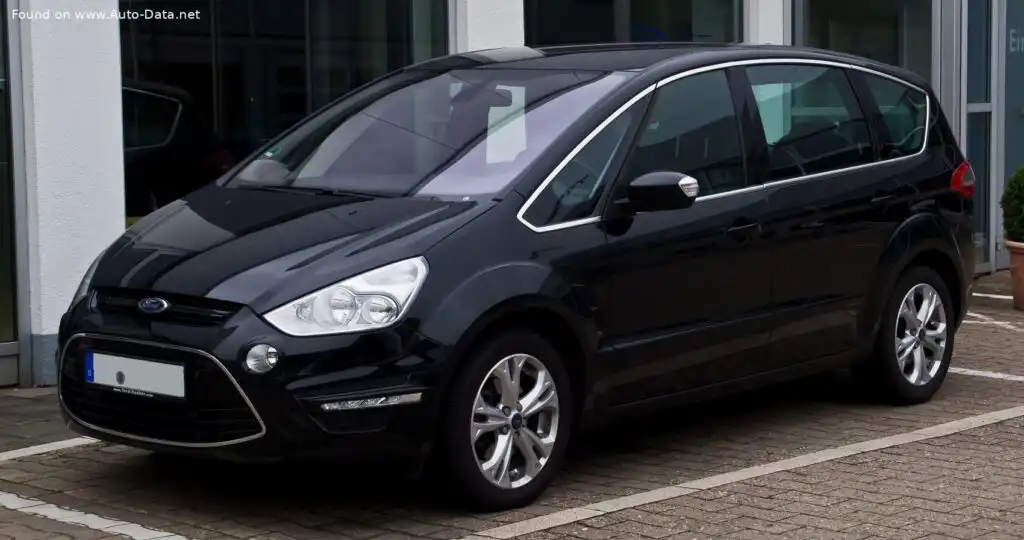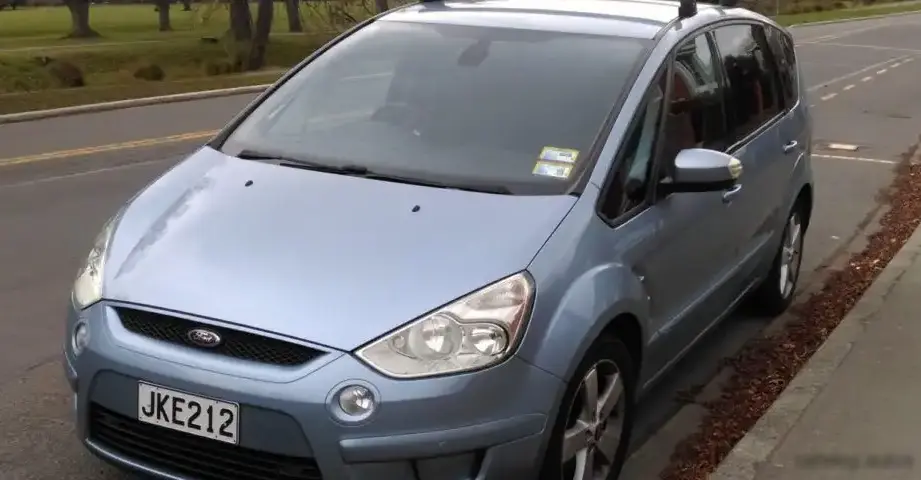
The Ford S-MAX 2.0 TDCi Automatic, produced between 2006 and 2010, represented a key offering in Ford’s European minivan lineup. Positioned as a mid-range trim, it aimed to balance fuel efficiency, practicality, and a more accessible price point compared to the higher-powered variants. The S-MAX, launched in 2006, was Ford’s attempt to create a sportier, more driver-focused minivan, differentiating itself from more traditionally styled people carriers. This 2.0 TDCi Automatic model was particularly significant in European markets where diesel engines and automatic transmissions were gaining popularity for family vehicles.
Technical Specifications
| Brand | Ford |
| Model | S-MAX |
| Type (Engine) | 2.0 TDCi (140 Hp) Automatic |
| Start of production | 2006 |
| End of production | 2010 |
| Fuel consumption (urban) | 8.1 l/100 km (29 US mpg, 34.9 UK mpg) |
| Fuel consumption (extra urban) | 5.4 l/100 km (43.6 US mpg, 52.3 UK mpg) |
| Fuel consumption (combined) | 6.4 l/100 km (36.8 US mpg, 44.1 UK mpg) |
| Fuel Type | Diesel |
| Acceleration 0 – 100 km/h | 10.9 sec |
| Acceleration 0 – 62 mph | 10.9 sec |
| Acceleration 0 – 60 mph | 10.4 sec |
| Maximum speed | 191 km/h (118.68 mph) |
| Emission standard | Euro 4 |
| Weight-to-power ratio | 12.4 kg/Hp |
| Weight-to-torque ratio | 5.4 kg/Nm |
| Power | 140 Hp @ 4000 rpm |
| Torque | 320 Nm @ 1750 rpm (236.02 lb.-ft. @ 1750 rpm) |
| Engine layout | Front, Transverse |
| Engine Model/Code | QXWA, QXWB, QXWC |
| Engine displacement | 1997 cm3 (121.86 cu. in.) |
| Number of cylinders | 4 |
| Engine configuration | Inline |
| Cylinder Bore | 85 mm (3.35 in.) |
| Piston Stroke | 88 mm (3.46 in.) |
| Compression ratio | 17.9:1 |
| Number of valves per cylinder | 4 |
| Fuel injection system | Diesel Commonrail |
| Engine aspiration | Turbocharger, Intercooler |
| Engine oil capacity | 5.5 l (5.81 US qt, 4.84 UK qt) |
| Coolant capacity | 8.1 l (8.56 US qt, 7.13 UK qt) |
| Kerb Weight | 1736 kg (3827.22 lbs.) |
| Max. weight | 2505 kg (5522.58 lbs.) |
| Max load | 769 kg (1695.35 lbs.) |
| Trunk (boot) space – minimum | 854 l (30.16 cu. ft.) |
| Trunk (boot) space – maximum | 2100 l (74.16 cu. ft.) |
| Fuel tank capacity | 70 l (18.49 US gal, 15.4 UK gal) |
| Length | 4768 mm (187.72 in.) |
| Width | 1884 mm (74.17 in.) |
| Height | 1658 mm (65.28 in.) |
| Wheelbase | 2850 mm (112.2 in.) |
| Front track | 1589 mm (62.56 in.) |
| Rear track | 1605 mm (63.19 in.) |
| Minimum turning circle | 11.6 m (38.06 ft.) |
| Drivetrain | Front wheel drive |
| Number of gears | 5 |
| Gearbox type | Automatic transmission |
| Front suspension | Spring Strut |
| Rear suspension | Transverse stabilizer |
| Front brakes | Ventilated discs |
| Rear brakes | Disc |
| Assisting systems | ABS (Anti-lock braking system) |
| Steering type | Steering rack and pinion |
| Tires size | 215/60 R16 |
| Wheel rims size | 6.5J x 16 5×10⁸ |
Powertrain & Engine Architecture
The heart of the S-MAX 2.0 TDCi Automatic is the PSA-Ford 2.0-liter inline-four diesel engine. Engine codes QXWA, QXWB, and QXWC denote slight variations within the same engine family, primarily relating to emissions control equipment and calibration. This engine utilizes a common rail direct injection system, delivering fuel at extremely high pressure for optimized combustion. A turbocharger with an intercooler is employed to boost power and torque, mitigating turbo lag and improving overall responsiveness. The engine features four valves per cylinder, contributing to efficient gas exchange. The automatic transmission is a five-speed unit, designed to provide smooth shifts and ease of driving, particularly in urban environments. While not known for its sportiness, it was a reliable and well-matched transmission for the engine’s torque characteristics.
Driving Characteristics
The 140 horsepower and 236 lb-ft of torque offered by the 2.0 TDCi engine provided adequate performance for the S-MAX, though it wasn’t a particularly quick vehicle. Acceleration from 0-60 mph took around 10.4 seconds, and top speed was approximately 118 mph. The automatic transmission, while convenient, did slightly diminish the overall performance compared to the six-speed manual option. Gear ratios were tuned for fuel efficiency and comfortable cruising, rather than outright acceleration. In real-world driving, the engine felt most comfortable in the mid-range, providing sufficient power for overtaking and highway driving. Compared to the more powerful 2.5-liter five-cylinder petrol engine available in the S-MAX, this 2.0 TDCi Automatic offered significantly better fuel economy but lacked the same level of performance.
Equipment & Trim Levels
The 2.0 TDCi Automatic trim typically included features such as air conditioning, power windows, power mirrors, and a basic audio system. Higher trim levels added features like alloy wheels, rear parking sensors, and upgraded interior upholstery. The interior generally featured durable, practical materials, reflecting the vehicle’s family-oriented purpose. Optional extras included a panoramic sunroof, leather seats, and a more advanced navigation system. Safety features such as ABS and multiple airbags were standard across the range.
Chassis & Braking
The S-MAX utilized a front-wheel-drive platform with a MacPherson strut front suspension and a multi-link rear suspension. This setup provided a good balance between ride comfort and handling. The front brakes were ventilated discs, while the rear brakes were solid discs. The suspension was tuned to prioritize comfort, but the S-MAX still offered reasonably controlled handling for a minivan. Stabilizer bars were fitted front and rear to reduce body roll during cornering.
Market Reception & Comparison
The S-MAX 2.0 TDCi Automatic was generally well-received by automotive critics as a practical and fuel-efficient family vehicle. It was praised for its spacious interior, comfortable ride, and decent handling. However, some critics noted that the automatic transmission could feel sluggish at times, and the engine lacked the refinement of some of its competitors. Compared to other minivans in its class, such as the Renault Espace and Volkswagen Touran, the S-MAX offered a more dynamic driving experience but was often slightly more expensive. Fuel economy was a strong point, consistently achieving around 37 mpg on combined cycles.
Legacy
The Ford S-MAX 2.0 TDCi Automatic has proven to be a relatively reliable vehicle, with the 2.0-liter diesel engine generally considered durable. Common issues include wear and tear on the turbocharger and potential problems with the diesel particulate filter (DPF), particularly on vehicles that have primarily been used for short journeys. In the used car market, these S-MAX models represent a good value proposition for families seeking a spacious, practical, and fuel-efficient vehicle. Parts availability is generally good, and maintenance costs are reasonable. The S-MAX, in general, helped establish Ford as a player in the more stylish and driver-focused minivan segment, paving the way for future models like the current generation S-MAX.