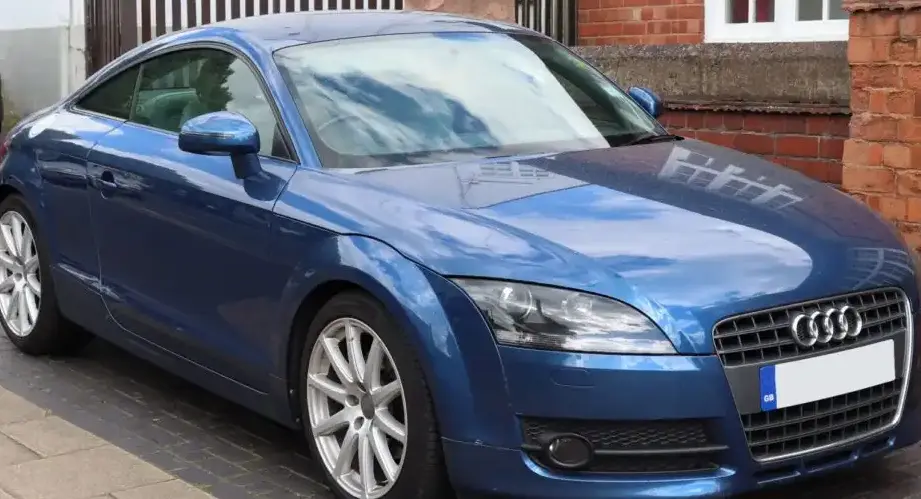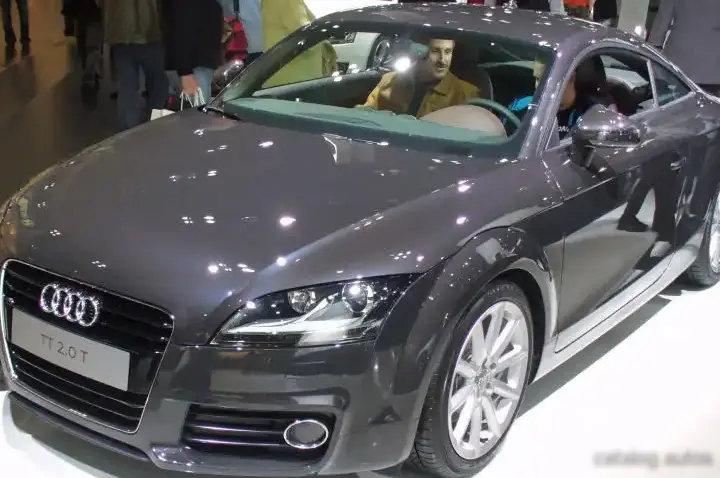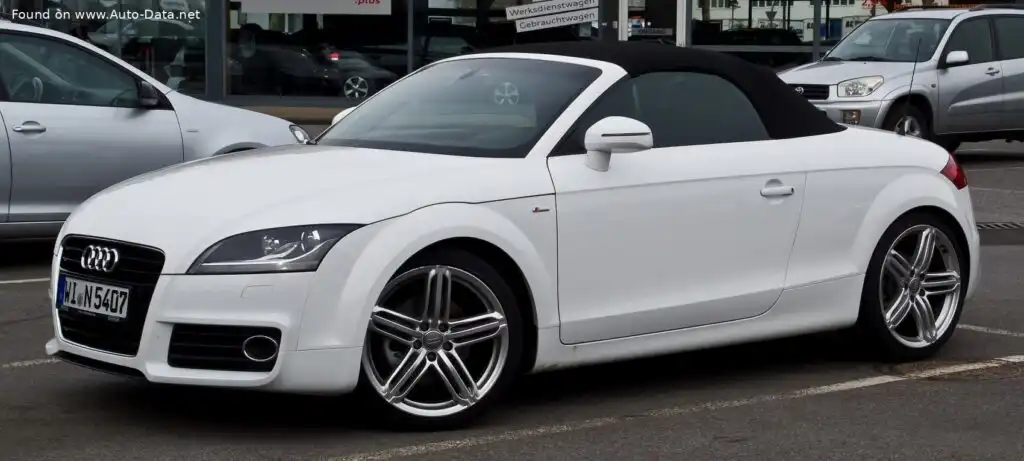
The Audi TT Roadster (8J, facelift) 2.0 TDI quattro, produced from May 2010 to June 2014, represents a unique offering within the second-generation TT lineup. Positioned as a fuel-efficient and all-weather performance variant, it combined the sporty aesthetics of the TT Roadster with the practicality of a turbocharged diesel engine and Audi’s renowned quattro all-wheel-drive system. This model aimed to broaden the TT’s appeal, attracting buyers who desired a stylish convertible with enhanced efficiency and year-round usability, particularly in European markets where diesel engines were prevalent. It sat in the mid-range of the TT Roadster offerings, below the more powerful 2.0 TFSI models but above the base 1.8 TFSI.
Technical Specifications
| Brand | Audi |
| Model | TT |
| Generation | TT Roadster (8J, facelift 2010) |
| Type (Engine) | 2.0 TDI (170 Hp) quattro |
| Start of production | May, 2010 |
| End of production | June, 2014 |
| Powertrain Architecture | Internal Combustion engine |
| Body type | Roadster |
| Seats | 2 |
| Doors | 2 |
| Fuel consumption (urban) | 7.2 l/100 km (32.7 US mpg, 39.2 UK mpg, 13.9 km/l) |
| Fuel consumption (extra urban) | 4.5 l/100 km (52.3 US mpg, 62.8 UK mpg, 22.2 km/l) |
| Fuel consumption (combined) | 5.5 l/100 km (42.8 US mpg, 51.4 UK mpg, 18.2 km/l) |
| CO2 emissions | 144 g/km |
| Fuel Type | Diesel |
| Acceleration 0 – 100 km/h | 7.8 sec |
| Acceleration 0 – 62 mph | 7.8 sec |
| Acceleration 0 – 60 mph | 7.4 sec |
| Maximum speed | 223 km/h (138.57 mph) |
| Emission standard | Euro 5 |
| Weight-to-power ratio | 8.4 kg/Hp, 118.9 Hp/tonne |
| Weight-to-torque ratio | 4.1 kg/Nm, 244.8 Nm/tonne |
| Power | 170 Hp @ 4200 rpm |
| Power per litre | 86.4 Hp/l |
| Torque | 350 Nm @ 1750-2500 rpm (258.15 lb.-ft. @ 1750-2500 rpm) |
| Engine layout | Front, Transverse |
| Engine Model/Code | CFGB |
| Engine displacement | 1968 cm3 (120.09 cu. in.) |
| Number of cylinders | 4 |
| Engine configuration | Inline |
| Cylinder Bore | 81 mm (3.19 in.) |
| Piston Stroke | 95.5 mm (3.76 in.) |
| Compression ratio | 16.5:1 |
| Number of valves per cylinder | 4 |
| Fuel injection system | Diesel Commonrail |
| Engine aspiration | Turbocharger, Intercooler |
| Valvetrain | DOHC |
| Engine oil capacity | 4 l (4.23 US qt | 3.52 UK qt) |
| Coolant | 8.7 l (9.19 US qt | 7.65 UK qt) |
| Kerb Weight | 1430 kg (3152.61 lbs.) |
| Max. weight | 1750 kg (3858.09 lbs.) |
| Max load | 320 kg (705.48 lbs.) |
| Trunk (boot) space – minimum | 250 l (8.83 cu. ft.) |
| Trunk (boot) space – maximum | 700 l (24.72 cu. ft.) |
| Fuel tank capacity | 60 l (15.85 US gal | 13.2 UK gal) |
| Length | 4198 mm (165.28 in.) |
| Width | 1842 mm (72.52 in.) |
| Width including mirrors | 1952 mm (76.85 in.) |
| Height | 1358 mm (53.46 in.) |
| Wheelbase | 2468 mm (97.17 in.) |
| Front track | 1572 mm (61.89 in.) |
| Rear (Back) track | 1558 mm (61.34 in.) |
| Front overhang | 911 mm (35.87 in.) |
| Rear overhang | 819 mm (32.24 in.) |
| Drag coefficient (Cd) | 0.32 |
| Minimum turning circle | 10.96 m (35.96 ft.) |
| Drive wheel | All wheel drive (4×4) |
| Number of gears | 6 gears, manual transmission |
| Front suspension | Independent, type McPherson with coil spring and anti-roll bar |
| Rear suspension | Independent multi-link spring suspension with stabilizer |
| Front brakes | Ventilated discs |
| Rear brakes | Disc |
| Assisting systems | ABS (Anti-lock braking system) |
| Steering type | Steering rack and pinion |
| Tires size | 225/55 R16 |
| Wheel rims size | 7.5J x 16 |
INTRODUCTION
The Audi TT Roadster (8J, facelift) 2.0 TDI quattro, launched in 2010, was a mid-cycle refresh of the already successful second-generation TT. The facelift brought subtle styling changes, improved interior materials, and crucially, updated engine options. The 2.0 TDI quattro variant was a key addition, offering a diesel-powered, all-wheel-drive option for the first time in the TT Roadster range. Built on the Volkswagen Group’s PQ35 platform (internally known as the 8J series), the TT Roadster aimed to deliver a premium, sporty driving experience in a compact and stylish package. This particular engine and drivetrain combination was primarily aimed at the European market, where diesel fuel was more readily available and often incentivized.
Powertrain & Engine Architecture
The heart of the 2.0 TDI quattro is the CFGB engine, a 1968cc inline-four cylinder diesel engine. This engine utilizes a common rail direct injection system, delivering fuel at extremely high pressure for optimized combustion. The engine features a single turbocharger with an intercooler to increase air density and boost power output. The DOHC (Double Overhead Camshaft) valvetrain, with four valves per cylinder, further enhances breathing and efficiency. The engine produces 170 horsepower at 4200 rpm and a substantial 350 Nm (258 lb-ft) of torque between 1750 and 2500 rpm. This broad torque curve is a hallmark of diesel engines, providing strong pulling power across a wide range of engine speeds. The engine also incorporates a diesel particulate filter (DPF) to reduce emissions, meeting Euro 5 standards. The engine was typically paired with a six-speed manual transmission, although a S tronic dual-clutch transmission was also available as an option.
Driving Characteristics
The 2.0 TDI quattro Roadster offered a different driving experience compared to its gasoline-powered siblings. While lacking the outright acceleration of the 2.0 TFSI models, the diesel engine’s abundant torque provided strong and responsive performance in everyday driving situations. The quattro all-wheel-drive system ensured excellent traction, particularly in wet or slippery conditions, making it a capable year-round vehicle. The six-speed manual transmission offered precise shifts, but the gear ratios were tuned for fuel efficiency rather than outright performance. Acceleration from 0 to 100 km/h (0-62 mph) took approximately 7.8 seconds, which was respectable for a diesel-powered roadster. The car felt stable and planted during cornering, thanks to the quattro system and well-tuned suspension. However, the diesel engine’s inherent characteristics – a slightly gruffer sound and less willingness to rev freely – meant it didn’t offer the same sporty feel as the TFSI models.
Equipment & Trim Levels
The 2.0 TDI quattro Roadster typically came equipped with a generous level of standard features. These included leather upholstery, air conditioning, a multi-function steering wheel, and an Audi Concert audio system. Optional extras included navigation, heated seats, parking sensors, and upgraded alloy wheels. The interior design was typically minimalist and driver-focused, with a clean dashboard layout and high-quality materials. The TT Roadster’s signature feature – a circular center console with controls for the climate control and audio system – was also present in this variant. Trim levels were relatively straightforward, with options primarily revolving around adding individual features rather than distinct packages.
Chassis & Braking
The TT Roadster’s chassis featured an independent McPherson strut suspension at the front and a multi-link suspension at the rear. This setup provided a good balance between ride comfort and handling precision. Stabilizer bars were fitted to both axles to reduce body roll during cornering. The braking system consisted of ventilated discs at the front and solid discs at the rear, providing adequate stopping power. Anti-lock braking system (ABS) was standard, enhancing safety and control. The car’s relatively low weight (1430 kg / 3153 lbs) contributed to its agile handling characteristics.
Market Reception & Comparison
The 2.0 TDI quattro Roadster was generally well-received by automotive critics, who praised its fuel efficiency, all-weather capability, and stylish design. However, some reviewers noted that the diesel engine lacked the excitement and responsiveness of the gasoline-powered models. Compared to the 2.0 TFSI variants, the TDI offered significantly better fuel economy (around 5.5 l/100 km combined) but slightly slower acceleration. Against competitors like the BMW Z4 and Porsche Boxster, the TT Roadster offered a more affordable and practical option, particularly for buyers prioritizing fuel efficiency and all-wheel-drive traction.
Legacy
The 2.0 TDI quattro Roadster has proven to be a relatively reliable vehicle, with the CFGB engine generally considered durable and long-lasting. However, like all diesel engines, it’s important to ensure regular maintenance, including timely DPF regeneration and oil changes. In the used car market, these models represent a good value proposition for buyers seeking a stylish and fuel-efficient roadster. While not as sought-after as the higher-performance TFSI variants, the 2.0 TDI quattro offers a unique combination of practicality, efficiency, and all-weather capability that continues to appeal to a specific segment of the market.