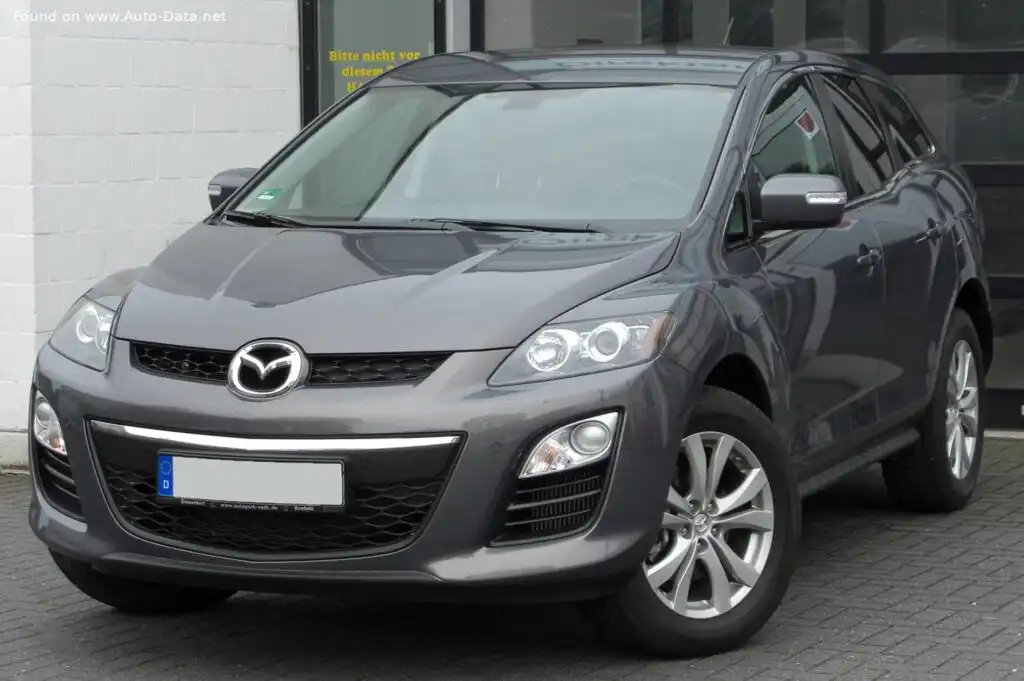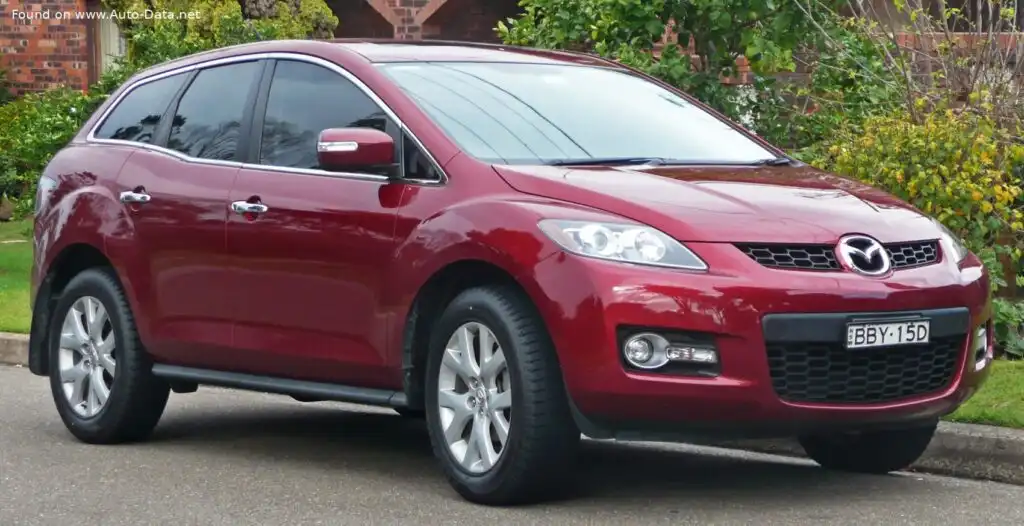
The Mazda CX-7 2.3 DISI Turbo AWD Automatic, produced from 2006 to 2009, represented Mazda’s entry into the burgeoning crossover SUV market. Positioned as a sportier alternative to more traditionally styled SUVs, the CX-7 aimed to deliver a more engaging driving experience alongside the practicality expected of the segment. This particular variant, equipped with the 2.3-liter DISI turbocharged engine and a six-speed automatic transmission, was a mid-range offering within the CX-7 lineup, slotting above the naturally aspirated 2.5-liter models and below potential future performance trims. It was primarily sold in North America, where Mazda sought to establish a stronger foothold in the competitive SUV landscape.
Technical Specifications
| Brand | Mazda |
| Model | CX-7 |
| Generation | CX-7 |
| Type (Engine) | 2.3 DISI Turbo (244 Hp) AWD Automatic |
| Start of production | 2006 |
| End of production | 2009 |
| Powertrain Architecture | Internal Combustion engine |
| Body type | SUV, Crossover |
| Seats | 5 |
| Doors | 5 |
| Fuel consumption (urban) | 13.1-14.7 l/100 km (18-16 US mpg) |
| Fuel consumption (extra urban) | 9.8-10.7 l/100 km (24-22 US mpg) |
| Fuel Type | Petrol (Gasoline) |
| Emission standard | LEV II |
| Weight-to-power ratio | 7.3 kg/Hp |
| Weight-to-torque ratio | 5.1 kg/Nm |
| Power | 244 Hp @ 5000 rpm |
| Power per litre | 107.9 Hp/l |
| Torque | 350 Nm @ 2500 rpm (258.15 lb.-ft. @ 2500 rpm) |
| Maximum engine speed | 6700 rpm |
| Engine layout | Front, Transverse |
| Engine Model/Code | L3-VDT |
| Engine displacement | 2261 cm3 (137.97 cu. in.) |
| Number of cylinders | 4 |
| Engine configuration | Inline |
| Cylinder Bore | 87.5 mm (3.44 in.) |
| Piston Stroke | 94 mm (3.7 in.) |
| Compression ratio | 9.5:1 |
| Number of valves per cylinder | 4 |
| Fuel injection system | Direct injection |
| Engine aspiration | Turbocharger, Intercooler |
| Valvetrain | DOHC |
| Engine oil capacity | 5.7 l (6.02 US qt | 5.02 UK qt) |
| Coolant capacity | 9 l (9.51 US qt | 7.92 UK qt) |
| Kerb Weight | 1782 kg (3928.64 lbs.) |
| Max. weight | 2267 kg (4997.88 lbs.) |
| Max load | 485 kg (1069.24 lbs.) |
| Trunk (boot) space – minimum | 847 l (29.91 cu. ft.) |
| Trunk (boot) space – maximum | 1659 l (58.59 cu. ft.) |
| Fuel tank capacity | 69 l (18.23 US gal | 15.18 UK gal) |
| Permitted trailer load with brakes (12%) | 907 kg (1999.59 lbs.) |
| Length | 4675 mm (184.06 in.) |
| Width | 1872 mm (73.7 in.) |
| Height | 1645 mm (64.76 in.) |
| Wheelbase | 2750 mm (108.27 in.) |
| Front track | 1617 mm (63.66 in.) |
| Rear track | 1612 mm (63.46 in.) |
| Ride height (ground clearance) | 206 mm (8.11 in.) |
| Minimum turning circle | 11.4 m (37.4 ft.) |
| Drivetrain Architecture | All wheel drive (4×4) |
| Number of gears | 6 |
| Gearbox type | Automatic transmission |
| Front suspension | Independent, McPherson with coil spring and anti-roll bar |
| Rear suspension | Independent multi-link with stabilizer |
| Front brakes | Ventilated discs |
| Rear brakes | Ventilated discs |
| Assisting systems | ABS |
| Steering type | Steering rack and pinion |
| Power steering | Electric |
| Tires size | 235/60 R18 |
| Wheel rims size | 7.5J x 18 |
INTRODUCTION
The Mazda CX-7 2.3 DISI Turbo AWD Automatic, launched in 2006, was a key model in Mazda’s strategy to broaden its appeal beyond its traditional focus on sporty, driver-focused cars. Built on the CX-7 platform (shared with the Ford Escape and Mercury Mariner), the CX-7 distinguished itself with a more aggressively styled exterior and a more powerful engine option. The 2.3-liter DISI (Direct Injection Spark Ignition) turbocharged engine, paired with a six-speed automatic transmission and all-wheel drive, was intended to provide a balance of performance and practicality. Production continued through 2009, with minor updates throughout its lifespan. This variant aimed to attract buyers seeking a crossover SUV with a more dynamic driving experience than many of its competitors.
Powertrain & Engine Architecture
At the heart of the CX-7 2.3 DISI Turbo lies the L3-VDT engine, a 2.3-liter inline-four cylinder powerplant. This engine utilizes direct fuel injection, a technology that allows for more precise fuel delivery and improved combustion efficiency. The DISI system, combined with a turbocharger and intercooler, enables the engine to produce 244 horsepower at 5000 rpm and 350 Nm (258 lb-ft) of torque at 2500 rpm. The engine features a double overhead camshaft (DOHC) valvetrain with four valves per cylinder, optimizing airflow for increased power output. The six-speed automatic transmission was specifically chosen to handle the engine’s torque and provide smooth, responsive shifts. While not known for being the most refined automatic on the market, it was generally considered adequate for the vehicle’s intended purpose. The transmission’s gear ratios were tuned to prioritize acceleration and provide reasonable fuel economy.
Driving Characteristics
The CX-7 2.3 DISI Turbo Automatic offered a noticeably more spirited driving experience compared to the base 2.5-liter models. The turbocharger provides a surge of power in the mid-range, making overtaking and merging onto highways relatively effortless. However, the automatic transmission can sometimes feel hesitant, particularly during kickdown maneuvers. Compared to a manual transmission equipped CX-7 (which wasn’t widely available), the automatic sacrifices some responsiveness. The all-wheel-drive system provides enhanced traction in various weather conditions, but the CX-7 isn’t designed for serious off-road use. The suspension is tuned for a balance between comfort and handling, resulting in a ride that is generally compliant but can feel somewhat firm over rough surfaces. The steering is reasonably precise, contributing to a more engaging driving experience than many other crossovers of the era.
Equipment & Trim Levels
The 2.3 DISI Turbo Automatic trim typically included standard features such as air conditioning, power windows and locks, keyless entry, a CD player with auxiliary input, and cruise control. Upholstery was generally cloth, although leather options were available. Higher trim levels added features like a sunroof, upgraded audio system, heated front seats, and automatic climate control. Optional extras included a navigation system and a rear entertainment system. The interior design was functional and relatively modern for its time, but the materials used were not particularly luxurious. The CX-7 offered a decent amount of cargo space, with approximately 30 cubic feet behind the rear seats and 59 cubic feet with the rear seats folded down.
Chassis & Braking
The CX-7 utilizes an independent suspension system at all four corners. The front suspension employs a McPherson strut design with coil springs and an anti-roll bar, while the rear suspension features a multi-link setup with a stabilizer bar. This configuration provides a good balance of ride comfort and handling stability. Braking duties are handled by ventilated disc brakes on all four wheels, providing adequate stopping power. Anti-lock braking system (ABS) was standard equipment. The CX-7’s chassis was designed to provide a relatively stable and predictable driving experience, but it wasn’t particularly sporty or agile. The vehicle’s weight, approximately 3929 lbs, contributes to a somewhat ponderous feel in corners.
Market Reception & Comparison
The Mazda CX-7 2.3 DISI Turbo Automatic received generally positive reviews from automotive critics. It was praised for its powerful engine, sporty handling, and attractive styling. However, some reviewers criticized the automatic transmission for its occasional hesitation and the interior for its somewhat basic materials. Compared to other crossovers in its class, such as the Honda CR-V and Toyota RAV4, the CX-7 offered a more engaging driving experience but lacked the same level of refinement and practicality. Fuel economy was average for the segment, with EPA estimates ranging from 18-24 mpg. Reliability was generally considered acceptable, but some owners reported issues with the turbocharger and fuel injectors.
Legacy
The Mazda CX-7 2.3 DISI Turbo Automatic, while not a massive sales success, played an important role in establishing Mazda as a brand that offered more than just sporty cars. The engine, while prone to some issues if not properly maintained, provided a significant performance boost over the base models. Today, the CX-7 is a relatively affordable used car option. However, potential buyers should be aware of the potential for turbocharger and fuel injector problems. Well-maintained examples can still provide a fun and practical driving experience, offering a unique alternative to more mainstream crossover SUVs. The CX-7 paved the way for Mazda’s continued success in the crossover segment with later models like the CX-5 and CX-9.