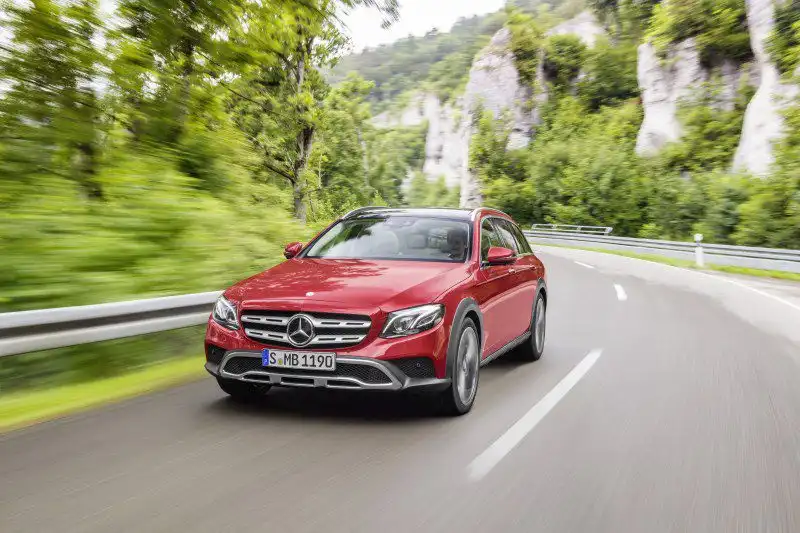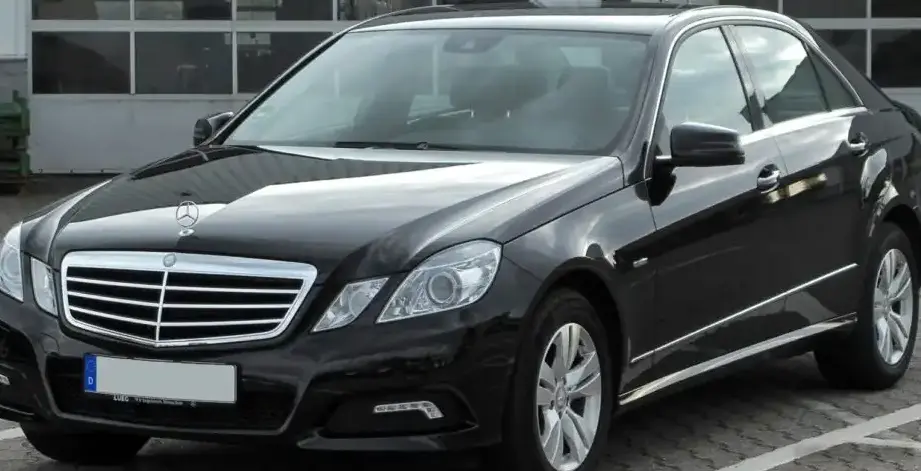
The Mercedes-Benz E 200 CDI BlueEFFICIENCY, produced between February 2011 and January 2013, was a key variant within the W212 E-Class range. Positioned as a fuel-efficient and relatively affordable entry point into the E-Class lineup, it catered to buyers prioritizing economy and comfort over outright performance. This model represented Mercedes-Benz’s commitment to reducing emissions and improving fuel consumption through its BlueEFFICIENCY technologies, including the Start & Stop system. The W212 generation, launched in 2009, aimed to blend luxury, technology, and driving dynamics, and the E 200 CDI BlueEFFICIENCY played a significant role in broadening its appeal.
Technical Specifications
| Brand | Mercedes-Benz |
| Model | E-class |
| Generation | E-class (W212) |
| Type (Engine) | E 200 CDI BlueEFFICIENCY (136 Hp) Start & Stop |
| Start of production | February, 2011 |
| End of production | January, 2013 |
| Powertrain Architecture | Internal Combustion engine |
| Body type | Sedan |
| Seats | 5 |
| Doors | 4 |
| Fuel consumption (economy) – urban (NEDC) | 6.3-6.5 l/100 km (37.3 – 36.2 US mpg, 44.8 – 43.5 UK mpg, 15.9 – 15.4 km/l) |
| Fuel consumption (economy) – extra urban (NEDC) | 4.4-4.7 l/100 km (53.5 – 50 US mpg, 64.2 – 60.1 UK mpg, 22.7 – 21.3 km/l) |
| Fuel consumption (economy) – combined (NEDC) | 5.1-5.4 l/100 km (46.1 – 43.6 US mpg, 55.4 – 52.3 UK mpg, 19.6 – 18.5 km/l) |
| CO2 emissions (NEDC) | 134-141 g/km |
| Fuel Type | Diesel |
| Acceleration 0 – 100 km/h | 10.2 sec |
| Acceleration 0 – 62 mph | 10.2 sec |
| Acceleration 0 – 60 mph | 9.7 sec |
| Maximum speed | 210 km/h (130.49 mph) |
| Emission standard | Euro 5 |
| Weight-to-power ratio | 12.1 kg/Hp, 82.7 Hp/tonne |
| Weight-to-torque ratio | 4.6 kg/Nm, 218.8 Nm/tonne |
| Power | 136 Hp @ 2800-4600 rpm |
| Power per litre | 63.5 Hp/l |
| Torque | 360 Nm @ 1600-2600 rpm (265.52 lb.-ft. @ 1600-2600 rpm) |
| Engine layout | Front, Longitudinal |
| Engine Model/Code | OM 651.925 |
| Engine displacement | 2143 cm3 (130.77 cu. in.) |
| Number of cylinders | 4 |
| Engine configuration | Inline |
| Cylinder Bore | 83 mm (3.27 in.) |
| Piston Stroke | 99 mm (3.9 in.) |
| Compression ratio | 16.2:1 |
| Number of valves per cylinder | 4 |
| Fuel injection system | Diesel Commonrail |
| Engine aspiration | Turbocharger, Intercooler |
| Valvetrain | DOHC |
| Engine oil capacity | 6.5 l (6.87 US qt | 5.72 UK qt) |
| Coolant | 9 l (9.51 US qt | 7.92 UK qt) |
| Kerb Weight | 1645 kg (3626.6 lbs.) |
| Max. weight | 2255 kg (4971.42 lbs.) |
| Max load | 610 kg (1344.82 lbs.) |
| Trunk (boot) space – minimum | 540 l (19.07 cu. ft.) |
| Fuel tank capacity | 59 l (15.59 US gal | 12.98 UK gal) |
| Max. roof load | 100 kg (220.46 lbs.) |
| Permitted trailer load with brakes (12%) | 1900 kg (4188.78 lbs.) |
| Permitted trailer load without brakes | 750 kg (1653.47 lbs.) |
| Permitted towbar download | 84 kg (185.19 lbs.) |
| Length | 4868 mm (191.65 in.) |
| Width | 1854 mm (72.99 in.) |
| Width including mirrors | 2071 mm (81.54 in.) |
| Height | 1471 mm (57.91 in.) |
| Wheelbase | 2874 mm (113.15 in.) |
| Front track | 1598 mm (62.91 in.) |
| Rear (Back) track | 1614 mm (63.54 in.) |
| Front overhang | 841 mm (33.11 in.) |
| Rear overhang | 1153 mm (45.39 in.) |
| Drag coefficient (Cd) | 0.25 |
| Minimum turning circle (turning diameter) | 11.25 m (36.91 ft.) |
| Drivetrain Architecture | The Internal combustion engine (ICE) drives the rear wheels of the vehicle. |
| Drive wheel | Rear wheel drive |
| Number of gears and type of gearbox | 6 gears, manual transmission |
| Front suspension | Coil spring, Independent multi-link suspension, Transverse stabilizer, Air Suspension – Optional |
| Rear suspension | Independent multi-link spring suspension with stabilizer, Air Suspension – Optional |
| Front brakes | Ventilated discs, 295 mm |
| Rear brakes | Disc, 300 mm |
| Assisting systems | ABS (Anti-lock braking system) |
| Steering type | Steering rack and pinion |
| Power steering | Hydraulic Steering |
| Tires size | Front wheel tires: 205/60 R16; 225/55 R16; 245/45 R17; 245/40 R18Rear wheel tires: 205/60 R16; 225/55 R16; 245/45 R17; 265/50 R18 |
| Wheel rims size | Front wheel rims: 7J x 16; 7.5J x 16; 8J x 17; 8.5J x 18Rear wheel rims: 7J x 16; 7.5J x 16; 8J x 17; 9J x 18 |
Powertrain & Engine Architecture
The E 200 CDI BlueEFFICIENCY was powered by the OM651.925, a 2.1-liter inline-four cylinder diesel engine. This engine was a mainstay in the Mercedes-Benz lineup, known for its durability and efficiency. It featured a common rail direct injection system, delivering fuel at extremely high pressure for optimized combustion. A turbocharger with an intercooler further enhanced performance and torque output. The engine produced 136 horsepower at 2800-4600 rpm and 360 Nm (265.52 lb.-ft.) of torque between 1600-2600 rpm. The engine utilized a double overhead camshaft (DOHC) valvetrain with four valves per cylinder. The Start & Stop system, a key component of the BlueEFFICIENCY package, automatically shut off the engine when the vehicle came to a standstill, reducing fuel consumption and emissions. The standard transmission was a 6-speed manual, although a 5-speed automatic transmission was also available as an option.
Driving Characteristics
The E 200 CDI BlueEFFICIENCY with the manual transmission offered a respectable, if not exhilarating, driving experience. Acceleration from 0-100 km/h (0-62 mph) took approximately 10.2 seconds. The engine’s torque was readily available from low revs, making it suitable for everyday driving and overtaking maneuvers. The automatic transmission, while providing convenience, slightly dulled the responsiveness compared to the manual. Gear ratios were optimized for fuel efficiency, resulting in a comfortable cruising experience on the highway. However, the car wasn’t designed for sporty driving; its focus was on refinement and economy. The relatively low power output meant that the car felt less nimble than higher-powered E-Class variants.
Equipment & Trim Levels
The E 200 CDI BlueEFFICIENCY typically came equipped with standard features such as automatic climate control, a multi-function steering wheel, and an audio system with a CD player. Upholstery was generally cloth, although leather options were available. Optional extras included a sunroof, navigation system, upgraded audio systems, and parking sensors. The trim level could vary depending on the market, but generally, it was positioned as a mid-range offering, bridging the gap between the base models and the more luxurious trims like the E 350. Safety features such as ABS, ESP, and multiple airbags were standard.
Chassis & Braking
The W212 E-Class featured a sophisticated chassis design. The E 200 CDI BlueEFFICIENCY utilized a coil spring, independent multi-link suspension at the front and an independent multi-link spring suspension at the rear. A transverse stabilizer bar helped to reduce body roll during cornering. Front brakes were ventilated discs measuring 295mm, while rear brakes were solid discs measuring 300mm. The suspension was tuned for comfort, providing a smooth ride over various road surfaces. Air suspension was available as an optional extra, further enhancing ride quality.
Market Reception & Comparison
The E 200 CDI BlueEFFICIENCY was generally well-received by critics for its fuel efficiency and comfortable ride. It was seen as a practical and sensible choice for buyers prioritizing economy over performance. Compared to the more powerful E 250 or E 350 models, the E 200 CDI offered significantly better fuel economy. However, it lacked the punch and responsiveness of its higher-powered siblings. The 1.8L petrol variants were less popular due to their higher fuel consumption. The E 220 CDI, with its slightly higher power output, was often considered a more desirable alternative, but at a higher price point.
Legacy
The OM651 engine, found in the E 200 CDI BlueEFFICIENCY, has proven to be remarkably durable and reliable. These engines are known to exceed high mileage with proper maintenance. In the used car market, the E 200 CDI BlueEFFICIENCY remains a popular choice for buyers seeking a comfortable, fuel-efficient, and well-built executive car. While not the most exciting E-Class variant, its practicality and long-term reliability have ensured its continued appeal. Common issues are related to the diesel particulate filter (DPF) and the glow plugs, especially on vehicles that have primarily been used for short journeys.