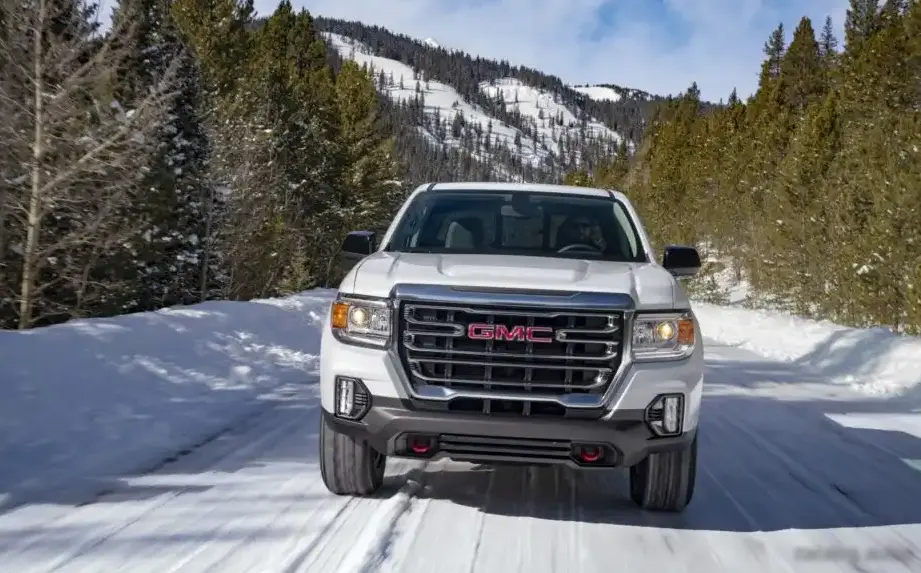
The GMC Canyon II, specifically the facelifted version introduced in 2021, represents General Motors’ mid-size pickup truck offering. This iteration of the Canyon, built on the GMT-315 platform, aimed to provide a more refined and capable experience compared to its predecessor. The 2.8 Duramax TD (181 Hp) 4WD Automatic variant, produced from 2021 to 2022, occupied a significant position within the Canyon lineup, offering a balance between fuel efficiency, towing capacity, and everyday usability. It was positioned as a step up from the base gasoline engine options, targeting buyers who needed diesel torque for work or recreation but didn’t require the maximum power output of the higher-trim diesel models.
Technical Specifications
| Brand | GMC |
| Model | Canyon |
| Generation | Canyon II (facelift 2021) Crew cab |
| Type (Engine) | 2.8 Duramax TD (181 Hp) 4WD Automatic |
| Start of production | 2021 |
| End of production | 2022 |
| Powertrain Architecture | Internal Combustion engine |
| Body type | Pick-up |
| Seats | 5 |
| Doors | 4 |
| Fuel consumption (urban) | 12.4 l/100 km (19 US mpg, 22.8 UK mpg, 8.1 km/l) |
| Fuel consumption (extra urban) | 8.4 l/100 km (28 US mpg, 33.6 UK mpg, 11.9 km/l) |
| Fuel Type | Diesel |
| Weight-to-power ratio | 11.2 kg/Hp, 88.9 Hp/tonne |
| Weight-to-torque ratio | 4.1 kg/Nm, 245.6 Nm/tonne |
| Power | 181 Hp @ 3400 rpm |
| Power per litre | 65.2 Hp/l |
| Torque | 500 Nm @ 2000 rpm (368.78 lb.-ft. @ 2000 rpm) |
| Engine layout | Front, Longitudinal |
| Engine Model/Code | LWN |
| Engine displacement | 2776 cm3 (169.4 cu. in.) |
| Number of cylinders | 4 |
| Engine configuration | Inline |
| Cylinder Bore | 94 mm (3.7 in.) |
| Piston Stroke | 100 mm (3.94 in.) |
| Compression ratio | 16.5:1 |
| Number of valves per cylinder | 4 |
| Fuel injection system | Diesel Commonrail |
| Engine aspiration | Turbocharger, Intercooler |
| Valvetrain | DOHC |
| Engine oil capacity | 5.6 l (5.92 US qt | 4.93 UK qt) |
| Coolant capacity | 10.5 l (11.1 US qt | 9.24 UK qt) |
| Kerb Weight | 2036 kg (4488.61 lbs.) |
| Max. weight | 2812 kg (6199.4 lbs.) |
| Max load | 776 kg (1710.79 lbs.) |
| Fuel tank capacity | 79.5 l (21 US gal | 17.49 UK gal) |
| AdBlue tank capacity | 20.4 l (5.39 US gal | 4.49 UK gal) |
| Permitted trailer load with brakes (12%) | 3447 kg (7599.33 lbs.) |
| Length | 5395 mm (212.4 in.) |
| Width | 1886 mm (74.25 in.) |
| Height | 1794 mm (70.63 in.) |
| Wheelbase | 3258 mm (128.27 in.) |
| Front track | 1586 mm (62.44 in.) |
| Rear track | 1586 mm (62.44 in.) |
| Ride height (ground clearance) | 208 mm (8.19 in.) |
| Drivetrain Architecture | All wheel drive (4×4). ICE drives rear wheels, front wheels engaged via clutch. |
| Number of gears and type of gearbox | 6 gears, automatic transmission Hydra-Matic |
| Front suspension | Independent coil spring |
| Rear suspension | Rigid axle suspension, Leaf spring |
| Front brakes | Disc, 324×18 mm |
| Rear brakes | Disc, 324×18 mm |
| Assisting systems | ABS (Anti-lock braking system) |
| Steering type | Steering rack and pinion |
| Power steering | Electric Steering |
| Tires size | 255/65 R17; 265/65 R17; 265/60 R18 |
| Wheel rims size | 8J x 17; 8.5J x 18 |
INTRODUCTION
The 2021-2022 GMC Canyon Crew Cab equipped with the 2.8-liter Duramax turbodiesel engine and a six-speed Hydra-Matic automatic transmission represents a mid-cycle refresh of the second-generation Canyon (introduced in 2015). This facelift brought updated styling, enhanced technology, and refinements to the powertrain. The Canyon, as GMC’s offering in the competitive mid-size truck segment, aimed to appeal to buyers seeking a more premium alternative to the Chevrolet Colorado (with which it shares a platform) and other rivals like the Toyota Tacoma and Ford Ranger. The 2.8L Duramax variant was positioned as a sweet spot, offering a significant increase in torque over the base gasoline engines without the higher price tag of the more powerful diesel options.
Powertrain & Engine Architecture
The heart of this Canyon variant is the 2.8-liter (2776 cc) inline-four cylinder Duramax turbodiesel engine, designated with the engine code LWN. This engine utilizes a common-rail direct fuel injection system, delivering fuel at extremely high pressures for optimized combustion. The engine features a single variable geometry turbocharger (VGT) with an intercooler to enhance power and efficiency. The double overhead camshaft (DOHC) valvetrain, with four valves per cylinder, contributes to improved breathing and overall engine performance. The 2.8L Duramax produces 181 horsepower at 3400 rpm and a robust 500 Nm (368.78 lb.-ft.) of torque at 2000 rpm. The Hydra-Matic 6L50 six-speed automatic transmission is paired with the engine, providing smooth and efficient gear changes. This transmission is known for its durability and ability to handle the engine’s torque output.
Driving Characteristics
The 2.8 Duramax-equipped Canyon delivers a noticeably different driving experience compared to the gasoline-powered models. The abundant low-end torque makes it particularly well-suited for towing and hauling. While not as quick off the line as some of its gasoline counterparts, the diesel engine provides strong acceleration in the mid-range, making highway passing and merging relatively effortless. The six-speed automatic transmission is well-tuned, offering smooth shifts and keeping the engine in its optimal power band. Compared to the higher-output Duramax variants, this 181 hp version feels less stressed during acceleration, contributing to a more relaxed driving experience. The gear ratios are optimized for both fuel economy and towing capability, providing a balance between performance and efficiency.
Equipment & Trim Levels
The 2.8 Duramax TD 4WD Automatic was typically offered in the SLE and AT4 trim levels. The SLE trim included standard features such as an 8-inch touchscreen infotainment system with Apple CarPlay and Android Auto compatibility, a rearview camera, and keyless entry. The AT4 trim added off-road-focused features like a factory-lifted suspension, skid plates, and an automatic locking rear differential. Interior upholstery typically consisted of cloth or leatherette seating surfaces, depending on the trim level and optional packages. Available options included a premium Bose audio system, heated and ventilated front seats, a power-adjustable driver’s seat, and a navigation system.
Chassis & Braking
The Canyon II utilizes a body-on-frame construction, providing a robust and durable platform. The front suspension consists of independent coil springs, while the rear suspension employs a traditional leaf spring setup. This configuration is designed to handle the demands of hauling and towing. The braking system features disc brakes on all four wheels, measuring 324×18 mm. An Anti-lock Braking System (ABS) is standard, enhancing safety and control during emergency braking situations. The steering system utilizes a rack-and-pinion setup with electric power steering, providing responsive and precise handling.
Market Reception & Comparison
The 2.8 Duramax Canyon received generally positive reviews from automotive critics. It was praised for its strong towing capacity, fuel efficiency, and comfortable ride. However, some reviewers noted that the interior felt somewhat dated compared to newer competitors. Compared to the gasoline-powered Canyon models, the 2.8 Duramax offered significantly better fuel economy and torque, making it a more practical choice for those who frequently tow or haul heavy loads. Compared to the higher-output Duramax variants, the 181 hp version offered a more affordable price point and a slightly more refined driving experience.
Legacy
The 2.8 Duramax engine, in general, has proven to be a reliable and durable powertrain. While some owners have reported issues with the diesel particulate filter (DPF) system, these issues are relatively common in modern diesel engines and can often be mitigated with proper maintenance. The 2021-2022 Canyon 2.8 Duramax TD 4WD Automatic remains a popular choice in the used car market, particularly among buyers seeking a capable and fuel-efficient mid-size pickup truck. Its combination of power, efficiency, and features makes it a compelling option for both work and recreational use.