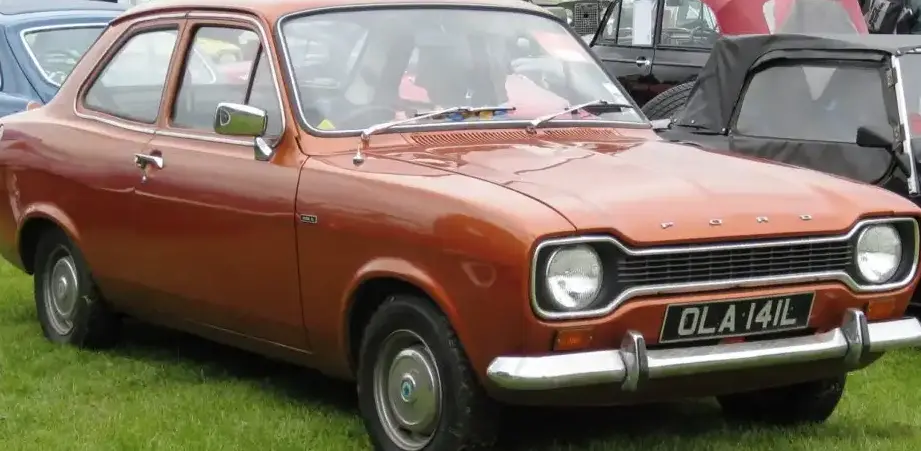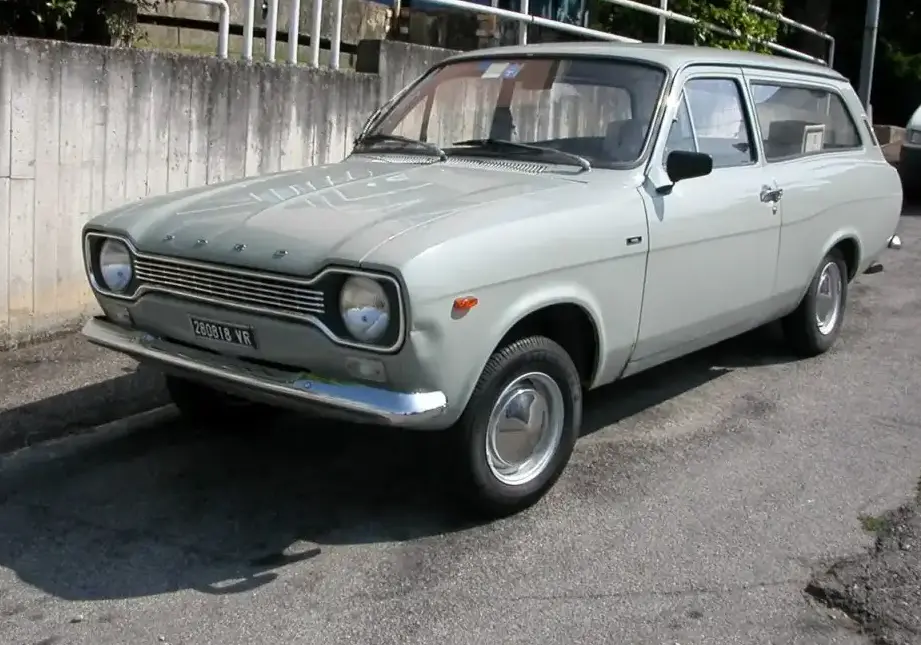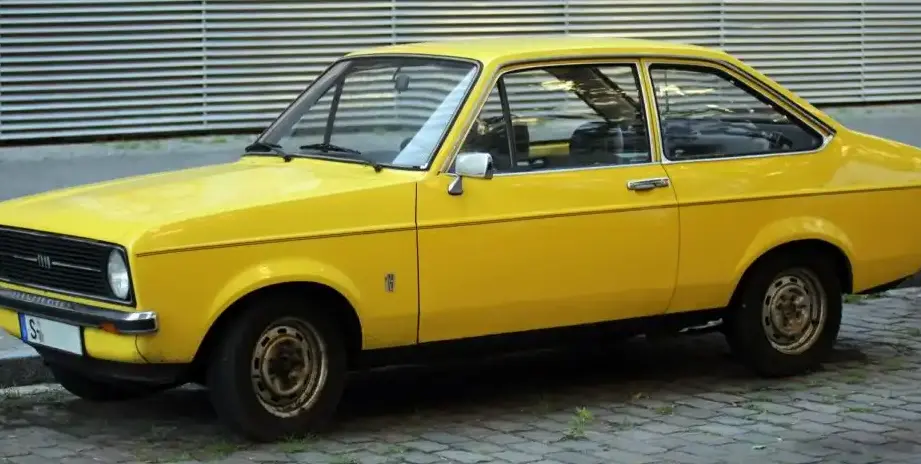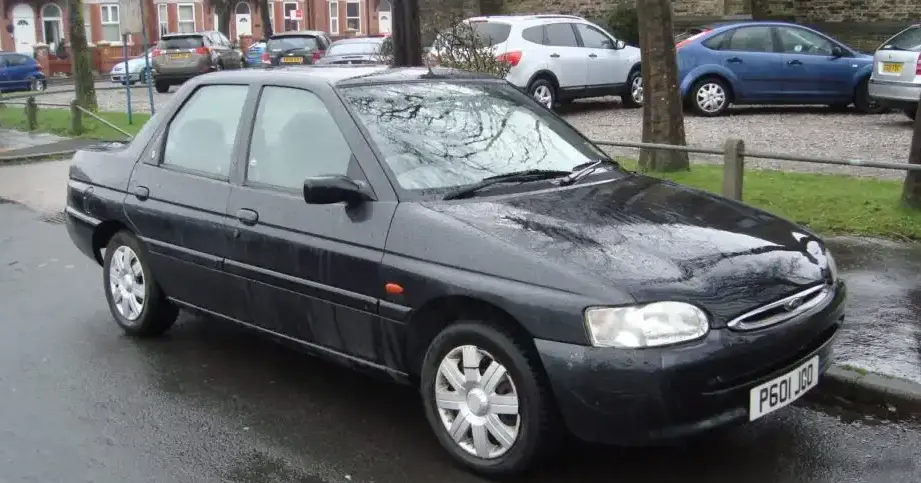
The Ford Escort VII, produced between 1995 and 1998, represented a significant evolution of Ford’s long-running Escort line. Within the seventh generation (chassis codes GAL, AAL, and ABL), the 1.4 i variant, producing 75 horsepower, served as the entry point into the range. This model was primarily aimed at buyers seeking affordable, reliable transportation, particularly in European markets where smaller displacement engines were favored due to taxation and fuel costs. It occupied the lower end of the spectrum, positioned below the more powerful 1.6L and 1.8L models, and significantly below performance-oriented trims. The 1.4 i was typically offered with a five-speed manual transmission, but a four-speed automatic option was also available, impacting its performance and target demographic.
Technical Specifications
| Brand | Ford |
| Model | Escort |
| Generation | Escort VII (GAL, AAL, ABL) |
| Type (Engine) | 1.4 i (75 Hp) |
| Start of production | 1995 |
| End of production | 1998 |
| Powertrain Architecture | Internal Combustion engine |
| Body type | Sedan |
| Seats | 5 |
| Doors | 4 |
| Fuel consumption (combined) | 8 l/100 km (29.4 US mpg, 35.3 UK mpg, 12.5 km/l) |
| Fuel Type | Petrol (Gasoline) |
| Acceleration 0 – 100 km/h | 14.6 sec |
| Acceleration 0 – 62 mph | 14.6 sec |
| Acceleration 0 – 60 mph | 13.9 sec |
| Maximum speed | 169 km/h (105.01 mph) |
| Weight-to-power ratio | 14.3 kg/Hp, 70.1 Hp/tonne |
| Weight-to-torque ratio | 10.1 kg/Nm, 99.1 Nm/tonne |
| Power | 75 Hp @ 5500 rpm |
| Power per litre | 53.9 Hp/l |
| Torque | 106 Nm @ 2750 rpm (78.18 lb.-ft. @ 2750 rpm) |
| Engine layout | Front, Transverse |
| Engine Model/Code | F4B, FUH |
| Engine displacement | 1391 cm3 (84.88 cu. in.) |
| Number of cylinders | 4 |
| Engine configuration | Inline |
| Cylinder Bore | 77.2 mm (3.04 in.) |
| Piston Stroke | 74.3 mm (2.93 in.) |
| Compression ratio | 8.5:1 |
| Number of valves per cylinder | 2 |
| Fuel injection system | Multi-port manifold injection |
| Engine aspiration | Naturally aspirated engine |
| Valvetrain | OHC |
| Engine oil capacity | 3.5 l (3.7 US qt | 3.08 UK qt) |
| Coolant | 7.6 l (8.03 US qt | 6.69 UK qt) |
| Kerb Weight | 1070 kg (2358.95 lbs.) |
| Max. weight | 1615 kg (3560.47 lbs.) |
| Max load | 545 kg (1201.52 lbs.) |
| Trunk (boot) space – minimum | 490 l (17.3 cu. ft.) |
| Fuel tank capacity | 55 l (14.53 US gal | 12.1 UK gal) |
| Length | 4293 mm (169.02 in.) |
| Width | 1700 mm (66.93 in.) |
| Height | 1394 mm (54.88 in.) |
| Wheelbase | 2525 mm (99.41 in.) |
| Front track | 1440 mm (56.69 in.) |
| Rear (Back) track | 1462 mm (57.56 in.) |
| Drivetrain Architecture | The Internal combustion engine (ICE) drives the front wheels of the vehicle. |
| Drive wheel | Front wheel drive |
| Number of gears and type of gearbox | 5 gears, manual transmission |
| Front suspension | Wishbone |
| Rear suspension | Coil spring |
| Front brakes | Ventilated discs |
| Rear brakes | Drum |
| Assisting systems | ABS (Anti-lock braking system) |
| Steering type | Steering rack and pinion |
| Power steering | Hydraulic Steering |
| Tires size | 175/65 R14 H |
Powertrain & Engine Architecture
The 1.4 i Escort utilized the Ford F4B or FUH engine, an inline four-cylinder unit with a displacement of 1391 cc (84.88 cubic inches). This engine featured a single overhead camshaft (OHC) design operating two valves per cylinder. Fuel delivery was managed by a multi-port fuel injection system, a common setup for the time, providing improved efficiency and emissions compared to earlier carbureted designs. The engine’s 8.5:1 compression ratio was a compromise between performance and the ability to run on readily available fuel grades. The automatic transmission option was typically a four-speed unit, designed for smooth, if not particularly sporty, operation. This transmission was chosen for its simplicity and cost-effectiveness, rather than outright performance.
Driving Characteristics
The 1.4 i Escort with the automatic transmission offered a comfortable, but uninspiring, driving experience. Acceleration was modest, with a 0-60 mph time around 13.9 seconds. The automatic gearbox, while providing convenience, noticeably dulled the engine’s performance. Gear ratios were optimized for fuel economy rather than rapid acceleration. Compared to the five-speed manual version, the automatic suffered a slight performance penalty. The manual transmission allowed for better control and a more engaging driving experience, while the automatic prioritized ease of use, appealing to drivers who primarily used the car for commuting or city driving. The 1.6L and 1.8L models offered significantly more power and quicker acceleration, making them the preferred choice for drivers seeking a more dynamic experience.
Equipment & Trim Levels
The 1.4 i Escort typically came with a basic level of equipment. Standard features generally included power steering, central locking, and an AM/FM radio. Interior upholstery was typically cloth, with a relatively simple dashboard layout. Optional extras included air conditioning, electric windows, and upgraded audio systems. Trim levels varied slightly depending on the market, but the 1.4 i generally represented the entry-level offering. Higher trim levels, such as the Ghia, offered more luxurious appointments, including upgraded upholstery, alloy wheels, and additional features like a sunroof.
Chassis & Braking
The Escort VII utilized a front-wheel-drive layout with independent wishbone suspension at the front and a coil spring rear suspension. The 1.4 i variant, being the entry-level model, typically featured ventilated disc brakes at the front and drum brakes at the rear. ABS (Anti-lock Braking System) was often included as standard equipment, enhancing safety. Stabilizer bars were present, but were generally thinner than those found on higher-performance models. The suspension was tuned for comfort, providing a relatively smooth ride, although it wasn’t particularly sporty.
Market Reception & Comparison
The 1.4 i Escort was generally well-received as an affordable and reliable family car. Critics acknowledged its practicality and fuel efficiency, but often noted its lack of performance. Compared to the 1.6L and 1.8L models, the 1.4 i offered lower running costs but at the expense of driving enjoyment. The 1.9 TDI diesel variant, available in some markets, provided superior fuel economy and torque, appealing to drivers who prioritized efficiency over outright power. The automatic transmission, while convenient, was often criticized for its sluggishness and impact on fuel economy.
Legacy
The 1.4 i Escort VII, while not the most exciting variant in the lineup, proved to be a durable and dependable vehicle. The F4B/FUH engine, while not known for its high performance, was generally reliable and relatively easy to maintain. Today, these Escorts are relatively affordable on the used car market, making them a popular choice for budget-conscious buyers. However, finding well-maintained examples can be challenging, as many have suffered from neglect or high mileage. The automatic transmission, while offering convenience, is generally considered less desirable than the manual version due to its lower performance and potential for higher repair costs. Despite its modest specifications, the 1.4 i Escort VII remains a testament to Ford’s commitment to providing affordable and practical transportation.