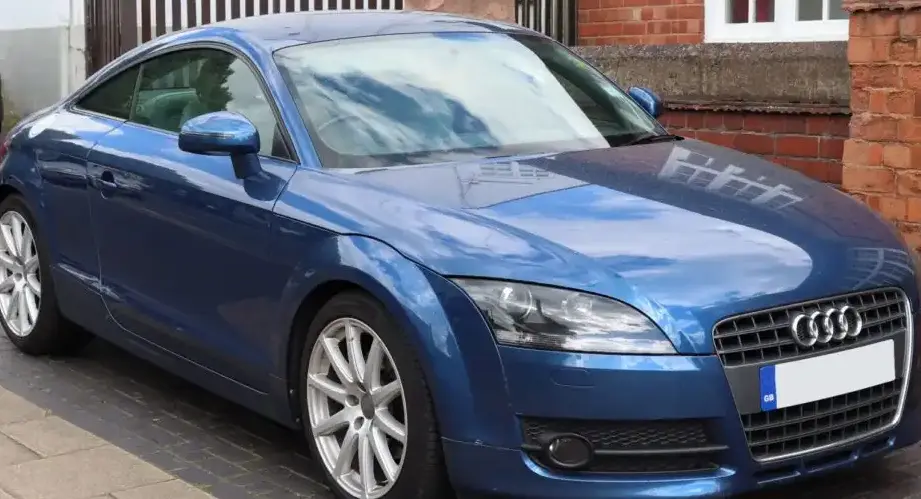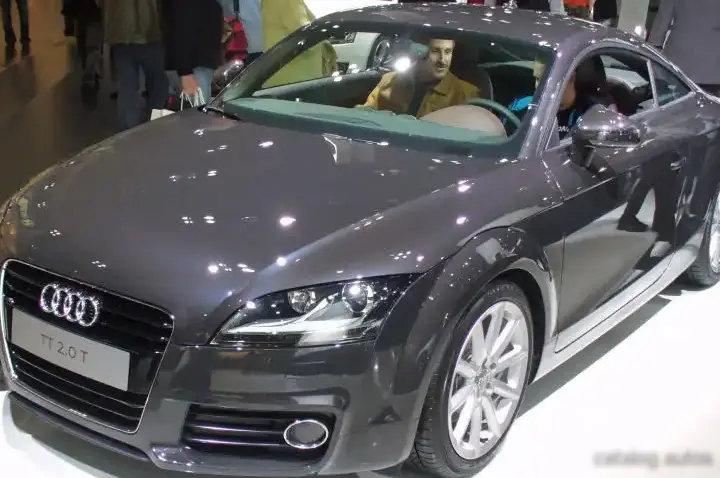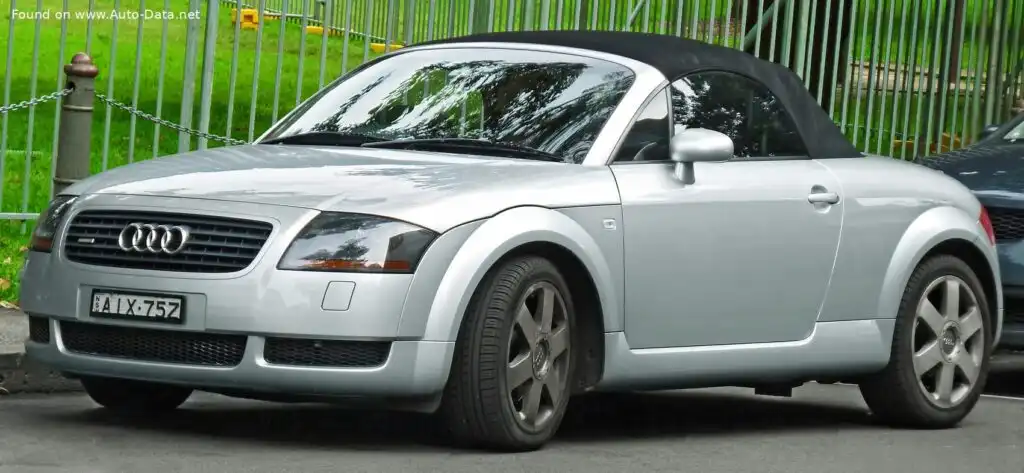
The Audi TT Roadster (8N) 1.8T, produced from October 1998 to 2000, represented a bold entry into the affordable sports car market. Part of the first-generation (8N) TT lineup, this variant offered a compelling blend of Audi’s renowned build quality, distinctive Bauhaus-inspired styling, and turbocharged performance in a compact, two-seater roadster package. Positioned as a mid-range offering within the initial TT range, it sat between the base 1.6-liter model (not widely available in the US) and the more potent 225 horsepower 1.8T quattro. The 8N platform, shared with the Volkswagen Golf Mk4, Audi A3, and other VW Group vehicles, provided a solid foundation for the TT’s sporty character.
Technical Specifications
| Brand | Audi |
| Model | TT |
| Generation | TT Roadster (8N) |
| Type (Engine) | 1.8 T (180 Hp) |
| Start of production | October, 1998 |
| End of production | 2000 |
| Powertrain Architecture | Internal Combustion engine |
| Body type | Roadster |
| Seats | 2 |
| Doors | 2 |
| Fuel consumption (urban) | 11.4 l/100 km (20.6 US mpg, 24.8 UK mpg, 8.8 km/l) |
| Fuel consumption (extra urban) | 6.5 l/100 km (36.2 US mpg, 43.5 UK mpg, 15.4 km/l) |
| Fuel consumption (combined) | 8.2 l/100 km (28.7 US mpg, 34.4 UK mpg, 12.2 km/l) |
| CO2 emissions | 197 g/km |
| Fuel Type | Petrol (Gasoline) |
| Acceleration 0 – 100 km/h | 7.9 sec |
| Acceleration 0 – 62 mph | 7.9 sec |
| Acceleration 0 – 60 mph | 7.5 sec |
| Maximum speed | 222 km/h (137.94 mph) |
| Emission standard | Euro 3 |
| Weight-to-power ratio | 7.3 kg/Hp, 137.4 Hp/tonne |
| Weight-to-torque ratio | 5.6 kg/Nm, 179.4 Nm/tonne |
| Power | 180 Hp @ 5500 rpm |
| Power per litre | 101.1 Hp/l |
| Torque | 235 Nm @ 1950-5000 rpm (173.33 lb.-ft. @ 1950-5000 rpm) |
| Engine layout | Front, Transverse |
| Engine Model/Code | AJQ, APP, ATC, AUQ |
| Engine displacement | 1781 cm3 (108.68 cu. in.) |
| Number of cylinders | 4 |
| Engine configuration | Inline |
| Cylinder Bore | 81 mm (3.19 in.) |
| Piston Stroke | 86.4 mm (3.4 in.) |
| Compression ratio | 9.5:1 |
| Number of valves per cylinder | 5 |
| Fuel injection system | Multi-port manifold injection |
| Engine aspiration | Turbocharger |
| Valvetrain | DOHC |
| Engine oil capacity | 4.5 l (4.76 US qt | 3.96 UK qt) |
| Coolant | 7 l (7.4 US qt | 6.16 UK qt) |
| Kerb Weight | 1310 kg (2888.06 lbs.) |
| Max. weight | 1610 kg (3549.44 lbs.) |
| Max load | 300 kg (661.39 lbs.) |
| Trunk (boot) space – minimum | 220 l (7.77 cu. ft.) |
| Fuel tank capacity | 55 l (14.53 US gal | 12.1 UK gal) |
| Length | 4041 mm (159.09 in.) |
| Width | 1764 mm (69.45 in.) |
| Height | 1349 mm (53.11 in.) |
| Wheelbase | 2422 mm (95.35 in.) |
| Front track | 1528 mm (60.16 in.) |
| Rear (Back) track | 1513 mm (59.57 in.) |
| Drag coefficient (Cd) | 0.36 |
| Minimum turning circle | 10.5 m (34.45 ft.) |
| Drivetrain Architecture | Front wheel drive |
| Drive wheel | Front wheel drive |
| Number of gears | 5 gears, manual transmission |
| Front suspension | Independent, type McPherson with coil spring and anti-roll bar |
| Rear suspension | independent torsion suspension |
| Front brakes | Ventilated discs |
| Rear brakes | Disc |
| Assisting systems | ABS (Anti-lock braking system) |
| Steering type | Steering rack and pinion |
| Power steering | Hydraulic Steering |
| Tires size | 205/55 R16 |
| Wheel rims size | 7J x 16 |
Powertrain & Engine Architecture
The heart of the 1.8T Roadster was the 1781cc, inline-four cylinder engine, identifiable by engine codes such as AJQ, APP, ATC, and AUQ. This engine was a significant departure from naturally aspirated engines of the time, utilizing a K03 turbocharger and multi-port fuel injection to deliver a substantial power boost. The engine featured a dual overhead camshaft (DOHC) valvetrain with five valves per cylinder – three intake and two exhaust – contributing to its efficient breathing and broad torque curve. The turbocharger provided 8.5 psi of boost, allowing for 180 horsepower at 5500 rpm and 173 lb-ft of torque available from a low 1950 rpm all the way to 5000 rpm. The engine’s transverse mounting and front-wheel drive configuration were typical for vehicles in this class. The 5-speed manual transmission was the standard offering, providing direct engagement and a sporty feel. A four-speed automatic transmission was also available, though it impacted acceleration slightly.
Driving Characteristics
The 1.8T Roadster with the manual transmission offered a lively driving experience. Acceleration to 60 mph took around 7.5 seconds, and top speed was approximately 138 mph. The turbocharger provided a noticeable surge of power, making overtaking maneuvers relatively effortless. The front-wheel drive layout, while offering good traction in most conditions, could exhibit some torque steer under hard acceleration. The automatic transmission, while providing convenience, resulted in a slight decrease in performance and a less engaging driving experience. Gear ratios were tuned for a balance between acceleration and fuel economy. The suspension, while firm enough to provide good body control, was not overly harsh, making the TT a comfortable daily driver.
Equipment & Trim Levels
The 1.8T Roadster came reasonably well-equipped as standard. Interior features included sport seats, leather trim, and a multi-function steering wheel. Air conditioning, power windows, and power locks were also standard. Optional extras included a premium sound system, heated seats, and a sunroof. The interior design was minimalist and focused on the driver, reflecting the Bauhaus design philosophy. Exterior options included various wheel designs and paint colors. The overall aesthetic was modern and sophisticated, setting the TT apart from its competitors.
Chassis & Braking
The 8N TT Roadster utilized a McPherson strut front suspension and a torsion beam rear suspension. This setup provided a good balance between handling and ride comfort. The front suspension incorporated a stabilizer bar to reduce body roll during cornering. Braking duties were handled by ventilated discs at the front and solid discs at the rear. Anti-lock braking system (ABS) was standard, enhancing safety and control. The steering was a rack-and-pinion system with hydraulic power assistance, providing precise and responsive steering feel.
Market Reception & Comparison
The Audi TT Roadster 1.8T was generally well-received by automotive critics. It was praised for its striking design, engaging driving dynamics, and high-quality interior. However, some critics noted the potential for torque steer with the manual transmission and the slightly compromised practicality of a two-seater roadster. Compared to the 225 hp 1.8T quattro, the 180 hp version offered a more affordable entry point into the TT lineup, but at the expense of outright performance. Fuel economy was respectable for a sports car, averaging around 29 mpg combined. The 1.8T offered a compelling alternative to rivals such as the BMW Z3 and Mercedes-Benz SLK.
Legacy
The Audi TT Roadster (8N) 1.8T proved to be a reliable and durable sports car. The 1.8T engine, in particular, is known for its robustness and relatively straightforward maintenance. Common issues include occasional turbocharger failure and oil leaks, but these are generally not major concerns. Today, the 8N TT Roadster 1.8T remains a popular choice among enthusiasts, offering a stylish and affordable way to experience classic Audi performance. Well-maintained examples command reasonable prices in the used car market, and parts availability is generally good. The 8N TT established the TT as a design icon and paved the way for subsequent generations of this popular sports car.