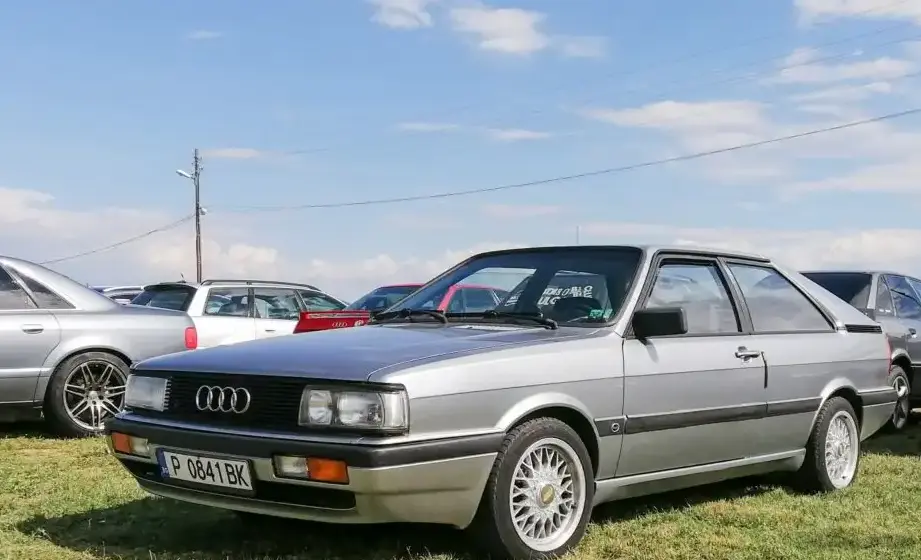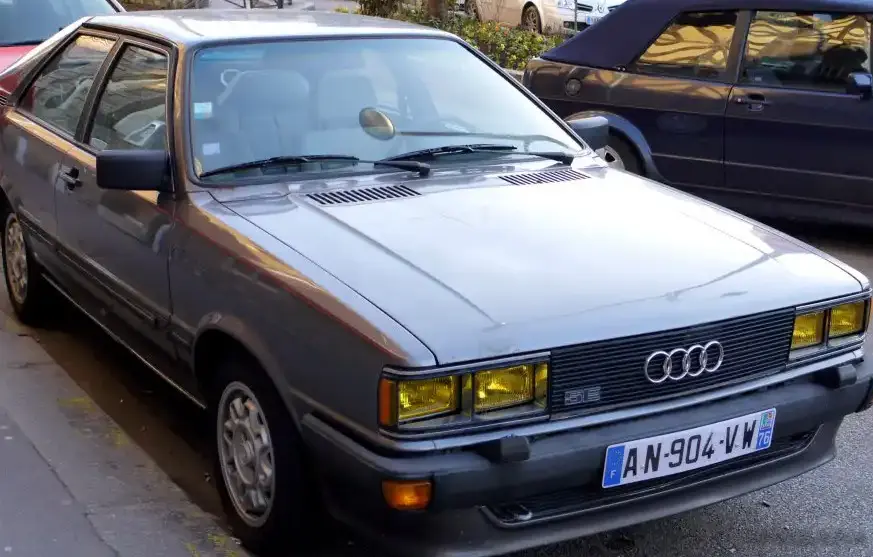
The Audi Coupe (B2), produced between 1980 and 1988, represented a significant step forward for Audi, blending sporty styling with practical usability. The GT 1.8 variant, equipped with a 90 horsepower engine and a three-speed automatic transmission, was offered from 1982 to 1984. This model occupied an entry-level position within the B2 Coupe range, providing a more accessible price point compared to the more powerful and performance-oriented versions like the WR and quattro models. It was primarily marketed towards buyers seeking a stylish and comfortable coupe without the higher running costs associated with larger engines.
Technical Specifications
| Brand | Audi |
| Model | Coupe |
| Generation | Coupe (B2 81, 85) |
| Type (Engine) | GT 1.8 (90 Hp) Automatic |
| Start of production | 1982 |
| End of production | 1984 |
| Powertrain Architecture | Internal Combustion engine |
| Body type | Coupe |
| Seats | 5 |
| Doors | 2 |
| Fuel Type | Petrol (Gasoline) |
| Acceleration 0 – 100 km/h | 13.6 sec |
| Acceleration 0 – 62 mph | 13.6 sec |
| Acceleration 0 – 60 mph | 12.9 sec |
| Maximum speed | 166 km/h (103.15 mph) |
| Weight-to-power ratio | 10.8 kg/Hp, 92.8 Hp/tonne |
| Weight-to-torque ratio | 6.7 kg/Nm, 149.5 Nm/tonne |
| Power | 90 Hp @ 5200 rpm |
| Power per litre | 50.5 Hp/l |
| Torque | 145 Nm @ 3300 rpm (106.95 lb.-ft. @ 3300 rpm) |
| Engine layout | Front, Longitudinal |
| Engine Model/Code | DS, JN, JV |
| Engine displacement | 1781 cm3 (108.68 cu. in.) |
| Number of cylinders | 4 |
| Engine configuration | Inline |
| Cylinder Bore | 81 mm (3.19 in.) |
| Piston Stroke | 86.4 mm (3.4 in.) |
| Compression ratio | 10:1 |
| Number of valves per cylinder | 2 |
| Fuel injection system | Carburettor |
| Engine aspiration | Naturally aspirated engine |
| Engine oil capacity | 3.5 l (3.7 US qt | 3.08 UK qt) |
| Coolant capacity | 6.5 l (6.87 US qt | 5.72 UK qt) |
| Kerb Weight | 970 kg (2138.48 lbs.) |
| Max. weight | 1410 kg (3108.52 lbs.) |
| Max load | 440 kg (970.03 lbs.) |
| Trunk (boot) space – minimum | 494 l (17.45 cu. ft.) |
| Fuel tank capacity | 60 l (15.85 US gal | 13.2 UK gal) |
| Length | 4349 mm (171.22 in.) |
| Width | 1682 mm (66.22 in.) |
| Height | 1350 mm (53.15 in.) |
| Wheelbase | 2542 mm (100.08 in.) |
| Front track | 1400 mm (55.12 in.) |
| Rear (Back) track | 1420 mm (55.91 in.) |
| Drag coefficient (Cd) | 0.39 |
| Minimum turning circle | 10.4 m (34.12 ft.) |
| Drivetrain Architecture | The Internal combustion engine (ICE) drives the front wheels of the vehicle. |
| Drive wheel | Front wheel drive |
| Number of gears and type of gearbox | 3 gears, automatic transmission |
| Front brakes | Disc |
| Rear brakes | Drum |
| Tires size | 175/70 R13 |
| Wheel rims size | 13 |
Powertrain & Engine Architecture
The GT 1.8 utilized Audi’s DS, JN, or JV engine code, all variations of the same 1.8-liter inline-four cylinder engine. This engine was a relatively simple design, featuring a cast iron block and an aluminum cylinder head. It employed a single overhead camshaft (SOHC) valvetrain with two valves per cylinder. Fuel delivery was managed by a Solex carburetor, a common setup for European cars of this era. This carburetor system, while reliable, was less efficient and offered less precise fuel control compared to the fuel injection systems found in later models. The engine’s 90 horsepower output at 5200 rpm and 145 Nm (107 lb-ft) of torque at 3300 rpm were modest, but adequate for comfortable cruising. The three-speed automatic transmission was a Jatco unit, known for its smoothness but also for its relatively slow shift times. This transmission was chosen to provide ease of use, appealing to drivers who preferred the convenience of an automatic over a manual gearbox.
Driving Characteristics
The 1.8L automatic Coupe offered a relaxed driving experience. Acceleration was not its strong suit, with a 0-60 mph time of around 12.9 seconds. The automatic transmission, while smooth, contributed to a noticeable delay in response, especially during overtaking maneuvers. The gear ratios were optimized for fuel economy and comfortable highway cruising rather than spirited performance. Compared to the five-speed manual version of the 1.8, the automatic suffered a slight performance penalty. The more powerful 1.8 WR and 2.1-liter five-cylinder models offered significantly more performance, but at a higher price point and with increased running costs. The front-wheel-drive configuration provided predictable handling, but lacked the all-weather capability of the quattro models.
Equipment & Trim Levels
The GT 1.8 Automatic typically came equipped with basic features as standard. Interior upholstery was usually cloth, with a simple dashboard layout. Power steering was often included, but air conditioning and electric windows were typically optional extras. The exterior featured steel wheels with hubcaps, and relatively minimal brightwork. Optional extras included upgraded audio systems, sunroofs, and metallic paint finishes. The trim level was positioned as the entry point to the Coupe range, offering a balance of affordability and practicality.
Chassis & Braking
The B2 Coupe utilized a MacPherson strut front suspension and a torsion beam rear suspension. The GT 1.8 variant typically featured a smaller diameter rear drum brakes, contributing to cost savings. Front brakes were ventilated discs. Stabilizer bars were present at both the front and rear, helping to reduce body roll during cornering. The suspension was tuned for comfort, providing a relatively soft ride quality. The 175/70 R13 tires offered adequate grip for everyday driving, but were not designed for high-performance handling.
Market Reception & Comparison
The Audi Coupe GT 1.8 Automatic was generally well-received as an affordable and stylish coupe. Critics praised its comfortable ride and practical interior space. However, the engine’s modest power output and the automatic transmission’s slow shift times were often criticized. Compared to the manual transmission versions and the more powerful engine options, the GT 1.8 Automatic offered lower fuel economy and slower acceleration. However, it remained a popular choice for buyers who prioritized comfort and ease of use over outright performance. Its reliability was generally good, although carburetor maintenance could be required over time.
Legacy
The Audi Coupe B2, including the GT 1.8 Automatic variant, holds a nostalgic place in automotive history. While not a performance icon, it represented a significant step forward for Audi in terms of design and engineering. The 1.8-liter engine and three-speed automatic transmission combination proved to be reasonably reliable, and many examples are still on the road today. In the used car market, the GT 1.8 Automatic is often sought after by enthusiasts looking for a classic Audi at an affordable price. However, potential buyers should be aware of the potential for carburetor issues and the need for regular maintenance to keep these cars running smoothly. The B2 Coupe paved the way for future generations of Audi coupes, establishing the brand’s reputation for stylish and well-engineered vehicles.