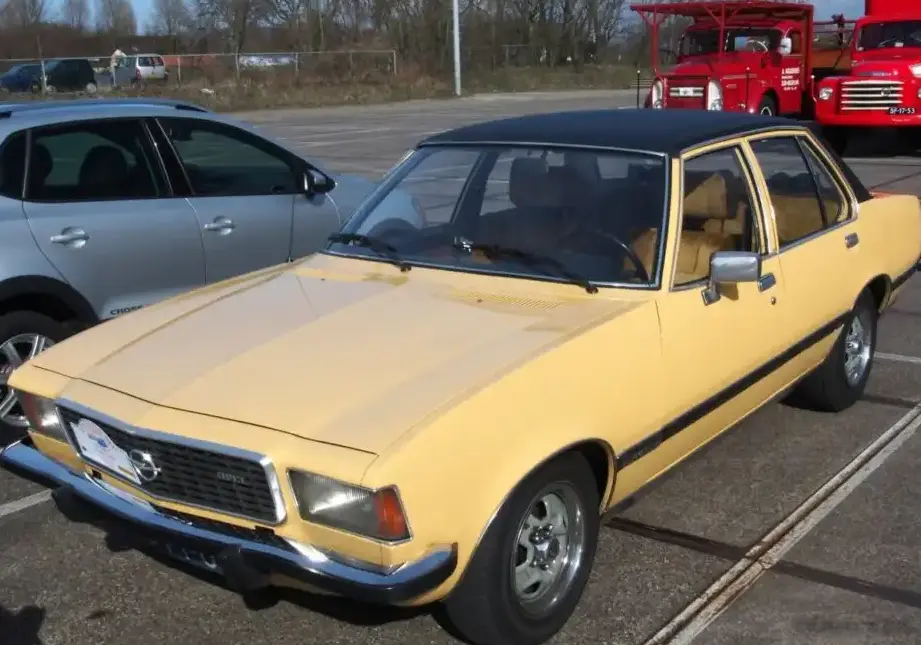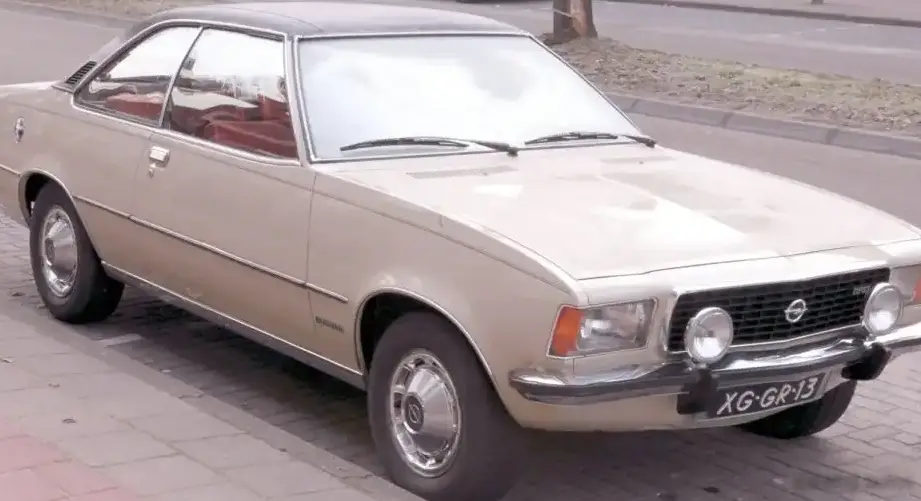
The Opel Commodore B Coupe 2.8 GS/E, produced between 1977 and 1978, represented the pinnacle of the Commodore B coupe range. Positioned as the high-performance variant, the GS/E (Grand Sport Einspritzung – Grand Sport Injection) offered a significant step up in power and refinement compared to the standard Commodore coupes. It was a key model in Opel’s lineup during a period when the brand was gaining recognition for building sporty and comfortable grand tourers, primarily aimed at the European market. The Commodore B, and specifically the Coupe, aimed to compete with vehicles like the Ford Capri and BMW 3 Series coupes, offering a blend of style, performance, and practicality.
Technical Specifications
| Brand | Opel |
| Model | Commodore |
| Generation | Commodore B Coupe |
| Type (Engine) | 2.8 GS/E (155 Hp) |
| Start of production | 1977 |
| End of production | 1978 |
| Powertrain Architecture | Internal Combustion engine |
| Body type | Coupe |
| Seats | 5 |
| Doors | 2 |
| Fuel Type | Petrol (Gasoline) |
| Acceleration 0 – 100 km/h | 9.5 sec |
| Acceleration 0 – 62 mph | 9.5 sec |
| Acceleration 0 – 60 mph | 9 sec |
| Maximum speed | 200 km/h (124.27 mph) |
| Weight-to-power ratio | 8 kg/Hp, 125 Hp/tonne |
| Weight-to-torque ratio | 5.7 kg/Nm, 175 Nm/tonne |
| Power | 155 Hp @ 5600 rpm |
| Power per litre | 55.7 Hp/l |
| Torque | 217 Nm @ 4200 rpm (160.05 lb.-ft. @ 4200 rpm) |
| Engine layout | Front, Longitudinal |
| Engine Model/Code | 28EC |
| Engine displacement | 2784 cm3 (169.89 cu. in.) |
| Number of cylinders | 6 |
| Engine configuration | Inline |
| Cylinder Bore | 92 mm (3.62 in.) |
| Piston Stroke | 69.8 mm (2.75 in.) |
| Compression ratio | 9:1 |
| Number of valves per cylinder | 2 |
| Fuel injection system | Multi-port manifold injection |
| Engine aspiration | Naturally aspirated engine |
| Valvetrain | SOHC |
| Engine oil capacity | 5.5 l (5.81 US qt | 4.84 UK qt) |
| Kerb Weight | 1240 kg (2733.73 lbs.) |
| Max. weight | 1675 kg (3692.74 lbs.) |
| Max load | 435 kg (959.01 lbs.) |
| Trunk (boot) space – minimum | 434 l (15.33 cu. ft.) |
| Fuel tank capacity | 70 l (18.49 US gal | 15.4 UK gal) |
| Length | 4607 mm (181.38 in.) |
| Width | 1728 mm (68.03 in.) |
| Height | 1380 mm (54.33 in.) |
| Wheelbase | 2668 mm (105.04 in.) |
| Front track | 1450 mm (57.09 in.) |
| Rear (Back) track | 1400 mm (55.12 in.) |
| Ride height (ground clearance) | 140 mm (5.51 in.) |
| Drag coefficient (Cd) | 0.45 |
| Minimum turning circle (turning diameter) | 11.2 m (36.75 ft.) |
| Drivetrain Architecture | The Internal combustion engine (ICE) drives the rear wheels of the vehicle. |
| Drive wheel | Rear wheel drive |
| Number of gears and type of gearbox | 4 gears, manual transmission |
| Front brakes | Disc |
| Rear brakes | Disc |
Powertrain & Engine Architecture
The heart of the Commodore B Coupe 2.8 GS/E was the 28EC engine, a 2.8-liter inline-six cylinder powerplant. This engine was a significant upgrade over the smaller displacement engines offered in other Commodore B models. The 28EC featured a single overhead camshaft (SOHC) valvetrain operating two valves per cylinder. Crucially, the GS/E utilized Bosch K-Jetronic multi-port fuel injection, a sophisticated system for its time that contributed to improved performance and fuel efficiency compared to carbureted engines. The engine produced 155 horsepower at 5600 rpm and 217 Nm (160 lb-ft) of torque at 4200 rpm. The engine was mounted longitudinally in the front of the vehicle, driving the rear wheels. The four-speed manual transmission was standard, providing a direct and engaging driving experience. While an automatic transmission was available, it was less common and generally considered to diminish the car’s sporting character.
Driving Characteristics
The 2.8 GS/E offered a noticeably more spirited driving experience than its siblings. The fuel injection system provided crisp throttle response, and the engine pulled strongly throughout the rev range. Acceleration to 60 mph was achieved in around 9 seconds, and the car could reach a top speed of 124 mph. The manual transmission allowed for precise control, and the rear-wheel-drive layout contributed to balanced handling. Compared to the lower-powered Commodore coupes, the GS/E felt significantly more capable on winding roads. However, it wasn’t a lightweight car, and its size meant it wasn’t as nimble as some of its smaller competitors. The automatic transmission, when equipped, dulled the performance somewhat, resulting in slower acceleration and a less engaging driving experience.
Equipment & Trim Levels
The GS/E trim level included a number of features designed to enhance both comfort and style. Standard equipment typically included a wood-trimmed dashboard, upgraded upholstery (often featuring a sporty check pattern), and a comprehensive instrument cluster. Power steering and disc brakes on all four wheels were also standard. Optional extras included a sunroof, upgraded audio systems, and air conditioning. The GS/E also featured distinctive exterior styling cues, such as a front spoiler, rear window louvers, and unique wheel trims. The interior was generally well-appointed for its time, offering a comfortable and refined environment for both driver and passengers.
Chassis & Braking
The Commodore B Coupe utilized a traditional body-on-frame construction. The suspension consisted of independent front suspension with coil springs and a rigid rear axle with leaf springs. The GS/E benefited from slightly stiffer suspension settings compared to the standard models, which helped to reduce body roll and improve handling. All four wheels were equipped with disc brakes, providing ample stopping power. The braking system was hydraulically assisted, offering a firm and progressive pedal feel. The steering was a recirculating ball system, which provided reasonable precision but lacked the feel of more modern steering technologies.
Market Reception & Comparison
The Commodore B Coupe 2.8 GS/E was generally well-received by automotive critics. It was praised for its strong engine, comfortable ride, and stylish design. However, some critics noted its relatively high price and its size, which made it less agile than some of its competitors. Compared to the standard Commodore coupes, the GS/E offered a significant performance upgrade, but it also came at a premium. The GS/E was positioned as a more luxurious and refined alternative to the more basic Commodore models. Fuel economy was reasonable for the time, but not exceptional. Reliability was generally good, although the K-Jetronic fuel injection system could require specialized maintenance.
Legacy
The Opel Commodore B Coupe 2.8 GS/E remains a sought-after classic car today. Its combination of style, performance, and relative rarity has made it a favorite among collectors and enthusiasts. The 28EC engine is known for its durability and relatively straightforward maintenance, although finding parts for the K-Jetronic fuel injection system can sometimes be challenging. Well-maintained examples of the GS/E command a premium in the used car market. The Commodore B Coupe, and the GS/E variant in particular, represents a high point in Opel’s history, showcasing the brand’s ability to produce stylish and capable grand tourers.