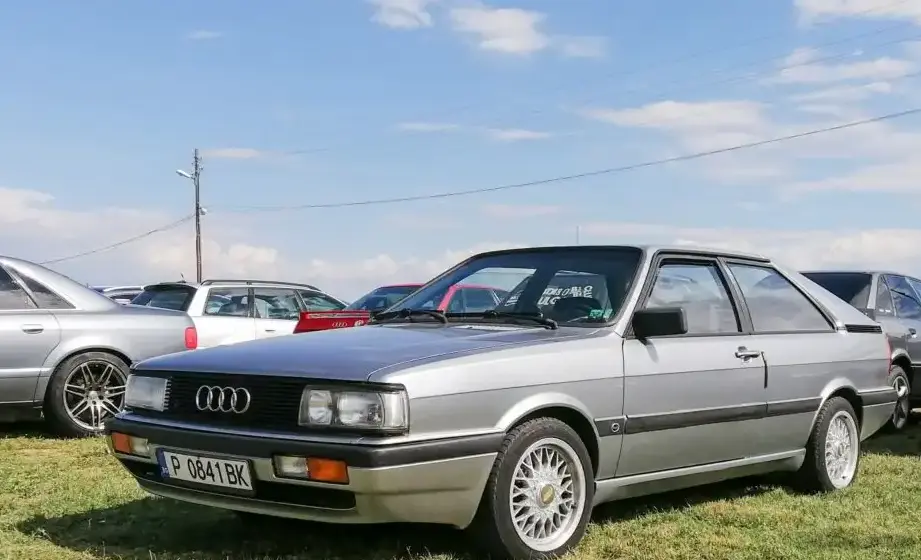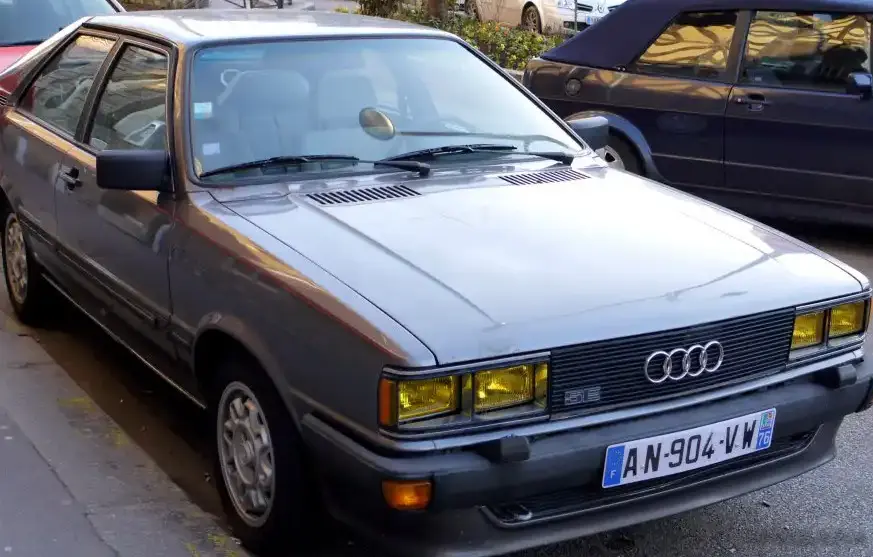
The Audi Coupe (B2), produced between 1980 and 1988, represented a significant step forward for Audi in the realm of sporty, yet practical coupes. The GT 2.2 variant, specifically those built between 1981 and 1984, occupied a middle ground within the B2 lineup, offering a balance between performance and affordability. Positioned above the base 1.8-liter models but below the more potent 2.1-liter and later 2.3-liter versions, the GT 2.2 catered to buyers seeking a refined driving experience without the higher price tag of the flagship models. It was a key component of the first generation of the Coupe, chassis codes 81 and 85, and played a role in establishing Audi’s reputation for build quality and innovative design.
Technical Specifications
| Brand | Audi |
| Model | Coupe |
| Generation | Coupe (B2 81, 85) |
| Type (Engine) | GT 2.2 (115 Hp) CAT |
| Start of production | 1981 |
| End of production | 1984 |
| Powertrain Architecture | Internal Combustion engine |
| Body type | Coupe |
| Seats | 5 |
| Doors | 2 |
| Fuel Type | Petrol (Gasoline) |
| Acceleration 0 – 100 km/h | 9.5 sec |
| Acceleration 0 – 62 mph | 9.5 sec |
| Acceleration 0 – 60 mph | 9 sec |
| Maximum speed | 189 km/h (117.44 mph) |
| Power | 115 Hp @ 5500 rpm |
| Power per litre | 51.7 Hp/l |
| Torque | 165 Nm @ 2500 rpm (121.7 lb.-ft. @ 2500 rpm) |
| Engine layout | Front, Longitudinal |
| Engine Model/Code | KX |
| Engine displacement | 2226 cm3 (135.84 cu. in.) |
| Number of cylinders | 5 |
| Engine configuration | Inline |
| Cylinder Bore | 81 mm (3.19 in.) |
| Piston Stroke | 86.4 mm (3.4 in.) |
| Compression ratio | 10:1 |
| Number of valves per cylinder | 2 |
| Fuel injection system | Multi-port manifold injection |
| Engine aspiration | Naturally aspirated engine |
| Engine oil capacity | 4.5 l (4.76 US qt | 3.96 UK qt) |
| Coolant | 8 l (8.45 US qt | 7.04 UK qt) |
| Trunk (boot) space – minimum | 494 l (17.45 cu. ft.) |
| Fuel tank capacity | 60 l (15.85 US gal | 13.2 UK gal) |
| Length | 4349 mm (171.22 in.) |
| Width | 1682 mm (66.22 in.) |
| Height | 1350 mm (53.15 in.) |
| Wheelbase | 2542 mm (100.08 in.) |
| Front track | 1400 mm (55.12 in.) |
| Rear (Back) track | 1420 mm (55.91 in.) |
| Drag coefficient (Cd) | 0.39 |
| Drivetrain Architecture | The Internal combustion engine (ICE) drives the front wheels of the vehicle. |
| Drive wheel | Front wheel drive |
| Number of gears and type of gearbox | 5 gears, manual transmission |
| Front brakes | Ventilated discs |
| Rear brakes | Disc |
Powertrain & Engine Architecture
The heart of the GT 2.2 was the Audi KX engine, a 2.2-liter inline five-cylinder powerplant. This engine was a key feature of the B2 Coupe and represented a departure from the more common four-cylinder engines of the time. The KX engine utilized multi-port fuel injection, a relatively advanced system for the early 1980s, contributing to improved fuel efficiency and smoother power delivery. The engine featured a single overhead camshaft operating two valves per cylinder. The catalytic converter (“CAT” in the model designation) was standard equipment, reflecting growing environmental concerns and emissions regulations. The engine’s longitudinal front-engine layout, coupled with front-wheel drive, provided a balanced weight distribution and contributed to the car’s handling characteristics.
Driving Characteristics
The GT 2.2 offered a respectable, if not exhilarating, driving experience. With 115 horsepower and 122 lb-ft of torque, acceleration from 0 to 60 mph took around 9 seconds, and top speed was approximately 117 mph. While slower than the higher-spec 2.1 and 2.3-liter Coupes, the 2.2-liter engine provided sufficient power for comfortable cruising and everyday driving. The five-speed manual transmission allowed drivers to effectively utilize the engine’s powerband. The front-wheel drive configuration, while providing good traction in most conditions, could exhibit torque steer under hard acceleration. Compared to the later turbocharged versions, the GT 2.2 offered a more linear power delivery, making it more predictable and easier to control.
Equipment & Trim Levels
The GT 2.2 typically came equipped with a reasonable level of standard features. Interior appointments included cloth upholstery, a basic instrument cluster, and a four-speaker stereo system. Power steering was often included, but air conditioning was frequently an optional extra. The exterior featured body-colored bumpers and steel wheels with hubcaps. Optional extras included upgraded stereo systems, sunroofs, and alloy wheels. The interior design was functional and understated, reflecting the German emphasis on practicality and build quality. The GT 2.2 trim level aimed for a balance between comfort and affordability, making it an attractive option for buyers who didn’t require the luxury features of the higher-end models.
Chassis & Braking
The B2 Coupe utilized a MacPherson strut front suspension and a semi-trailing arm rear suspension. This setup provided a good compromise between ride comfort and handling. The GT 2.2 was equipped with ventilated disc brakes at the front and solid disc brakes at the rear, providing adequate stopping power for its weight and performance. The steering was a rack-and-pinion system, offering precise control. Stabilizer bars were fitted to both the front and rear axles to reduce body roll during cornering. The chassis was relatively lightweight, contributing to the car’s nimble handling characteristics.
Market Reception & Comparison
The Audi Coupe GT 2.2 was generally well-received by automotive critics. It was praised for its stylish design, comfortable interior, and refined driving experience. However, some critics noted that its performance was not as exciting as that of the higher-spec models. Compared to the 1.8-liter versions, the GT 2.2 offered a noticeable improvement in performance and refinement. Compared to the 2.1 and 2.3-liter models, it represented a more affordable option, albeit with slightly less power. Fuel economy was reasonable for the time, averaging around 25-30 mpg. Reliability was generally good, although maintenance costs could be higher than those of more mainstream vehicles.
Legacy
The Audi Coupe B2, and the GT 2.2 variant specifically, holds a respected place in automotive history. It helped establish Audi as a maker of stylish, well-engineered coupes. The inline five-cylinder engine became a signature feature of Audi performance models for many years. Today, well-maintained examples of the GT 2.2 are sought after by classic car enthusiasts. The KX engine, while not known for being particularly high-strung, is generally considered reliable if properly maintained. Common issues include wear and tear on suspension components and potential corrosion, particularly in areas exposed to road salt. The GT 2.2 remains a testament to Audi’s commitment to innovation and quality, and a desirable classic for those seeking a taste of 1980s German engineering.