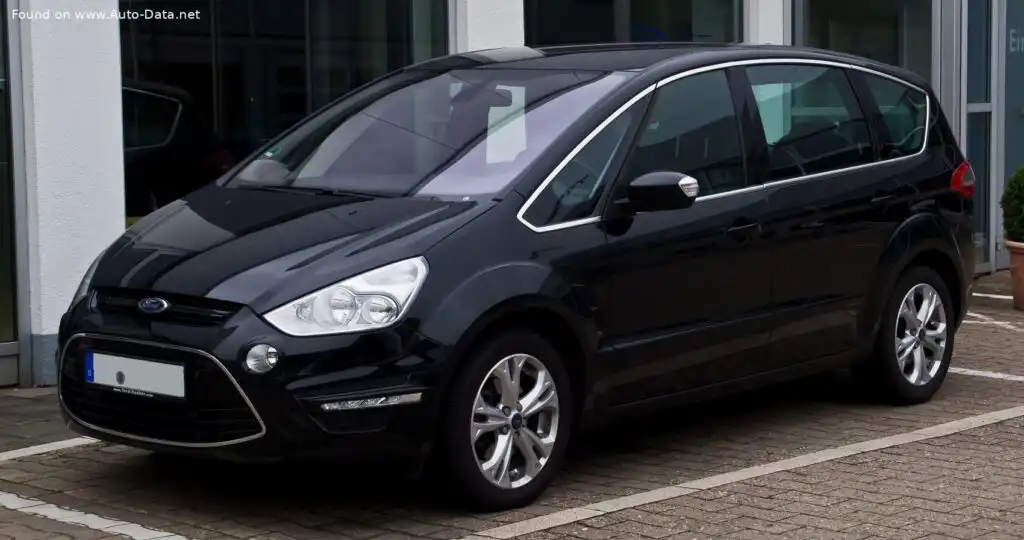
The Ford S-MAX, particularly the facelifted version introduced in 2010, represented Ford’s entry into the multi-purpose vehicle (MPV) segment with a focus on sporty handling and practicality. The 2.0 Duratorq TDCi variant, producing 140 horsepower and paired with the Powershift dual-clutch transmission, was a significant offering within the S-MAX lineup from 2010 to 2014. This configuration aimed to balance fuel efficiency with acceptable performance for family transportation, positioning itself as a mid-range option appealing to buyers seeking a versatile vehicle without the higher costs of the more powerful engine options.
Technical Specifications
| Brand | Ford |
| Model | S-MAX |
| Generation | S-MAX (facelift 2010) |
| Type (Engine) | 2.0 Duratorq TDCi (140 Hp) Powershift |
| Start of production | 2010 |
| End of production | 2014 |
| Powertrain Architecture | Internal Combustion engine |
| Body type | MPV |
| Seats | 7 |
| Doors | 5 |
| Fuel consumption (urban) | 7.4 l/100 km (31.8 US mpg) |
| Fuel consumption (extra urban) | 5.2 l/100 km (45.2 US mpg) |
| Fuel consumption (combined) | 6 l/100 km (39.2 US mpg) |
| Fuel Type | Diesel |
| Acceleration 0 – 100 km/h | 10.9 sec |
| Acceleration 0 – 62 mph | 10.9 sec |
| Acceleration 0 – 60 mph | 10.4 sec |
| Maximum speed | 193 km/h (119.92 mph) |
| Emission standard | Euro 5 |
| Weight-to-power ratio | 12.1 kg/Hp |
| Power | 140 Hp |
| Engine layout | Front, Transverse |
| Engine Model/Code | UFWA |
| Engine configuration | Inline |
| Fuel injection system | Diesel Commonrail |
| Engine aspiration | Turbocharger, Intercooler |
| Engine oil capacity | 5.5 l (5.81 US qt) |
| Coolant capacity | 8.1 l (8.56 US qt) |
| Kerb Weight | 1689 kg (3723.61 lbs) |
| Max. weight | 2505 kg (5522.58 lbs) |
| Max load | 816 kg (1798.97 lbs) |
| Trunk (boot) space – minimum | 285 l (10.06 cu. ft) |
| Trunk (boot) space – maximum | 2000 l (70.63 cu. ft) |
| Fuel tank capacity | 70 l (18.49 US gal) |
| Length | 4903 mm (193.03 in) |
| Width | 2154 mm (84.8 in) |
| Height | 1660 mm (65.35 in) |
| Minimum turning circle | 11.9 m (39.04 ft) |
| Drivetrain | Front wheel drive |
| Number of gears | 6 |
| Gearbox type | Automatic transmission |
| Assisting systems | ABS (Anti-lock braking system) |
Powertrain & Engine Architecture
The heart of this S-MAX variant is the 2.0-liter Duratorq TDCi diesel engine, specifically the UFWA engine code. This engine is a four-cylinder, inline configuration, utilizing a common-rail direct fuel injection system. This system, operating at very high pressures, ensures precise fuel delivery for optimized combustion and reduced emissions. A turbocharger with an intercooler is employed to increase power output by forcing more air into the cylinders. The engine also incorporates a diesel particulate filter (DPF) to meet stringent Euro 5 emission standards. The Powershift transmission is a six-speed, dual-clutch transmission (DCT). This type of transmission offers quicker and smoother gear changes compared to a traditional automatic, contributing to improved fuel efficiency and a more engaging driving experience. It essentially combines the efficiency of a manual transmission with the convenience of an automatic.
Driving Characteristics
The 140 horsepower output and the Powershift transmission provide a reasonable level of performance for everyday driving. Acceleration from 0-60 mph takes approximately 10.4 seconds, which is adequate for merging onto highways and overtaking slower traffic. However, it’s noticeably slower than the higher-powered S-MAX variants, such as those equipped with the 2.0-liter bi-turbo engine. The Powershift transmission is generally responsive, but some drivers have reported occasional hesitation at low speeds. The gear ratios are tuned for a balance between fuel economy and usability, with a focus on providing sufficient torque for comfortable cruising. Compared to the manual transmission versions of the same engine, the Powershift offers greater convenience, especially in urban environments, but may slightly diminish fuel economy.
Equipment & Trim Levels
The 2.0 Duratorq TDCi Powershift S-MAX typically came equipped with a respectable level of standard features. These generally included air conditioning, alloy wheels, a CD/radio system with auxiliary input, power windows and mirrors, and ABS brakes. Higher trim levels, such as Titanium, added features like automatic climate control, parking sensors, a more advanced audio system, and leather upholstery. Optional extras included navigation systems, panoramic sunroofs, and upgraded sound systems. The interior typically featured cloth upholstery, with a functional and durable design. The dashboard layout was straightforward and user-friendly, prioritizing practicality over luxury.
Chassis & Braking
The S-MAX utilizes a front-wheel-drive platform with independent suspension at the front (typically MacPherson struts) and a multi-link suspension at the rear. This suspension setup provides a good balance between ride comfort and handling. The braking system typically consists of ventilated disc brakes at the front and either disc or drum brakes at the rear, depending on the specific trim level. ABS (Anti-lock Braking System) is standard, enhancing safety during emergency braking situations. Stabilizer bars are fitted to both the front and rear axles to reduce body roll during cornering.
Market Reception & Comparison
The 2.0 Duratorq TDCi Powershift S-MAX was generally well-received by automotive critics as a practical and fuel-efficient MPV. It was praised for its spacious interior, versatile seating configuration, and comfortable ride. However, some reviewers noted that the 140 horsepower engine could feel underpowered when the vehicle was fully loaded with passengers and luggage. Compared to the more powerful S-MAX variants, this version offered a lower price point and better fuel economy, making it an attractive option for budget-conscious buyers. The 1.6 TDCi engine was available as a lower-cost alternative, but it offered significantly less performance. The higher-output 2.0-liter bi-turbo engine provided superior performance but came at a higher price and with increased fuel consumption.
Legacy
The 2.0 Duratorq TDCi engine, in various iterations, has proven to be a relatively reliable powertrain. The Powershift transmission, however, has been known to experience issues in some cases, including clutch wear and software glitches. Regular maintenance, including timely fluid changes, is crucial for ensuring the longevity of both the engine and the transmission. In the used car market, the 2.0 Duratorq TDCi Powershift S-MAX represents a good value proposition for buyers seeking a spacious and practical MPV. However, potential buyers should be aware of the potential transmission issues and thoroughly inspect the vehicle before making a purchase. The S-MAX, in general, remains a popular choice for families due to its versatility and practicality, and this particular variant continues to offer a compelling blend of fuel efficiency and usability.