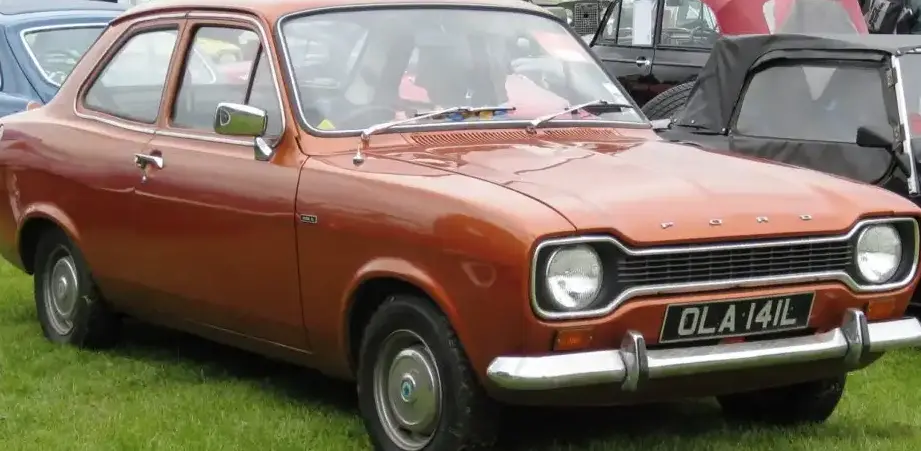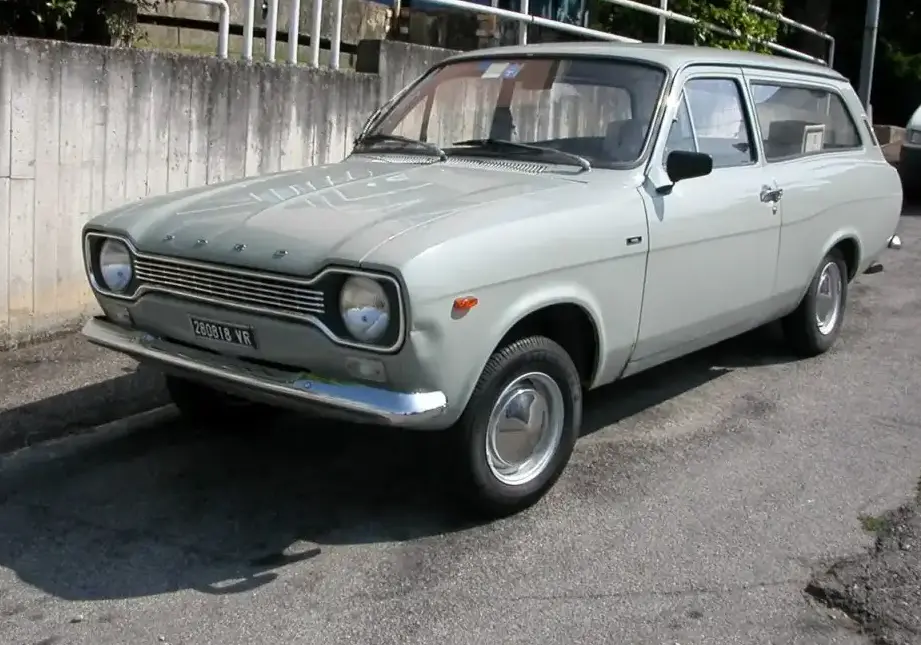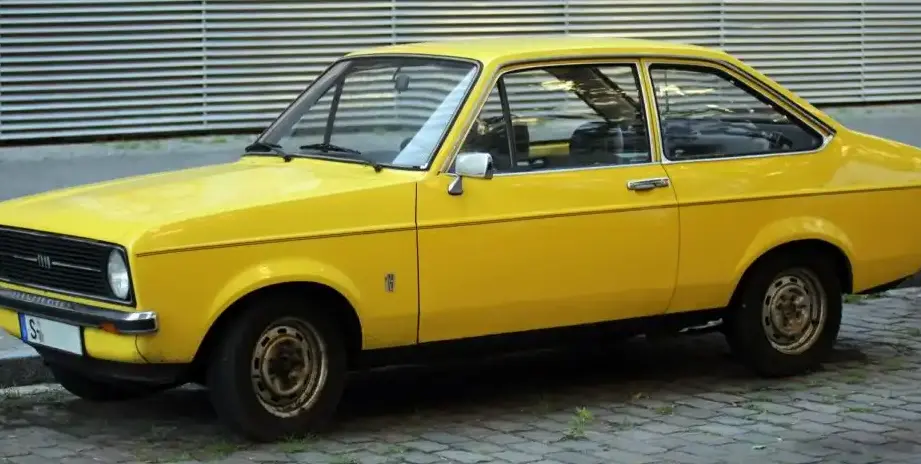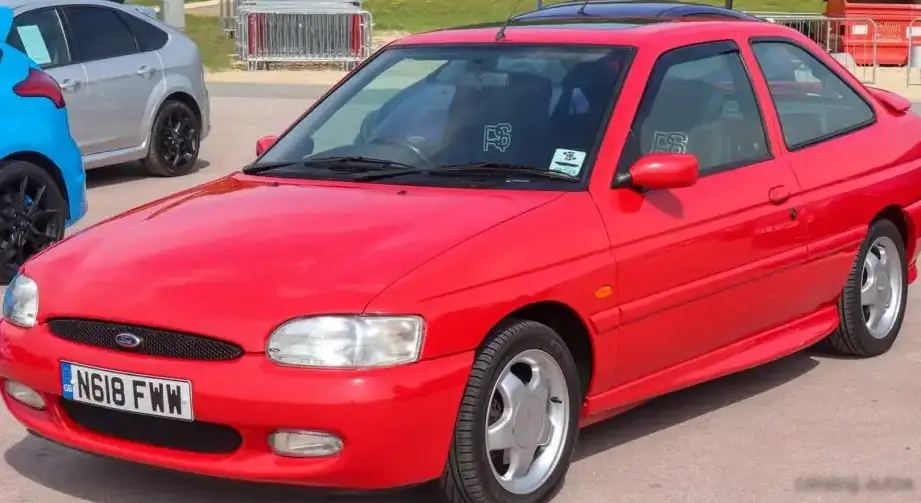
The Ford Escort VII, produced between 1995 and 1999, represented a significant evolution of Ford’s long-running Escort line. Within the seventh generation (GAL, AFL chassis codes), the 1.4 i variant, producing 75 horsepower, served as the entry point into the range, particularly in European markets. Positioned as an affordable and practical hatchback, it aimed to provide economical transportation for families and first-time drivers. This model occupied the lower end of the spectrum, contrasting with more powerful and feature-rich versions like the 1.6 and later, the sporty XR3i. The Escort VII was a crucial model for Ford of Europe, competing directly with rivals like the Volkswagen Golf, Opel/Vauxhall Astra, and Peugeot 306.
Technical Specifications
| Brand | Ford |
| Model | Escort |
| Generation | Escort VII Hatch (GAL, AFL) |
| Type (Engine) | 1.4 i (75 Hp) |
| Start of production | 1995 |
| End of production | 1999 |
| Powertrain Architecture | Internal Combustion engine |
| Body type | Hatchback |
| Seats | 5 |
| Doors | 3/5 |
| Fuel consumption (combined) | 8 l/100 km (29.4 US mpg, 35.3 UK mpg, 12.5 km/l) |
| Fuel Type | Petrol (Gasoline) |
| Acceleration 0 – 100 km/h | 14.4 sec |
| Acceleration 0 – 62 mph | 14.4 sec |
| Acceleration 0 – 60 mph | 13.7 sec |
| Maximum speed | 169 km/h (105.01 mph) |
| Weight-to-power ratio | 14 kg/Hp, 71.4 Hp/tonne |
| Weight-to-torque ratio | 9.9 kg/Nm, 101 Nm/tonne |
| Power | 75 Hp @ 5500 rpm |
| Power per litre | 53.9 Hp/l |
| Torque | 106 Nm @ 2750 rpm (78.18 lb.-ft. @ 2750 rpm) |
| Engine layout | Front, Transverse |
| Engine Model/Code | F4B, FUH |
| Engine displacement | 1391 cm3 (84.88 cu. in.) |
| Number of cylinders | 4 |
| Engine configuration | Inline |
| Cylinder Bore | 77.2 mm (3.04 in.) |
| Piston Stroke | 74.3 mm (2.93 in.) |
| Compression ratio | 8.5:1 |
| Number of valves per cylinder | 2 |
| Fuel injection system | Multi-port manifold injection |
| Engine aspiration | Naturally aspirated engine |
| Valvetrain | OHC |
| Engine oil capacity | 3.5 l (3.7 US qt | 3.08 UK qt) |
| Coolant | 7.6 l (8.03 US qt | 6.69 UK qt) |
| Kerb Weight | 1050 kg (2314.85 lbs.) |
| Max. weight | 1590 kg (3505.35 lbs.) |
| Max load | 540 kg (1190.5 lbs.) |
| Trunk (boot) space – minimum | 380 l (13.42 cu. ft.) |
| Trunk (boot) space – maximum | 735 l (25.96 cu. ft.) |
| Fuel tank capacity | 55 l (14.53 US gal | 12.1 UK gal) |
| Length | 4104 mm (161.57 in.) |
| Width | 1691 mm (66.57 in.) |
| Height | 1398 mm (55.04 in.) |
| Wheelbase | 2525 mm (99.41 in.) |
| Front track | 1440 mm (56.69 in.) |
| Rear (Back) track | 1462 mm (57.56 in.) |
| Drivetrain Architecture | The Internal combustion engine (ICE) drives the front wheels of the vehicle. |
| Drive wheel | Front wheel drive |
| Number of gears and type of gearbox | 5 gears, manual transmission |
| Front suspension | Wishbone |
| Rear suspension | Coil spring |
| Front brakes | Ventilated discs |
| Rear brakes | Drum |
| Assisting systems | ABS (Anti-lock braking system) |
| Steering type | Steering rack and pinion |
| Power steering | Hydraulic Steering |
| Tires size | 175/70 R13 T |
Powertrain & Engine Architecture
The 1.4 i Escort utilized the Ford F4B or FUH engine, an inline four-cylinder petrol engine. This engine was a relatively simple design, featuring a single overhead camshaft (OHC) operating two valves per cylinder. Fuel delivery was managed by a multi-port fuel injection system, providing a balance between efficiency and performance. The 1391cc displacement produced 75 horsepower at 5500 rpm and 106 Nm (78.18 lb-ft) of torque at 2750 rpm. The engine’s relatively low compression ratio of 8.5:1 was a factor in its ability to run on lower octane fuels, common in many European markets. The engine was transversely mounted, driving the front wheels. The standard transmission was a five-speed manual, although a four-speed automatic was also available, albeit less common in this configuration.
Driving Characteristics
The 1.4 i Escort with the five-speed manual transmission offered adequate, if not exhilarating, performance. Acceleration to 60 mph took around 13.7 seconds, and top speed was approximately 105 mph. The engine felt somewhat strained at higher speeds, and overtaking required careful planning. The automatic transmission version, while offering convenience, further diminished performance, resulting in slower acceleration and a less engaging driving experience. Gear ratios were geared towards fuel economy rather than outright speed. The 1.4L engine was noticeably less responsive than the 1.6L or the more powerful XR3i models, making it better suited for urban driving and shorter journeys.
Equipment & Trim Levels
The 1.4 i Escort typically came with a basic level of equipment. Standard features included power steering, central locking, and an adjustable steering column. Interior upholstery was typically cloth, and the dashboard featured a simple, functional design. Optional extras included electric windows, a sunroof, and upgraded audio systems. Trim levels varied slightly depending on the market, but generally, the 1.4 i represented the entry-level offering. Air conditioning was often an optional extra, and higher trim levels might have included alloy wheels and body-colored bumpers.
Chassis & Braking
The Escort VII utilized a MacPherson strut front suspension and a coil spring rear suspension. The front brakes were ventilated discs, providing adequate stopping power, while the rear brakes were drums. ABS (Anti-lock Braking System) was available as an option, and became increasingly common on later models. The chassis was relatively lightweight, contributing to the car’s nimble handling. Stabilizer bars were fitted to both the front and rear axles, helping to reduce body roll during cornering. The suspension setup was tuned for comfort rather than outright sportiness, providing a reasonably smooth ride on most road surfaces.
Market Reception & Comparison
The 1.4 i Escort was generally well-received as an affordable and practical hatchback. Critics praised its fuel economy and ease of driving, but noted its lack of performance compared to higher-spec models. Compared to the 1.6L version, the 1.4 i offered lower running costs but sacrificed acceleration and overall refinement. The 1.6L provided a noticeable performance boost, making it a more appealing option for drivers who frequently used the motorway or carried passengers. Reliability was generally good, although the engine was known to be susceptible to oil leaks in some cases. Fuel economy averaged around 35 mpg in real-world driving conditions.
Legacy
The 1.4 i Escort VII remains a relatively common sight on European roads today, often found as an affordable used car. The F4B/FUH engine is known for its durability, although regular maintenance is essential to prevent oil leaks and ensure long-term reliability. Parts availability is generally good, and the car’s simple mechanical design makes it relatively easy to repair. While not a particularly exciting car to drive, the 1.4 i Escort VII represents a practical and economical choice for those seeking a reliable and affordable hatchback. Its enduring popularity is a testament to its functional design and overall build quality.