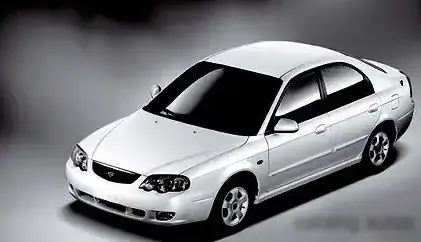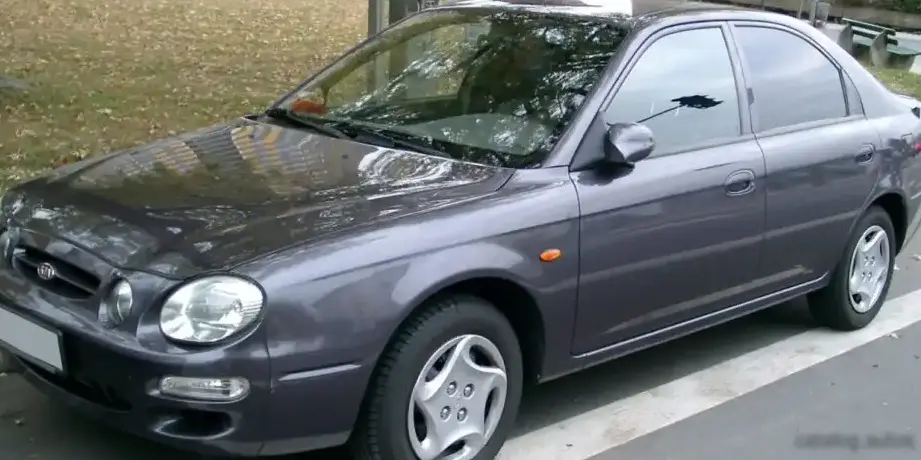
The Kia Shuma (FB) 1.8 i 16V, produced between 1997 and 2001, represented Kia’s entry into the increasingly competitive compact hatchback segment. Positioned as a mid-range offering within the Shuma lineup, it aimed to provide a balance of performance, practicality, and affordability. The Shuma, in general, was Kia’s attempt to establish a stronger foothold in the European market, and the 1.8L variant was intended to appeal to buyers seeking a more spirited driving experience than the base models offered. It was built on the FB platform, a front-wheel-drive configuration common for compact cars of the era.
Technical Specifications
| Brand | Kia |
| Model | Shuma |
| Generation | Shuma (FB) |
| Type (Engine) | 1.8 i 16V (110 Hp) |
| Start of production | 1997 |
| End of production | 2001 |
| Powertrain Architecture | Internal Combustion engine |
| Body type | Hatchback |
| Seats | 5 |
| Doors | 5 |
| Fuel consumption (urban) | 12.6 l/100 km (18.7 US mpg, 22.4 UK mpg, 7.9 km/l) |
| Fuel consumption (extra urban) | 7 l/100 km (33.6 US mpg, 40.4 UK mpg, 14.3 km/l) |
| Fuel Type | Petrol (Gasoline) |
| Acceleration 0 – 100 km/h | 10.3 sec |
| Acceleration 0 – 62 mph | 10.3 sec |
| Acceleration 0 – 60 mph | 9.8 sec |
| Maximum speed | 196 km/h (121.79 mph) |
| Weight-to-power ratio | 10.4 kg/Hp, 96.5 Hp/tonne |
| Weight-to-torque ratio | 7.5 kg/Nm, 133.3 Nm/tonne |
| Power | 110 Hp @ 5750 rpm |
| Power per litre | 61.3 Hp/l |
| Torque | 152 Nm @ 4400 rpm (112.11 lb.-ft. @ 4400 rpm) |
| Engine layout | Front, Transverse |
| Engine Model/Code | T8D |
| Engine displacement | 1793 cm3 (109.42 cu. in.) |
| Number of cylinders | 4 |
| Engine configuration | Inline |
| Cylinder Bore | 81 mm (3.19 in.) |
| Piston Stroke | 87 mm (3.43 in.) |
| Compression ratio | 9.5:1 |
| Number of valves per cylinder | 4 |
| Fuel injection system | Multi-port manifold injection |
| Engine aspiration | Naturally aspirated engine |
| Engine oil capacity | 4 l (4.23 US qt | 3.52 UK qt) |
| Coolant capacity | 6 l (6.34 US qt | 5.28 UK qt) |
| Kerb Weight | 1140 kg (2513.27 lbs.) |
| Max. weight | 1640 kg (3615.58 lbs.) |
| Max load | 500 kg (1102.31 lbs.) |
| Trunk (boot) space – minimum | 328 l (11.58 cu. ft.) |
| Trunk (boot) space – maximum | 780 l (27.55 cu. ft.) |
| Fuel tank capacity | 50 l (13.21 US gal | 11 UK gal) |
| Length | 4475 mm (176.18 in.) |
| Width | 1711 mm (67.36 in.) |
| Height | 1427 mm (56.18 in.) |
| Wheelbase | 2560 mm (100.79 in.) |
| Front track | 1465 mm (57.68 in.) |
| Rear track | 1455 mm (57.28 in.) |
| Drivetrain Architecture | Front wheel drive |
| Number of gears | 5 |
| Gearbox type | Manual transmission |
| Front suspension | Coil spring |
| Rear suspension | Coil spring |
| Front brakes | Disc |
| Rear brakes | Disc |
| Assisting systems | ABS (Anti-lock braking system) |
| Steering type | Steering rack and pinion |
| Power steering | Hydraulic Steering |
| Tires size | 185/60 R14 |
| Wheel rims size | 14 |
Powertrain & Engine Architecture
The heart of the Shuma 1.8 i 16V is the T8D engine, a 1.8-liter inline-four cylinder gasoline engine. This engine featured a multi-port fuel injection system, a relatively common setup for the time, providing adequate fuel atomization for efficient combustion. The 16-valve configuration (four valves per cylinder) enhanced breathing and contributed to the engine’s respectable power output for its displacement. The engine’s 9.5:1 compression ratio was a typical value for naturally aspirated engines of this era, balancing performance and fuel efficiency. The T8D engine, while not a particularly advanced design, was known for its relative simplicity and durability. The five-speed manual transmission was the standard offering, providing drivers with full control over the engine’s power band. The transmission was designed to handle the engine’s 152 Nm (112 lb-ft) of torque, offering reasonably crisp shifts.
Driving Characteristics
The Shuma 1.8 i 16V offered a noticeable step up in performance compared to the lower-displacement Shuma models. The 110 horsepower engine provided adequate acceleration, with a 0-60 mph time of around 9.8 seconds. While not a sports car by any means, the 1.8L engine allowed for confident highway merging and overtaking. The five-speed manual transmission allowed drivers to keep the engine in its optimal power range. The gear ratios were fairly standard for a front-wheel-drive hatchback, prioritizing fuel economy in higher gears and providing sufficient torque multiplication in lower gears. Compared to a potential automatic transmission version (not widely available in many markets), the manual offered a more engaging driving experience and better fuel efficiency. The suspension, while tuned for comfort, provided reasonable handling characteristics, though body roll was noticeable during aggressive cornering.
Equipment & Trim Levels
The Shuma 1.8 i 16V typically came equipped with a reasonable level of standard features. These generally included power steering, central locking, electric front windows, and an AM/FM radio. Interior upholstery was typically cloth, with a relatively simple dashboard layout. Optional extras could include air conditioning, alloy wheels, and a more advanced audio system. The trim level often dictated the availability of these options. The Shuma aimed for a practical and functional interior, rather than a luxurious one. Safety features were relatively basic for the time, typically including a driver’s airbag and ABS brakes.
Chassis & Braking
The Shuma’s chassis utilized a coil spring suspension system at both the front and rear. The front suspension employed MacPherson struts, a common design for front-wheel-drive vehicles, while the rear suspension used a torsion beam setup. This configuration provided a good balance of ride comfort and handling. Braking duties were handled by disc brakes on all four wheels, a welcome feature for a car in this class. The inclusion of ABS (Anti-lock Braking System) further enhanced safety, preventing wheel lockup during hard braking. The Shuma’s weight of around 1140 kg (2513 lbs) was typical for a compact hatchback of its era.
Market Reception & Comparison
The Kia Shuma 1.8 i 16V was generally well-received as a practical and affordable hatchback. Critics praised its value for money and its relatively spacious interior. However, it was often criticized for its somewhat bland styling and its lack of refinement compared to established European competitors. Compared to the base Shuma models with smaller engines, the 1.8L variant offered a significant performance improvement, but at a higher price point. Fuel economy was reasonable for the time, but not exceptional. Reliability was generally considered to be good, though not outstanding. The Shuma 1.8 i 16V competed with other compact hatchbacks such as the Ford Focus, Volkswagen Golf, and Opel/Vauxhall Astra.
Legacy
The Kia Shuma, while not a groundbreaking vehicle, played an important role in Kia’s efforts to establish itself as a credible automotive manufacturer. The 1.8 i 16V variant, in particular, offered a compelling combination of performance and affordability. Today, the Shuma is a relatively rare sight on the roads, but it has developed a small following among enthusiasts who appreciate its simplicity and reliability. The T8D engine, while not known for its high-tech features, has proven to be a durable and long-lasting unit. Used examples are typically quite affordable, making them an attractive option for budget-conscious buyers seeking a practical and reliable hatchback. Parts availability can be a challenge, however, as the Shuma is no longer in production.