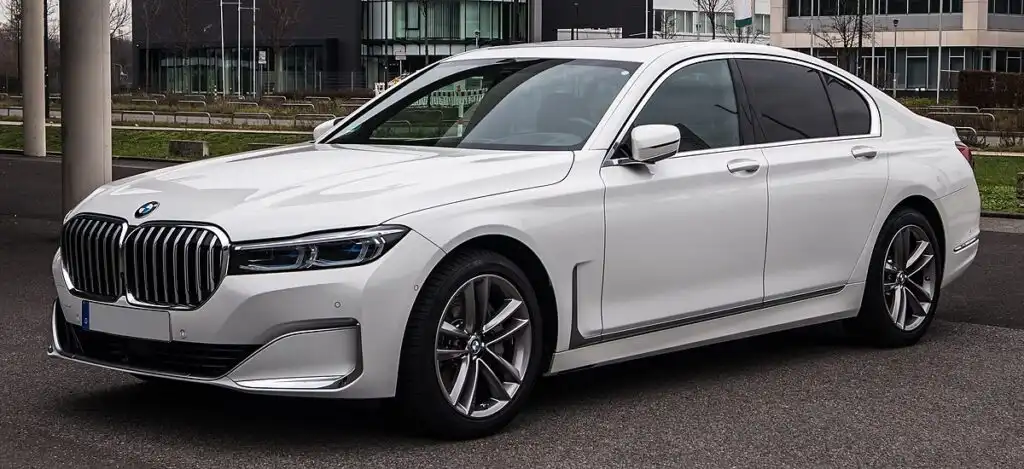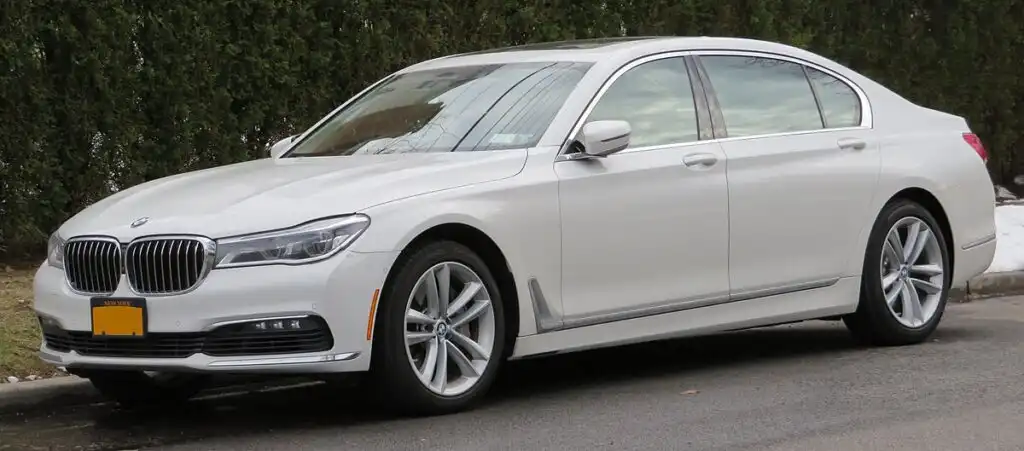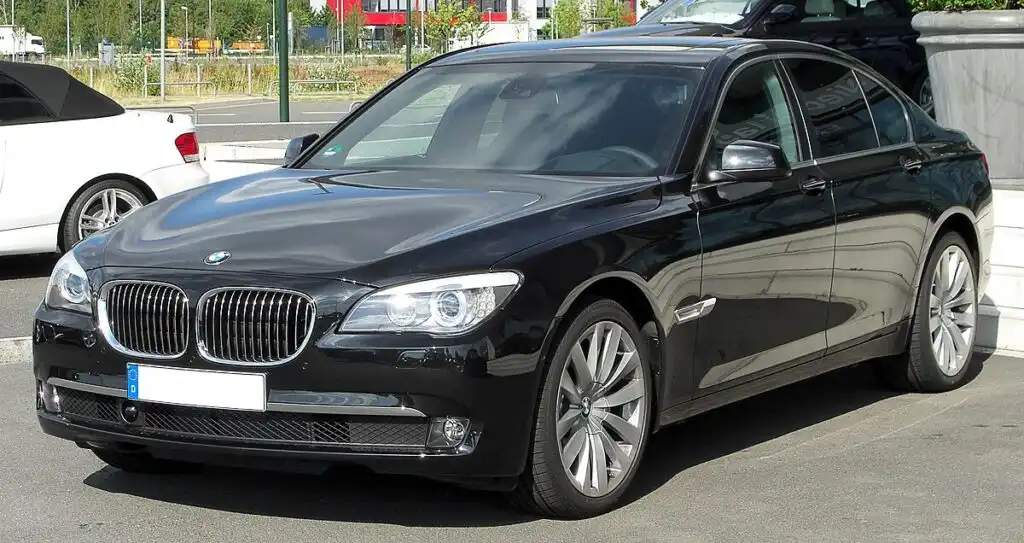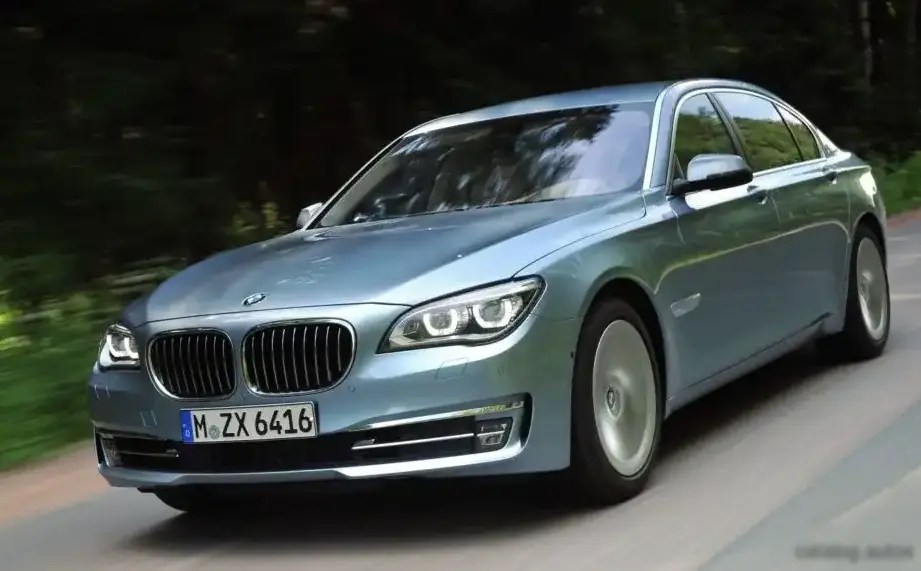
The BMW 7 Series ActiveHybrid 4.4 V8 (F04) was a short-lived but technologically significant variant of BMW’s flagship sedan, produced from October 2009 to July 2012. Representing BMW’s initial foray into mainstream hybrid technology, the ActiveHybrid aimed to combine the luxury and performance expected of a 7 Series with improved fuel efficiency. This model sat within the F04 generation of the 7 Series, which itself was a substantial evolution of the E65/E66 predecessor, utilizing the BMW Group’s flexible architecture. The ActiveHybrid 4.4 V8 was positioned as a premium offering, bridging the gap between the conventionally powered 750i and the ultra-luxury 760i models.
Technical Specifications
| Brand | BMW |
| Model | 7 Series |
| Generation | 7 Series ActiveHybrid (F04) |
| Type (Engine) | ActiveHybrid 4.4 V8 (465 Hp) Steptronic |
| Start of production | October, 2009 |
| End of production | July, 2012 |
| Powertrain Architecture | MHEV (Mild Hybrid Electric Vehicle) |
| Body type | Sedan |
| Seats | 5 |
| Doors | 4 |
| Fuel consumption (urban) | 12.6 l/100 km (18.7 US mpg) |
| Fuel consumption (extra urban) | 7.6 l/100 km (30.9 US mpg) |
| Fuel consumption (combined) | 9.4 l/100 km (25 US mpg) |
| CO2 emissions | 219 g/km |
| Fuel Type | Petrol (Gasoline) |
| Acceleration 0 – 100 km/h | 4.9 sec |
| Acceleration 0 – 62 mph | 4.9 sec |
| Acceleration 0 – 60 mph | 4.7 sec |
| Maximum speed | 250 km/h (155.34 mph) |
| Emission standard | Euro 5 |
| Weight-to-power ratio | 4.4 kg/Hp |
| Weight-to-torque ratio | 2.9 kg/Nm |
| Gross battery capacity | 0.4 kWh |
| Battery technology | Lithium-ion (Li-Ion) |
| Battery weight | 27 kg (59.52 lbs) |
| Battery location | Inside the trunk |
| Electric motor power | 20 Hp |
| Electric motor Torque | 210 Nm (154.89 lb.-ft.) |
| Electric motor location | Between the combustion engine and the transmission |
| System power | 465 Hp |
| System torque | 700 Nm (516.29 lb.-ft.) |
| Engine Power | 449 Hp @ 5500-6000 rpm |
| Engine Torque | 650 Nm @ 2000-4500 rpm (479.42 lb.-ft.) |
| Engine layout | Front, Longitudinal |
| Engine Model/Code | N63B44A |
| Engine displacement | 4395 cm3 (268.2 cu. in.) |
| Number of cylinders | 8 |
| Engine configuration | V-engine |
| Cylinder Bore | 89 mm (3.5 in.) |
| Piston Stroke | 88.3 mm (3.48 in.) |
| Compression ratio | 10:1 |
| Number of valves per cylinder | 4 |
| Fuel injection system | Direct injection |
| Engine aspiration | Twin-power turbo, Intercooler |
| Valvetrain | DOHC |
| Engine oil capacity | 8 l (8.45 US qt) |
| Coolant capacity | 14.2 l (15 US qt) |
| Kerb Weight | 2045 kg (4508.45 lbs) |
| Max. weight | 2635 kg (5809.18 lbs) |
| Max load | 590 kg (1300.73 lbs) |
| Trunk (boot) space | 460 l (16.24 cu. ft.) |
| Fuel tank capacity | 80 l (21.13 US gal) |
| Length | 5072 mm (199.69 in.) |
| Width | 1902 mm (74.88 in.) |
| Height | 1485 mm (58.46 in.) |
| Wheelbase | 3070 mm (120.87 in.) |
| Front track | 1621 mm (63.82 in.) |
| Rear track | 1632 mm (64.25 in.) |
| Gearbox | 8-speed automatic (Steptronic) |
INTRODUCTION
The BMW 7 Series ActiveHybrid 4.4 V8 represented BMW’s initial attempt to blend the performance and luxury of its flagship sedan with the efficiency gains of a hybrid powertrain. Introduced in 2009, it utilized a “mild hybrid” architecture, meaning the electric motor primarily assisted the gasoline engine rather than providing significant standalone electric driving range. The F04 ActiveHybrid was a relatively short-run model, discontinued in 2012, likely due to limited market demand and the rapid evolution of hybrid technology. It was positioned as a technologically advanced option within the 7 Series lineup, appealing to buyers seeking a more environmentally conscious luxury vehicle.
Powertrain & Engine Architecture
At the heart of the ActiveHybrid 4.4 V8 lay BMW’s N63B44A 4.4-liter twin-turbocharged V8 engine. This engine, already known for its robust power output, produced 449 horsepower and 479 lb-ft of torque. The “ActiveHybrid” component consisted of a 20-horsepower electric motor integrated between the engine and the 8-speed Steptronic automatic transmission. A lithium-ion battery pack, with a gross capacity of 0.4 kWh, was located in the trunk, reducing cargo space. The system operated through a power-assist hybrid configuration, where the electric motor provided supplemental power during acceleration and allowed for regenerative braking to recharge the battery. The N63 engine featured direct fuel injection and BMW’s Valvetronic variable valve timing system, optimizing both power and efficiency. The Steptronic transmission was specifically tuned to work seamlessly with the hybrid system, providing smooth and efficient gear changes.
Driving Characteristics
The ActiveHybrid 4.4 V8 offered a unique driving experience. While not as overtly sporty as the 750i, the electric motor’s assistance provided a noticeable boost during acceleration, resulting in a 0-60 mph time of around 4.7 seconds. The hybrid system’s integration was largely transparent to the driver, with power delivery feeling smooth and linear. The 8-speed automatic transmission contributed to this refinement, offering well-chosen gear ratios for both city and highway driving. Compared to the standard 750i, the ActiveHybrid prioritized refinement and efficiency over outright performance. The electric motor allowed for near-silent operation during low-speed cruising, enhancing the sense of luxury. However, the added weight of the hybrid components (approximately 300 lbs) did slightly diminish the car’s agility compared to its non-hybrid counterparts.
Equipment & Trim Levels
The ActiveHybrid 4.4 V8 was generously equipped, reflecting its position as a premium model. Standard features included leather upholstery, a premium sound system, a navigation system, and a host of driver-assistance technologies. Interior trim options were similar to those offered on the 750i, with a range of wood veneers and metallic accents available. Optional extras included features like massaging seats, a rear-seat entertainment system, and advanced parking assistance. The dashboard layout was consistent with other F04 7 Series models, featuring BMW’s iDrive infotainment system. The ActiveHybrid also included specific displays within the instrument cluster to monitor the hybrid system’s operation and energy flow.
Chassis & Braking
The ActiveHybrid 4.4 V8 utilized the same sophisticated chassis and braking systems as other F04 7 Series models. It featured a double-wishbone front suspension and an independent multi-link rear suspension, providing a comfortable and controlled ride. Ventilated disc brakes were used on all four wheels, offering ample stopping power. The ActiveHybrid’s braking system incorporated regenerative braking, which captured energy during deceleration and used it to recharge the battery. The car was equipped with BMW’s Servotronic power steering system, which provided variable assistance based on vehicle speed. While stabilizer bars were standard, the ActiveHybrid did not receive any specific suspension tuning to compensate for the added weight of the hybrid components.
Market Reception & Comparison
The BMW 7 Series ActiveHybrid 4.4 V8 received mixed reviews from automotive critics. While praised for its smooth and refined driving experience, its relatively modest fuel economy gains compared to the 750i were often questioned. The reduction in trunk space due to the battery pack was also a point of criticism. Compared to the 750i, the ActiveHybrid offered a more environmentally friendly option, but at a higher price point. Against competitors like the Lexus LS 600h, the ActiveHybrid offered a more engaging driving experience, but lacked the Lexus’s more substantial electric-only driving range. Reliability reports suggest that the ActiveHybrid powertrain has proven reasonably durable, although the complexity of the hybrid system does increase the potential for maintenance issues.
Legacy
The BMW 7 Series ActiveHybrid 4.4 V8, while a relatively short-lived model, served as an important stepping stone in BMW’s development of hybrid technology. It demonstrated the company’s commitment to improving fuel efficiency without sacrificing luxury or performance. On the used car market today, the ActiveHybrid 4.4 V8 represents a unique and relatively affordable entry point into the world of BMW’s flagship sedan. While the hybrid system’s benefits may not be as significant as those offered by more modern hybrid vehicles, the ActiveHybrid remains a technologically interesting and well-equipped luxury car. The N63 engine, despite some early issues with fuel delivery components, has proven to be a robust and reliable powerplant when properly maintained.