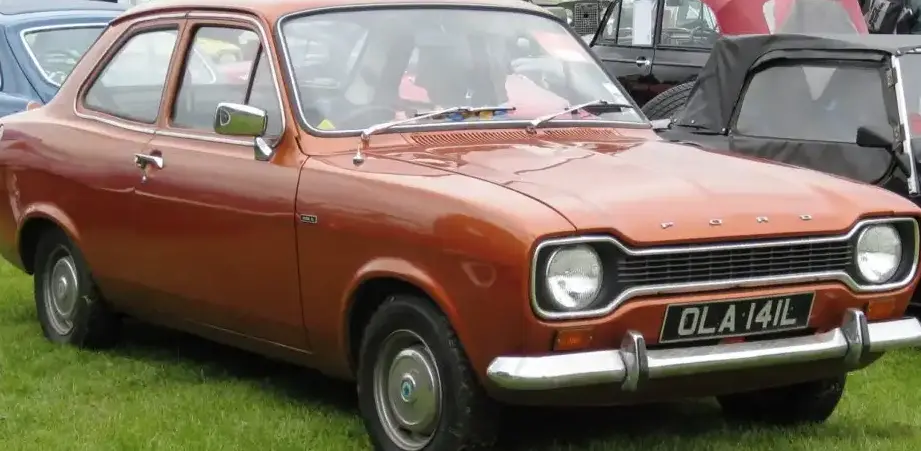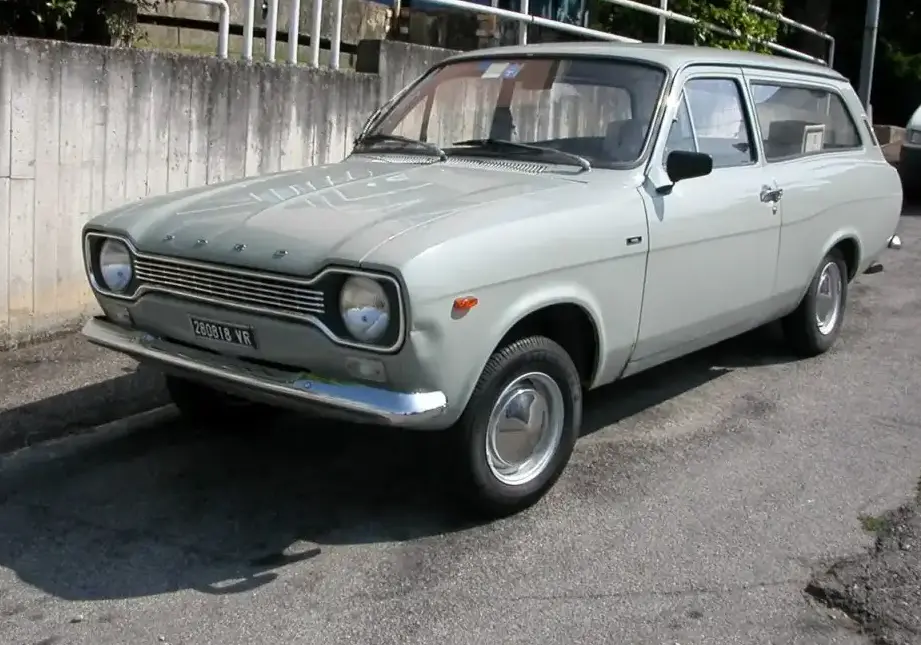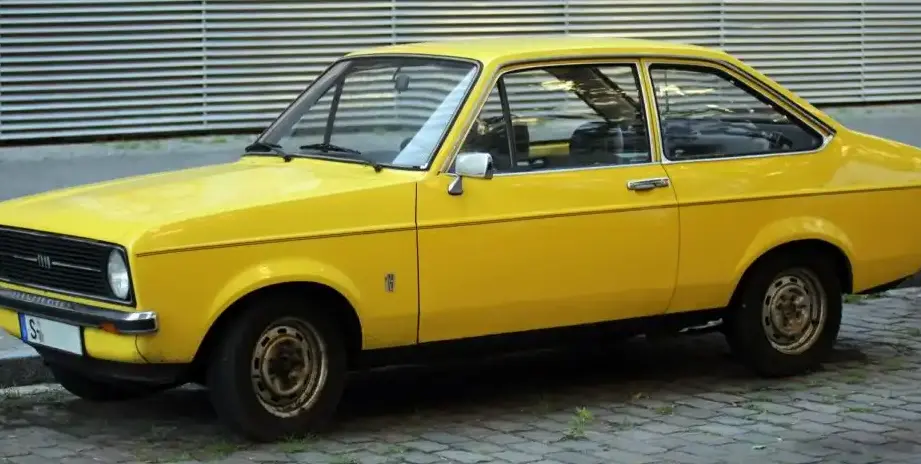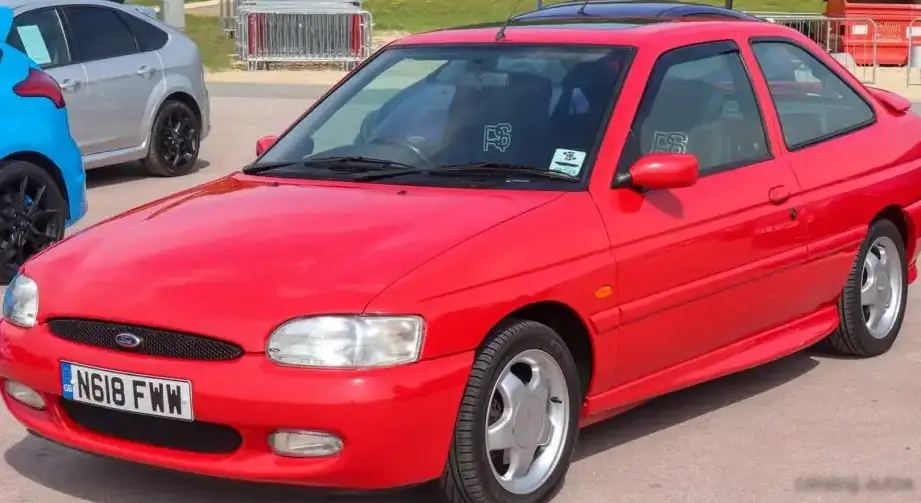
The Ford Escort VII Hatch, specifically the 1.8 D variant producing 60 horsepower, was a mainstay of the European Ford lineup from 1995 to 1999. Positioned as the entry-level diesel offering within the GAL/AFL platform generation, it catered to buyers prioritizing fuel economy and practicality over outright performance. This model represented a continuation of the Escort’s long-standing reputation as an affordable and reliable family car, though it faced increasing competition from newer rivals in the compact segment. The 1.8 D served as a budget-conscious alternative to the gasoline-powered Escorts and the more powerful 1.8 TD diesel.
Technical Specifications
| Brand | Ford |
| Model | Escort |
| Generation | Escort VII Hatch (GAL, AFL) |
| Type (Engine) | 1.8 D (60 Hp) |
| Start of production | 1995 |
| End of production | 1999 |
| Powertrain Architecture | Internal Combustion engine |
| Body type | Hatchback |
| Seats | 5 |
| Doors | 3/5 |
| Fuel consumption (combined) | 5.9 l/100 km (39.9 US mpg, 47.9 UK mpg, 16.9 km/l) |
| Fuel Type | Diesel |
| Acceleration 0 – 100 km/h | 17.7 sec |
| Acceleration 0 – 62 mph | 17.7 sec |
| Acceleration 0 – 60 mph | 16.8 sec |
| Maximum speed | 153 km/h (95.07 mph) |
| Weight-to-power ratio | 18.3 kg/Hp, 54.8 Hp/tonne |
| Weight-to-torque ratio | 10 kg/Nm, 100.5 Nm/tonne |
| Power | 60 Hp @ 4800 rpm |
| Power per litre | 34.2 Hp/l |
| Torque | 110 Nm @ 2500 rpm (81.13 lb.-ft. @ 2500 rpm) |
| Engine layout | Front, Transverse |
| Engine Model/Code | RTE, RTF, RTH |
| Engine displacement | 1753 cm3 (106.97 cu. in.) |
| Number of cylinders | 4 |
| Engine configuration | Inline |
| Cylinder Bore | 82.5 mm (3.25 in.) |
| Piston Stroke | 82 mm (3.23 in.) |
| Compression ratio | 21.5:1 |
| Number of valves per cylinder | 2 |
| Fuel injection system | Precombustion chamber injection |
| Engine aspiration | Naturally aspirated engine |
| Valvetrain | OHC |
| Engine oil capacity | 5 l (5.28 US qt | 4.4 UK qt) |
| Coolant | 9.3 l (9.83 US qt | 8.18 UK qt) |
| Kerb Weight | 1095 kg (2414.06 lbs.) |
| Max. weight | 1635 kg (3604.56 lbs.) |
| Max load | 540 kg (1190.5 lbs.) |
| Trunk (boot) space – minimum | 380 l (13.42 cu. ft.) |
| Trunk (boot) space – maximum | 735 l (25.96 cu. ft.) |
| Fuel tank capacity | 55 l (14.53 US gal | 12.1 UK gal) |
| Length | 4104 mm (161.57 in.) |
| Width | 1691 mm (66.57 in.) |
| Height | 1398 mm (55.04 in.) |
| Wheelbase | 2525 mm (99.41 in.) |
| Front track | 1440 mm (56.69 in.) |
| Rear (Back) track | 1462 mm (57.56 in.) |
| Drivetrain Architecture | The Internal combustion engine (ICE) drives the front wheels of the vehicle. |
| Drive wheel | Front wheel drive |
| Number of gears and type of gearbox | 5 gears, manual transmission |
| Front suspension | Wishbone |
| Rear suspension | Coil spring |
| Front brakes | Ventilated discs |
| Rear brakes | Drum |
| Assisting systems | ABS (Anti-lock braking system) |
| Steering type | Steering rack and pinion |
| Power steering | Hydraulic Steering |
| Tires size | 175/70 R13 T |
Powertrain & Engine Architecture
The heart of the Escort VII 1.8 D was the Ford RTE, RTF, or RTH engine, a 1.8-liter inline-four diesel. This engine utilized precombustion chamber injection, a system common in diesel engines of the era. Unlike direct injection, precombustion chambers housed a glow plug and a small auxiliary combustion chamber, promoting more complete combustion, particularly during cold starts. The engine featured an overhead camshaft (OHC) valvetrain operating two valves per cylinder. The 60 horsepower output at 4800 rpm and 110 Nm (81.13 lb-ft) of torque at 2500 rpm were modest, reflecting the engine’s focus on fuel efficiency rather than performance. The engine’s relatively low compression ratio of 21.5:1 was typical for indirect injection diesels.
Driving Characteristics
The 1.8 D-powered Escort was not known for its speed. Acceleration was leisurely, with a 0-60 mph time around 16.8 seconds and a top speed of 95 mph. The five-speed manual transmission helped to make the most of the limited power, but the engine required frequent shifting to maintain momentum, especially when loaded or climbing hills. Compared to the 1.8 gasoline versions, the diesel offered significantly less power but superior fuel economy. The 1.8 TD, a turbocharged diesel variant, provided a substantial performance upgrade, but at a higher price point. The 1.8 D’s power delivery was linear, but lacked the responsiveness of the gasoline engines or the turbocharged diesel.
Equipment & Trim Levels
The 1.8 D typically represented the base trim level in the Escort VII range. Standard equipment generally included power steering, central locking, and basic instrumentation. Interior upholstery was typically cloth, and the dashboard featured a functional but utilitarian design. Options included power windows, a sunroof, and upgraded audio systems. Higher trim levels, such as the Ghia, offered more luxurious appointments, including leather upholstery, alloy wheels, and additional comfort features. The 1.8 D was often seen as a practical choice for fleet buyers and those seeking a no-frills, economical vehicle.
Chassis & Braking
The Escort VII utilized a front-wheel-drive layout with independent wishbone suspension at the front and a coil spring rear suspension. The front brakes were ventilated discs, providing adequate stopping power, while the rear brakes were drums, a cost-saving measure common in entry-level models. Anti-lock braking system (ABS) was often included as standard equipment, enhancing safety. The suspension was tuned for comfort and ride quality, rather than sporty handling. Stabilizer bars were typically fitted to improve body roll control, though their thickness varied depending on the specific trim level.
Market Reception & Comparison
The Escort VII 1.8 D was generally well-received as a practical and economical vehicle. Critics praised its fuel efficiency and reliability, but noted its lack of performance. Compared to rivals like the Volkswagen Golf and Opel/Vauxhall Astra, the Escort offered a competitive price point and a spacious interior. The 1.8 TD diesel variant was often seen as a more desirable option for those seeking a balance of performance and economy. Fuel economy was a key selling point, with the 1.8 D achieving around 40 mpg in real-world driving conditions. Reliability was generally good, although the precombustion chamber injection system could require occasional maintenance.
Legacy
The Ford Escort VII 1.8 D, while not a performance icon, remains a popular choice among classic car enthusiasts and budget-conscious buyers. The engine is known for its durability and relatively simple mechanical design, making it relatively easy to maintain. However, finding parts for the precombustion chamber injection system can sometimes be challenging. Today, well-maintained examples of the Escort VII 1.8 D can be found for relatively low prices, making them an affordable entry point into classic Ford ownership. The engine’s longevity and fuel efficiency continue to be appreciated by owners, cementing its place as a practical and reliable workhorse of the 1990s.