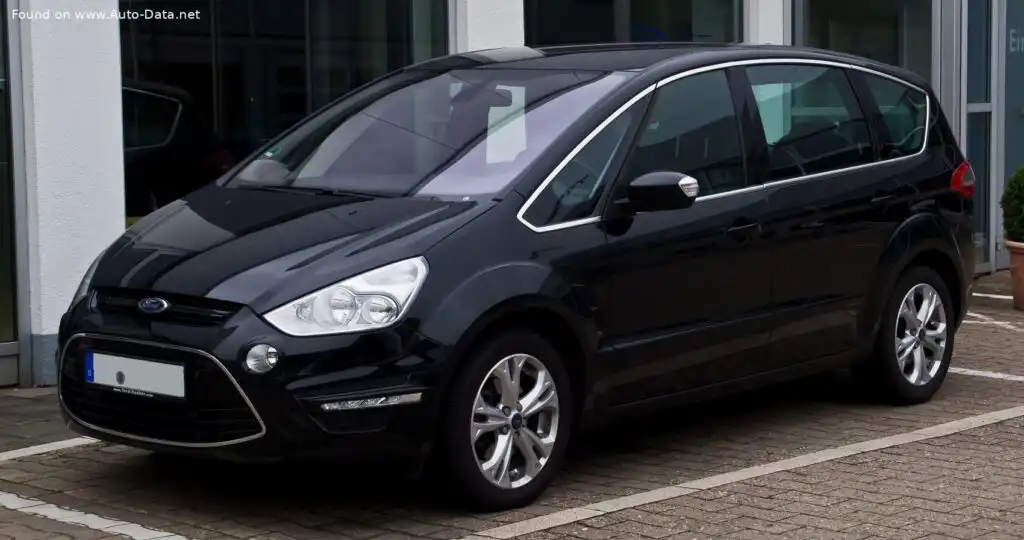
The Ford S-MAX, particularly the facelifted version introduced in 2010, represented a significant evolution in the multi-purpose vehicle (MPV) segment. This iteration, produced through 2014, aimed to blend practicality with a more dynamic driving experience. Among the engine options available, the 2.0 EcoBoost variant producing 240 horsepower occupied a prominent position, offering a compelling balance of performance and efficiency for families and drivers seeking a versatile vehicle. It was positioned as a mid-to-upper range trim, offering more power than the base engines but remaining more accessible than potential future performance-oriented models.
Technical Specifications
| Brand | Ford |
| Model | S-MAX |
| Generation | S-MAX (facelift 2010) |
| Type (Engine) | 2.0 EcoBoost (240 Hp) |
| Start of production | 2010 |
| End of production | 2014 |
| Powertrain Architecture | Internal Combustion engine |
| Body type | MPV |
| Seats | 7 |
| Doors | 5 |
| Fuel consumption (urban) | 11.2 l/100 km (21 US mpg, 25.2 UK mpg, 8.9 km/l) |
| Fuel consumption (extra urban) | 6.4 l/100 km (36.8 US mpg, 44.1 UK mpg, 15.6 km/l) |
| Fuel consumption (combined) | 8.1 l/100 km (29 US mpg, 34.9 UK mpg, 12.3 km/l) |
| Fuel Type | Petrol (Gasoline) |
| Acceleration 0 – 100 km/h | 7.6 sec |
| Acceleration 0 – 62 mph | 7.6 sec |
| Acceleration 0 – 60 mph | 7.2 sec |
| Maximum speed | 240 km/h (149.13 mph) |
| Emission standard | Euro 5 |
| Power | 240 Hp |
| Engine layout | Front, Transverse |
| Engine Model/Code | TPWA |
| Engine configuration | Inline |
| Fuel injection system | Direct injection |
| Engine aspiration | Turbocharger, Intercooler |
| Engine oil capacity | 5.4 l (5.71 US qt, 4.75 UK qt) |
| Coolant capacity | 6.9 l (7.29 US qt, 6.07 UK qt) |
| Trunk (boot) space – minimum | 285 l (10.06 cu. ft.) |
| Trunk (boot) space – maximum | 2000 l (70.63 cu. ft.) |
| Fuel tank capacity | 70 l (18.49 US gal, 15.4 UK gal) |
| Length | 4903 mm (193.03 in.) |
| Width | 2154 mm (84.8 in.) |
| Height | 1660 mm (65.35 in.) |
| Minimum turning circle | 11.9 m (39.04 ft.) |
| Drivetrain Architecture | Front wheel drive |
| Number of gears | 6 |
| Gearbox type | Manual transmission |
| Assisting systems | ABS (Anti-lock braking system) |
| Steering type | Steering rack and pinion |
Powertrain & Engine Architecture
The heart of the S-MAX 2.0 EcoBoost was the TPWA engine, a 1998cc inline-four cylinder powerplant. This engine was part of Ford’s EcoBoost family, characterized by a combination of direct fuel injection, turbocharging, and variable valve timing. Direct injection allowed for more precise fuel delivery, improving both power and efficiency. The single turbocharger, coupled with an intercooler, boosted intake air pressure, significantly increasing horsepower and torque output. The engine utilized a twin-cam four-valve per cylinder configuration, optimizing airflow for enhanced performance. The 6-speed manual transmission was the standard offering, providing drivers with full control over the engine’s power band. The transmission was chosen for its balance of efficiency and driver engagement.
Driving Characteristics
The 240 hp EcoBoost engine transformed the S-MAX’s driving experience. Acceleration from 0-60 mph in approximately 7.2 seconds was brisk for an MPV, making it feel surprisingly agile. The turbocharger provided a noticeable surge of power in the mid-range, making overtaking maneuvers effortless. The 6-speed manual transmission allowed drivers to keep the engine in its optimal power band, maximizing performance. Compared to the lower-powered 1.6 EcoBoost or 2.0 Duratec engines, the 2.0 EcoBoost offered a significantly more responsive and engaging driving experience. While not as fuel-efficient as the lower-powered options, the performance gains were considered worthwhile by many drivers. The gear ratios were well-matched to the engine’s torque curve, providing smooth and predictable acceleration in all gears.
Equipment & Trim Levels
The 2.0 EcoBoost S-MAX typically came equipped with a generous level of standard features. These included air conditioning, power windows and mirrors, a CD/radio system with auxiliary input, and alloy wheels. Higher trim levels added features such as leather upholstery, a sunroof, parking sensors, and a more advanced infotainment system with navigation. The S-MAX was also available with a range of optional extras, including a rear entertainment system, heated seats, and advanced safety features like adaptive cruise control. Interior upholstery was typically cloth on base models, with leather options available on higher trims. The dashboard layout was functional and modern, with a focus on ergonomics and ease of use.
Chassis & Braking
The S-MAX featured a MacPherson strut front suspension and a multi-link rear suspension, providing a comfortable yet controlled ride. The suspension was tuned to balance handling and ride quality, making it suitable for both long-distance journeys and spirited driving. Brakes were typically disc brakes all around, providing ample stopping power. Anti-lock Braking System (ABS) was standard, enhancing safety in emergency braking situations. Stabilizer bars were fitted to both the front and rear axles, reducing body roll during cornering. The chassis was designed to be rigid and strong, providing a solid foundation for the vehicle’s handling characteristics.
Market Reception & Comparison
The 2.0 EcoBoost S-MAX received generally positive reviews from automotive critics. It was praised for its strong performance, spacious interior, and versatile practicality. Critics noted that the EcoBoost engine provided a significant improvement in performance compared to the older Duratec engines. Fuel economy was considered reasonable for a vehicle of its size and performance. Compared to competitors like the Volkswagen Sharan and Citroën C4 Picasso, the S-MAX was often seen as offering a more engaging driving experience. However, some critics noted that the interior quality wasn’t quite as refined as some of its rivals. The 2.0 EcoBoost offered a sweet spot in the lineup, providing a good balance of performance, fuel economy, and price.
Legacy
The 2.0 EcoBoost engine proved to be a reliable and durable powerplant when properly maintained. While some early EcoBoost engines experienced issues with carbon buildup on the intake valves, these problems were largely addressed with software updates and improved fuel quality. Today, used S-MAX models with the 2.0 EcoBoost engine are generally considered to be a good value, offering a lot of space, practicality, and performance for the money. Regular maintenance, including oil changes and spark plug replacements, is crucial for ensuring the long-term reliability of this powertrain. The S-MAX, and particularly the 2.0 EcoBoost variant, helped to redefine the MPV segment, demonstrating that practicality and driving enjoyment could coexist.