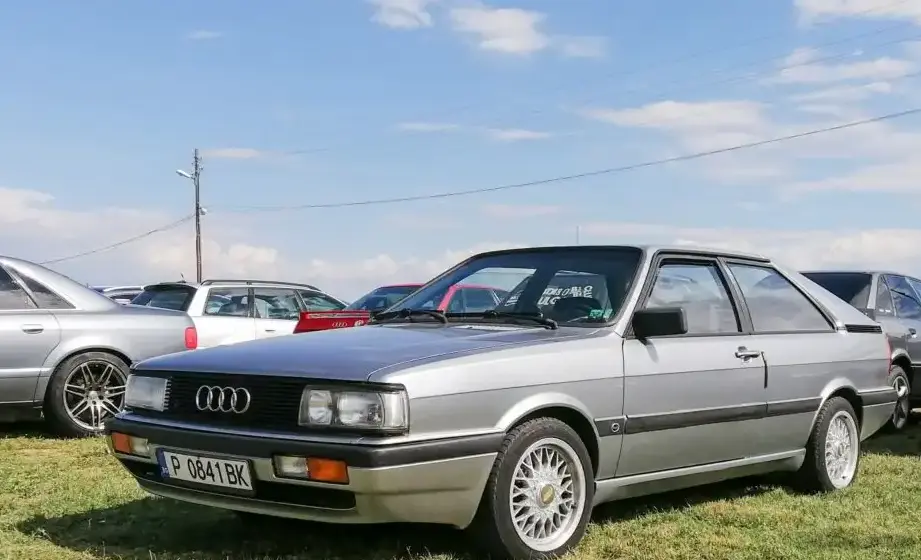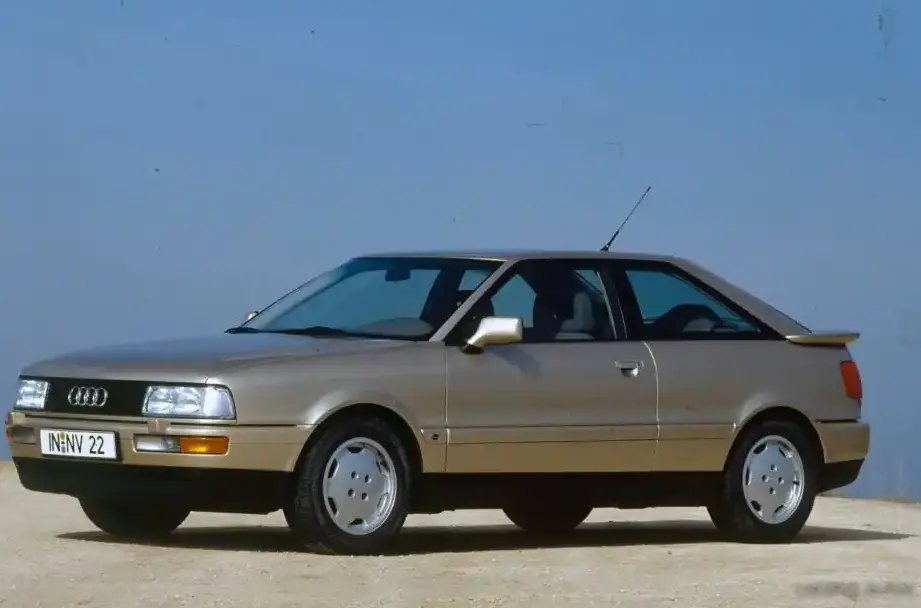
The Audi Coupe (B3), produced from 1988 to 1991, represented a significant evolution in Audi’s coupe design. The 2.0 20V quattro variant, introduced in August 1990 and continuing through July 1991, was a performance-oriented model within the B3 range, built on the Audi 80 (B3) platform – internally designated as the B3. It aimed to deliver a more engaging driving experience than the standard models, leveraging Audi’s renowned quattro all-wheel-drive system and a high-revving, four-valve-per-cylinder engine. This model occupied a premium position in the lineup, bridging the gap between the base 1.8L models and the more potent 2.3L variants.
Technical Specifications
| Brand | Audi |
| Model | Coupe |
| Generation | Coupe (B3 89) |
| Type (Engine) | 2.0 20V (160 Hp) quattro |
| Start of production | August, 1990 |
| End of production | July, 1991 |
| Powertrain Architecture | Internal Combustion engine |
| Body type | Coupe |
| Seats | 5 |
| Doors | 2 |
| Fuel consumption (urban) | 12 l/100 km (19.6 US mpg, 23.5 UK mpg, 8.3 km/l) |
| Fuel consumption (extra urban) | 9 l/100 km (26.1 US mpg, 31.4 UK mpg, 11.1 km/l) |
| Fuel consumption (combined) | 11 l/100 km (21.4 US mpg, 25.7 UK mpg, 9.1 km/l) |
| Fuel Type | Petrol (Gasoline) |
| Acceleration 0 – 100 km/h | 8.5 sec |
| Acceleration 0 – 62 mph | 8.5 sec |
| Acceleration 0 – 60 mph | 8.1 sec |
| Maximum speed | 240 km/h (149.13 mph) |
| Weight-to-power ratio | 8.4 kg/Hp, 118.5 Hp/tonne |
| Weight-to-torque ratio | 6.9 kg/Nm, 144.4 Nm/tonne |
| Power | 160 Hp @ 5900 rpm |
| Power per litre | 80.2 Hp/l |
| Torque | 195 Nm (143.82 lb.-ft.) |
| Engine layout | Front, Longitudinal |
| Engine Model/Code | NM |
| Engine displacement | 1994 cm3 (121.68 cu. in.) |
| Number of cylinders | 5 |
| Engine configuration | Inline |
| Cylinder Bore | 81 mm (3.19 in.) |
| Piston Stroke | 77.4 mm (3.05 in.) |
| Compression ratio | 10.3:1 |
| Number of valves per cylinder | 4 |
| Fuel injection system | Multi-port manifold injection |
| Engine aspiration | Naturally aspirated engine |
| Valvetrain | DOHC |
| Engine oil capacity | 4.5 l (4.76 US qt | 3.96 UK qt) |
| Coolant | 8 l (8.45 US qt | 7.04 UK qt) |
| Kerb Weight | 1350 kg (2976.24 lbs.) |
| Max. weight | 1750 kg (3858.09 lbs.) |
| Max load | 400 kg (881.85 lbs.) |
| Trunk (boot) space – minimum | 232 l (8.19 cu. ft.) |
| Trunk (boot) space – maximum | 522 l (18.43 cu. ft.) |
| Fuel tank capacity | 70 l (18.49 US gal | 15.4 UK gal) |
| Length | 4366 mm (171.89 in.) |
| Width | 1716 mm (67.56 in.) |
| Height | 1370 mm (53.94 in.) |
| Wheelbase | 2550 mm (100.39 in.) |
| Front track | 1455 mm (57.28 in.) |
| Rear (Back) track | 1435 mm (56.5 in.) |
| Drive wheel | All wheel drive (4×4) |
| Number of gears and type of gearbox | 5 gears, manual transmission |
| Front suspension | Independent type McPherson |
| Rear suspension | Independent multi-link spring suspension with stabilizer |
| Front brakes | Ventilated discs |
| Rear brakes | Disc |
| Assisting systems | ABS (Anti-lock braking system) |
| Steering type | Steering rack and pinion |
| Power steering | Hydraulic Steering |
| Tires size | 205/60 R15 |
| Wheel rims size | 15 |
Powertrain & Engine Architecture
The heart of the 2.0 20V quattro was the NM engine, a 1994cc inline-five cylinder powerplant. This engine was a key feature of Audi’s performance models during this era. The “20V” designation refers to the dual overhead camshafts (DOHC) and four valves per cylinder, a configuration that allowed for superior breathing and higher engine speeds. Fuel delivery was managed by a Bosch Motronic multi-port fuel injection system, optimizing fuel efficiency and responsiveness. The engine produced 160 horsepower at 5900 rpm and 195 Nm (143.82 lb-ft) of torque. The engine’s longitudinal mounting and the rear-biased quattro all-wheel-drive system contributed to a balanced chassis and enhanced traction. The transmission was a five-speed manual, chosen for its direct feel and ability to fully exploit the engine’s powerband.
Driving Characteristics
The 2.0 20V quattro offered a noticeably more spirited driving experience compared to the base 1.8L Coupe. While not as brutally fast as the 2.3L 170hp version, the 2.0 20V provided a strong mid-range and a willingness to rev. The quattro system provided excellent grip, particularly in adverse weather conditions, and minimized understeer. The five-speed manual transmission allowed for precise gear selection, and the gear ratios were well-matched to the engine’s power delivery. The 0-60 mph time of around 8.1 seconds was respectable for the early 1990s. Compared to the automatic versions of the 1.8L, the 2.0 20V quattro felt significantly more responsive and engaging.
Equipment & Trim Levels
The 2.0 20V quattro typically came with a relatively well-equipped standard specification. This included power windows, central locking, and an upgraded stereo system. Interior upholstery was typically cloth, although leather options were available. The dashboard featured a clean, functional design typical of Audi interiors of the period. Optional extras included a sunroof, alloy wheels (often the distinctive “Rhone” wheels), and upgraded sound systems. The quattro badge was prominently displayed on the exterior, signifying the all-wheel-drive system. The trim level was generally positioned as a mid-range offering, providing a balance of performance and comfort.
Chassis & Braking
The B3 Audi Coupe featured an independent suspension setup, with McPherson struts at the front and a multi-link system at the rear. This configuration provided a comfortable ride while maintaining good handling characteristics. The 2.0 20V quattro benefited from slightly stiffer springs and dampers compared to the base models, further enhancing its handling prowess. Braking was handled by ventilated discs at the front and solid discs at the rear, with ABS (Anti-lock Braking System) as standard equipment. The ABS system improved braking performance and stability, particularly on slippery surfaces. The chassis was reinforced in key areas to handle the increased power and torque of the 2.0 20V engine.
Market Reception & Comparison
The Audi Coupe 2.0 20V quattro was generally well-received by automotive critics. It was praised for its engaging driving dynamics, strong engine performance, and the security of the quattro all-wheel-drive system. Compared to the 1.8L models, the 2.0 20V offered a significant performance upgrade, while remaining more affordable than the 2.3L variants. Fuel economy was reasonable for a performance coupe of the era, averaging around 21.4 US mpg in combined driving. Reliability was generally good, although the complex engine and all-wheel-drive system required regular maintenance. The 2.0 20V quattro competed with other sporty coupes of the time, such as the BMW 3 Series Coupe and the Mercedes-Benz 190E Coupe.
Legacy
The Audi Coupe B3 2.0 20V quattro has become a sought-after classic among Audi enthusiasts. The NM engine is known for its durability and tunability, and the quattro all-wheel-drive system remains a hallmark of Audi performance. While finding well-maintained examples can be challenging, the 2.0 20V quattro offers a unique blend of performance, style, and practicality. Parts availability is generally good, although some specific components may be difficult to source. Today, these cars represent a piece of Audi’s rich history and continue to provide an enjoyable driving experience for those who appreciate a classic German coupe.