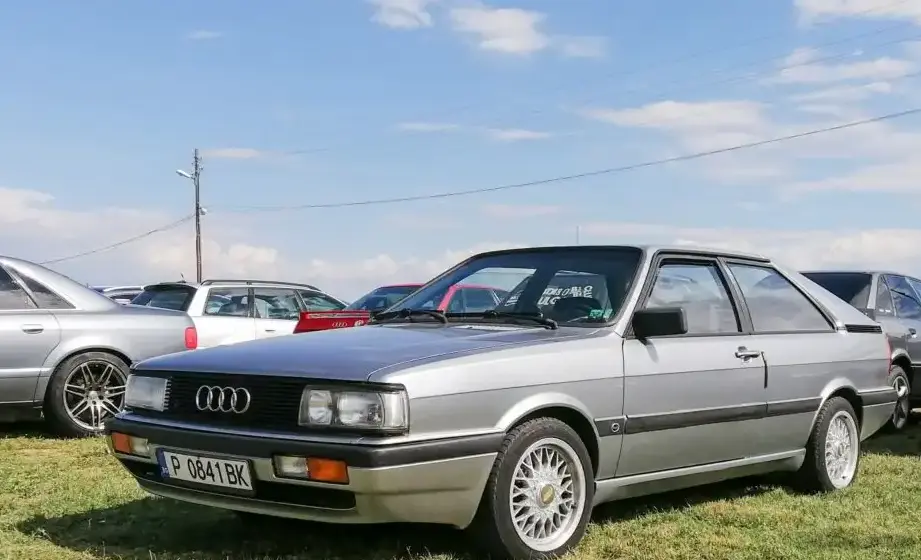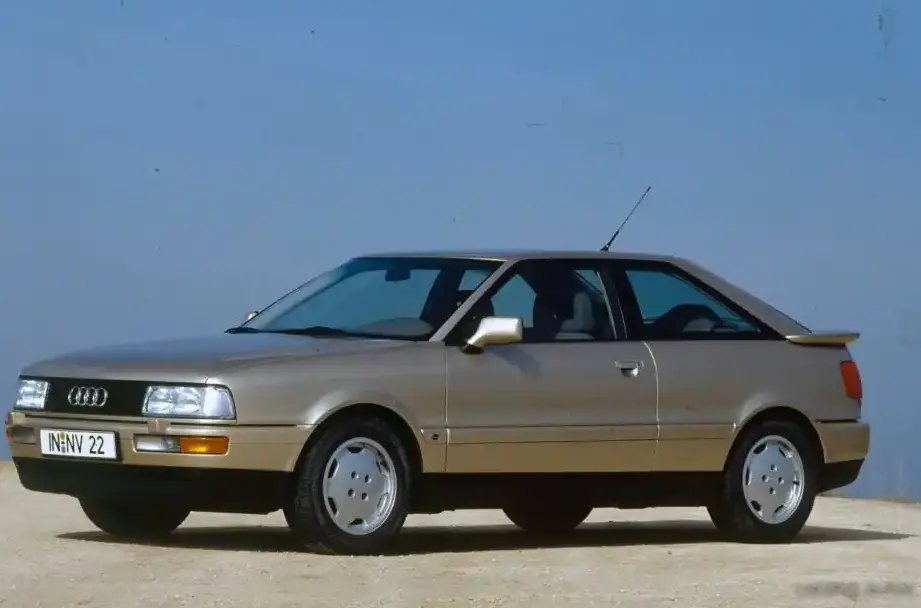
The Audi Coupe (B3), produced between 1988 and 1990, represented a significant evolution in Audi’s compact coupe offerings. Specifically, the 2.3-liter (136 hp) CAT variant occupied a middle ground within the B3 Coupe lineup, positioned above the base 1.8-liter models and below the more potent 2.3-liter 170 hp and the performance-oriented quattro versions. This model, built on the B3 platform (shared with the Audi 80/90), aimed to deliver a balance of performance, comfort, and fuel efficiency for the European market, with limited direct sales in the United States. The “CAT” designation refers to the catalytic converter equipped to meet increasingly stringent emissions regulations.
Technical Specifications
| Brand | Audi |
| Model | Coupe |
| Generation | Coupe (B3 89) |
| Type (Engine) | 2.3 (136 Hp) CAT |
| Start of production | 1988 |
| End of production | 1990 |
| Powertrain Architecture | Internal Combustion engine |
| Body type | Coupe |
| Seats | 5 |
| Doors | 2 |
| Fuel Type | Petrol (Gasoline) |
| Acceleration 0 – 100 km/h | 9.2 sec |
| Acceleration 0 – 62 mph | 9.2 sec |
| Acceleration 0 – 60 mph | 8.7 sec |
| Maximum speed | 206 km/h (128 mph) |
| Weight-to-power ratio | 8.6 kg/Hp, 116.2 Hp/tonne |
| Weight-to-torque ratio | 6.2 kg/Nm, 162.4 Nm/tonne |
| Power | 136 Hp @ 5700 rpm |
| Power per litre | 58.9 Hp/l |
| Torque | 190 Nm @ 4500 rpm (140.14 lb.-ft. @ 4500 rpm) |
| Engine layout | Front, Longitudinal |
| Engine Model/Code | NG |
| Engine displacement | 2309 cm3 (140.9 cu. in.) |
| Number of cylinders | 5 |
| Engine configuration | Inline |
| Cylinder Bore | 82.5 mm (3.25 in.) |
| Piston Stroke | 86.4 mm (3.4 in.) |
| Compression ratio | 10:1 |
| Number of valves per cylinder | 2 |
| Fuel injection system | Multi-port manifold injection |
| Engine aspiration | Naturally aspirated engine |
| Valvetrain | OHC |
| Engine oil capacity | 4 l (4.23 US qt | 3.52 UK qt) |
| Coolant | 8 l (8.45 US qt | 7.04 UK qt) |
| Kerb Weight | 1170 kg (2579.41 lbs.) |
| Max. weight | 1630 kg (3593.53 lbs.) |
| Max load | 460 kg (1014.13 lbs.) |
| Trunk (boot) space – minimum | 280 l (9.89 cu. ft.) |
| Trunk (boot) space – maximum | 960 l (33.9 cu. ft.) |
| Fuel tank capacity | 68 l (17.96 US gal | 14.96 UK gal) |
| Length | 4366 mm (171.89 in.) |
| Width | 1716 mm (67.56 in.) |
| Height | 1370 mm (53.94 in.) |
| Wheelbase | 2556 mm (100.63 in.) |
| Front track | 1453 mm (57.2 in.) |
| Rear (Back) track | 1447 mm (56.97 in.) |
| Drag coefficient (Cd) | 0.32 |
| Minimum turning circle | 11.1 m (36.42 ft.) |
| Drivetrain Architecture | The Internal combustion engine (ICE) drives the front wheels of the vehicle. |
| Drive wheel | Front wheel drive |
| Number of gears | 5 gears, manual transmission |
Powertrain & Engine Architecture
The heart of the Audi Coupe 2.3 (136 hp) CAT is the NG engine, a 2.3-liter inline five-cylinder powerplant. This engine, a hallmark of Audi’s engineering during the late 1980s, featured a cast iron block and an aluminum cylinder head. It utilized Bosch Motronic fuel injection, a multi-port system that precisely controlled fuel delivery for optimal combustion and emissions. The engine employed a single overhead camshaft (OHC) design operating two valves per cylinder. The five-cylinder configuration provided a unique engine note and a smoother power delivery compared to traditional four-cylinder engines. The catalytic converter, denoted by the “CAT” in the model name, was crucial for meeting European emission standards. The engine was mounted longitudinally in the front of the vehicle, driving the front wheels through a five-speed manual transmission. While an automatic transmission was available, the manual was more common and favored by enthusiasts.
Driving Characteristics
The 2.3-liter, 136 hp engine delivered respectable performance for its time. Acceleration from 0 to 60 mph took approximately 8.7 seconds, and it could achieve a top speed of around 128 mph. However, it wasn’t a particularly quick car by modern standards. The engine’s torque peak of 140 lb-ft at 4500 rpm provided adequate pulling power for everyday driving and overtaking maneuvers. Compared to the more powerful 170 hp version of the 2.3-liter engine, the 136 hp variant felt noticeably less responsive, especially at higher engine speeds. The manual transmission offered precise shifts and allowed drivers to fully utilize the engine’s power band. The front-wheel-drive configuration provided good traction in most conditions, but could exhibit torque steer under hard acceleration.
Equipment & Trim Levels
The Audi Coupe 2.3 CAT typically came equipped with a reasonable level of standard features. Interior appointments included cloth upholstery, power windows, central locking, and a basic stereo system. Optional extras included a sunroof, upgraded stereo systems, alloy wheels, and leather upholstery. The dashboard layout was typical of Audi’s designs of the era, with a functional and straightforward design. Trim levels were relatively simple, with the 2.3 CAT representing a mid-range offering. It was positioned above the base models with smaller engines and fewer features, but below the more luxurious and performance-oriented versions.
Chassis & Braking
The B3 Coupe utilized an independent suspension system. The front suspension employed McPherson struts with coil springs and an anti-roll bar, while the rear featured a double-wishbone setup. This suspension configuration provided a comfortable ride and good handling characteristics. Braking duties were handled by ventilated discs at the front and discs at the rear. The braking system was adequate for the car’s performance, but lacked the sophistication of more modern systems. Steering was via a rack and pinion system, providing precise and responsive control.
Market Reception & Comparison
The Audi Coupe 2.3 CAT was generally well-received by automotive critics. It was praised for its stylish design, comfortable ride, and refined engine. However, some critics noted that the 136 hp engine lacked the punch of its more powerful siblings. Compared to the 1.8-liter models, the 2.3 CAT offered a significant performance upgrade. Compared to the 170 hp 2.3-liter version, it represented a more affordable option with slightly lower running costs. Fuel economy was reasonable for the time, averaging around 25-30 mpg. Reliability was generally good, although the complex Bosch Motronic fuel injection system could occasionally require maintenance.
Legacy
The Audi Coupe B3, including the 2.3 CAT variant, holds a nostalgic appeal for many automotive enthusiasts. The NG engine, while not the most powerful of its time, proved to be relatively durable and reliable. Today, well-maintained examples are sought after by collectors and classic car enthusiasts. Parts availability can be a challenge, but a dedicated community of Audi enthusiasts helps to keep these cars on the road. The B3 Coupe represents a significant chapter in Audi’s history, showcasing the brand’s commitment to innovation and engineering excellence. The 2.3 CAT variant, in particular, offers a compelling blend of style, comfort, and performance for those seeking a classic European coupe.