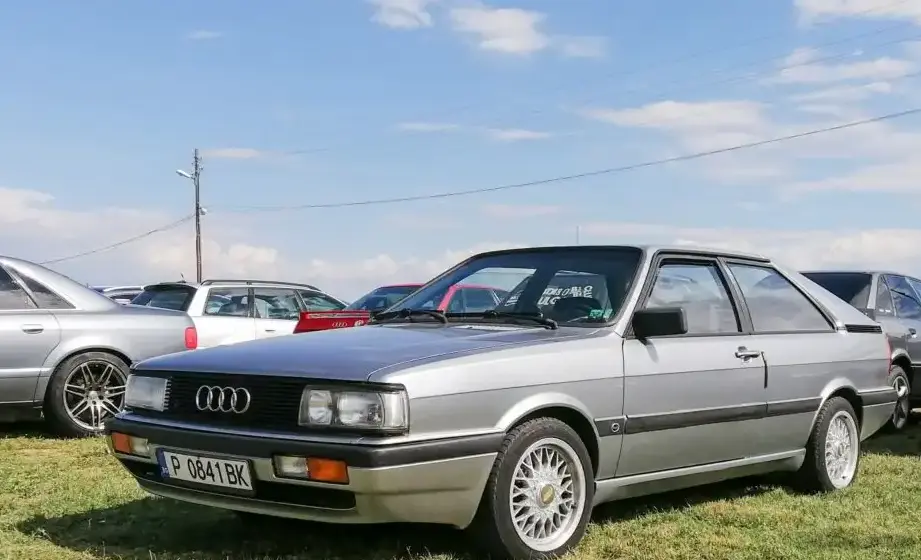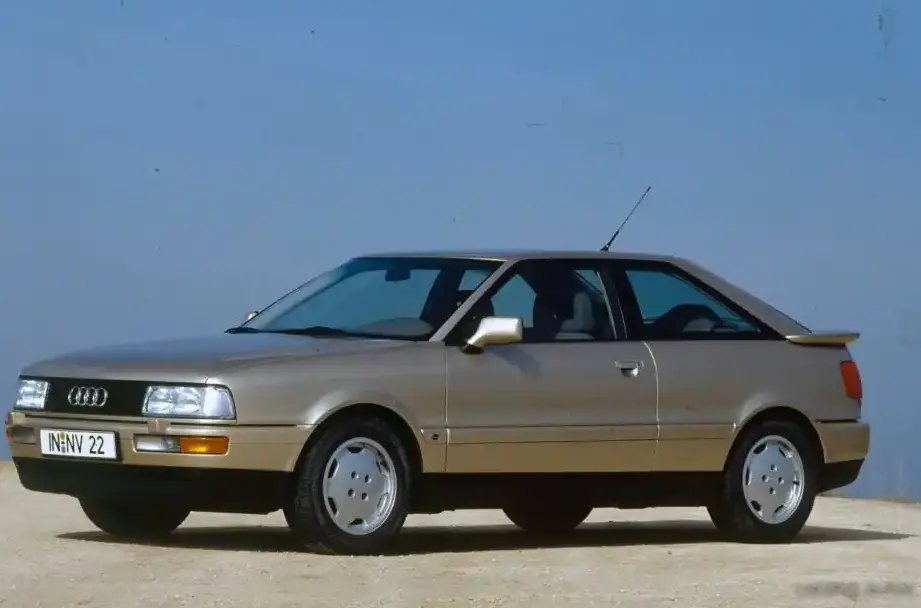
The Audi Coupe (B3), produced between 1980 and 1988, represented a significant step forward for Audi, blending sporty styling with advanced engineering. The 2.3 20V quattro variant, specifically available in the United States from 1989 to 1991, was the performance flagship of the B3 Coupe range. Positioned above the base 1.8L and 2.1L models, it offered a substantial increase in power and handling thanks to its five-cylinder engine and all-wheel drive system. This model was part of the larger Audi 80/90 (B3) family, sharing its platform (B3) with the Audi 80 and 90 sedans, but distinguished by its coupe body style and more focused sporting intent.
Technical Specifications
| Brand | Audi |
| Model | Coupe |
| Generation | Coupe (B3 89) |
| Type (Engine) | 2.3 20V (162 Hp) quattro (USA) |
| Start of production | 1989 |
| End of production | 1991 |
| Powertrain Architecture | Internal Combustion engine |
| Body type | Coupe |
| Seats | 5 |
| Doors | 3 |
| Fuel Type | Petrol (Gasoline) |
| Acceleration 0 – 100 km/h | 8.4 sec |
| Acceleration 0 – 62 mph | 8.4 sec |
| Acceleration 0 – 60 mph | 8 sec |
| Maximum speed | 219 km/h (136.08 mph) |
| Weight-to-power ratio | 8.9 kg/Hp, 112.5 Hp/tonne |
| Weight-to-torque ratio | 6.8 kg/Nm, 147.9 Nm/tonne |
| Power | 162 Hp @ 6000 rpm |
| Power per litre | 70.2 Hp/l |
| Torque | 213 Nm @ 4500 rpm (157.1 lb.-ft. @ 4500 rpm) |
| Engine layout | Front, Longitudinal |
| Engine Model/Code | 7A |
| Engine displacement | 2309 cm3 (140.9 cu. in.) |
| Number of cylinders | 5 |
| Engine configuration | Inline |
| Cylinder Bore | 82.5 mm (3.25 in.) |
| Piston Stroke | 86.4 mm (3.4 in.) |
| Compression ratio | 10.3:1 |
| Number of valves per cylinder | 4 |
| Fuel injection system | Multi-port manifold injection |
| Engine aspiration | Naturally aspirated engine |
| Valvetrain | DOHC |
| Engine oil capacity | 4.5 l (4.76 US qt | 3.96 UK qt) |
| Coolant | 7.9 l (8.35 US qt | 6.95 UK qt) |
| Kerb Weight | 1440 kg (3174.66 lbs.) |
| Trunk (boot) space – minimum | 232 l (8.19 cu. ft.) |
| Trunk (boot) space – maximum | 522 l (18.43 cu. ft.) |
| Fuel tank capacity | 70 l (18.49 US gal | 15.4 UK gal) |
| Length | 4470 mm (175.98 in.) |
| Width | 1716 mm (67.56 in.) |
| Height | 1380 mm (54.33 in.) |
| Wheelbase | 2549 mm (100.35 in.) |
| Front track | 1451 mm (57.13 in.) |
| Rear (Back) track | 1433 mm (56.42 in.) |
| Ride height (ground clearance) | 136 mm (5.35 in.) |
| Drivetrain Architecture | All wheel drive (4×4) |
| Number of gears | 5 gears, manual transmission |
| Front suspension | Independent, type McPherson with coil spring and anti-roll bar |
| Rear suspension | Double wishbone, Transverse stabilizer |
| Front brakes | Ventilated discs |
| Rear brakes | Disc |
| Assisting systems | ABS (Anti-lock braking system) |
| Steering type | Steering rack and pinion |
| Power steering | Hydraulic Steering |
| Tires size | 205/60 R15 |
| Wheel rims size | 7J x 15 |
INTRODUCTION
The Audi Coupe B3 2.3 20V quattro, introduced in the US market in 1989, represented the pinnacle of performance for the B3 generation. Building upon the success of the earlier B2 Coupe, the B3 offered a more modern design and a range of improved mechanical components. The “20V” designation refers to the engine’s five-cylinder, 20-valve cylinder head, a key element in its increased power output. The inclusion of Audi’s quattro all-wheel drive system further enhanced its handling capabilities, making it a compelling alternative to rear-wheel drive sports coupes of the era. This model was aimed at buyers seeking a sophisticated, capable, and relatively practical sports coupe.
Powertrain & Engine Architecture
The heart of the 2.3 20V quattro is the 7A engine, a 2.3-liter inline five-cylinder powerplant. This engine was a significant advancement over the earlier four-cylinder units, offering a smoother power delivery and a more refined character. The 20-valve cylinder head, featuring dual overhead camshafts (DOHC), allowed for improved breathing and higher engine speeds. Fuel delivery was handled by a Bosch Motronic multi-port fuel injection system, optimizing fuel efficiency and performance. The engine produced 162 horsepower at 6000 rpm and 157.1 lb-ft of torque at 4500 rpm. The engine’s longitudinal mounting and the rear-biased quattro all-wheel drive system contributed to its balanced handling. The standard transmission was a five-speed manual, although an optional four-speed automatic was available, though less common and generally considered to diminish the driving experience.
Driving Characteristics
The 2.3 20V quattro offered a compelling blend of performance and handling. Acceleration from 0 to 60 mph was achieved in around 8 seconds, and it could reach a top speed of 136 mph. The quattro system provided excellent traction, particularly in adverse weather conditions, allowing for confident cornering and acceleration. Compared to the 1.8L and 2.1L models, the 2.3 20V offered a noticeably more responsive engine and a more engaging driving experience. The five-speed manual transmission provided precise gear changes, while the optional automatic, while convenient, resulted in some power loss and a less direct connection to the engine. The suspension, tuned for a balance between comfort and handling, provided a relatively compliant ride without sacrificing stability.
Equipment & Trim Levels
The 2.3 20V quattro was generally well-equipped, reflecting its position as the premium model in the B3 Coupe range. Standard features included power windows, power locks, central locking, and a sunroof. The interior typically featured cloth upholstery, although leather was available as an option. A basic sound system was standard, with options for upgraded audio systems. Other available options included heated front seats, a trip computer, and alloy wheels. The dashboard layout was typical of Audi’s design language of the period, with a clean and functional design.
Chassis & Braking
The B3 Coupe chassis featured an independent McPherson strut front suspension and a double-wishbone rear suspension. This setup provided a good balance of ride comfort and handling precision. The quattro all-wheel drive system distributed power to all four wheels, enhancing traction and stability. Braking duties were handled by ventilated discs at the front and solid discs at the rear, with ABS (Anti-lock Braking System) standard. The braking system provided adequate stopping power for the vehicle’s weight and performance.
Market Reception & Comparison
The Audi Coupe B3 2.3 20V quattro was generally well-received by automotive critics. It was praised for its performance, handling, and sophisticated engineering. Compared to its siblings, the 2.3 20V offered a significant performance advantage, but it also came with a higher price tag. The 1.8L and 2.1L models were more affordable and focused on fuel economy and practicality, while the 2.3 20V catered to drivers seeking a more engaging and sporty driving experience. Reliability was generally good, although the complexity of the 20-valve engine and the quattro system could lead to higher maintenance costs compared to the simpler models.
Legacy
The Audi Coupe B3 2.3 20V quattro remains a desirable classic car today. Its combination of performance, handling, and all-wheel drive capability has earned it a loyal following. While finding well-maintained examples can be challenging, the 7A engine is generally considered to be robust and reliable if properly maintained. Parts availability can be an issue, but a dedicated community of enthusiasts helps to keep these cars on the road. The B3 2.3 20V quattro represents a significant chapter in Audi’s history, showcasing the brand’s commitment to innovation and performance.